Chef Juliette
Ordinary or White Consommé
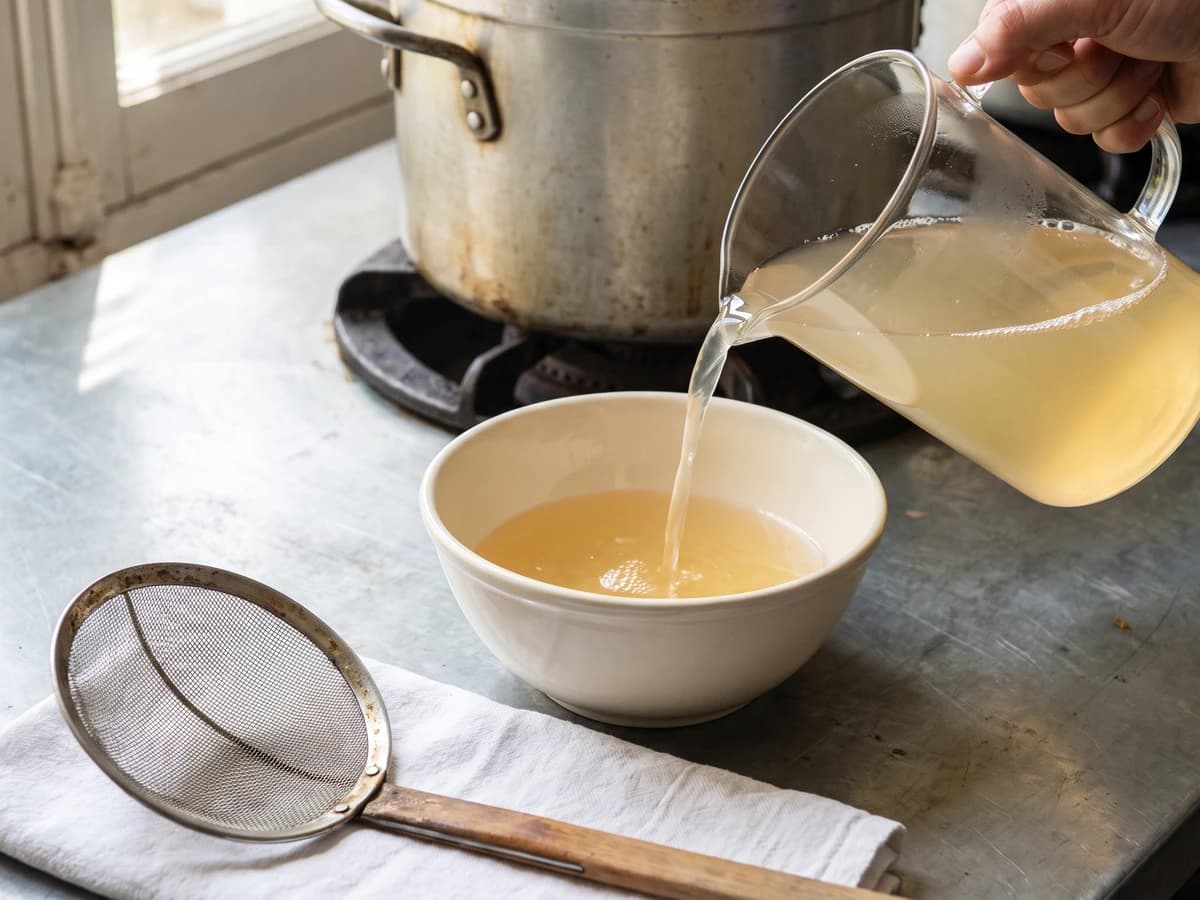
Beef shin, lean beef, and fowl begin in cold water and rise slowly toward a tremble. Skim before the boil, and you learn the quiet discipline that gives every clear French broth its backbone.
A cooking platform built around craft, culture, and the stories behind what we eat.
Created by Chef Juliette
Based on No. 130, Remoulade Sauce, from Le Guide Culinaire (1907) by Auguste Escoffier
Rémoulade teaches the cold emulsion family: keep its mayonnaise firm, press every salty garnish dry, then sharpen it with mustard, herbs, and anchovy for lobster, poultry, or cold roast.
Sauce rémoulade (mayonnaise sharpened with mustard, gherkins, capers, herbs, and anchovy) teaches the grammar of cold sauce derivatives: protect the emulsion, then give it character. There is no pan to hide behind. Every chopped garnish must be dry before it enters the bowl, because brine loosens the mayonnaise and steals the firm, spoonable body the sauce needs.
The source formula assumed a saucier with one pint of Mayonnaise ready at the cold station, plus gherkins, capers, and fines herbes, the parsley, chervil, and tarragon mixture, already chopped. At home, one bowl, a sharp knife, and a clean towel do the work. The pint stays because it is already generous home scale for a dinner party or picnic; only the book's spoon measures change, each large tablespoonful becomes a level tablespoon and the coffeespoon becomes a level teaspoon, making the ratio repeatable without changing its intent. The staffed garnish station is scaffolding and goes. The firm Mayonnaise, mustard, pressed capers, gherkins, herbs, and anchovy essence are the dish and stay.
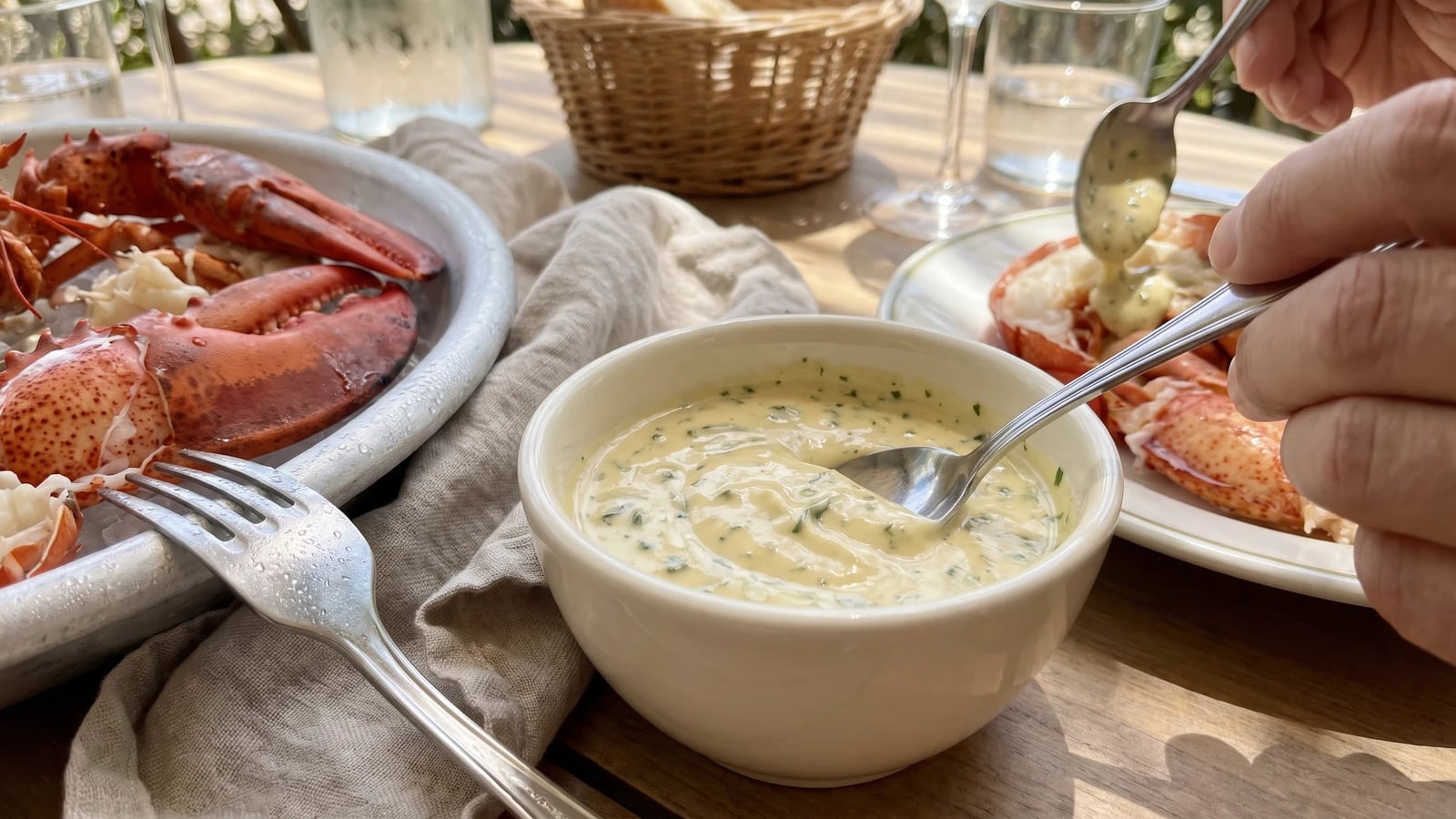
When it is right, rémoulade sits in soft peaks, pale Dijon gold with green herb flecks and small salty bites, sharp enough to wake cold poultry and rich lobster without drowning either. Reserve a little plain Mayonnaise before mixing, so a sauce loosened by hidden brine can be rebuilt rather than discarded. Ça se rattrape. Press the capers dry before you fold anything together; that is the step that decides the sauce.
Sauce rémoulade belongs to the French classical cold-sauce repertoire, with its working home at the garde-manger and on Parisian charcuterie and bistro tables. A mayonnaise base sharpened with mustard, pickles, capers, herbs, and anchovy accompanied cold meats, poultry, homard, and langouste, while céleri rémoulade carried the same sauce family into everyday lunches. French rémoulade is generally pale, mustard-led, and herb-flecked, not the red, paprika-heavy sauce known under the same name beyond France.
Quantity
2 cups (480 ml / 460 g)
Quantity
1 tablespoon (15 ml / 15 g)
Quantity
1 tablespoon (15 ml / 15 g)
finely chopped and blotted dry
Quantity
1 tablespoon (15 ml / 12 g)
measured after chopping and pressing dry
Quantity
1 teaspoon (5 ml / 1 g)
finely chopped
Quantity
1 teaspoon (5 ml / 1 g)
finely chopped
Quantity
1 teaspoon (5 ml / 1 g)
finely chopped
Quantity
1 teaspoon (5 ml / 6 g)
| Ingredient | Quantity |
|---|---|
| firm plain Mayonnaise | 2 cups (480 ml / 460 g) |
| Dijon mustard | 1 tablespoon (15 ml / 15 g) |
| gherkinsfinely chopped and blotted dry | 1 tablespoon (15 ml / 15 g) |
| capersmeasured after chopping and pressing dry | 1 tablespoon (15 ml / 12 g) |
| flat-leaf parsleyfinely chopped | 1 teaspoon (5 ml / 1 g) |
| chervilfinely chopped | 1 teaspoon (5 ml / 1 g) |
| tarragon leavesfinely chopped | 1 teaspoon (5 ml / 1 g) |
| anchovy essence | 1 teaspoon (5 ml / 6 g) |
Set aside about 1/4 cup of the Mayonnaise in a clean cup, then place the remainder in a wide mixing bowl. Stir it once or twice with a flexible spatula until smooth, without beating air into it. The reserved portion is your repair should hidden brine loosen the sauce, and it will be folded back in either way, so the source proportions remain intact.
Drain the gherkins and capers separately. Chop the gherkins finely, spread them on a clean towel, and blot them dry. Chop the capers, gather them in the towel, and press firmly before measuring the tablespoon. Dry the parsley, chervil, and tarragon completely before chopping them at the last moment. You want clean green flecks, not wet herb pulp.
Stir the Dijon mustard and anchovy essence into the bowl of Mayonnaise until the colour is even. Add the gherkins, pressed capers, parsley, chervil, and tarragon, then fold with broad, deliberate turns. Don't whisk. The Mayonnaise is already an emulsion; you are seasoning it, not making it endure a second campaign.
Lift the spatula. The rémoulade should fall in a heavy ribbon and hold a soft ridge in the bowl. If it has become pourable or shows beads of moisture, stop stirring. Put the reserved Mayonnaise in a clean bowl and add the loose sauce one spoonful at a time, mixing each addition smooth before the next; the stable emulsion will absorb the excess moisture and recover its body. Ça se rattrape. If the sauce remained firm, simply fold the reserved Mayonnaise back in.
Cover and refrigerate the rémoulade for 30 minutes so the mustard, fines herbes, capers, and anchovy settle into one another. Fold it once before serving, then spoon it into a chilled bowl. Bring it to the table with cold meat or poultry, homard (common lobster), or langouste (spiny lobster). À table!
1 serving (about 28g)
Culinary guides, cultural storytelling, and the editorial depth that makes cooking meaningful.
Discover Culinary ExplorerChef Juliette
Beef shin, lean beef, and fowl begin in cold water and rise slowly toward a tremble. Skim before the boil, and you learn the quiet discipline that gives every clear French broth its backbone.
Chef Juliette
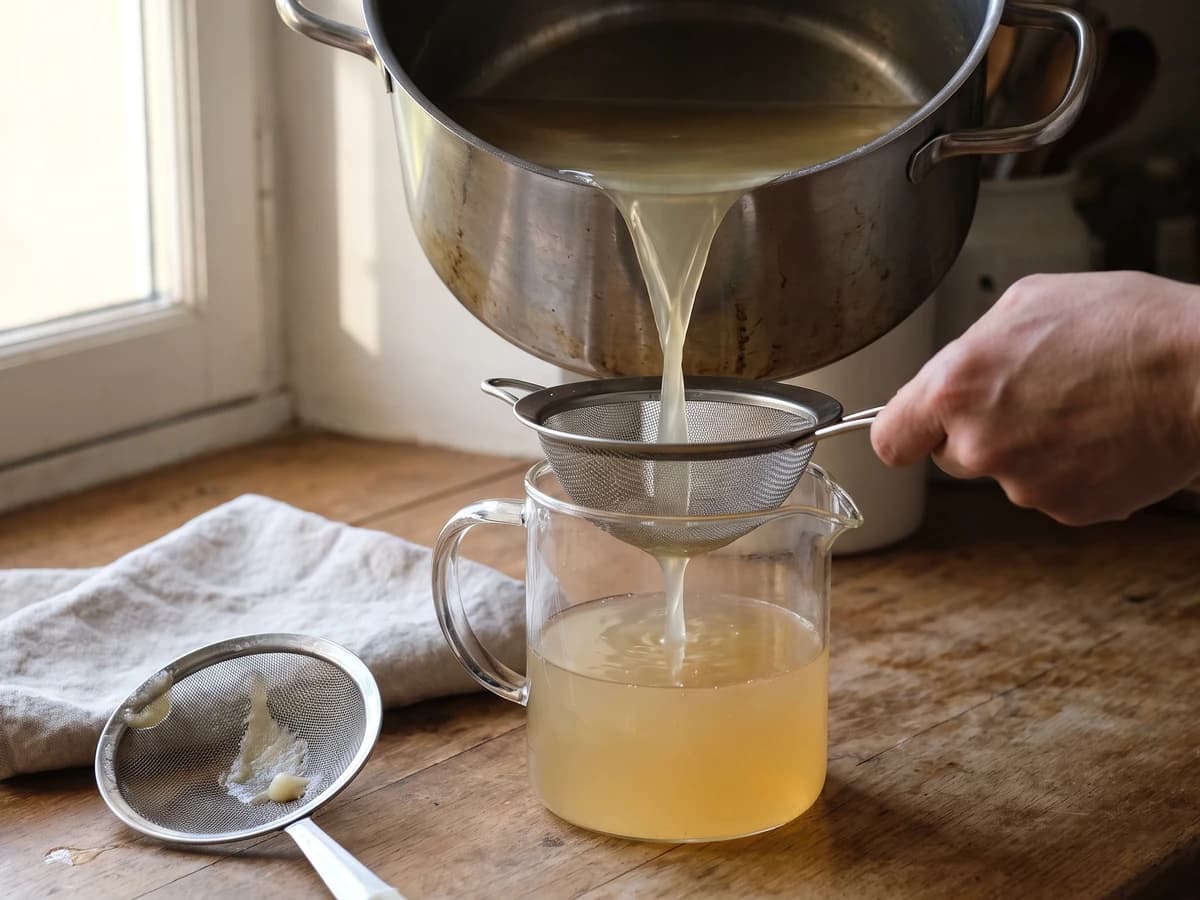
Break the veal bones small, then give them eight hours at a bare tremble. This pale, gelatinous fond becomes the quiet foundation beneath velouté, blanquette, and every sauce that must stay light.
Chef Juliette
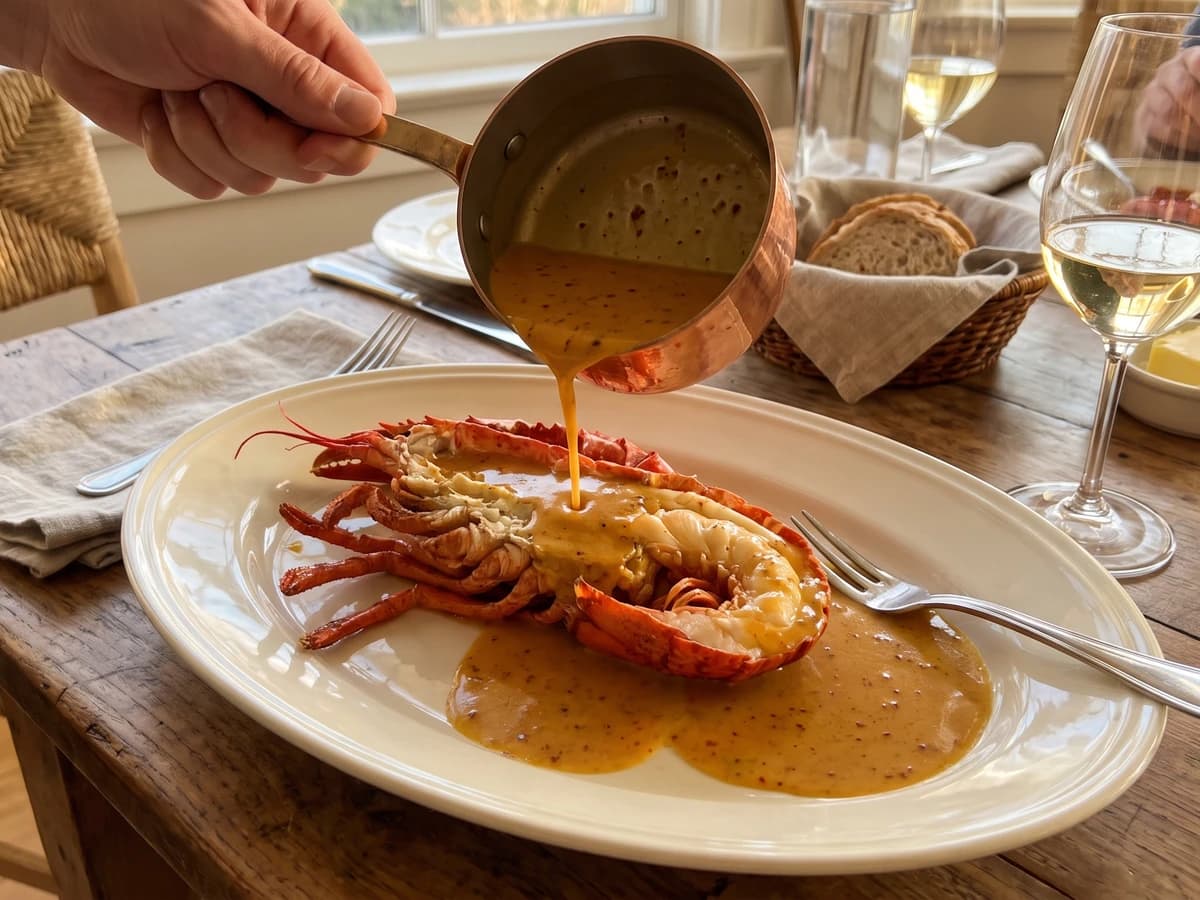
Sauce Orientale concentrates lobster-rich American Sauce with curry, then folds in cream away from the fire: a glossy, gently spiced derivative made for lobster, crayfish, and firm fish.
Chef Juliette
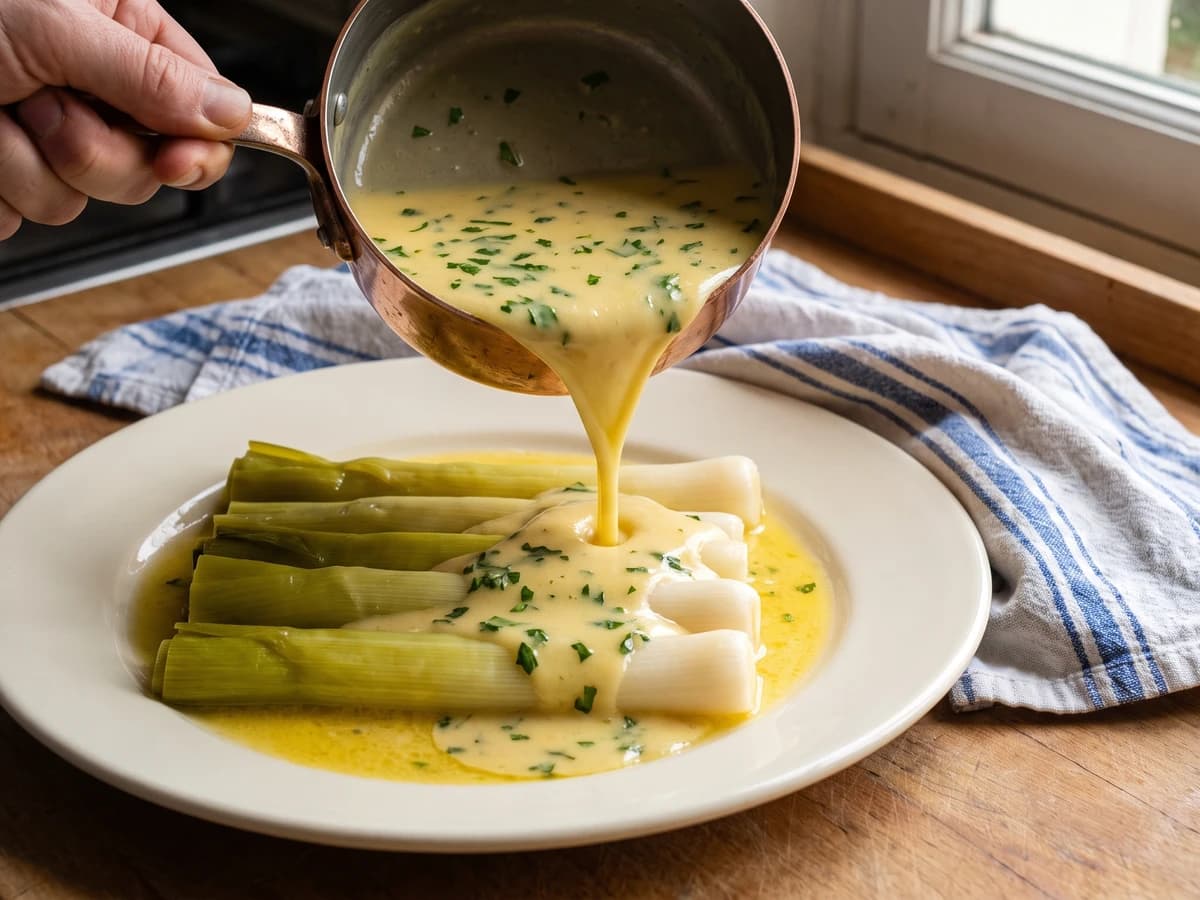
An old lesson in sauce families: Sauce Allemande takes mushroom liquor, then butter, lemon, and parsley, becoming a glossy Poulette for sheep's trotters, leeks, cauliflower, and anything needing gentle richness with a bright edge.