Chef Juliette
Ordinary or White Consommé
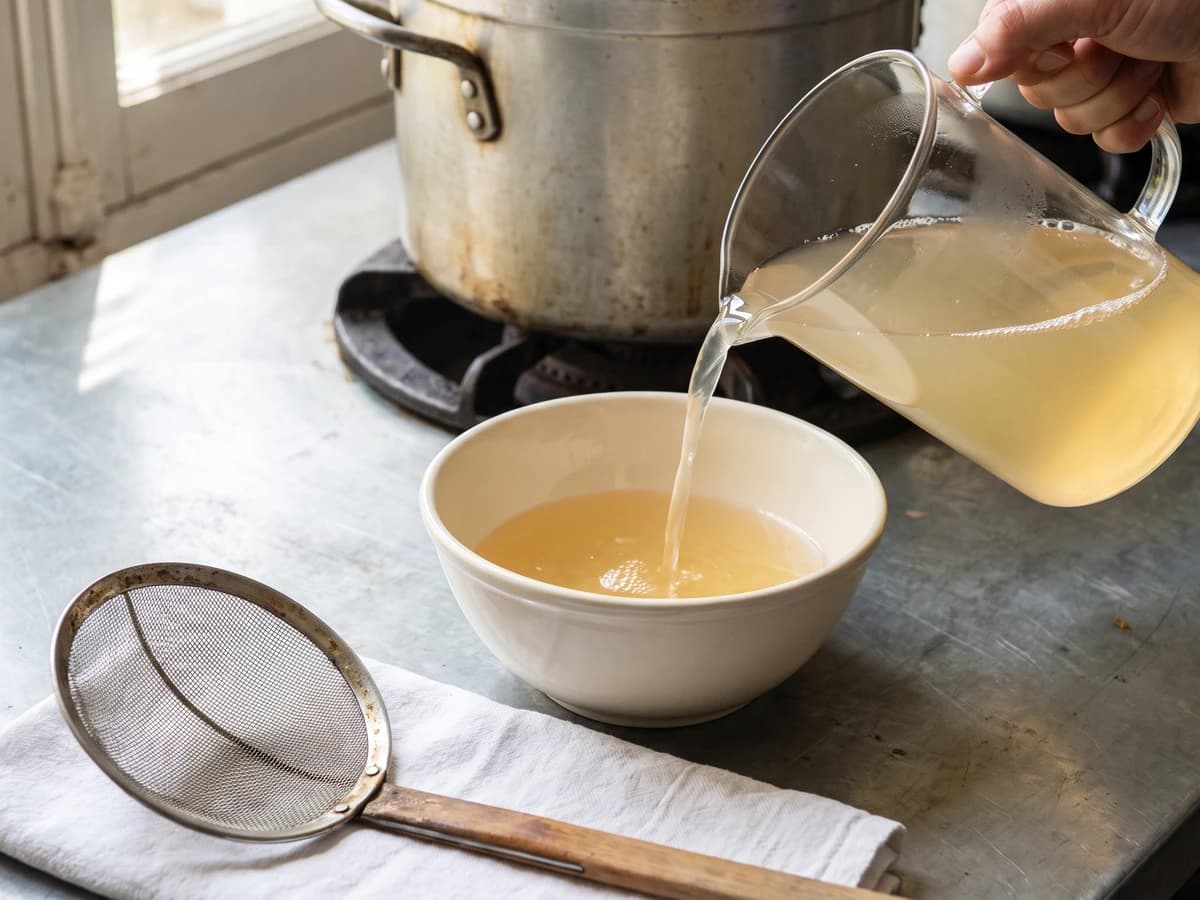
Beef shin, lean beef, and fowl begin in cold water and rise slowly toward a tremble. Skim before the boil, and you learn the quiet discipline that gives every clear French broth its backbone.
A cooking platform built around craft, culture, and the stories behind what we eat.
Created by Chef Juliette
Based on No. 129, Ravigote Sauce, or Vinaigrette, from Le Guide Culinaire (1907) by Auguste Escoffier
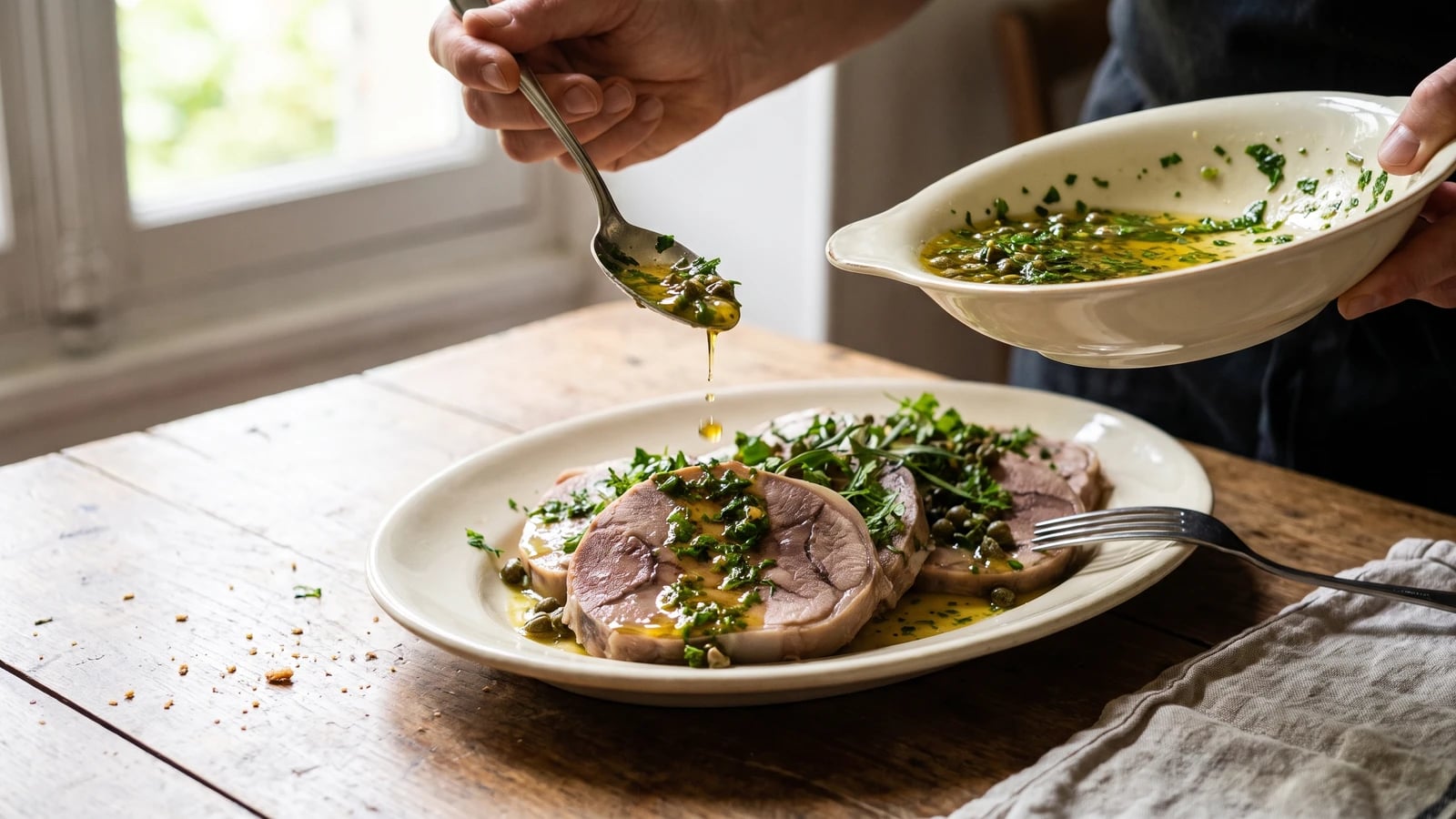
Sauce ravigote proves that a vinaigrette is built by proportion, not guesswork: three parts oil, one part vinegar, capers and five fresh herbs, stirred again just before it meets calf’s head or trotters.
Sauce ravigote froide, a cold herb-and-caper dressing, teaches the first grammar of every vinaigrette: three parts oil, one part vinegar, and no fantasy that the two will remain married forever. It should be bright, loose, and thoroughly stirred, with capers and fines herbes suspended through the oil. The one true thing is simple. Separation is not failure.
The source assumes a service bowl built from a full pint of oil, plus calf’s head, calf’s foot, or sheep’s trotters coming from the pot with their cooking liquor beside them. That quantity and ready stockpot belong to brigade service. Here the formula is reduced to one-third, about 1¼ cups for a home table, while its three-to-one ratio, caper load, exact herb proportions, and last-minute spoonful of cooking liquor remain. The large batch is scaffolding; thorough mixing and the acid-herb balance are the dish. One cook, one stove left cold, one evening.
Chop the onion exceedingly fine, but cut the herbs cleanly rather than crushing them into green paste. Measure the fines herbes by their proper proportions, whisk everything thoroughly, and stir once more just before serving. That final stirring is the step that decides the sauce.
Cold sauce ravigote belongs to the French classical and bourgeois table rather than to one province, particularly the triperie traditions of Parisian bouillons and Lyonnais bouchons, where acidic herb sauces sharpen the gentle richness of calf’s head, feet, and sheep’s trotters. Its name comes from ravigoter, to revive or enliven, and the family includes both hot and cold preparations; this is the cold vinaigrette form, not the cooked sauce that sometimes bears the same name. The spoonful of cooking liquor is not mere dilution: it ties the sauce to the meat and gives the vinaigrette a faint natural body.
Quantity
¾ cup (180 ml / 165 g)
Quantity
¼ cup (60 ml / 60 g)
Quantity
¼ teaspoon (1.25 ml / 1.5 g)
Quantity
⅛ teaspoon (0.6 ml / 0.3 g)
Quantity
2 tablespoons (30 ml / 18 g)
drained
Quantity
1 tablespoon (15 ml / 5 g)
very finely chopped, using two parts onion, two parts parsley, and one part each chervil, tarragon, and chives
Quantity
2 to 3 teaspoons (10 to 15 ml / 10 to 15 g)
strained
| Ingredient | Quantity |
|---|---|
| mild olive oil or neutral sunflower oil | ¾ cup (180 ml / 165 g) |
| white wine vinegar | ¼ cup (60 ml / 60 g) |
| fine sea salt | ¼ teaspoon (1.25 ml / 1.5 g) |
| freshly ground black pepper | ⅛ teaspoon (0.6 ml / 0.3 g) |
| small capersdrained | 2 tablespoons (30 ml / 18 g) |
| fines herbes mixture of onion, parsley, chervil, tarragon, and chivesvery finely chopped, using two parts onion, two parts parsley, and one part each chervil, tarragon, and chives | 1 tablespoon (15 ml / 5 g) |
| cooking liquor from the accompanying calf’s head, calf’s foot, or sheep’s trotters (optional)strained | 2 to 3 teaspoons (10 to 15 ml / 10 to 15 g) |
Chop the onion exceedingly fine, then chop the parsley, chervil, tarragon, and chives separately with a clean, sharp knife. Combine them in seven parts by volume: two parts onion, two parts parsley, and one part each chervil, tarragon, and chives. Measure one level tablespoon. Do not keep chopping once they are combined; bruised herbs become wet and muddy, while cleanly cut herbs keep their fragrance.
Put the oil, vinegar, salt, pepper, capers, and fines herbes into a nonreactive bowl, following the source’s simple sequence, and whisk thoroughly for 20 to 30 seconds. The sauce should look glossy and evenly flecked, but it will separate as it stands. That is the nature of a vinaigrette, not a broken sauce. Whisk it again and it returns at once. Ça se rattrape. If the vinegar tastes harsh rather than lively, add oil a few drops at a time; if the sauce tastes flat, add a few drops of vinegar and a pinch of salt.
When the ravigote accompanies calf’s head, calf’s foot, or sheep’s trotters, whisk in 2 teaspoons of the strained cooking liquor as the dish is being served, then add the final teaspoon only if the sauce still tastes balanced. The liquor brings savor and a slight gelatinous body, so use the meat’s own liquor rather than unrelated stock. If chilled gelatin makes the sauce tighten, set the bowl briefly over lukewarm water and whisk until loose again.
Taste once more for salt and acidity, then stir the sauce vigorously immediately before spooning it over or alongside the warm meat. Bring the remaining ravigote to the table in its bowl so everyone can take another spoonful. À table!
1 serving (about 33g)
Culinary guides, cultural storytelling, and the editorial depth that makes cooking meaningful.
Discover Culinary ExplorerChef Juliette
Beef shin, lean beef, and fowl begin in cold water and rise slowly toward a tremble. Skim before the boil, and you learn the quiet discipline that gives every clear French broth its backbone.
Chef Juliette
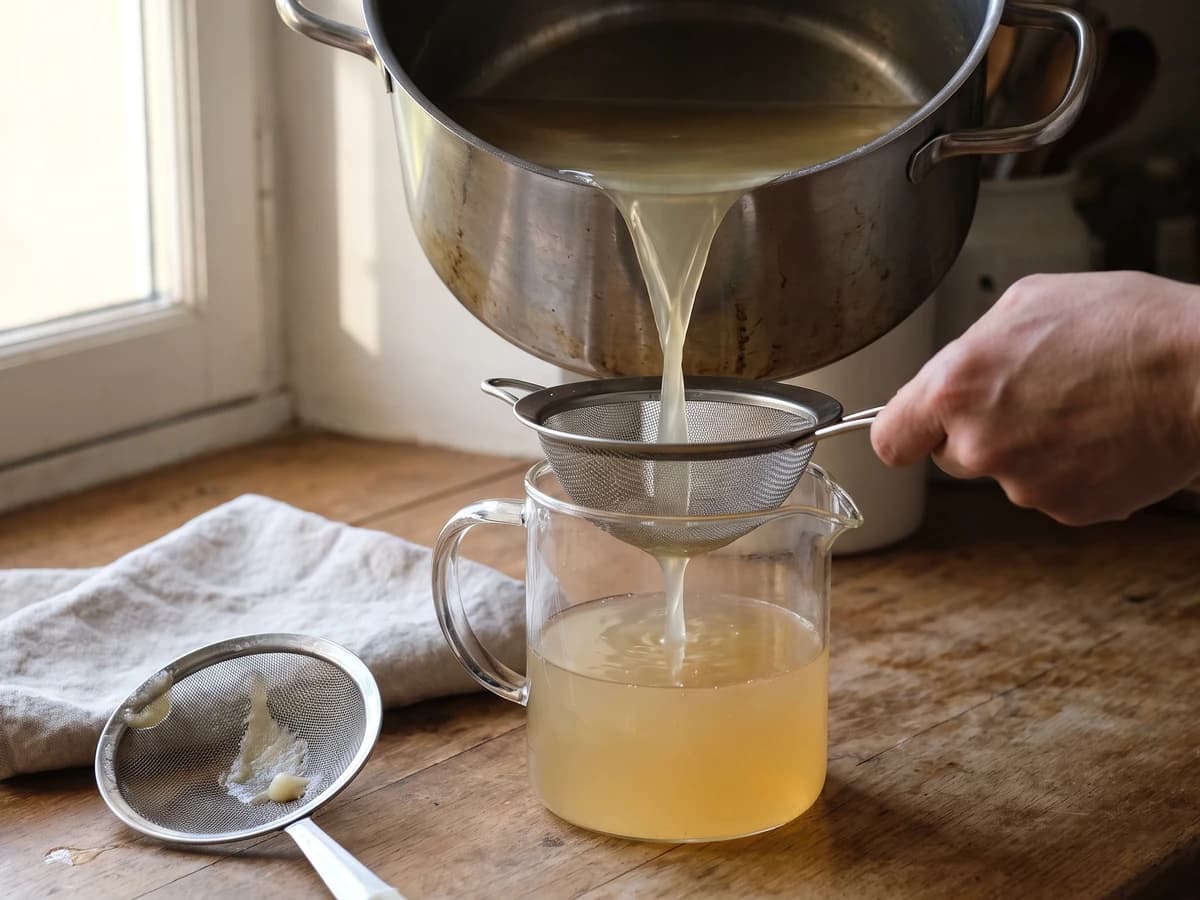
Break the veal bones small, then give them eight hours at a bare tremble. This pale, gelatinous fond becomes the quiet foundation beneath velouté, blanquette, and every sauce that must stay light.
Chef Juliette
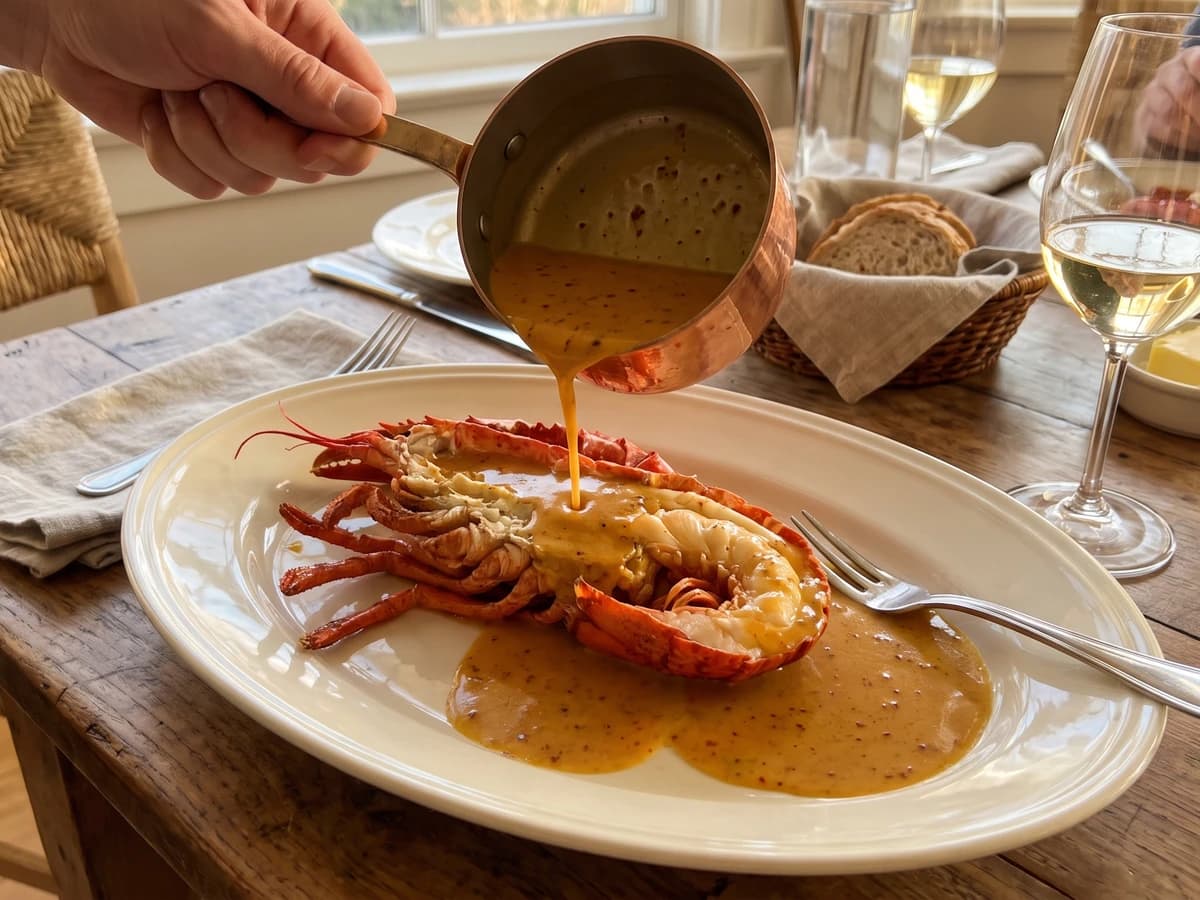
Sauce Orientale concentrates lobster-rich American Sauce with curry, then folds in cream away from the fire: a glossy, gently spiced derivative made for lobster, crayfish, and firm fish.
Chef Juliette
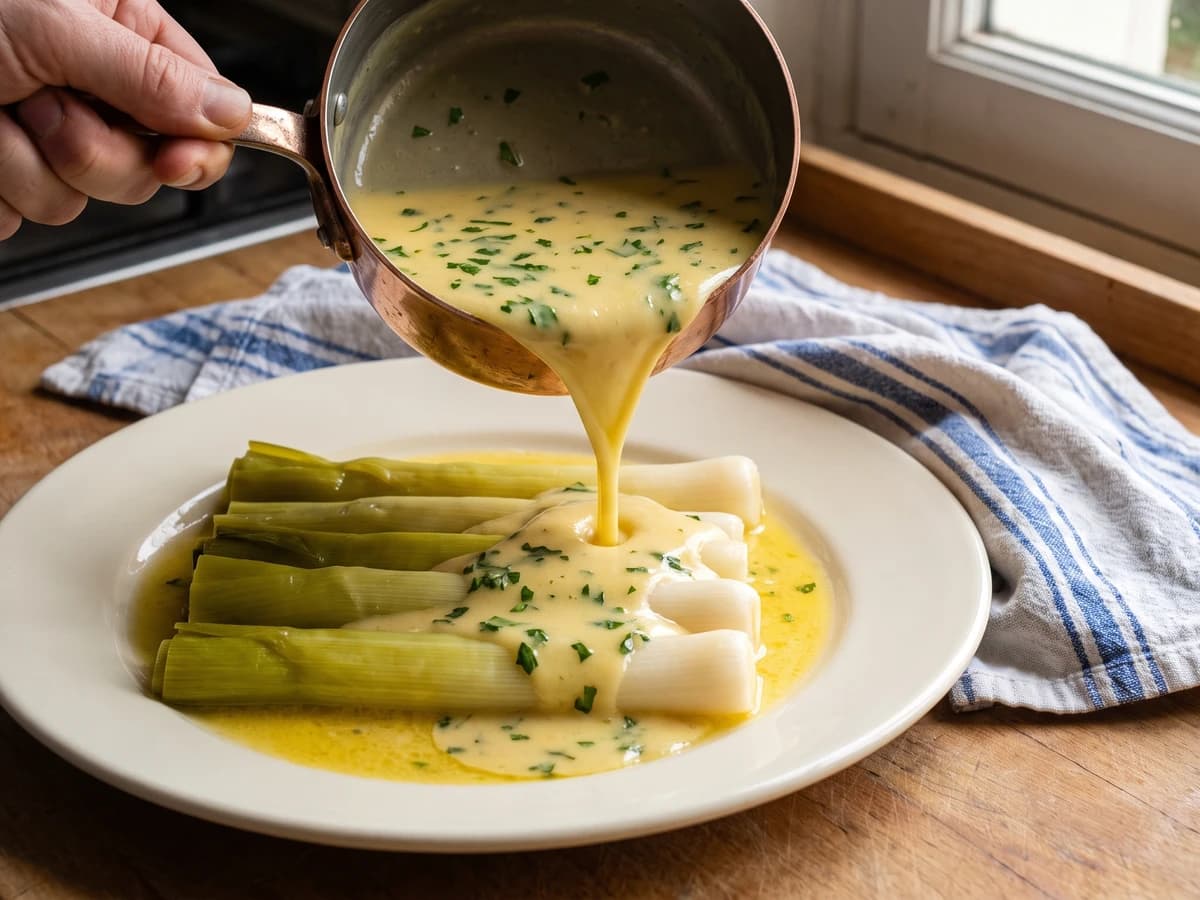
An old lesson in sauce families: Sauce Allemande takes mushroom liquor, then butter, lemon, and parsley, becoming a glossy Poulette for sheep's trotters, leeks, cauliflower, and anything needing gentle richness with a bright edge.