Chef Juliette
Ordinary or White Consommé
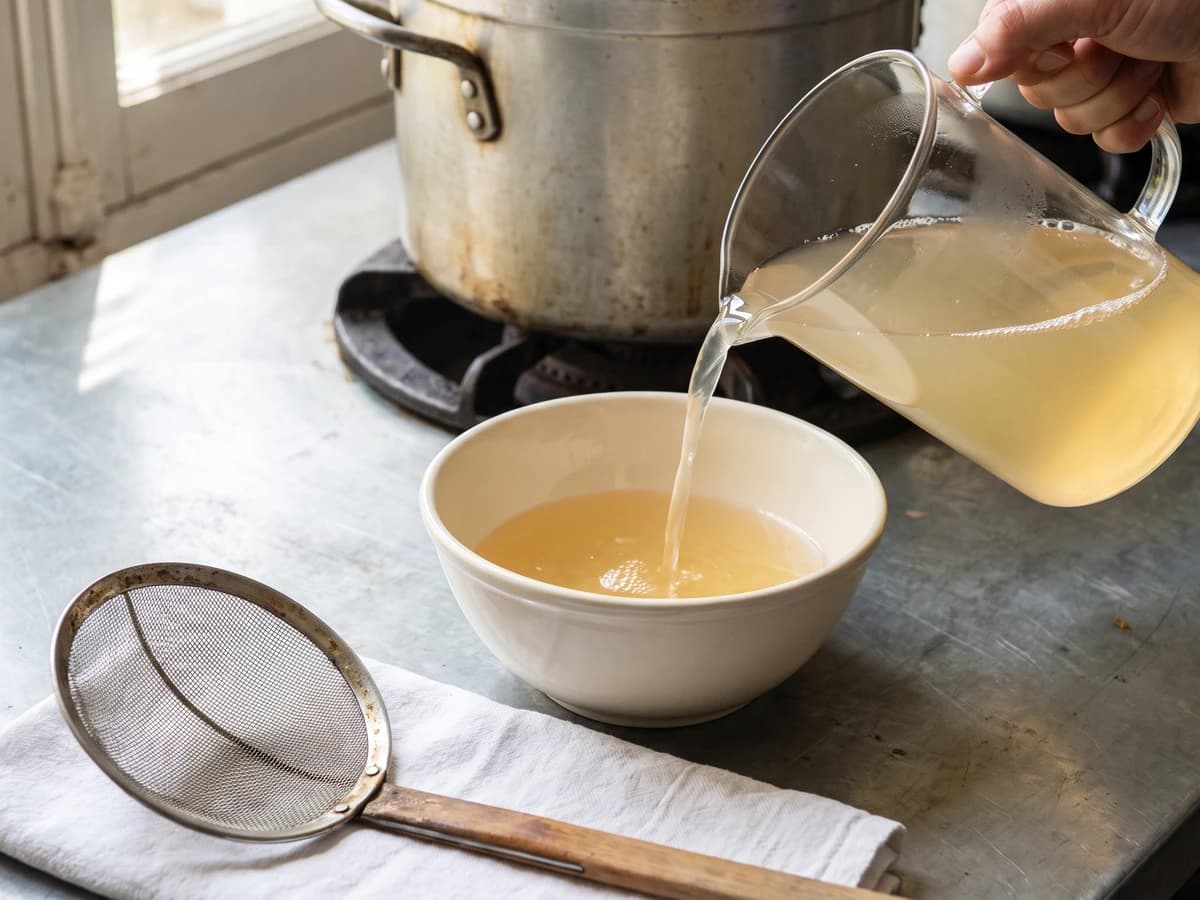
Beef shin, lean beef, and fowl begin in cold water and rise slowly toward a tremble. Skim before the boil, and you learn the quiet discipline that gives every clear French broth its backbone.
A cooking platform built around craft, culture, and the stories behind what we eat.
Created by Chef Juliette
Based on No. 128, Whisked Mayonnaise, from Le Guide Culinaire (1907) by Auguste Escoffier
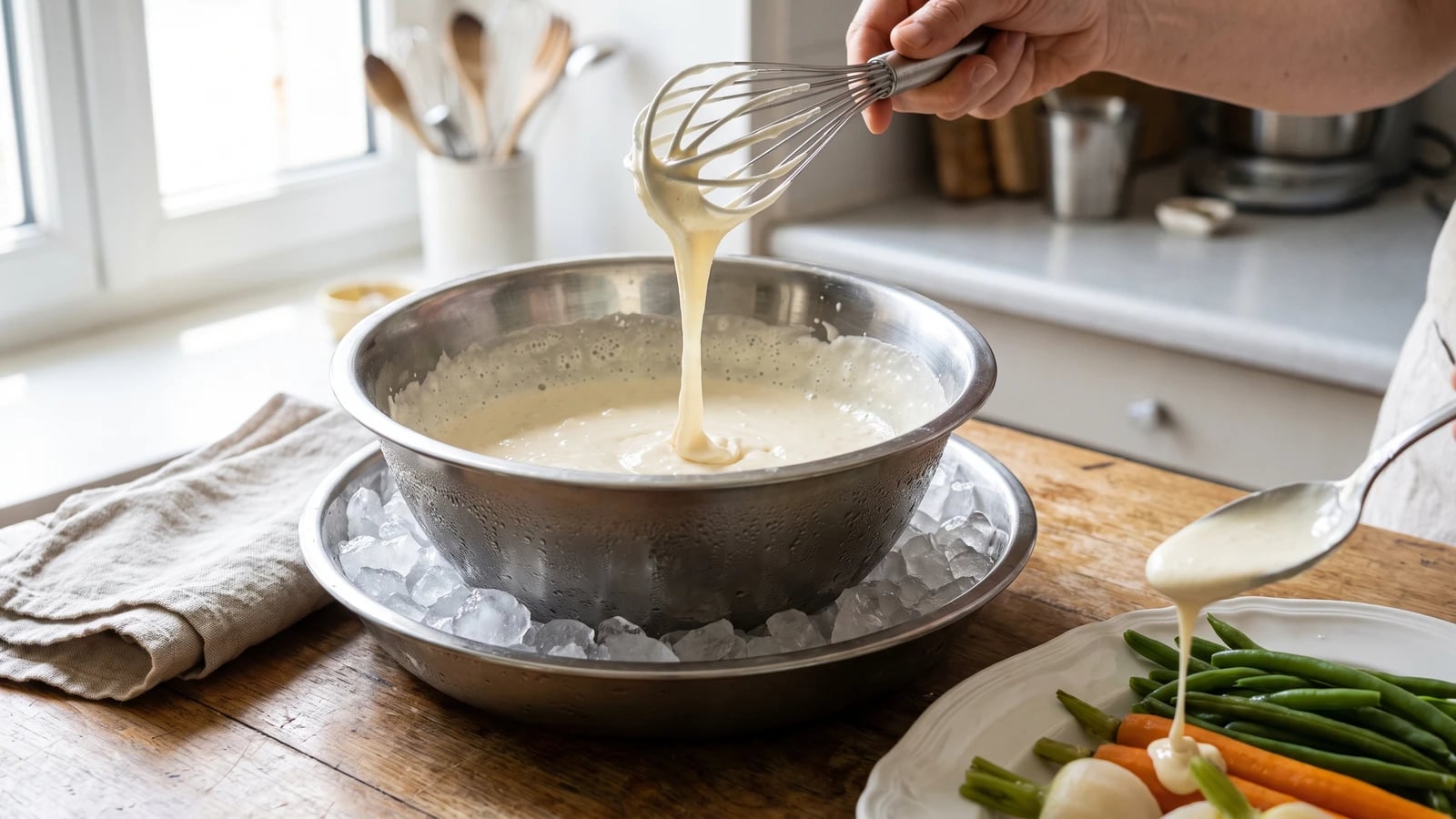
Mayonnaise fouettée is the cold-sauce lesson in timing: mayonnaise and liquid aspic, sharpened with tarragon vinegar and horseradish, whisked over ice until airy, glossy, and still loose enough to cloak vegetables.
Mayonnaise Fouettée (whisked mayonnaise) teaches the narrow border between an emulsion and a gel. The one true thing to know before you touch the bowl is this: the aspic must be melted, cool, and fully fluid, then the whisk must stop at the first sign of setting. Keep going and the sauce loses its flow; stop on time and it is pale, lively, and loose enough to cloak each vegetable without drowning it.
The original preparation assumed a copper basin set directly on ice, finished mayonnaise and clear savory jelly waiting in the garde-manger, and a quantity meant for service. For one cook, one stove, one evening, a stainless-steel bowl nested over ice does the same work, and this batch keeps the source's exact nine-to-eight volume ratio of jelly to mayonnaise while cutting the quantity for a home table. The copper and the brigade volume are scaffolding. The cold whisking and the precise stopping point are the dish.
Mix first, chill second, then whisk gently. Watch the edges, not the clock: when the sauce turns very frothy and the whisk begins to leave a faint trace, lift the bowl from the ice at once. If it firms before you can dress the salad, ça se rattrape, and a few seconds over lukewarm water will return the flow.
Mayonnaise fouettée belongs to the Parisian garde-manger, the cold kitchen responsible for composed salads, aspics, and buffet dishes. Despite its name, it is not simply mayonnaise made by hand with a whisk: finished mayonnaise is combined with melted aspic and aerated over ice so it gains lightness and a delicate cling. It passed readily from the grand cold buffet to the bourgeois table because its logic is practical, giving cooked vegetables a glossy coating that stays with them rather than draining onto the dish.
Quantity
1⅛ cups (270 ml / 270 g)
melted gently and cooled until fully fluid
Quantity
1 cup (240 ml / 230 g)
cold
Quantity
2¼ teaspoons (11 ml / 11 g)
Quantity
2¼ teaspoons (11 ml / 7 g)
finely grated or finely chopped
| Ingredient | Quantity |
|---|---|
| clear savory aspic jellymelted gently and cooled until fully fluid | 1⅛ cups (270 ml / 270 g) |
| prepared plain mayonnaisecold | 1 cup (240 ml / 230 g) |
| tarragon vinegar | 2¼ teaspoons (11 ml / 11 g) |
| fresh horseradishfinely grated or finely chopped | 2¼ teaspoons (11 ml / 7 g) |
Warm the prepared aspic jelly over the lowest heat only until it becomes completely liquid. Do not let it simmer. Measure the required amount and cool it to about 24 to 27°C (75 to 80°F), when it is no longer warm but still pours without a wobble. Warm aspic relaxes the mayonnaise; aspic already beginning to set leaves little gelatin flecks. If a skin forms, warm it again for a few seconds and let it settle.
Fill a large bowl halfway with ice and add just enough cold water to settle the cubes. Test that the stainless-steel mixing bowl can sit securely in it, then remove the mixing bowl until the sauce has been combined. Metal answers the cold promptly, which is all the copper basin contributed to this preparation.
Put the fluid aspic, cold mayonnaise, tarragon vinegar, and freshly grated horseradish into the mixing bowl. Whisk slowly off the ice until the mixture is completely uniform, with no streaks of mayonnaise or pockets of jelly. Keep the motion measured. You are joining prepared components before the cold begins to set them, not trying to build volume yet.
Set the bowl into the ice bath and whisk gently in steady circles for 2 to 4 minutes. The sauce will lighten, swell slightly, and become very frothy; watch the thin film around the sides, because that is where setting begins first. Stop the instant the whisk leaves a faint trace and the sauce starts to gain body. If it becomes softly set or mounded, lift it from the ice and hold the bowl over lukewarm water for 5 to 10 seconds while whisking gently. As soon as it flows in a broad ribbon, set it on the counter. Ça se rattrape.
Spoon a little sauce over the back of a chilled spoon. It should cling in a thin, frothy veil, then fall slowly from the edge rather than sitting in a mound. If it runs like plain mayonnaise, return it to the ice for 15-second intervals; if it holds its shape, loosen it briefly over lukewarm water. Fold it at once through cool, thoroughly dried cooked vegetables. Do not refrigerate the finished sauce before dressing the salad, because the aspic will continue to set. À table!
1 serving (about 47g)
Culinary guides, cultural storytelling, and the editorial depth that makes cooking meaningful.
Discover Culinary ExplorerChef Juliette
Beef shin, lean beef, and fowl begin in cold water and rise slowly toward a tremble. Skim before the boil, and you learn the quiet discipline that gives every clear French broth its backbone.
Chef Juliette
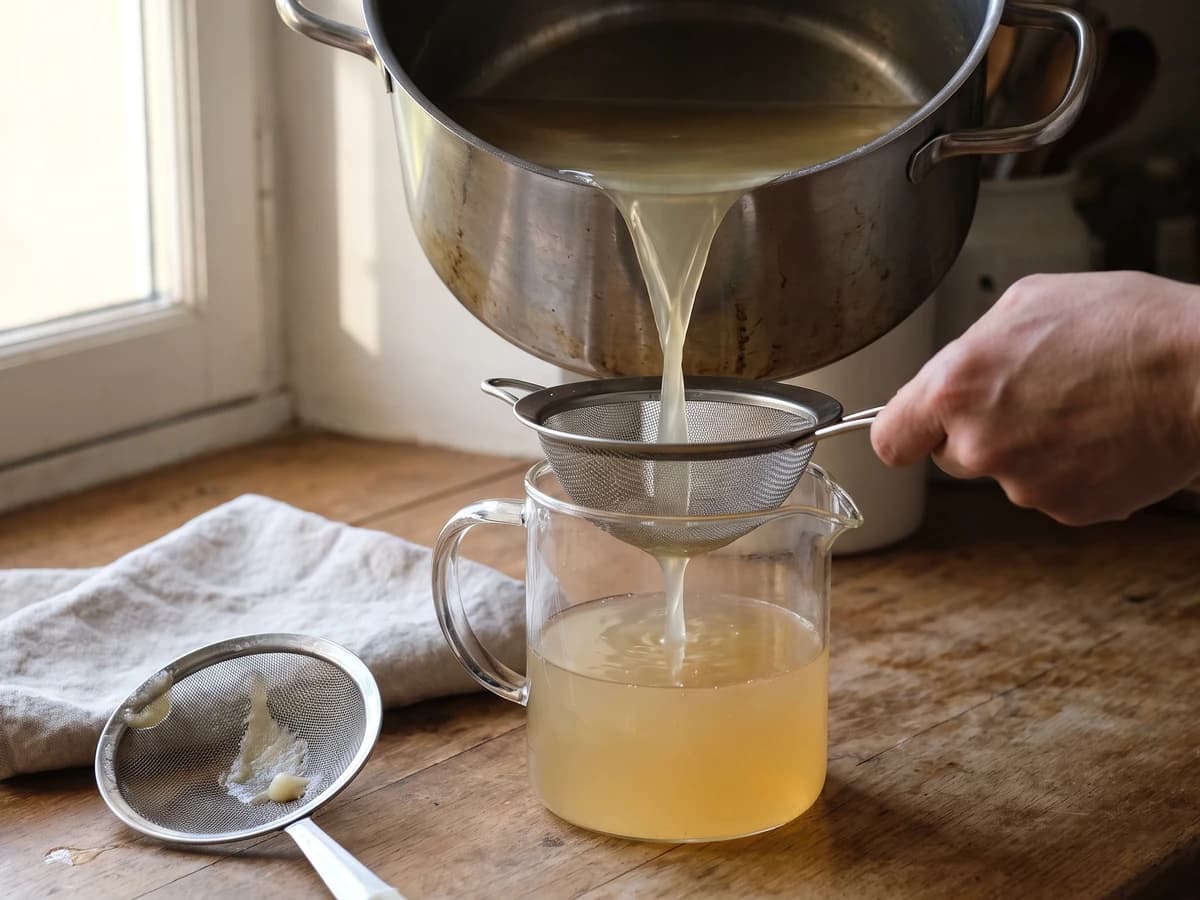
Break the veal bones small, then give them eight hours at a bare tremble. This pale, gelatinous fond becomes the quiet foundation beneath velouté, blanquette, and every sauce that must stay light.
Chef Juliette
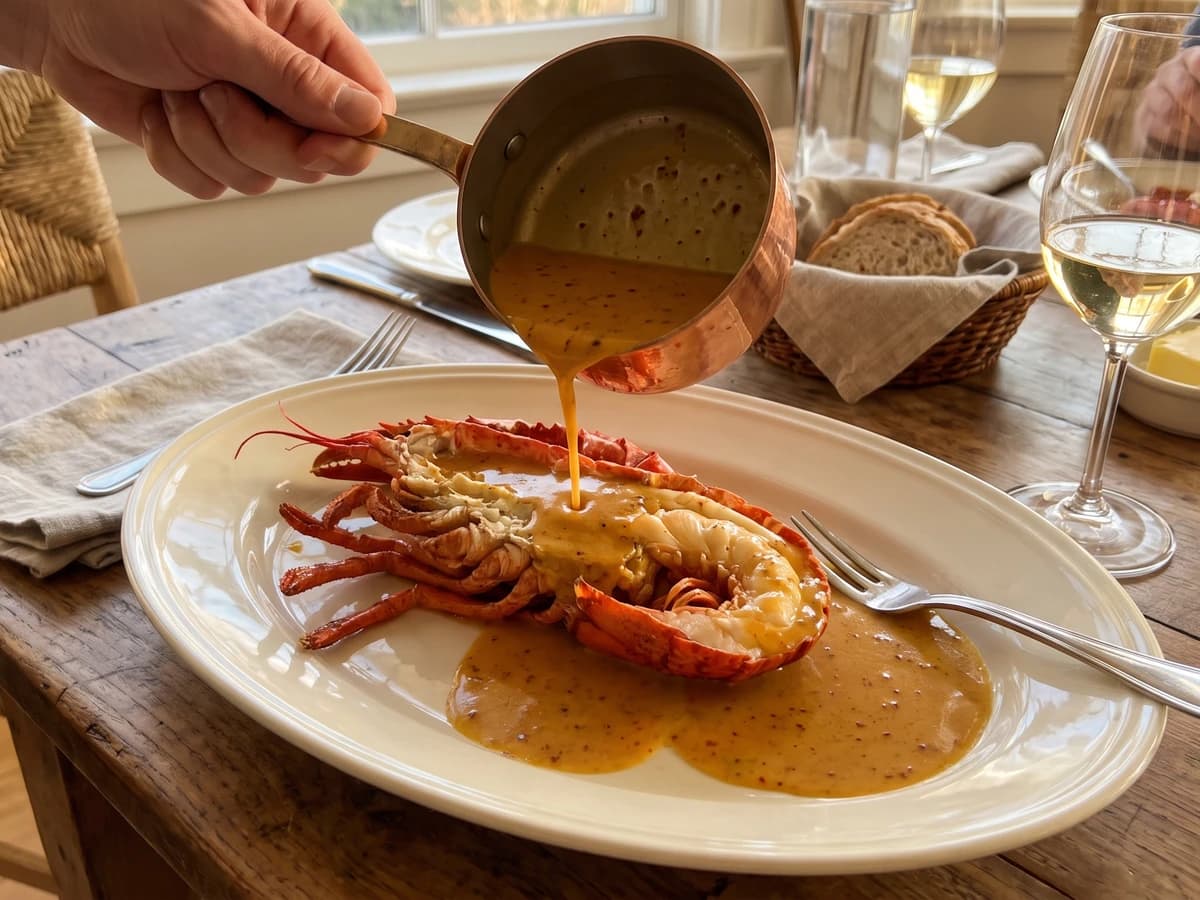
Sauce Orientale concentrates lobster-rich American Sauce with curry, then folds in cream away from the fire: a glossy, gently spiced derivative made for lobster, crayfish, and firm fish.
Chef Juliette
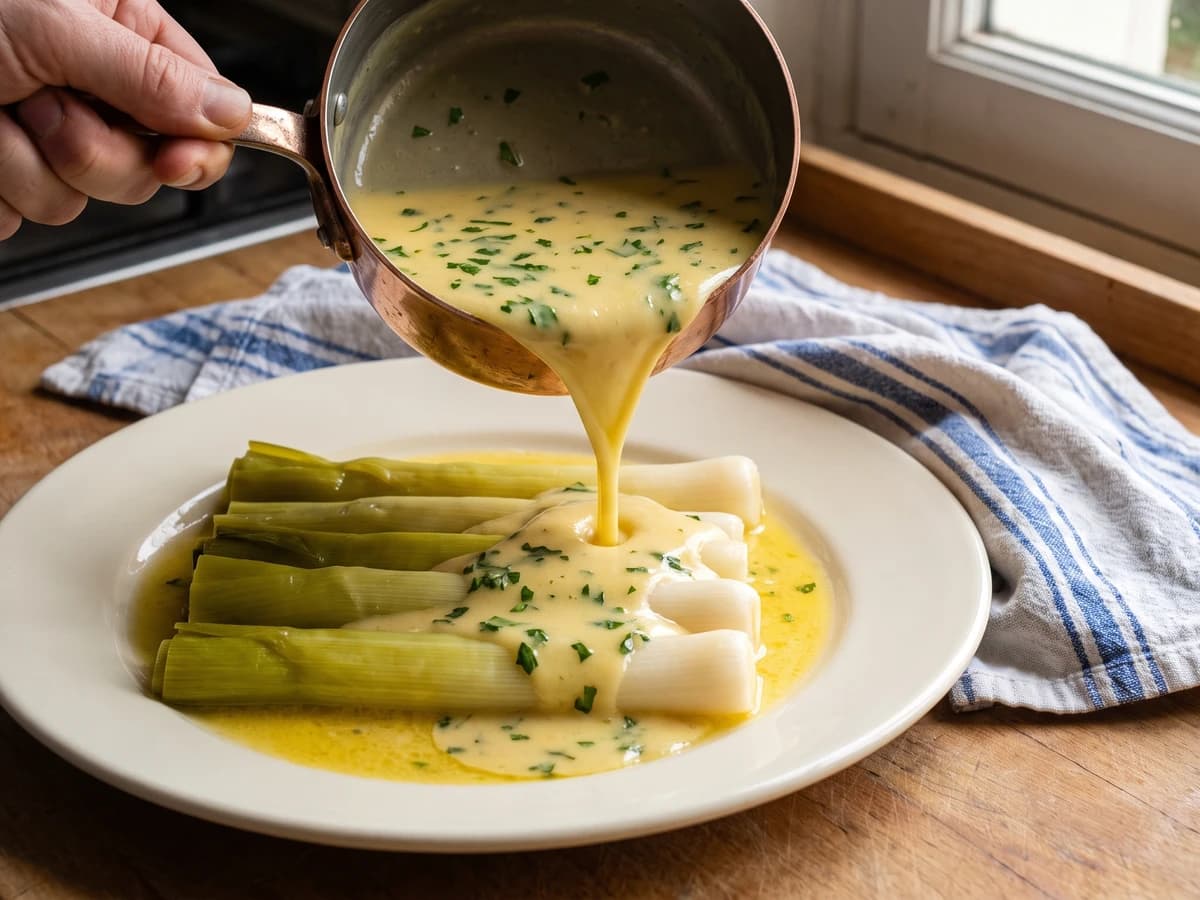
An old lesson in sauce families: Sauce Allemande takes mushroom liquor, then butter, lemon, and parsley, becoming a glossy Poulette for sheep's trotters, leeks, cauliflower, and anything needing gentle richness with a bright edge.