Chef Juliette
Ordinary or White Consommé
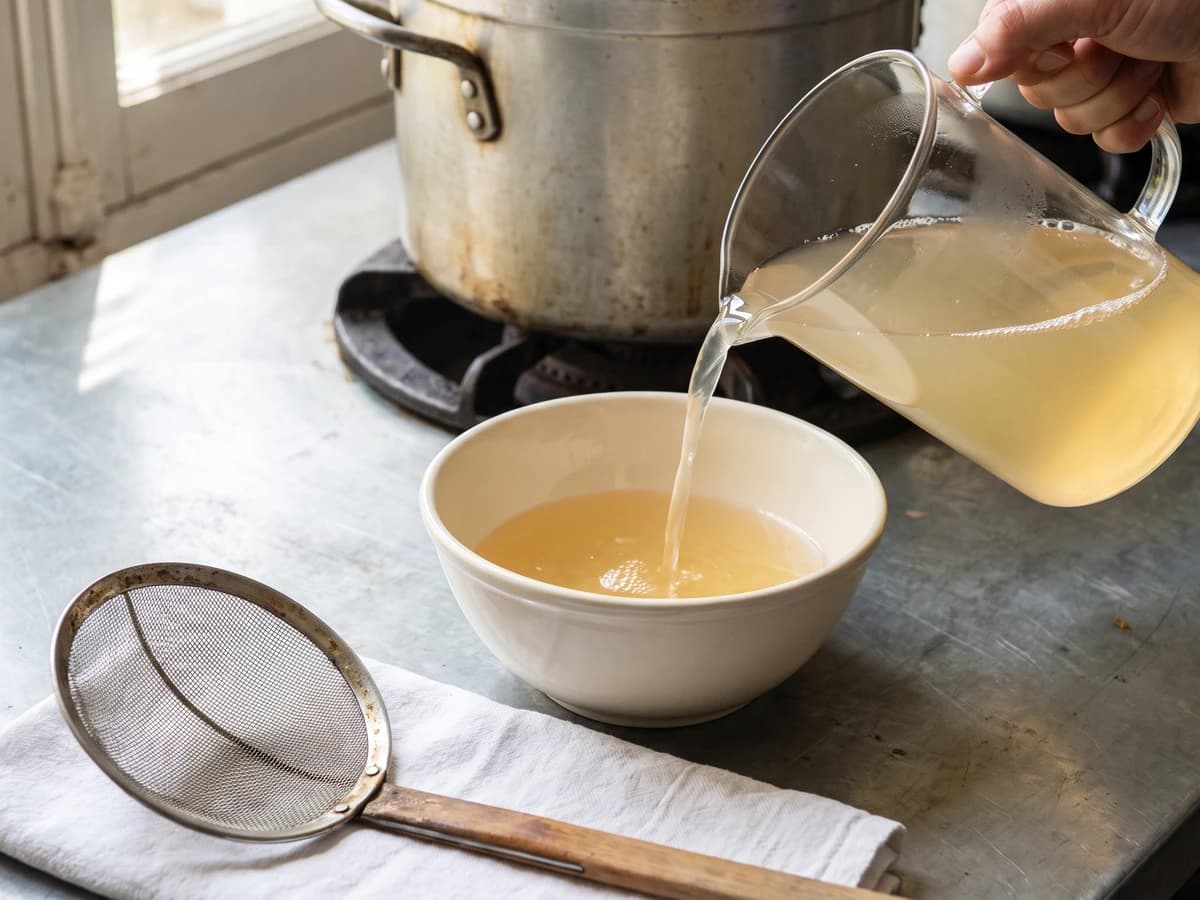
Beef shin, lean beef, and fowl begin in cold water and rise slowly toward a tremble. Skim before the boil, and you learn the quiet discipline that gives every clear French broth its backbone.
A cooking platform built around craft, culture, and the stories behind what we eat.
Created by Chef Juliette
Based on No. 125, Gribiche Sauce, from Le Guide Culinaire (1907) by Auguste Escoffier
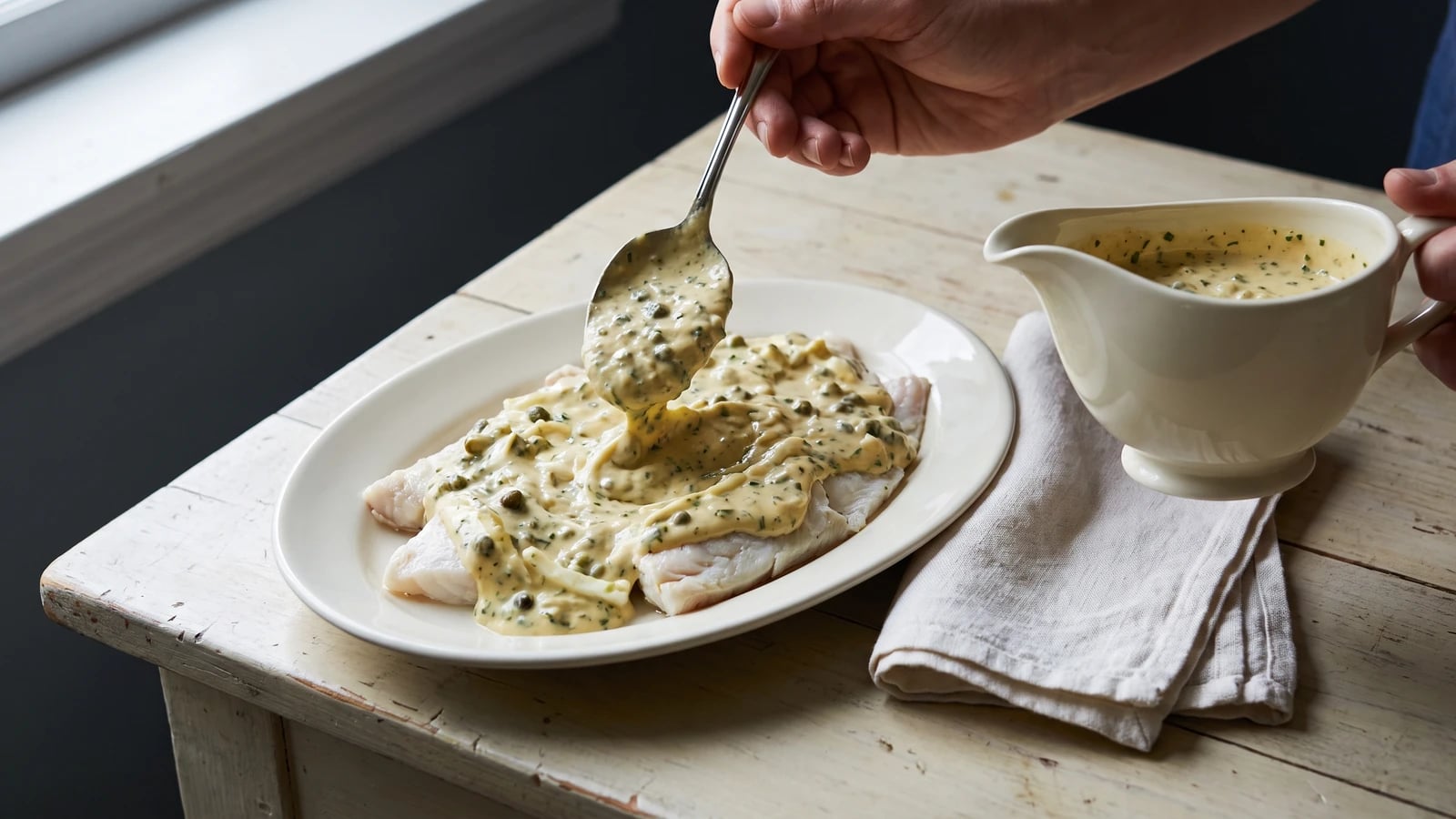
Hard-boiled yolks, mustard, and patient oil make sauce gribiche, a cool, softly textured emulsion sharpened with capers, gherkins, three herbs, and fine rods of egg white for cold fish.
Sauce gribiche (a cold hard-boiled egg emulsion) teaches one clean lesson: an emulsion begins with a stable base, not with the oil. Work the cooked yolks and French mustard absolutely smooth first, and the sauce will accept its oil patiently. Rush that foundation and you chase little yellow lumps around the bowl all evening.
The original formula assumed a saucier working six yolks and a pint of oil in a broad basin. For one cook, that brigade quantity is scaffolding, so this version makes one-third of it in a sturdy mixing bowl with a fork and a small whisk. The proportions, the cooked-yolk foundation, and the order of the oil remain untouched because those are the dish. One cook, one stove, one evening.
The finished gribiche should be pale ochre and softly spoonable, with mustard beneath the richness, little sparks of caper and gherkin, green herbs, and distinct white julienne. Before the first drop of oil goes in, make the yolk and mustard paste completely smooth. That is the step that decides the sauce.
Gribiche belongs to the Parisian classical cold-sauce repertoire, then traveled easily to bistro and bourgeois tables because it needs no last-minute heat. It is closely associated with tête de veau, cold fish, boiled meats, and spring vegetables, although this formula places cold fish first. Despite its resemblance to mayonnaise, gribiche is not simply flavored mayonnaise: cooked yolks give it a thicker, more textured emulsion, and the julienned white belongs to its classical structure rather than serving as decoration.
Quantity
2 large eggs
hard-boiled; use both yolks and the white of 1
Quantity
1 generous teaspoon (5 ml / 6 g)
Quantity
¼ teaspoon (1.25 ml / 1.5 g)
Quantity
1/16 teaspoon (0.3 ml / 0.1 g)
Quantity
¾ cup plus 2 teaspoons (190 ml / 174 g)
at room temperature
Quantity
⅔ teaspoon (3.3 ml / 0.5 g)
finely chopped
Quantity
⅔ teaspoon (3.3 ml / 3 g)
capers drained and gherkins finely chopped
| Ingredient | Quantity |
|---|---|
| large eggshard-boiled; use both yolks and the white of 1 | 2 large eggs |
| smooth French mustard | 1 generous teaspoon (5 ml / 6 g) |
| fine sea salt | ¼ teaspoon (1.25 ml / 1.5 g) |
| finely ground white pepper | 1/16 teaspoon (0.3 ml / 0.1 g) |
| neutral oil, such as sunflower or grapeseedat room temperature | ¾ cup plus 2 teaspoons (190 ml / 174 g) |
| equal-parts mixture of fresh flat-leaf parsley, chervil, and tarragonfinely chopped | ⅔ teaspoon (3.3 ml / 0.5 g) |
| equal-parts mixture of capers and gherkinscapers drained and gherkins finely chopped | ⅔ teaspoon (3.3 ml / 3 g) |
Put the eggs in a small saucepan, cover them with cold water by 2.5 cm, and bring to a boil. Lower the heat and simmer gently for 10 minutes, then transfer the eggs to cold water until cool enough to handle. Peel them, separate both yolks, and reserve the white of one egg; the second white is not used because the source formula uses half as many whites as yolks.
Cut the reserved egg white en julienne, into short matchstick rods about 2 cm long. Chop the parsley, chervil, and tarragon finely and mix them in equal proportions. Mix equal quantities of drained capers and finely chopped gherkins separately. Keep all three garnishes ready beside the bowl so the finished emulsion is not left waiting.
Crush the two cooked yolks against the side of a sturdy bowl with a fork until no firm pieces remain. Add the French mustard, salt, and white pepper, then work everything with the fork or a wooden spoon into a perfectly smooth, dense paste. Reserve 1 teaspoon of this paste in a small cup. If you can still see yolk crumbs, keep working; oil will coat those crumbs, not remove them.
Beat the oil into the yolk paste a few drops at a time until the first 2 tablespoons are fully absorbed. Continue in a very thin thread, beating steadily and waiting for each addition to disappear before adding more. The gribiche will loosen, then gain a soft, satiny body. If oil gathers in a shiny slick, stop. Ça se rattrape: put the reserved yolk paste in a clean bowl and beat the broken sauce into it one teaspoon at a time until smooth, then continue slowly. If the sauce merely grows stiff but remains uniform, pause briefly and beat again; stiffness is not a broken emulsion.
If the reserved yolk paste was not needed for a rescue, beat it back into the emulsion. Fold in the chopped herb mixture, the caper and gherkin mixture, and finally the egg-white julienne, using only enough strokes to distribute them evenly. Taste for salt, cover, and let the sauce rest in the cold for 15 minutes. Serve cool rather than icy with cold fish, spooning it generously so every portion receives yolk, herbs, capers, gherkins, and white. À table!
1 serving (about 42g)
Culinary guides, cultural storytelling, and the editorial depth that makes cooking meaningful.
Discover Culinary ExplorerChef Juliette
Beef shin, lean beef, and fowl begin in cold water and rise slowly toward a tremble. Skim before the boil, and you learn the quiet discipline that gives every clear French broth its backbone.
Chef Juliette
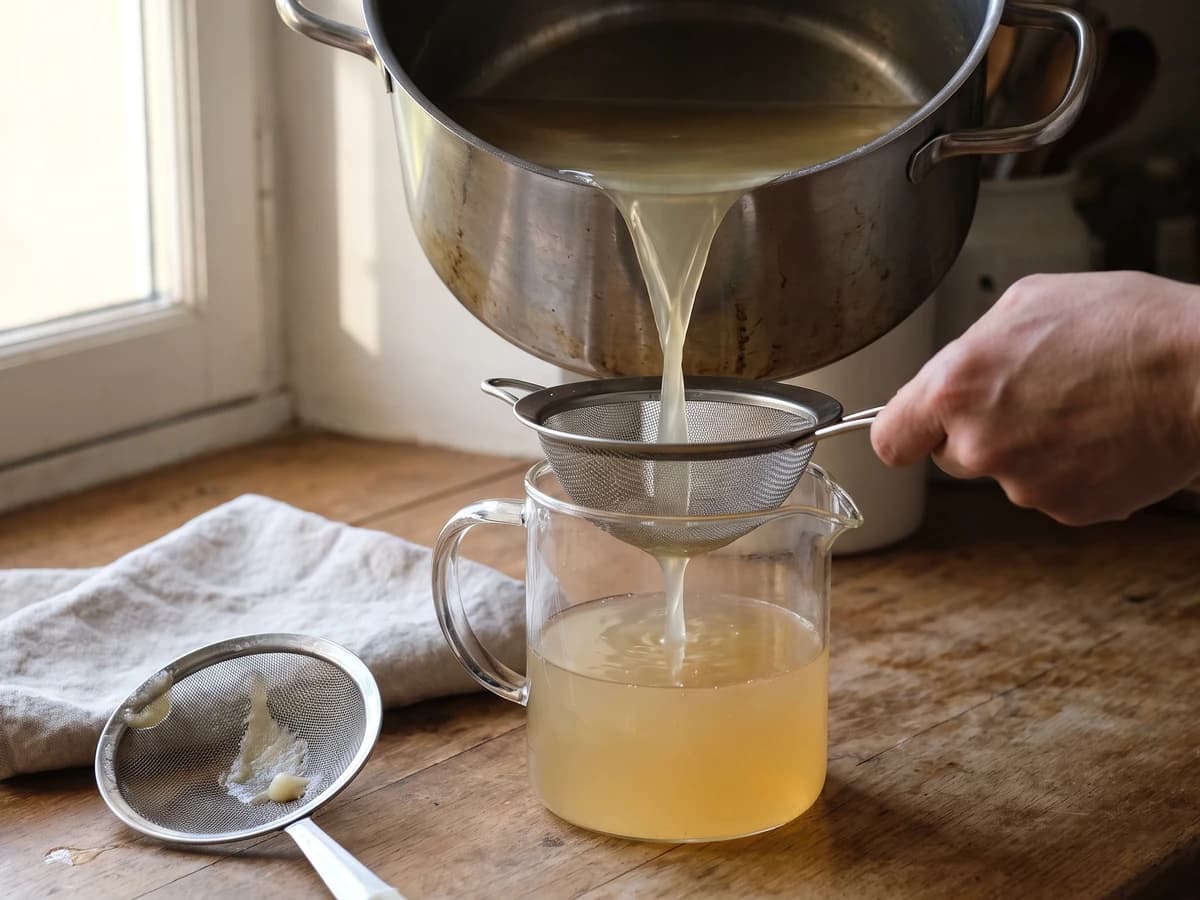
Break the veal bones small, then give them eight hours at a bare tremble. This pale, gelatinous fond becomes the quiet foundation beneath velouté, blanquette, and every sauce that must stay light.
Chef Juliette
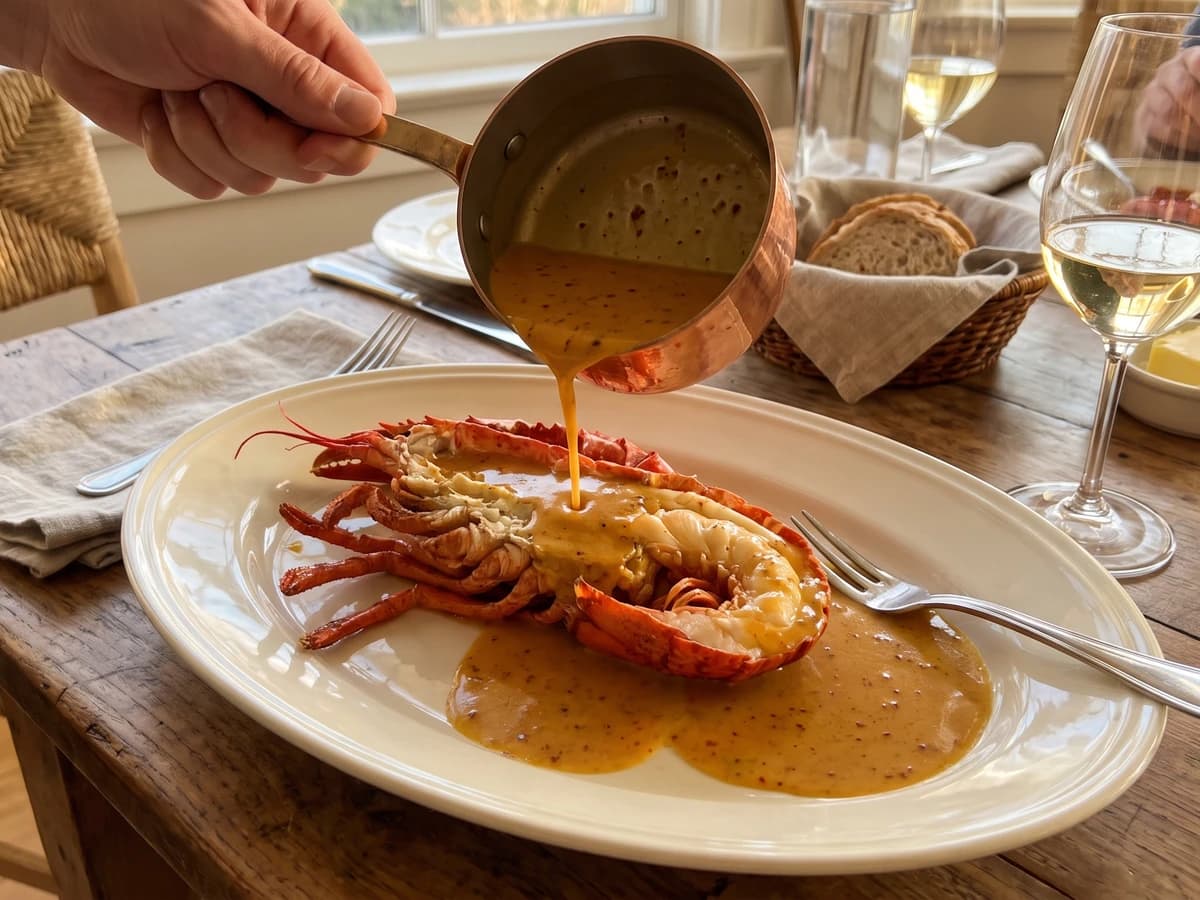
Sauce Orientale concentrates lobster-rich American Sauce with curry, then folds in cream away from the fire: a glossy, gently spiced derivative made for lobster, crayfish, and firm fish.
Chef Juliette
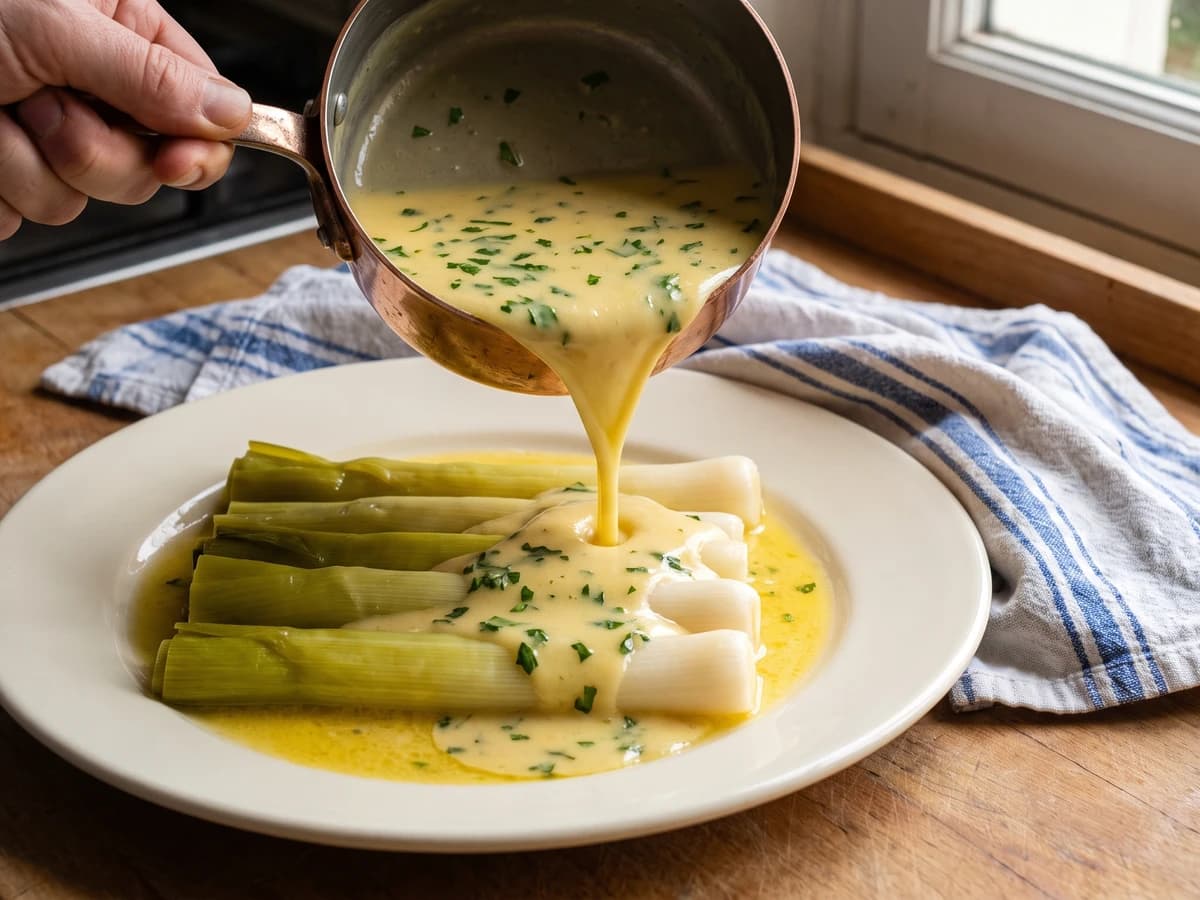
An old lesson in sauce families: Sauce Allemande takes mushroom liquor, then butter, lemon, and parsley, becoming a glossy Poulette for sheep's trotters, leeks, cauliflower, and anything needing gentle richness with a bright edge.