Chef Juliette
Ordinary or White Consommé
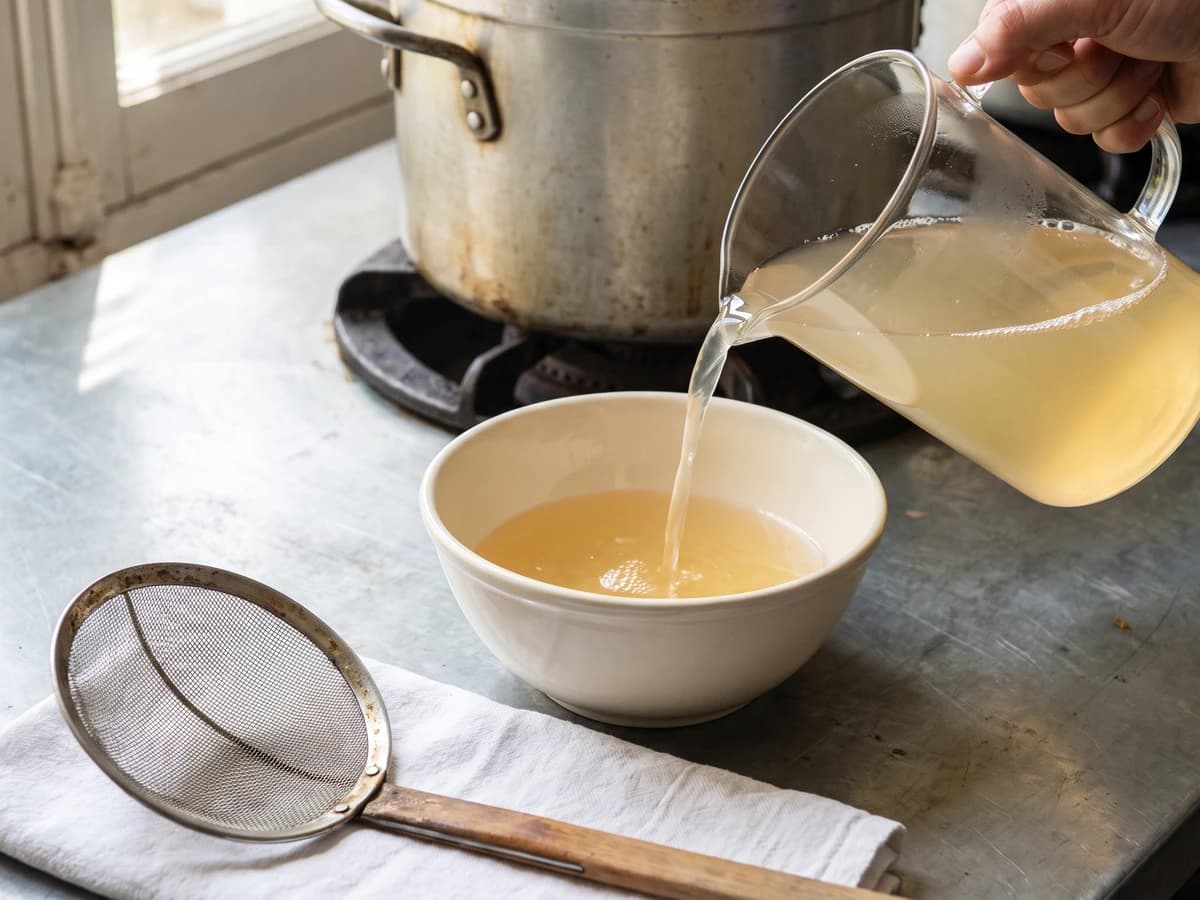
Beef shin, lean beef, and fowl begin in cold water and rise slowly toward a tremble. Skim before the boil, and you learn the quiet discipline that gives every clear French broth its backbone.
A cooking platform built around craft, culture, and the stories behind what we eat.
Created by Chef Juliette
Based on No. 124, Genoa Sauce, from Le Guide Culinaire (1907) by Auguste Escoffier
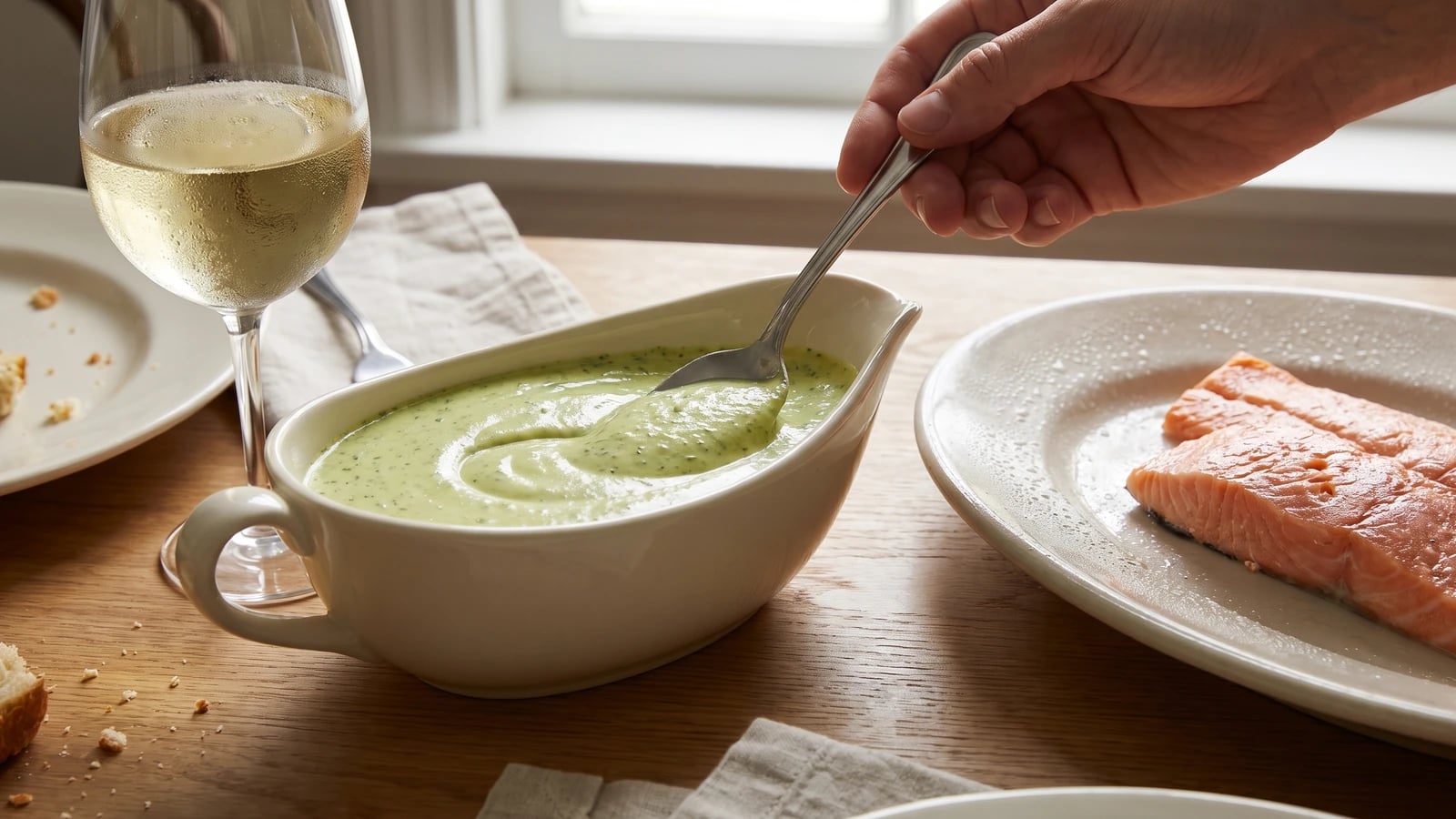
Sauce Génoise is the cold emulsion that proves texture begins before oil: pistachios and pine nuts pounded to silk, built into mayonnaise, then sharpened with lemon and greened with four scalded herbs.
Sauce Génoise (Genoa Sauce) teaches one true thing: an emulsion preserves the texture you give it at the beginning. Pound the pistachios and pine nuts to a perfectly smooth paste before the first drop of oil, because mayonnaise can carry that silkiness, but it cannot correct grit.
The original formula assumed a saucier, a large mortar, and a quart of oil destined for a busy cold buffet. This home version keeps precisely one third of its yolks, oil, nuts, lemon, Béchamel, and herb purée, enough for a generous dinner party without leaving a basin of raw-egg sauce behind. The brigade quantity was scaffolding. The nut pounding, mayonnaise method, one-minute scald, and fine sieving are the dish, so they stay. Fir-apple kernels become pine nuts and pimpernel becomes salad burnet, their present names rather than substitutions. One cook, one stove, one evening.
Finished properly, the sauce is satiny and pale herb green, with pistachio and pine nut beneath the bright lemon and fresh herbs. It belongs beside cold poached fish, where its richness meets clean, firm flesh. Before you lift the whisk, finish pounding the nuts until no grain remains beneath the pestle. That is the step that decides the sauce.
Sauce Génoise belongs to the French classical cold-sauce table, although its name points southeast to Genoa and the Ligurian larder of pine nuts, herbs, and oil. It is not pesto carried across the border, nor should it be confused with sauce Genevoise from Geneva: French sauciers translated those Mediterranean flavors through mayonnaise, Béchamel, lemon, and a blanched herb purée for cold fish. The vocabulary can mislead modern cooks, since fir-apple kernels are pine nuts and pimpernel here means culinary salad burnet, not scarlet pimpernel.
Quantity
2 packed tablespoons (30 ml / 2 g)
Quantity
2 packed tablespoons (30 ml / 2 g)
Quantity
2 packed tablespoons (30 ml / 2 g)
Quantity
2 packed tablespoons (30 ml / 2 g)
Quantity
1 rounded tablespoon (15 ml / 9.5 g)
Quantity
1 rounded tablespoon (15 ml / 9.5 g)
Quantity
½ teaspoon (2.5 ml / 3 g)
Quantity
2
at cool room temperature
Quantity
¼ teaspoon (1.25 ml / 1.5 g)
Quantity
⅛ teaspoon (0.6 ml / 0.25 g)
Quantity
1⅓ cups (320 ml / 295 g)
at cool room temperature
Quantity
2 tablespoons (30 ml / 30 g)
Quantity
1
for rescuing a broken emulsion
| Ingredient | Quantity |
|---|---|
| fresh chervil leaves | 2 packed tablespoons (30 ml / 2 g) |
| fresh flat-leaf parsley leaves | 2 packed tablespoons (30 ml / 2 g) |
| fresh tarragon leaves | 2 packed tablespoons (30 ml / 2 g) |
| fresh salad burnet leaves | 2 packed tablespoons (30 ml / 2 g) |
| raw unsalted pistachio kernels | 1 rounded tablespoon (15 ml / 9.5 g) |
| raw pine nuts | 1 rounded tablespoon (15 ml / 9.5 g) |
| cold Béchamel | ½ teaspoon (2.5 ml / 3 g) |
| large pasteurized egg yolksat cool room temperature | 2 |
| fine sea salt | ¼ teaspoon (1.25 ml / 1.5 g) |
| finely ground white pepper | ⅛ teaspoon (0.6 ml / 0.25 g) |
| neutral refined sunflower or grapeseed oilat cool room temperature | 1⅓ cups (320 ml / 295 g) |
| fresh lemon juice | 2 tablespoons (30 ml / 30 g) |
| additional pasteurized egg yolk (optional)for rescuing a broken emulsion | 1 |
Wash and dry all four herbs, keeping their quantities equal. Bring a small saucepan of water to a full boil and set a bowl of iced water beside it. Have the mortar, fine sieve, and a clean cloth ready before the herbs enter the water, because their color depends on cooling them immediately.
Drop the chervil, parsley, tarragon, and salad burnet into the boiling water together and scald them for exactly one minute. Lift them straight into the iced water, stir until completely cold, then drain and squeeze with real conviction in the clean cloth. Water left in the herbs weakens the emulsion, so squeeze again if they still feel spongy. Pound or chop them to a pulp, press that pulp through the fine sieve, and measure 1 tablespoon (15 ml / about 8 g) of smooth herb purée. Keep it cold.
Put the pistachios and pine nuts in the dry mortar and pound until they become a smooth, cohesive paste with no grit beneath the pestle. Scrape the mortar often so every fragment passes under it. Only when the paste is fine should you work in the cold Béchamel. A small processor merely chops this quantity and leaves grains behind; the mortar is not ceremony here, it is the technique.
Transfer the nut paste to a medium bowl and whisk in the two yolks, salt, and white pepper until perfectly even. Anchor the bowl on a damp cloth. Add the oil drop by drop at first, whisking without pause; once about ¼ cup (60 ml) has entered and the sauce holds a thick gloss, add the remaining oil in a thread. Work in the lemon juice a teaspoon at a time whenever the sauce becomes very stiff, finishing with all the oil and lemon. If the emulsion separates, stop pouring. Ça se rattrape: whisk 1 teaspoon of warm water in a clean bowl and feed the broken sauce into it a teaspoon at a time. If it still refuses, begin with the optional fresh yolk and whisk in the broken sauce slowly, then continue.
Whisk the measured herb purée into the mayonnaise until the color is even and no dark streaks remain. The sauce should fall from a spoon in a slow, glossy ribbon. If it is too tight, loosen it with a few drops of cold water; add no more herb purée, because the source ratio gives the sauce its balance rather than turning it into an herb paste.
Press reusable food wrap directly against the surface and chill the Sauce Génoise for at least 30 minutes. Stir gently, then taste it cold and correct the salt or lemon if needed, since cold softens both. Serve 2 to 3 tablespoons beside each portion of cold poached salmon, trout, turbot, or another firm fish. Keep the sauce chilled until the table is ready. À table!
1 serving (about 40g)
Culinary guides, cultural storytelling, and the editorial depth that makes cooking meaningful.
Discover Culinary ExplorerChef Juliette
Beef shin, lean beef, and fowl begin in cold water and rise slowly toward a tremble. Skim before the boil, and you learn the quiet discipline that gives every clear French broth its backbone.
Chef Juliette
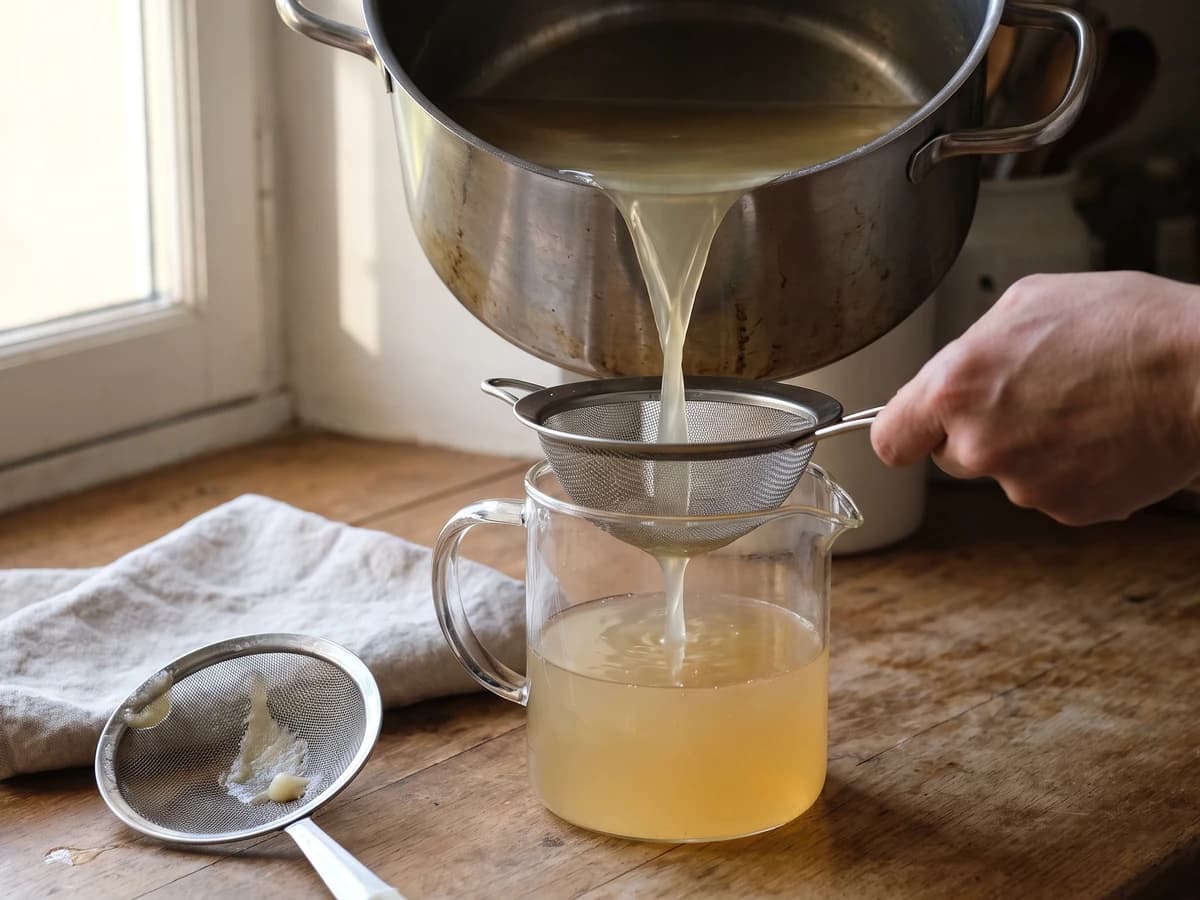
Break the veal bones small, then give them eight hours at a bare tremble. This pale, gelatinous fond becomes the quiet foundation beneath velouté, blanquette, and every sauce that must stay light.
Chef Juliette
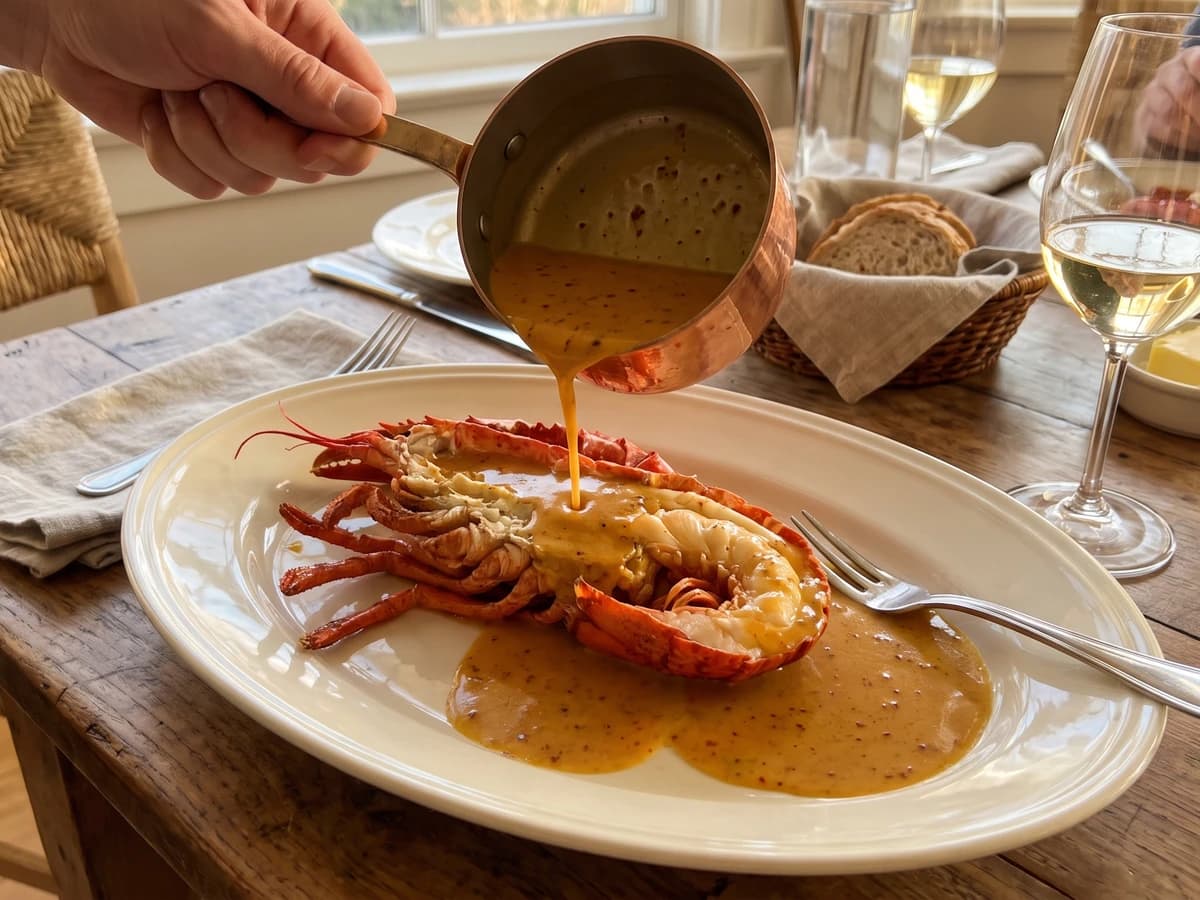
Sauce Orientale concentrates lobster-rich American Sauce with curry, then folds in cream away from the fire: a glossy, gently spiced derivative made for lobster, crayfish, and firm fish.
Chef Juliette
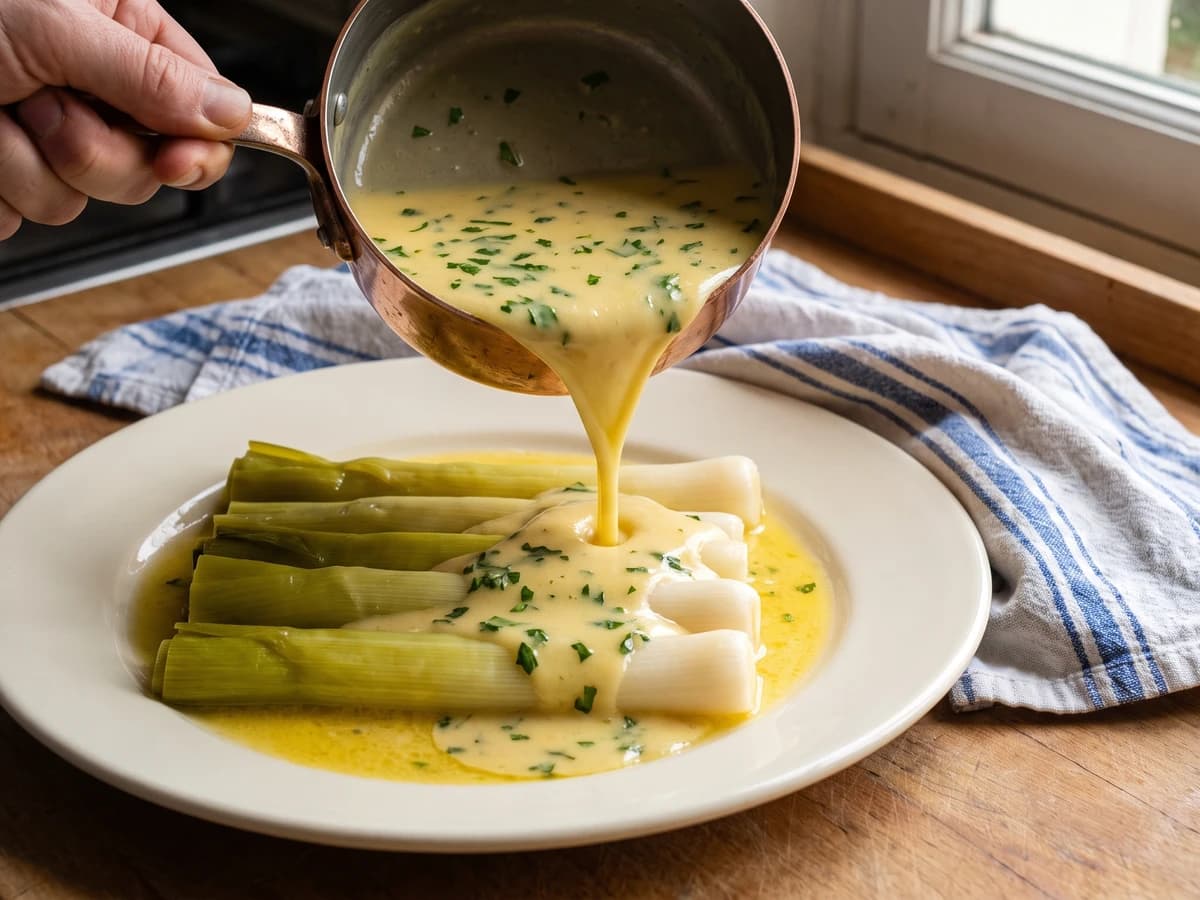
An old lesson in sauce families: Sauce Allemande takes mushroom liquor, then butter, lemon, and parsley, becoming a glossy Poulette for sheep's trotters, leeks, cauliflower, and anything needing gentle richness with a bright edge.