Chef Juliette
Ordinary or White Consommé
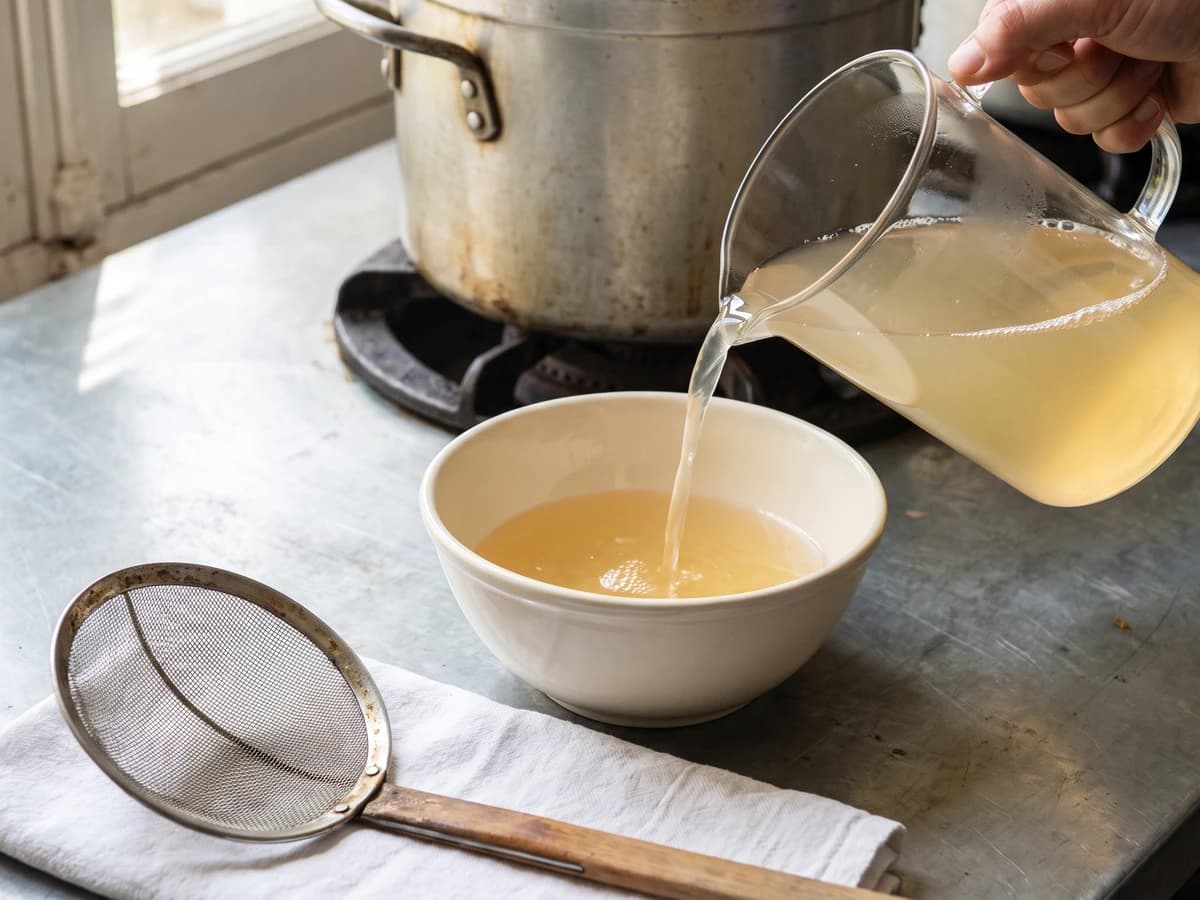
Beef shin, lean beef, and fowl begin in cold water and rise slowly toward a tremble. Skim before the boil, and you learn the quiet discipline that gives every clear French broth its backbone.
A cooking platform built around craft, culture, and the stories behind what we eat.
Created by Chef Juliette
Based on No. 121, Aioli Sauce, or Provence Butter, from Le Guide Culinaire (1907) by Auguste Escoffier
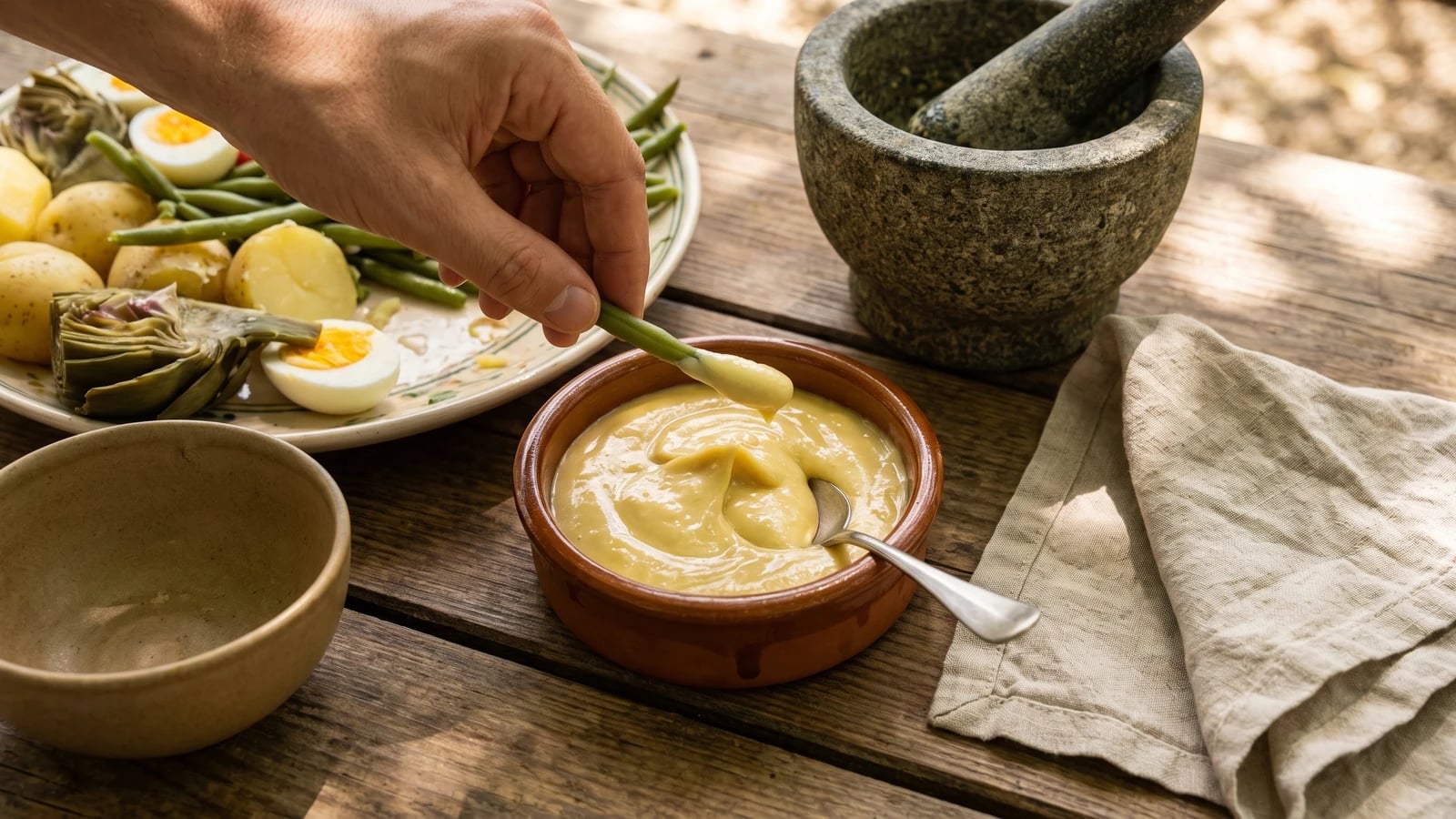
Aïoli is garlic pounded to silk, then bound with yolk and olive oil one patient drop at a time, an ivory-gold emulsion with enough force to anchor a long outdoor supper.
Aïoli (Provence butter) teaches emulsion in its purest, most uncompromising form. The one true thing to know before you touch the mortar is this: every addition of oil must disappear into the yolk and garlic before the next arrives. Rush that bargain and the sauce loosens into grease; honor it and the pestle leaves a clean furrow in a glossy, ivory-gold cream strong enough to carry a whole platter of vegetables and fish.
The original entry assumed a heavy mortar, a pestle, and a saucier free to keep one hand circling while the other fed half a pint of oil in a thread. Unlike many brigade formulas, that quantity already suits a home table, so I have kept it intact rather than inflating it into a service bucket. I changed only the notation, giving the ounce and half-pint as modern measures and setting aside tiny measured reserves of lemon and cold water. The dedicated saucier is scaffolding; the pounding and patient beginning are the dish. One cook, one stove, one evening, though the stove stays cold.
Keep the spare yolk nearby, not as a charm but as insurance. If the emulsion separates, ça se rattrape: begin again with that clean yolk and feed the broken sauce back into it slowly. The first two tablespoons of oil are the moment that matters, so add them in literal drops and don't move to a thread until the sauce grips the pestle.
Aïoli belongs to Provence and France's Mediterranean coast; its Provençal name joins garlic and oil, the two flavors that define it. At the Provençal table, le grand aïoli means not merely the sauce but a communal meal of salt cod, eggs, and boiled vegetables gathered around its bowl. The yolk in this classical formula remains a subject of household debate, but calling the result garlic mayonnaise misses the technique: garlic is pounded into the foundation, not stirred in as a seasoning afterward.
Quantity
8 medium cloves (1 oz / 28 g)
peeled
Quantity
1 yolk (about 1 tablespoon / 17 g)
Quantity
1 pinch (about 1/16 teaspoon / 0.4 g)
Quantity
½ pint, 1 cup (240 ml / 220 g)
Quantity
Up to ½ teaspoon (2.5 ml / 2.5 g)
Quantity
Up to ½ teaspoon (2.5 ml / 2.5 g)
Quantity
1 yolk (about 1 tablespoon / 17 g)
reserved for rescuing a split sauce
| Ingredient | Quantity |
|---|---|
| garlic clovespeeled | 8 medium cloves (1 oz / 28 g) |
| large raw egg yolk | 1 yolk (about 1 tablespoon / 17 g) |
| fine sea salt | 1 pinch (about 1/16 teaspoon / 0.4 g) |
| mild extra-virgin olive oil | ½ pint, 1 cup (240 ml / 220 g) |
| fresh lemon juice | Up to ½ teaspoon (2.5 ml / 2.5 g) |
| very cold water | Up to ½ teaspoon (2.5 ml / 2.5 g) |
| additional large raw egg yolk (optional)reserved for rescuing a split sauce | 1 yolk (about 1 tablespoon / 17 g) |
Set a heavy mortar on a folded damp towel so it cannot wander. Add the peeled garlic and salt, then pound and grind them against the mortar walls until no pieces remain and the garlic becomes a smooth, sticky paste. Scrape the sides often. This must be finer than minced garlic: any surviving pieces will interrupt the emulsion and leave the finished aïoli coarse.
Add the raw egg yolk to the garlic paste. Work it firmly with the pestle until the mixture is completely even, slightly paler, and tacky enough to cling to the mortar wall. Measure the oil into a small spouted jug, and place the lemon juice, cold water, and spare yolk within reach before you begin pouring.
Begin adding the oil one literal drop at a time while moving the pestle continuously in the same circular direction. Do not add another drop until the last has vanished. Once about 2 tablespoons (30 ml / 27 g) have been absorbed and the mixture has visibly thickened, increase to a fine, steady thread no thicker than kitchen string. If oil beads on the surface, stop pouring and keep working until it disappears. If the sauce separates into greasy curds, stop. Ça se rattrape: scrape the broken sauce into the jug, clean the mortar, place the spare yolk inside, and feed the broken sauce into it drop by drop until the emulsion catches again.
As the aïoli becomes so stiff that the pestle drags heavily, work in 3 or 4 drops of cold water, then resume the oil. Later, add a few drops of lemon juice the same way. Alternate these tiny additions only when the sauce tightens, never pour them in together, and continue until all the oil has been absorbed. The water keeps the emulsion supple; the restrained lemon sharpens it without turning a garlic sauce into a lemon sauce.
The finished aïoli should be dense, glossy, and firm enough to hold the track of the pestle, yet soft enough to fall from a spoon in a heavy ribbon. Taste for salt and add only the remaining drops of lemon or water needed to balance and loosen it. Spoon it generously into a bowl and serve with salt cod, boiled potatoes, green beans, artichokes, carrots, eggs, or simply cooked fish. If it separates while standing, rebuild it with a fresh yolk exactly as in step 3. À table!
1 serving (about 34g)
Culinary guides, cultural storytelling, and the editorial depth that makes cooking meaningful.
Discover Culinary ExplorerChef Juliette
Beef shin, lean beef, and fowl begin in cold water and rise slowly toward a tremble. Skim before the boil, and you learn the quiet discipline that gives every clear French broth its backbone.
Chef Juliette
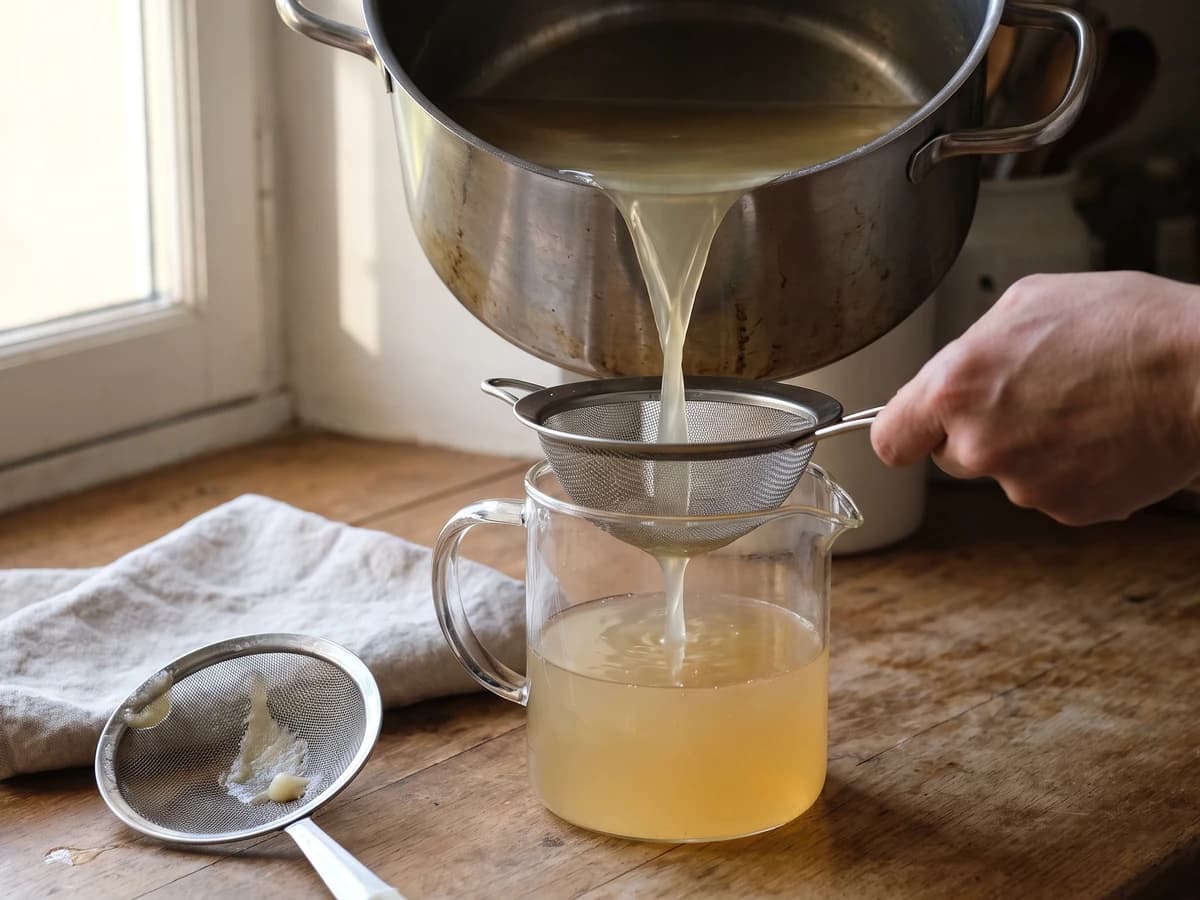
Break the veal bones small, then give them eight hours at a bare tremble. This pale, gelatinous fond becomes the quiet foundation beneath velouté, blanquette, and every sauce that must stay light.
Chef Juliette
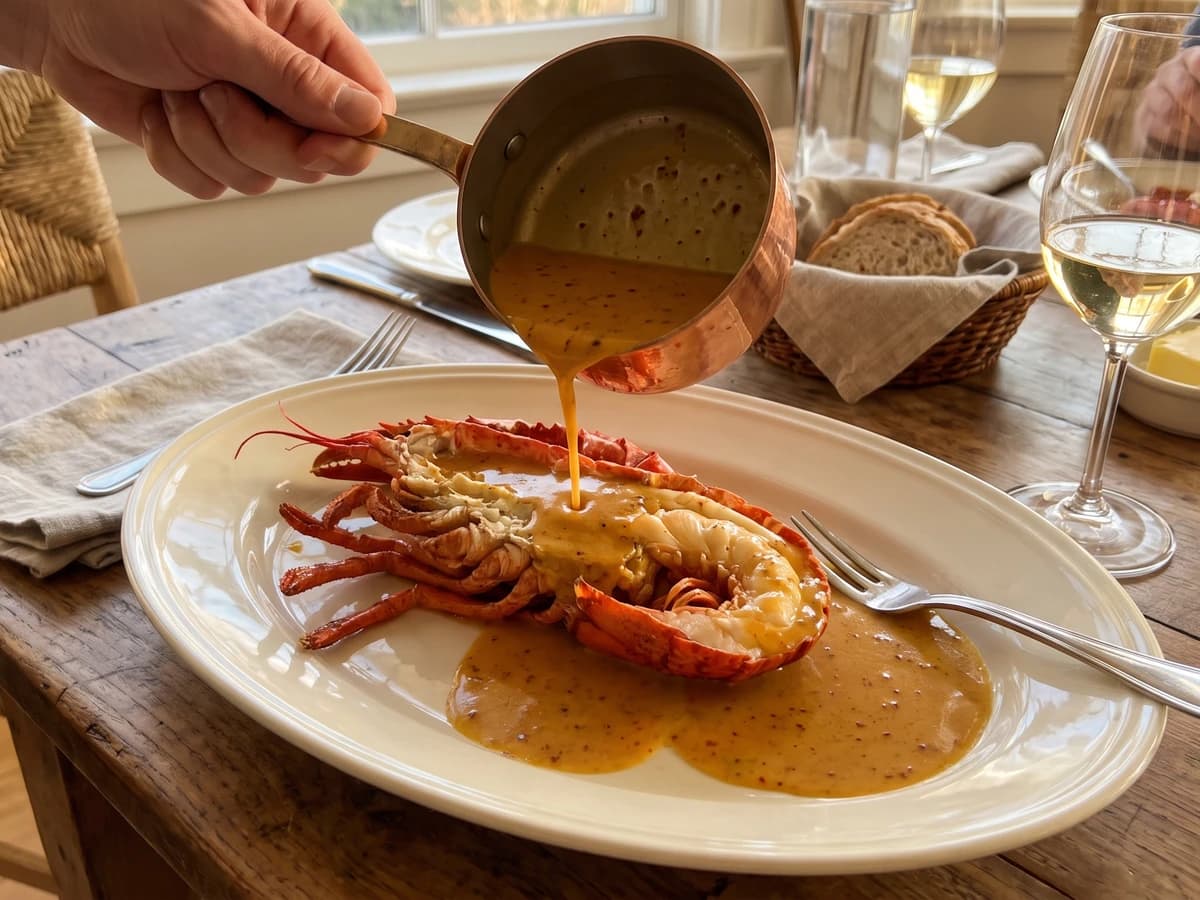
Sauce Orientale concentrates lobster-rich American Sauce with curry, then folds in cream away from the fire: a glossy, gently spiced derivative made for lobster, crayfish, and firm fish.
Chef Juliette
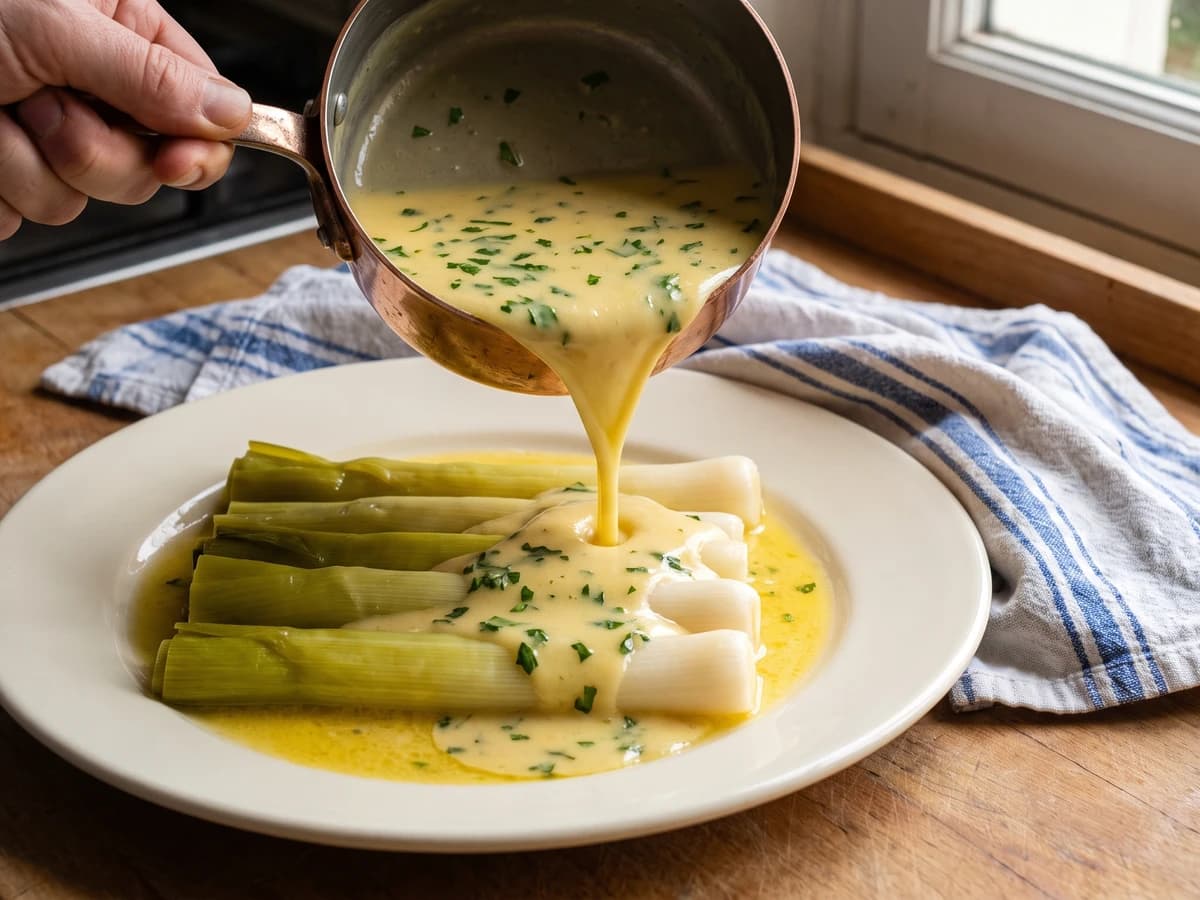
An old lesson in sauce families: Sauce Allemande takes mushroom liquor, then butter, lemon, and parsley, becoming a glossy Poulette for sheep's trotters, leeks, cauliflower, and anything needing gentle richness with a bright edge.