
Chef Zohra
Atay (Moroccan Mint Tea)
Atay is Morocco's welcome made liquid: green tea rinsed clean, mint pressed into the pot, sugar dissolved into the whole house, then poured high into small glasses.

Updated June 10, 2026
The welcome made liquid: atay poured long and high and three times over, the herbal teas a home brews when mint goes scarce, the cold juice-cart refreshers, the thick blended smoothies of every juice bar, and the café-terrace coffees. Where la cuisine du lien begins. There is not one Moroccan cuisine but many.
A cooking platform built around craft, culture, and the stories behind what we eat.
Chef Zohra
Atay is Morocco's welcome made liquid: green tea rinsed clean, mint pressed into the pot, sugar dissolved into the whole house, then poured high into small glasses.

Chef Zohra
A fragrant eastern Moroccan coffee, deepened with almonds, sesame, anise, and cinnamon, poured small and hot when the door opens and someone needs welcoming.

Chef Zohra
A Marrakech winter infusion: dried galangal brewed with cinnamon, ginger, cloves, and black pepper until dark and warming, then sweetened and poured hot into small glasses.

Chef Zohra
A Moroccan winter cup of hot milk simmered with seven plants, sweet spice, licorice root, fennel, and aniseed. You drink it for warmth, comfort, and the chair pulled close.

Chef Zohra
Cold almond milk for the festive Moroccan table, silky from peeled almonds, softly sweet, scented with orange-blossom water, and poured beside dates when guests arrive thirsty.

Chef Zohra
Late-summer prickly pears pressed into a cold Moroccan street-side juice, floral and faintly melon-sweet, strained clean of their hard seeds and poured for whoever has come in from the sun.

Chef Zohra
A Souss glass for the hungry hour: ripe banana blended with amlou, cold milk, roasted almonds, argan oil, and honey until it drinks like breakfast and comfort together.
Chef Zohra
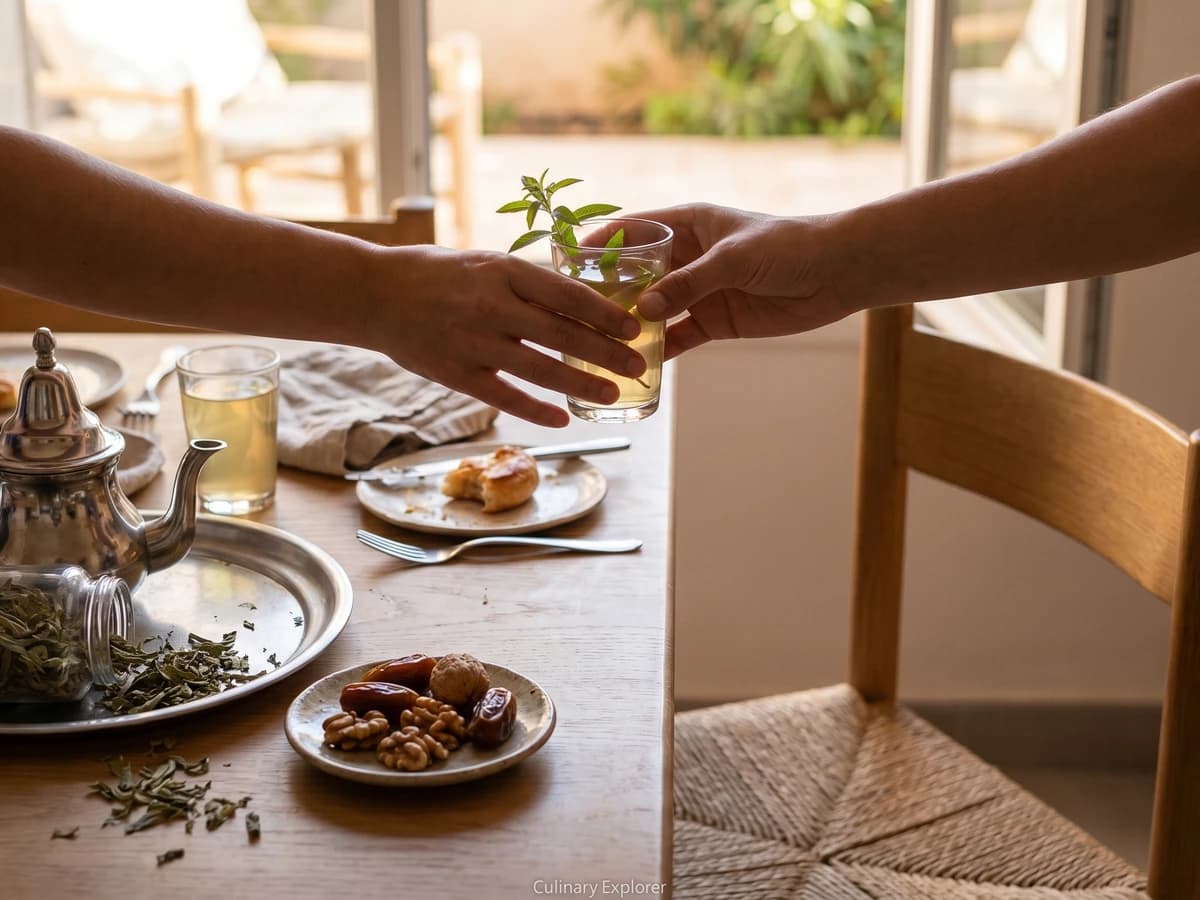
Louiza is the glass a Moroccan home pours when the evening needs quiet: lemon-verbena leaves steeped gently, fragrant and pale gold, with just enough sweetness to soften the edge.

Chef Zohra
The cold-evening cousin of mint tea: gunpowder green tea brewed with chiba, the bitter winter herb Moroccans use when na'na is scarce and the house needs warming.

Chef Zohra
The Moroccan street-cart glass: ripe oranges pressed to order, chilled and bright, with pulp catching the light. Nothing added unless the fruit asks for it.

Chef Zohra
Whole lemons, mint, sugar, and cold water, blended briefly and strained. This is the summer glass of Moroccan homes and juice counters, tart enough to wake you up.

Chef Zohra
A thick Moroccan juice-bar glass, ripe avocado blended with cold milk and sugar until it pours slowly, creamy and green, the Ramadan refresher that turns one blender into several welcome glasses.

Chef Zohra
The autumn cart in a glass: ruby pomegranate seeds crushed fresh, strained bright and tart, then served cold before the color has time to dull.

Chef Zohra
The café-terrace order that means half-and-half: strong coffee under hot milk, served in a glass, quick enough for a weekday and generous enough to keep someone seated.

Chef Zohra
The mixed-fruit milk smoothie of the Moroccan juice cart, poured thick in layers, sweet enough for iftar and cold enough to make a hot afternoon kinder.

Chef Zohra
The plain daily cup of the Moroccan café: short, dark, and unsweetened unless your hand reaches for sugar, served with water and enough time for talk.

Chef Zohra
Green tea softened with sage, sweetened in the pot, and poured for the guest who arrives tired, chilled, or needing the small mercy of a warm glass.

Chef Zohra
Fresh ginger bites first, then the green tea comes behind it: strong, sweet, peppery, and poured when the house needs warmth more than ceremony.
Culinary guides, cultural storytelling, and the editorial depth that makes cooking meaningful.
Discover Culinary ExplorerChef Zohra is a fictional culinary guide to Moroccan Regional Cuisine, written with the assistance of AI.