
Chef Zohra
Atay b Chiba (Moroccan Wormwood Tea)
The cold-evening cousin of mint tea: gunpowder green tea brewed with chiba, the bitter winter herb Moroccans use when na'na is scarce and the house needs warming.
A cooking platform built around craft, culture, and the stories behind what we eat.
Created by
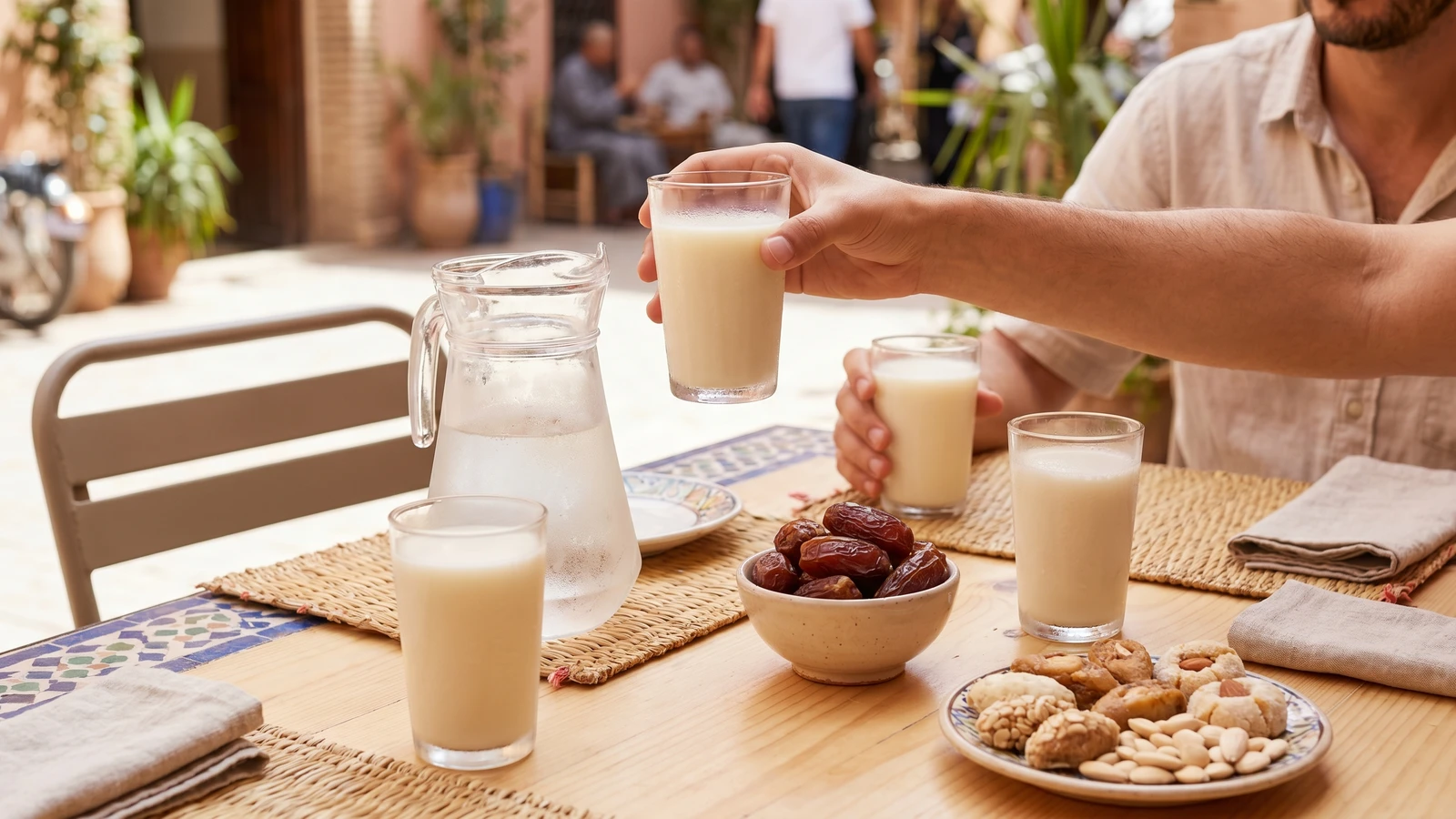
Cold almond milk for the festive Moroccan table, silky from peeled almonds, softly sweet, scented with orange-blossom water, and poured beside dates when guests arrive thirsty.
The almond is the whole drink. If it tastes flat, the glass will taste flat, so start with almonds that smell sweet when you break one open, not old nuts that have sat too long in a plastic bag. For assir louz, حليب اللوز, the drink lives in that first honesty.
Blanch the almonds and slip off their skins. The skins carry bitterness and make the milk dull, so we remove them before blending. Then you grind them long with cold milk until the drink turns pale and silky, strain it fine, and scent it with orange-blossom water at the end so the perfume stays alive.
This is not everyday thirst. It belongs to Ramadan evenings, weddings, Eid visits, and those afternoons when the door keeps opening and you need something generous in the refrigerator. Serve it very cold, with condensation on the glass and dates close by. Une table, c'est une porte qu'on laisse ouverte, a table is a door you leave open.
Almond drinks belong to the wider medieval Mediterranean inheritance carried through Andalusi kitchens, where almonds, sugar, and flower waters moved with trade across Iberia, North Africa, and the eastern Mediterranean. In Morocco, assir louz is especially tied to urban festive service in cities such as Fez, Rabat, Tetouan, and Marrakech, while the almonds themselves often come from southern and mountain-growing regions. Exact dating is difficult, but the combination of blanched almonds and orange-blossom water sits clearly in the old sweet ceremonial register of Moroccan hospitality.
Quantity
200g
preferably beldi almonds
Quantity
1 litre
very cold
Quantity
3 to 4 tbsp
or to taste
Quantity
1 tbsp
plus more if your bottle is gentle
Quantity
1 pinch
Quantity
as needed
for serving
| Ingredient | Quantity |
|---|---|
| raw whole almondspreferably beldi almonds | 200g |
| whole milkvery cold | 1 litre |
| sugaror to taste | 3 to 4 tbsp |
| orange-blossom waterplus more if your bottle is gentle | 1 tbsp |
| fine sea salt | 1 pinch |
| ice cubes (optional)for serving | as needed |
Bring a small pot of water just to a boil, add the almonds, and cook them for 1 minute. Drain them, rinse under cool water, then pinch each almond so the skin slips away. Do this while they're still warm, before the skins tighten again.
Put the peeled almonds in a bowl, cover them with cold water, and refrigerate for at least 2 hours, or overnight if you're preparing ahead. Drain well. The almonds should look plump and feel firm but not dry.
Add the drained almonds to a strong blender with 500ml of the cold milk, the sugar, and the pinch of salt. Blend for 2 to 3 minutes, stopping once to scrape down the sides, until the mixture looks creamy and no large almond pieces remain. Add the remaining milk and blend again until smooth.
Pour the almond milk through a very fine sieve, cheesecloth, or a nut-milk bag into a jug, pressing gently to take the milk without forcing coarse almond paste through. The drink should pour like light cream, with no grit at the bottom of the glass.
Stir in the orange-blossom water, taste, and adjust the sugar only if the almonds need it. Chill for at least 30 minutes before serving. Shake or stir the jug before pouring, because real almond milk settles a little, and that's nothing to fear.
Pour into small glasses, with ice if the day is hot, and serve beside dates, chebakia, or little almond sweets. The glass should be cold enough to bead on the outside, sweet enough to welcome, and perfumed enough that you smell the orange blossom before you drink.
1 serving (about 185g)
Culinary guides, cultural storytelling, and the editorial depth that makes cooking meaningful.
Discover Culinary ExplorerChef Zohra
The cold-evening cousin of mint tea: gunpowder green tea brewed with chiba, the bitter winter herb Moroccans use when na'na is scarce and the house needs warming.

Chef Zohra
Atay is Morocco's welcome made liquid: green tea rinsed clean, mint pressed into the pot, sugar dissolved into the whole house, then poured high into small glasses.

Chef Zohra
The plain daily cup of the Moroccan café: short, dark, and unsweetened unless your hand reaches for sugar, served with water and enough time for talk.

Chef Zohra
Whole lemons, mint, sugar, and cold water, blended briefly and strained. This is the summer glass of Moroccan homes and juice counters, tart enough to wake you up.