
Chef Zohra
Atay b Chiba (Moroccan Wormwood Tea)
The cold-evening cousin of mint tea: gunpowder green tea brewed with chiba, the bitter winter herb Moroccans use when na'na is scarce and the house needs warming.
A cooking platform built around craft, culture, and the stories behind what we eat.
Created by
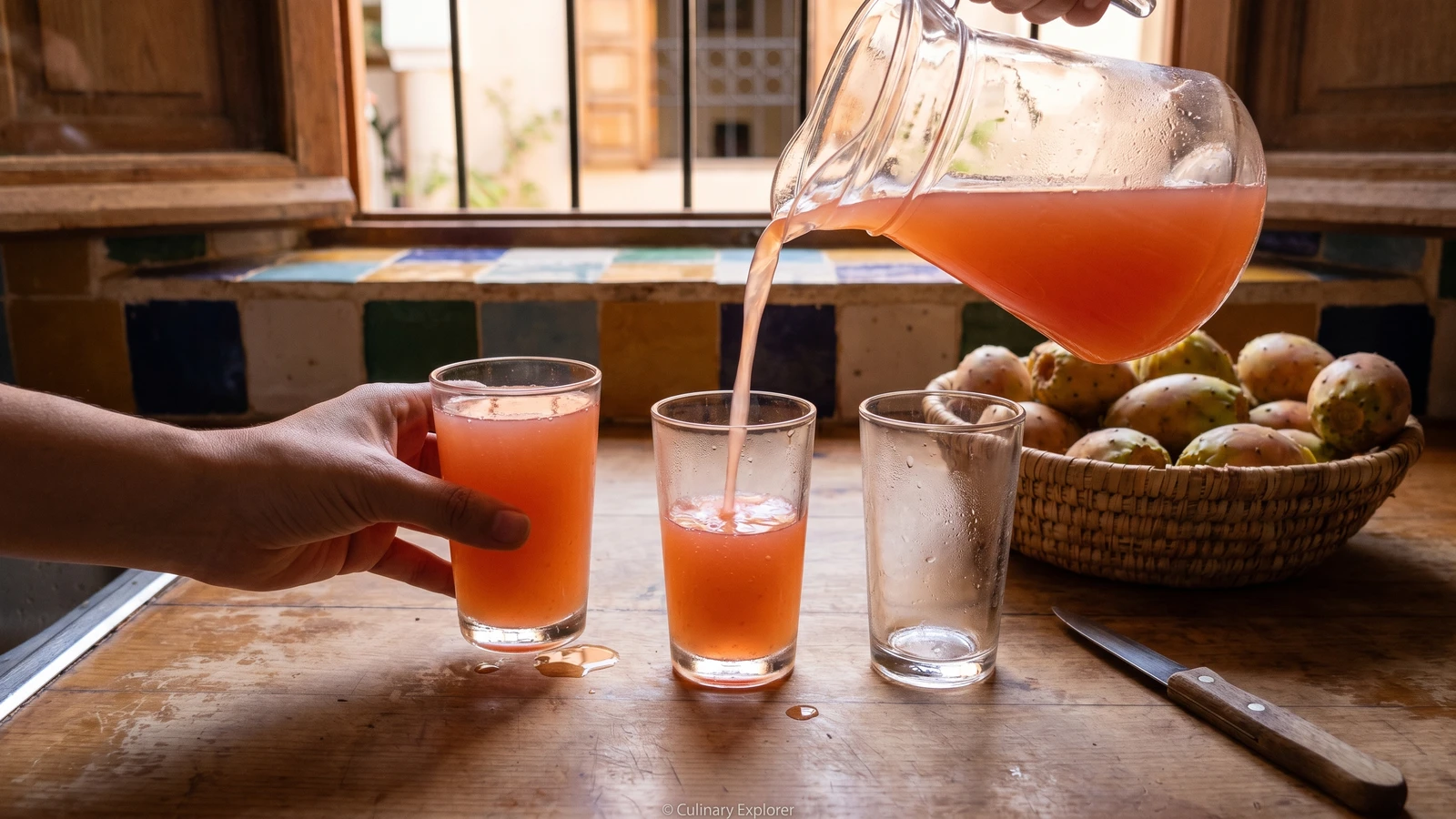
Late-summer prickly pears pressed into a cold Moroccan street-side juice, floral and faintly melon-sweet, strained clean of their hard seeds and poured for whoever has come in from the sun.
When the figues de Barbarie arrive, the season announces itself from the roadside before the market does. Yellow, orange, sometimes deep red, the fruits sit in baskets with their tiny thorns still pretending to be harmless. This is late-summer juice, aknari, cold enough to bead the glass and sweet enough without much help.
Treat the fruit with respect. The flesh is generous, but the seeds are hard, so you blend only until the pulp loosens, then strain it well. Crush the seeds too long and they'll give you grit where you wanted silk. That is the little rule that decides the glass.
Serve it very cold, with a squeeze of lemon if the fruit asks for brightness. No fuss. A few glasses, a plate of fruit skins set aside, someone coming in hot from the street. Une table, c'est une porte qu'on laisse ouverte, a table is a door you leave open, even when the welcome fits in one glass.
The prickly pear cactus reached North Africa after the Columbian exchanges of the 16th century and settled into Morocco's dry regions, especially in the Souss, Haouz, Doukkala, and eastern areas where it became both hedge and food. In Morocco the fruit is called by several names, including aknari in Amazigh contexts and karmous el-hindi in Arabic, a reminder that there are des cuisines marocaines, not one single kitchen. The roadside habit of peeling and eating the fruit by the basket is better documented than any fixed recipe for juice, so this drink belongs to living market practice rather than a courtly written canon.
Quantity
8
chilled if possible
Quantity
250ml
plus more if needed
Quantity
1 to 2 tbsp
to taste
Quantity
1 to 2 tsp
only if the fruit needs it
Quantity
4 to 6
| Ingredient | Quantity |
|---|---|
| ripe prickly pears (figues de Barbarie, aknari)chilled if possible | 8 |
| cold waterplus more if needed | 250ml |
| fresh lemon juiceto taste | 1 to 2 tbsp |
| sugar or honey (optional)only if the fruit needs it | 1 to 2 tsp |
| ice cubes (optional) | 4 to 6 |
Put on kitchen gloves or hold each fruit with tongs, even if the seller says the thorns are gone. Rinse the prickly pears under cold water, rubbing gently with a cloth to catch any fine prickles. Those little hairs are the trouble, not the big thorns.
Trim off both ends of each fruit. Make one shallow cut down the length, then open the skin with the tip of the knife and roll the flesh out in one piece. Keep the peeled fruit in a bowl and discard the skins without touching your face or eyes.
Put the peeled fruit in a blender with the cold water. Pulse just until the flesh collapses into a thick juice, 10 to 15 seconds. Don't grind it hard. The seeds are stone-like, and the longer you punish them, the more grit they give back.
Pour the juice through a fine sieve into a jug, pressing gently with the back of a spoon. Stop when the sieve holds mostly seeds and dry pulp. The juice should be bright, smooth, and thick enough to coat the glass lightly.
Stir in lemon juice a little at a time. Taste before adding sugar or honey, because ripe aknari often needs nothing. La balance est dans les yeux, and here also in the mouth: you want the fruit to stay first, with the lemon only waking it up.
Pour into small glasses over ice if you like, or chill the jug for 30 minutes before serving. Drink it the same day, while the color is lively and the perfume is still fresh.
1 serving (about 205g)
Culinary guides, cultural storytelling, and the editorial depth that makes cooking meaningful.
Discover Culinary ExplorerChef Zohra
The cold-evening cousin of mint tea: gunpowder green tea brewed with chiba, the bitter winter herb Moroccans use when na'na is scarce and the house needs warming.

Chef Zohra
Atay is Morocco's welcome made liquid: green tea rinsed clean, mint pressed into the pot, sugar dissolved into the whole house, then poured high into small glasses.

Chef Zohra
The plain daily cup of the Moroccan café: short, dark, and unsweetened unless your hand reaches for sugar, served with water and enough time for talk.

Chef Zohra
Whole lemons, mint, sugar, and cold water, blended briefly and strained. This is the summer glass of Moroccan homes and juice counters, tart enough to wake you up.