
Chef Zohra
Atay b Chiba (Moroccan Wormwood Tea)
The cold-evening cousin of mint tea: gunpowder green tea brewed with chiba, the bitter winter herb Moroccans use when na'na is scarce and the house needs warming.
A cooking platform built around craft, culture, and the stories behind what we eat.
Created by
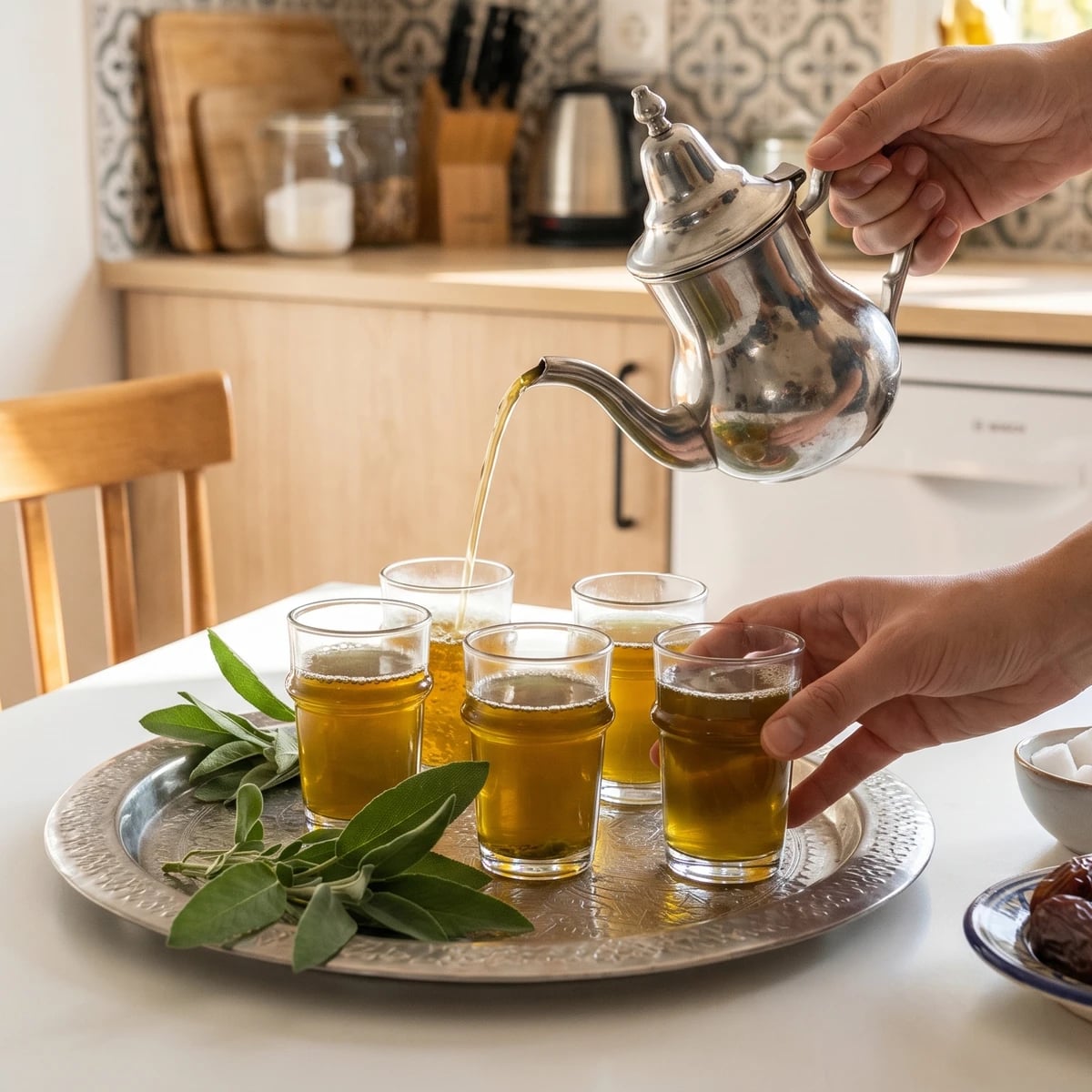
Green tea softened with sage, sweetened in the pot, and poured for the guest who arrives tired, chilled, or needing the small mercy of a warm glass.
Sage doesn't enter quietly. The moment it touches the hot tea, it gives that clean, camphor-green scent that Moroccans know from winter kitchens, tired stomachs, and throats asking for kindness. Salmia is not ceremony like mint tea, but it is still welcome. You make it when someone needs tending.
Use a light hand. Sage is generous, then suddenly stern if you leave it too long. Rinse the green tea first to take away the rough bitterness, then steep the salmia only until the glass smells herbal and rounded, not sharp. That is the whole judgment here. La balance est dans les yeux (the scale is in the eyes), and also in the nose.
Serve it sweet, in small glasses, while everyone is still gathered close. A table is a door you leave open, and some nights the door is held by one pot of tea.
Salmia belongs to Morocco's household pharmacopoeia as much as to its tea table: sage, called salmia in darija, sits among the herbs used for digestion, colds, and winter comfort across the Maghreb. The green tea base is more recent, spreading widely in Morocco in the 18th and 19th centuries through Atlantic trade ports such as Essaouira and Tangier before becoming a national habit. The dating of sage infusions is older and less neatly documented, which is honest for a remedy carried mostly by kitchens, markets, and memory.
Quantity
1 tbsp
Quantity
750ml
Quantity
6 leaves
or 1 tbsp dried Moroccan salmia
Quantity
4 tbsp, or to taste
| Ingredient | Quantity |
|---|---|
| Chinese gunpowder green tea | 1 tbsp |
| water | 750ml |
| fresh sage leavesor 1 tbsp dried Moroccan salmia | 6 leaves |
| sugar | 4 tbsp, or to taste |
Put the green tea in the teapot. Pour in a small splash of just-boiled water, swirl for a few seconds, then pour that water away. This first rinse wakes the leaves and carries off the rough edge, so the sage doesn't have to fight bitterness.
Add the sage and sugar to the pot. Pour in the remaining hot water, cover, and let it steep for 4 to 5 minutes. Smell it before you taste it: the sage should be clear and green, not harsh or medicinal.
Pour one small glass, then return it to the teapot. Do this once or twice so the sugar and strength move through the whole pot. Taste and adjust while it is still hot.
Pour into small tea glasses and serve at once. Salmia is best when the herb is still bright and the tea still gentle, the kind of glass you put into someone's hands before asking too many questions.
1 serving (about 130g)
Culinary guides, cultural storytelling, and the editorial depth that makes cooking meaningful.
Discover Culinary Explorer
Chef Zohra
The cold-evening cousin of mint tea: gunpowder green tea brewed with chiba, the bitter winter herb Moroccans use when na'na is scarce and the house needs warming.

Chef Zohra
Atay is Morocco's welcome made liquid: green tea rinsed clean, mint pressed into the pot, sugar dissolved into the whole house, then poured high into small glasses.

Chef Zohra
The plain daily cup of the Moroccan café: short, dark, and unsweetened unless your hand reaches for sugar, served with water and enough time for talk.

Chef Zohra
Whole lemons, mint, sugar, and cold water, blended briefly and strained. This is the summer glass of Moroccan homes and juice counters, tart enough to wake you up.