
Chef Zohra
Atay b Chiba (Moroccan Wormwood Tea)
The cold-evening cousin of mint tea: gunpowder green tea brewed with chiba, the bitter winter herb Moroccans use when na'na is scarce and the house needs warming.
A cooking platform built around craft, culture, and the stories behind what we eat.
Created by
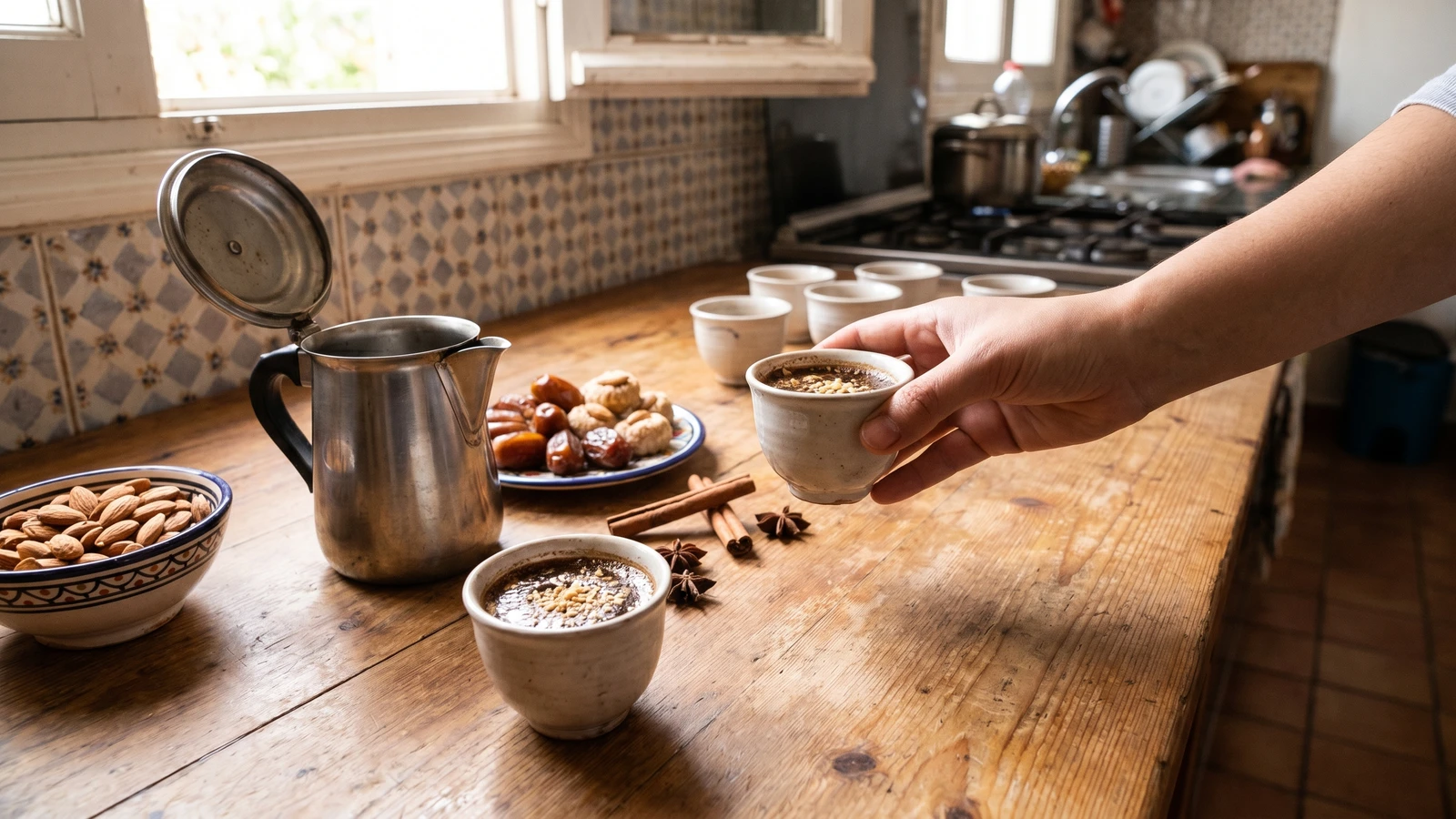
A fragrant eastern Moroccan coffee, deepened with almonds, sesame, anise, and cinnamon, poured small and hot when the door opens and someone needs welcoming.
The coffee tells you before the first sip. Almonds toasted just enough to smell sweet, sesame turning gold, anise waking under the heat, and the coffee itself dark enough to carry them all. This is not a thin cup. It has body. It stays on the tongue.
Qahwa b'Louz belongs to the eastern table I know well, the table of Oujda and the frontier, where a guest is offered something warm before the coat is even off. The almond matters because it softens the bitterness of the coffee, and the sesame gives it roundness. Grind too fine and the cup turns muddy. Grind with a little texture and strain patiently, and the drink becomes fragrant without feeling heavy.
Use the spices with a careful hand. La balance est dans les yeux, the scale is in the eyes, but your nose must also speak. Cinnamon should warm the cup, not take it over. Anise should lift it. Make a pot even if there are only two of you. Une table, c'est une porte qu'on laisse ouverte, a table is a door you leave open.
Qahwa b'Louz is tied especially to eastern Moroccan home tables around Oujda and the Algerian border, where coffee, almonds, sesame, and anise reflect both Moroccan pantry habits and older Maghrebi spice routes. Coffee entered Moroccan urban life through Ottoman and Mediterranean trade from the 16th century onward, but regional household blends like this are harder to date because they lived mostly in oral practice. The exact origin is contested between family repertoires, and that is honest: some recipes are preserved in hands before they are preserved in books.
Quantity
3 tbsp
finely ground
Quantity
2 tbsp
toasted
Quantity
1 tbsp
toasted
Quantity
1 tsp
Quantity
1/2 tsp
Quantity
1 small pinch
Quantity
1 small pinch
Quantity
1 small pinch
Quantity
500ml
Quantity
2 to 3 tbsp, or to taste
| Ingredient | Quantity |
|---|---|
| dark coffeefinely ground | 3 tbsp |
| blanched almondstoasted | 2 tbsp |
| sesame seedstoasted | 1 tbsp |
| anise seeds | 1 tsp |
| ground cinnamon | 1/2 tsp |
| ground nutmeg | 1 small pinch |
| ground ginger | 1 small pinch |
| black pepper | 1 small pinch |
| water | 500ml |
| sugar (optional) | 2 to 3 tbsp, or to taste |
Put the almonds in a dry pan over medium heat and toast until they smell sweet and show pale gold at the edges. Lift them out, then toast the sesame just until it turns golden and nutty. Do not walk away. Sesame goes from ready to bitter quickly, and bitterness will sit in every sip.
Grind the toasted almonds, sesame, anise, cinnamon, nutmeg, ginger, and black pepper together until sandy, not paste-like. Add the ground coffee and pulse or stir to combine. The one thing that decides the cup is the grind: too fine makes sludge, too coarse gives perfume without body.
Bring the water to a lively simmer in a small pot. Stir in the coffee blend and sugar, lower the heat, and let it murmur for 4 to 5 minutes. The surface should look dark and glossy, with tiny bubbles at the edge, not a hard boil that throws bitterness into the pot.
Take the pot off the heat and let it rest for 2 minutes so the grounds settle. Strain through a fine sieve or cloth into a warmed teapot or small cups. Pour slowly and stop before the last muddy spoonful at the bottom. That patience keeps the cup fragrant and clean.
Serve in small cups, hot and generous, with dates, fekkas, or almond sweets if the table is dressed for guests. This coffee is strong enough to be poured in little measures. Refill before anyone asks.
1 serving (about 85g)
Culinary guides, cultural storytelling, and the editorial depth that makes cooking meaningful.
Discover Culinary ExplorerChef Zohra
The cold-evening cousin of mint tea: gunpowder green tea brewed with chiba, the bitter winter herb Moroccans use when na'na is scarce and the house needs warming.

Chef Zohra
Atay is Morocco's welcome made liquid: green tea rinsed clean, mint pressed into the pot, sugar dissolved into the whole house, then poured high into small glasses.

Chef Zohra
The plain daily cup of the Moroccan café: short, dark, and unsweetened unless your hand reaches for sugar, served with water and enough time for talk.

Chef Zohra
Whole lemons, mint, sugar, and cold water, blended briefly and strained. This is the summer glass of Moroccan homes and juice counters, tart enough to wake you up.