Chef Isabel
Abanico Ibérico a la Plancha
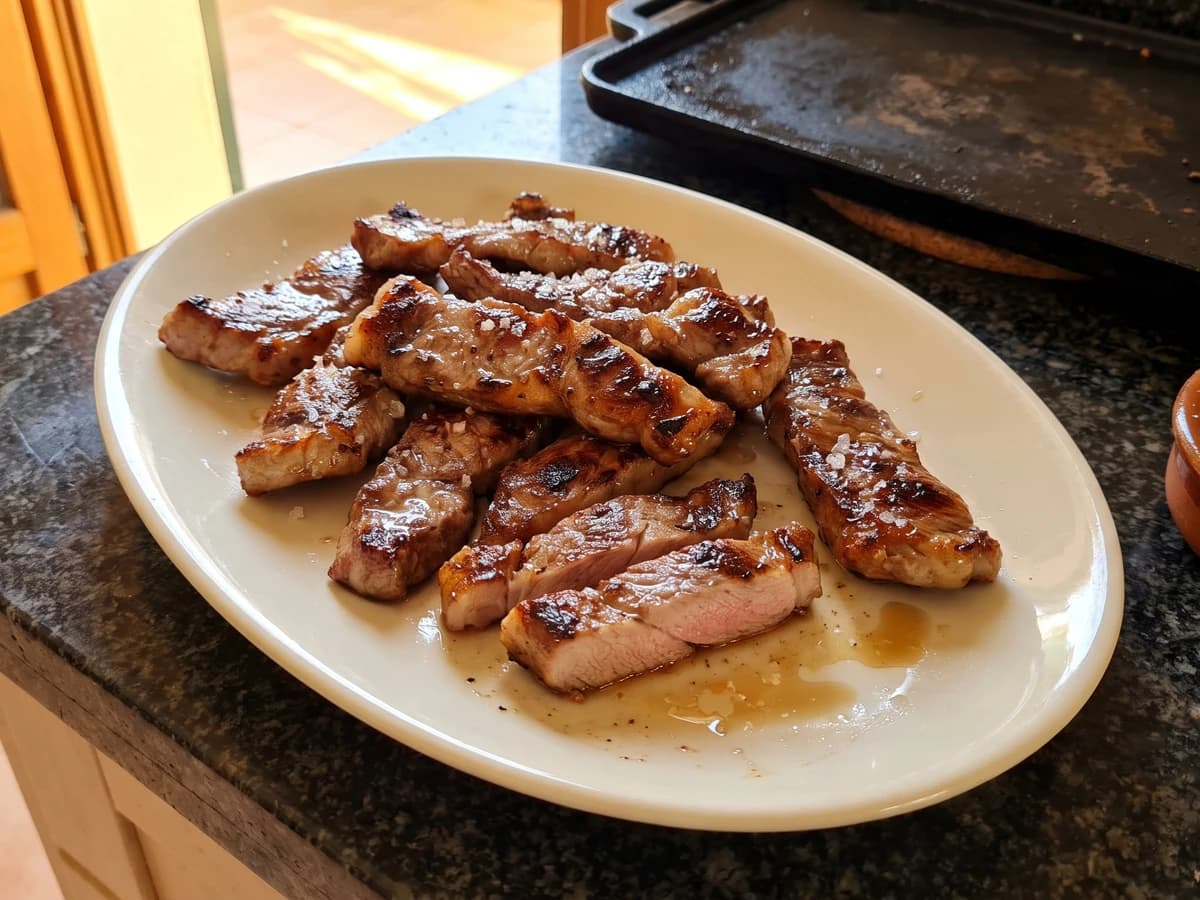
Extremadura's dehesa gives us this fan-shaped, marbled rib cut: salt it at the last moment, lay it on a fierce plancha, and count in seconds so the centre stays juicy.
A cooking platform built around craft, culture, and the stories behind what we eat.
Created by
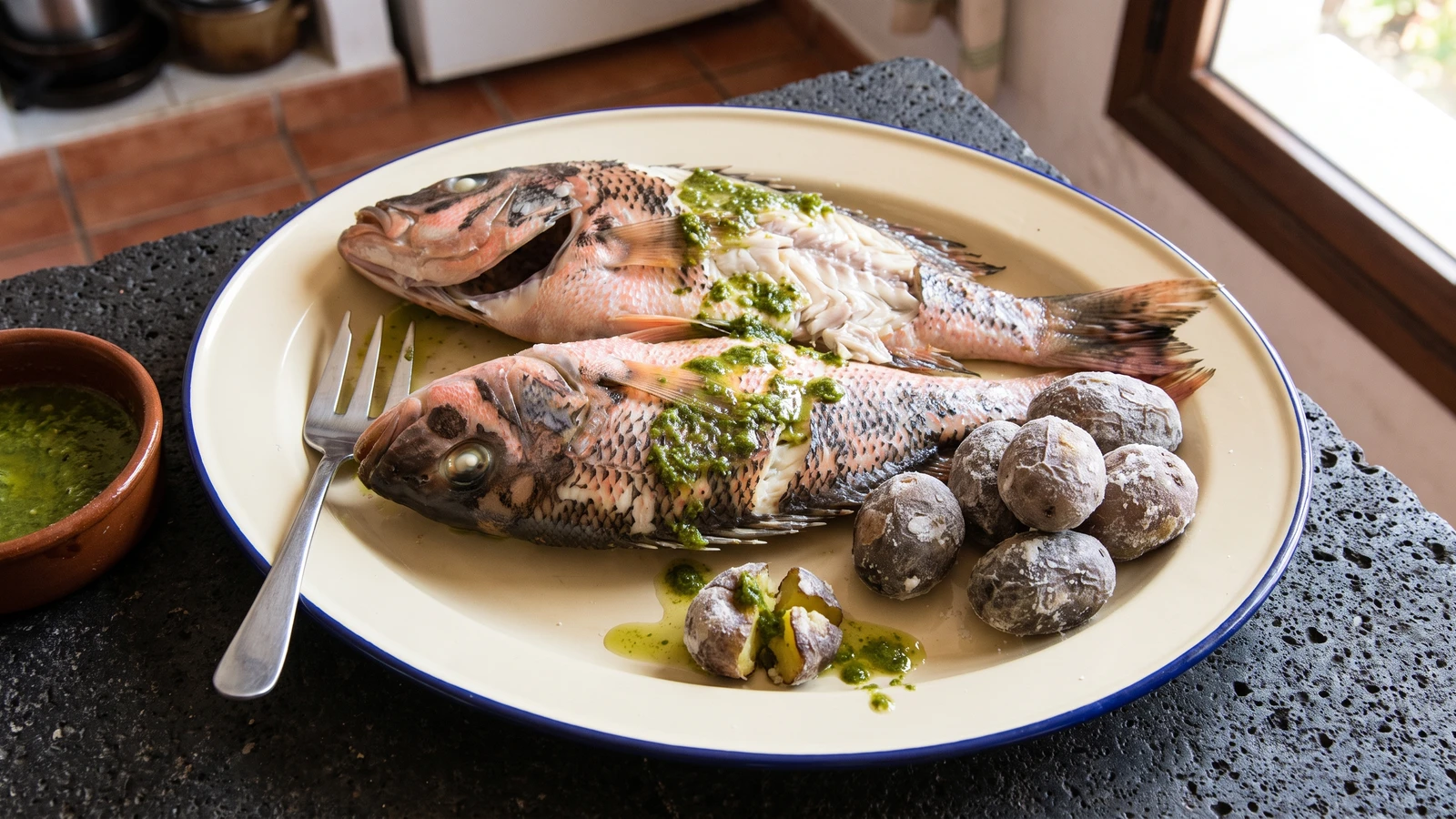
Vieja sancochada is Canarian coastal cooking at its plainest: whole parrotfish held just below the boil so its sweet, delicate flesh stays intact, served with papas arrugadas and sharp mojo verde.
Vieja sancochada is Canarian coastal cooking: fresh whole vieja, the islands' parrotfish, poached with onion, tomato, green pepper, and parsley, then served beside papas arrugadas and mojo verde. It isn't sancocho canario, the salt-fish dish with sweet potato and gofio. Here the fish is fresh, sweet, and barely cooked.
The method that decides it is the water. Bring the poaching liquor to a boil before the fish goes in, then lower it until only a small bubble appears at the edge. Keep it there. A rolling boil throws the vieja about and breaks its delicate flesh, while quiet water leaves every flake whole. Have the fishmonger gut it and remove the gills, but keep the great scales where they are. After cooking, skin and scales lift away together like a jacket.
Far from the Canary Islands, look for a whole sea bream, dorada, or red porgy of the same weight. Either takes this method well, though the flesh is firmer and lacks the vieja's particular sweetness. Don't buy an unrelated tropical parrotfish merely because the market uses the same English name. No hace falta haber pisado España, but you do need sound fish: bright eyes, firm flesh, and the clean smell of the sea.
Serve it simply, with the salt-crusted potatoes and a green mojo sharp with coriander, cumin, garlic, and vinegar. In the Margin beside this recipe I wrote two words: quiet water. Remember that and the fish takes care of itself.
Vieja is the Canarian name for Sparisoma cretense, a parrotfish from the rocky eastern Atlantic waters around the islands, long associated with small-boat fishing and coastal home tables. To sancochar here means to cook the fresh fish gently in salted water, traditionally with its heavy scales left on as protection for the fragile flesh. Papas arrugadas and mojo complete the island plate, joining potatoes carried through Atlantic trade with the salt, peppers, cumin, and sharp sauces of the Canarian larder.
Quantity
2 (1.2-1.4kg total)
gutted and gilled, scales left on
Quantity
3L
Quantity
54g
Quantity
150g
quartered
Quantity
180g
quartered
Quantity
120g
seeded and halved
Quantity
15g
Quantity
1kg
scrubbed and left unpeeled
Quantity
250g
Quantity
1.5L
or enough to barely cover
Quantity
10g (about 3 small cloves)
peeled
Quantity
2g
Quantity
5g
Quantity
100g
seeded and chopped
Quantity
25g
roughly chopped
Quantity
45ml
Quantity
120ml
| Ingredient | Quantity |
|---|---|
| whole vieja (Sparisoma cretense)gutted and gilled, scales left on | 2 (1.2-1.4kg total) |
| cold water for poaching | 3L |
| fine sea salt for poaching | 54g |
| onionquartered | 150g |
| ripe tomatoquartered | 180g |
| green pepper for the poaching liquorseeded and halved | 120g |
| flat-leaf parsley sprigs | 15g |
| small Canarian papas bonitas or small waxy potatoesscrubbed and left unpeeled | 1kg |
| coarse sea salt for the potatoes | 250g |
| cold water for the potatoesor enough to barely cover | 1.5L |
| garlicpeeled | 10g (about 3 small cloves) |
| cumin seeds | 2g |
| coarse sea salt for the mojo | 5g |
| mild green pepper for the mojoseeded and chopped | 100g |
| fresh coriander leaves and tender stemsroughly chopped | 25g |
| white wine vinegar | 45ml |
| extra virgin olive oil | 120ml |
Pound the cumin seeds, garlic, and 5g coarse salt in a mortar until they form a rough paste. Add the chopped green pepper and coriander a little at a time, crushing until thoroughly bruised but still flecked. Work in the vinegar, then stir in the olive oil. The mojo verde should be loose, sharp, and visibly speckled, not beaten into a smooth green cream. Leave it to settle while you cook.
Set the scrubbed potatoes in a snug pot, add 1.5L cold water or just enough to cover them, and pour in the 250g coarse salt. Bring to a steady boil and cook uncovered for 18 to 22 minutes, until a thin skewer passes through the largest potato without resistance. Drain every drop of water, return the pot to low heat, and shake it gently for 2 to 3 minutes. The skins will wrinkle and take on a fine white salt crust. Set them aside uncovered.
While the potatoes cook, combine the 3L water, 54g fine salt, onion, tomato, green pepper, and parsley in a wide caldero or fish kettle. Bring it to a full boil, then simmer for 12 minutes so the vegetables give the water a light, clean flavor. Push the vegetables toward the edges to leave room for the fish.
Wipe the fish cavities clean and check that the gills are gone, but do not scrape off the heavy scales. Lower the heat until the poaching liquor reaches 88-92°C, with only an occasional bubble breaking near the edge, then slip in the fish side by side. Those scales are their cooking jacket and help keep the delicate flesh together.
Partially cover the pot and hold the liquid just below the boil for 12 minutes. If the fish are not fully submerged, turn them once after 6 minutes using two broad spatulas. Check the thickest part beside the backbone: the flesh should be opaque, release cleanly from the bone, and reach 63°C. Give it another 2 minutes if needed. A rolling boil knocks the tender flakes apart, so quiet water is the whole method here.
Lift each vieja onto an oval platter with two broad spatulas and let it drain for 2 minutes. Set the papas arrugadas alongside. At the table, lift away the scaled skin in sections, divide the pearly flesh from the backbone, and spoon over a little mojo verde. Put the remaining mojo in a bowl so each person can add more. Siempre sale, si lo sigues, it turns out if you follow it.
1 serving (about 450g)
Culinary guides, cultural storytelling, and the editorial depth that makes cooking meaningful.
Discover Culinary ExplorerChef Isabel
Extremadura's dehesa gives us this fan-shaped, marbled rib cut: salt it at the last moment, lay it on a fierce plancha, and count in seconds so the centre stays juicy.

Chef Isabel
Aletría Murciana is Murcia's humble noodle guiso: fine fideos, pork ribs, potato, saffron, and a dark sweet sofrito. Get that base right and the pot knows where it's going.

Chef Isabel
Andrajos are Andalucía's dough-rag stew from Jaén and Granada: a slow rabbit guiso thickened with torn sheets of flour dough, rolled thin so they cook tender instead of gummy.
Chef Isabel
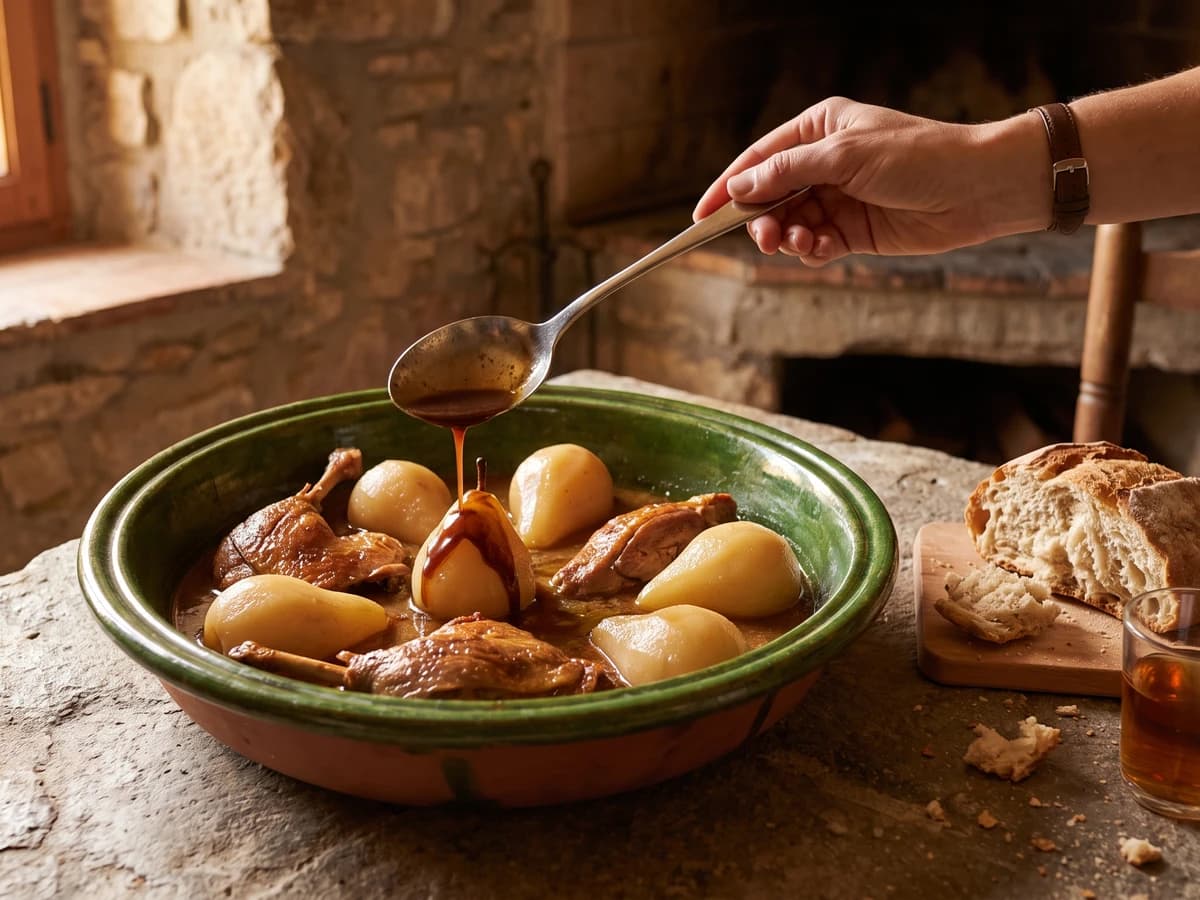
Ànec amb peres is Catalan celebration cooking: duck braised in a dark sofregit, firm autumn pears added near the end, and an almond-garlic picada that turns the juices into a close, glossy sauce.