Chef Isabel
Abanico Ibérico a la Plancha
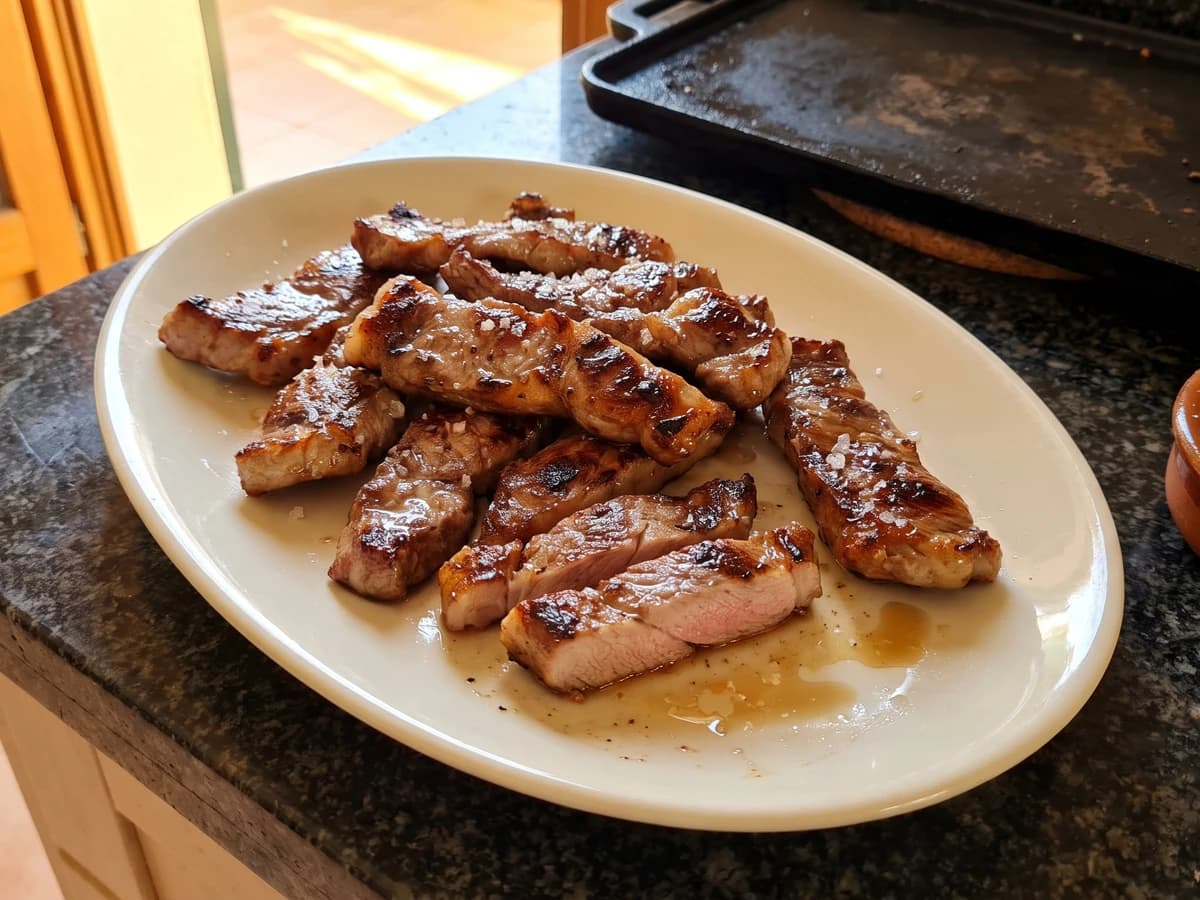
Extremadura's dehesa gives us this fan-shaped, marbled rib cut: salt it at the last moment, lay it on a fierce plancha, and count in seconds so the centre stays juicy.
A cooking platform built around craft, culture, and the stories behind what we eat.
Created by
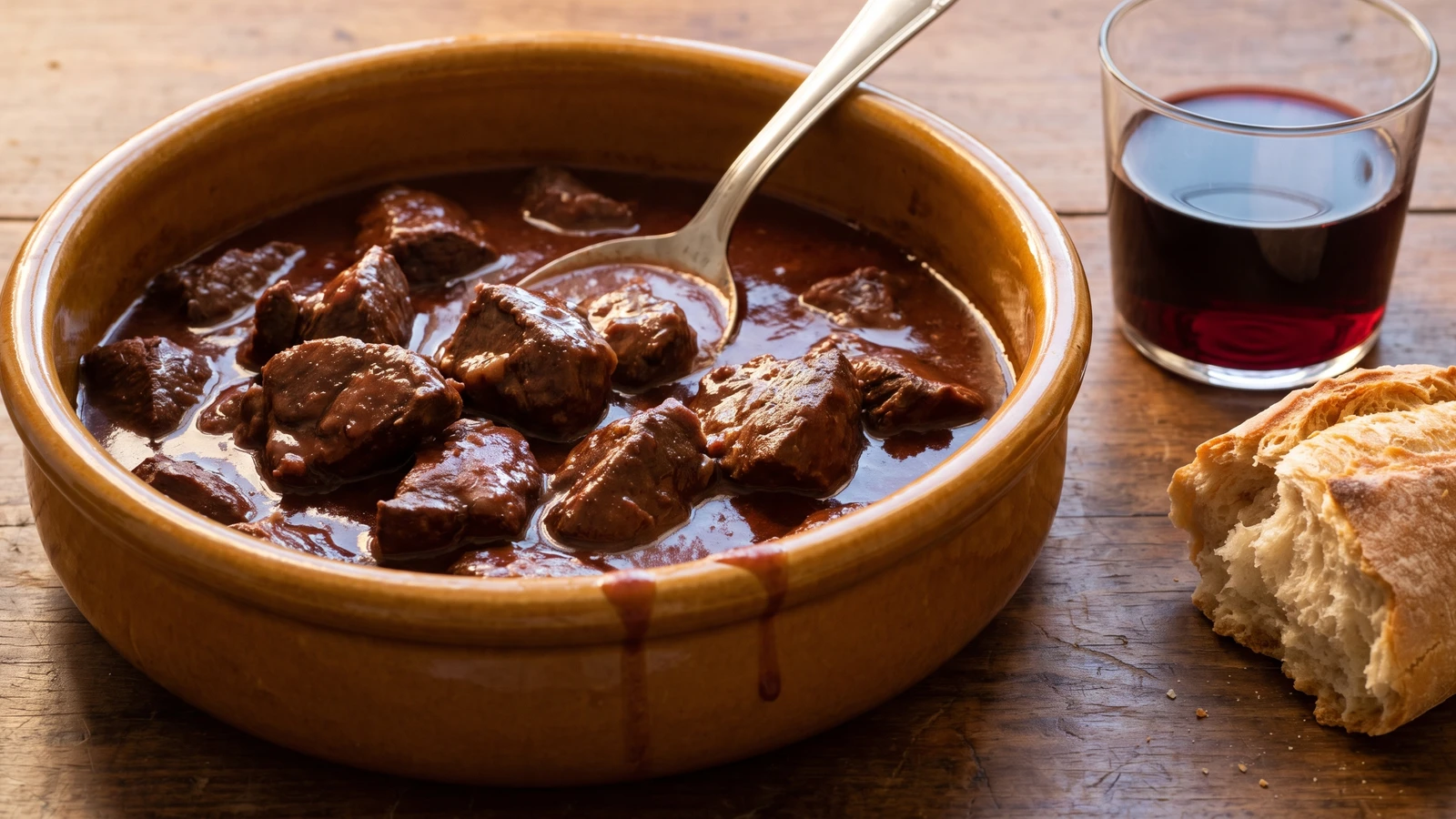
In the Montes de Toledo, venison shoulder is marinated with red wine and aromatics, browned, then braised slowly until tender, with the vegetables blended into a dark, glossy sauce.
Venado en salsa belongs to the Montes de Toledo in Castilla-La Mancha, where red deer from the wooded sierra is cooked with red wine, aromatic vegetables, and herbs. This version finishes by blending the long-cooked vegetables into the braising liquor, giving the dish its smooth, dark sauce. It isn't a quick sauce for tender loin, and it isn't a stew crowded with potatoes. This is shoulder or neck, the patient cuts, cooked for the middle of the table.
Marinate the venison overnight, brown it properly, and build the sofrito, the slow vegetable base, until the onion is dark gold and the tomato has lost its raw water. Then lower the heat. The method that decides the dish is the braise: hold it at the barest simmer because a hard boil tightens lean game before its connective tissue has time to soften. The clock can guide you, but the fork gives the answer. It should slide into a thick piece with almost no resistance.
No hace falta haber pisado España. Farmed red deer shoulder works very well and will taste milder than wild venison. Elk shoulder is the closest useful substitute in many places and may need another thirty minutes. If all you can find is beef chuck, use it and follow the same method, but say plainly what you've made: a good beef stew in this sauce, not venado.
Use a modest dry red wine you would willingly drink, and use canned summer tomatoes when the fresh ones are pale. My Margin beside this recipe says, "If the fork still argues, give it time, not fire." Rest the finished cazuela before serving, or leave it overnight and warm it gently the next day. Siempre sale, si lo sigues.
Venado en salsa is rooted in the Montes de Toledo, the wooded sierras of Castilla-La Mancha where red deer and the montería, the traditional driven hunt, have long shaped the cold-season table. Wine marinades and long cooking made good use of shoulder and neck, cuts too firm for the quick treatment given to the saddle. Passing the cooked vegetables through a sieve or food mill produced a substantial sauce without wasting what had flavored the pot.
Quantity
1.5kg
trimmed of silverskin and cut into 4cm pieces
Quantity
750ml
Quantity
350g
thinly sliced
Quantity
250g
peeled and cut into 1cm slices
Quantity
120g
thoroughly washed and thinly sliced
Quantity
30g, about 6 cloves
lightly crushed
Quantity
2
Quantity
4 sprigs
Quantity
1 small sprig
Quantity
10
Quantity
180g
seeded and diced
Quantity
75ml
divided
Quantity
250g
grated if fresh, crushed if canned
Quantity
3g, about 1 teaspoon
Quantity
300ml, plus up to 200ml more if needed
Quantity
14g
divided
| Ingredient | Quantity |
|---|---|
| boneless venison shoulder or necktrimmed of silverskin and cut into 4cm pieces | 1.5kg |
| dry red wine, preferably Tempranillo or Garnacha | 750ml |
| onionsthinly sliced | 350g |
| carrotspeeled and cut into 1cm slices | 250g |
| leekthoroughly washed and thinly sliced | 120g |
| garliclightly crushed | 30g, about 6 cloves |
| bay leaves | 2 |
| thyme | 4 sprigs |
| rosemary | 1 small sprig |
| black peppercorns | 10 |
| red bell pepperseeded and diced | 180g |
| extra virgin olive oildivided | 75ml |
| ripe tomatoes or good canned whole tomatoesgrated if fresh, crushed if canned | 250g |
| sweet pimentón de la Vera | 3g, about 1 teaspoon |
| hot water | 300ml, plus up to 200ml more if needed |
| fine sea saltdivided | 14g |
Put the venison in a non-reactive dish with the wine, onions, carrots, leek, garlic, bay leaves, thyme, rosemary, and peppercorns. Turn the meat until every piece is wet, cover, and refrigerate for 12 to 24 hours. Turn it once if the wine doesn't fully cover the meat. Keep it cold throughout; the marinade is not a reason to leave raw game on the counter.
Set a sieve over a bowl and drain the venison, keeping the wine and vegetables separately. Pick out and reserve the bay leaves and herb sprigs. Pat the meat very dry with kitchen paper and season it with 8g of the salt. Pour the marinade into a saucepan, bring it to a full boil for 5 minutes, and skim off any grey foam. This makes the raw-meat marinade safe for the braise and gives a cleaner sauce.
Heat a wide, heavy casserole over medium-high heat and add 50ml of the olive oil. Brown the venison in four batches, leaving space between the pieces. Give each batch 5 to 6 minutes, turning until several sides carry a deep brown crust. Transfer the meat to a bowl as it is ready. If you crowd the pot, the meat releases water and goes grey; that lost browning cannot be repaired later.
Lower the heat to medium and add the remaining 25ml oil, the drained vegetables, and the diced red pepper. Cook for 8 to 10 minutes until their wine-soaked moisture has evaporated. Lower the heat again and cook for another 15 to 20 minutes, stirring often, until the onion is dark gold and soft. Add the tomato and cook for 12 to 15 minutes, until it is thick, darkened, and no watery juice runs across the bottom. Take the pot off the heat, stir in the pimentón for 20 seconds, and return it at once to low heat so the spice doesn't scorch.
Return the venison and its collected juices to the casserole. Pour in the boiled marinade and 300ml hot water, then add the reserved bay leaves and herb sprigs. The liquid should come nearly to the top of the meat without drowning it; add a little more hot water if needed. Bring it just to a simmer, cover with the lid slightly ajar, and cook over very low heat for 2 to 2 1/2 hours. Turn the meat every 30 minutes and keep the liquid at a bare tremble. A rolling boil makes lean venison tight and dry. It is ready when a fork slides into a thick piece with almost no resistance.
Lift the tender venison into a clean bowl and discard the bay leaves, thyme stems, and rosemary stem. Let the liquid settle for 2 minutes, skim only any obvious excess fat, then blend the vegetables and cooking liquor until completely smooth. Work carefully with the hot sauce and keep an immersion blender head fully submerged. Return the meat to the casserole. If the sauce is too thick to move around the pieces, add hot water 50ml at a time; if it runs like broth, simmer uncovered for 10 to 15 minutes until it coats a spoon.
Add the remaining salt a little at a time, tasting after each addition. Simmer the venison in the finished sauce for 5 minutes, then take the casserole off the heat and rest it for 20 minutes. Serve in deep bowls or from the cazuela, with fried potatoes or sturdy bread for the sauce. The meat should hold its shape under the spoon but yield easily when cut.
1 serving (about 460g)
Culinary guides, cultural storytelling, and the editorial depth that makes cooking meaningful.
Discover Culinary ExplorerChef Isabel
Extremadura's dehesa gives us this fan-shaped, marbled rib cut: salt it at the last moment, lay it on a fierce plancha, and count in seconds so the centre stays juicy.
Chef Isabel
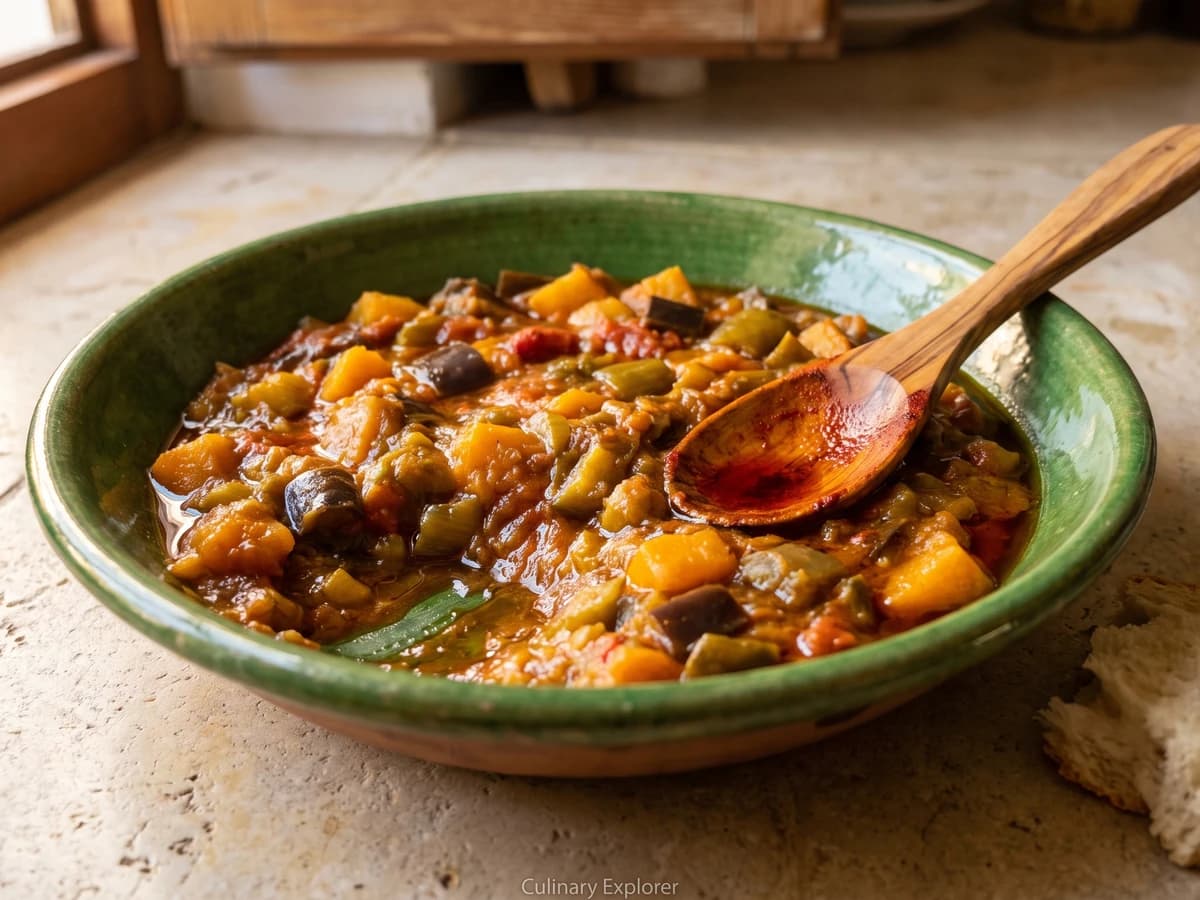
Alboronía is Andalucía's old pumpkin and aubergine stew, deepened with tomato, pimentón, and cumin, then cooked without hurry until the vegetables settle into a glossy, sweet, spoon-soft whole.

Chef Isabel
Aletría Murciana is Murcia's humble noodle guiso: fine fideos, pork ribs, potato, saffron, and a dark sweet sofrito. Get that base right and the pot knows where it's going.
Chef Isabel
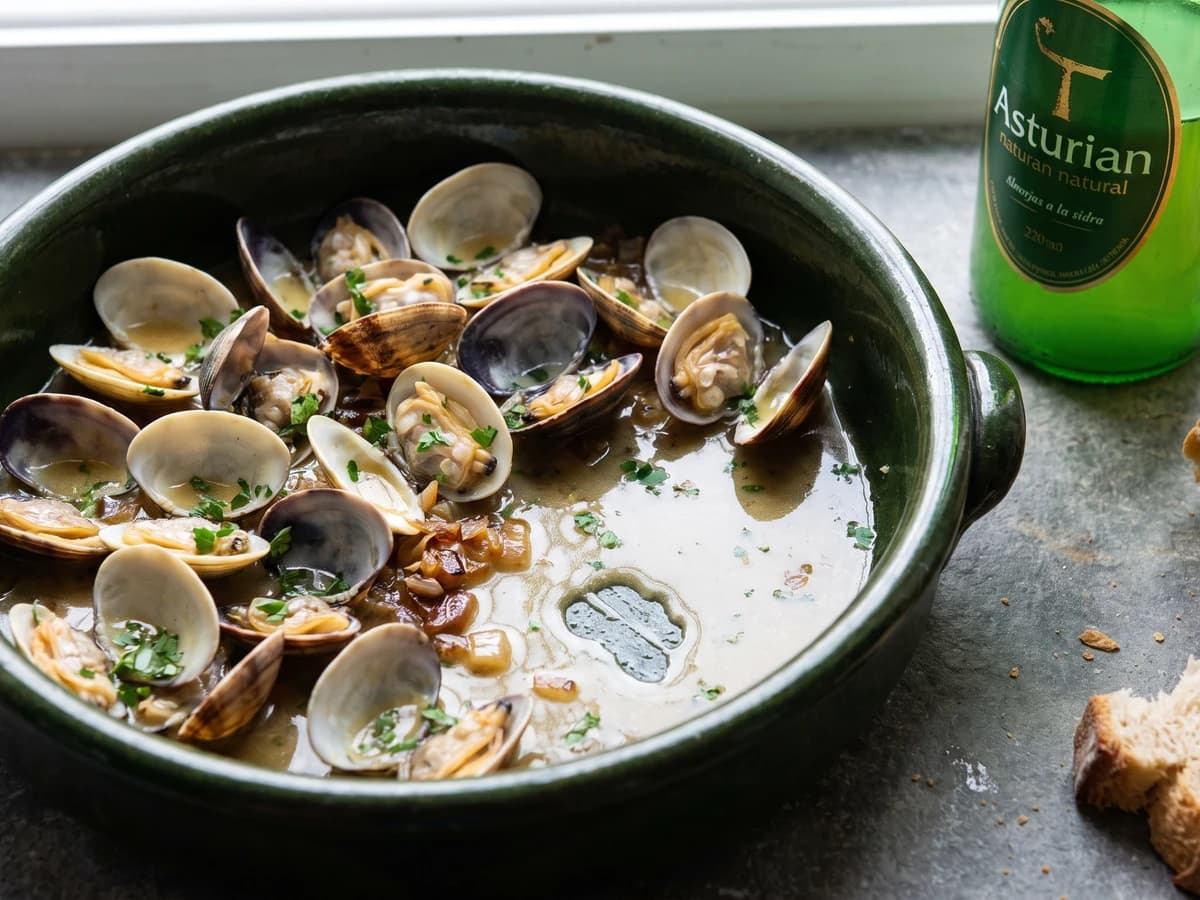
Asturias opens clams in tart natural cider over a slow onion and garlic sofrito, making a bright, briny sauce that asks for bread and rewards one rule: lift each clam as it opens.