Chef Isabel
Abanico Ibérico a la Plancha
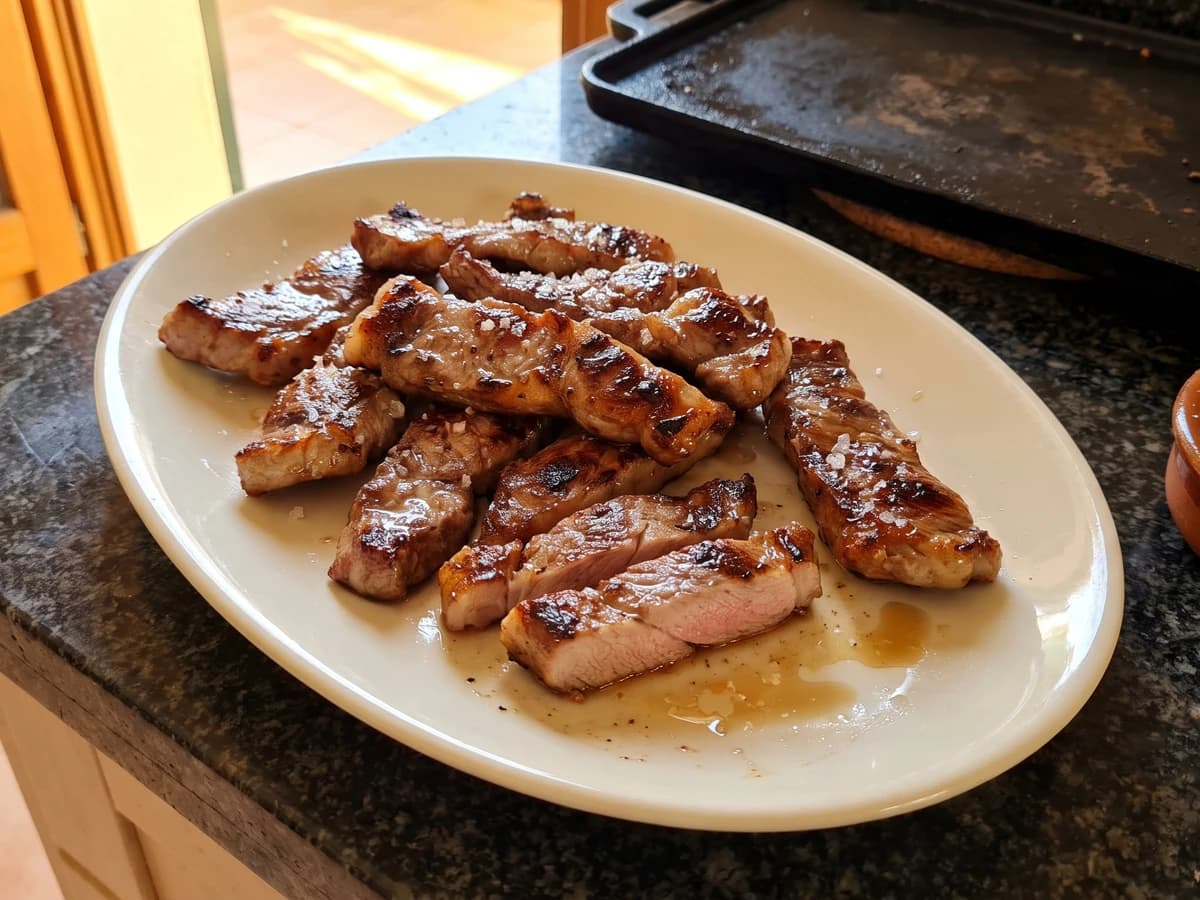
Extremadura's dehesa gives us this fan-shaped, marbled rib cut: salt it at the last moment, lay it on a fierce plancha, and count in seconds so the centre stays juicy.
A cooking platform built around craft, culture, and the stories behind what we eat.
Created by
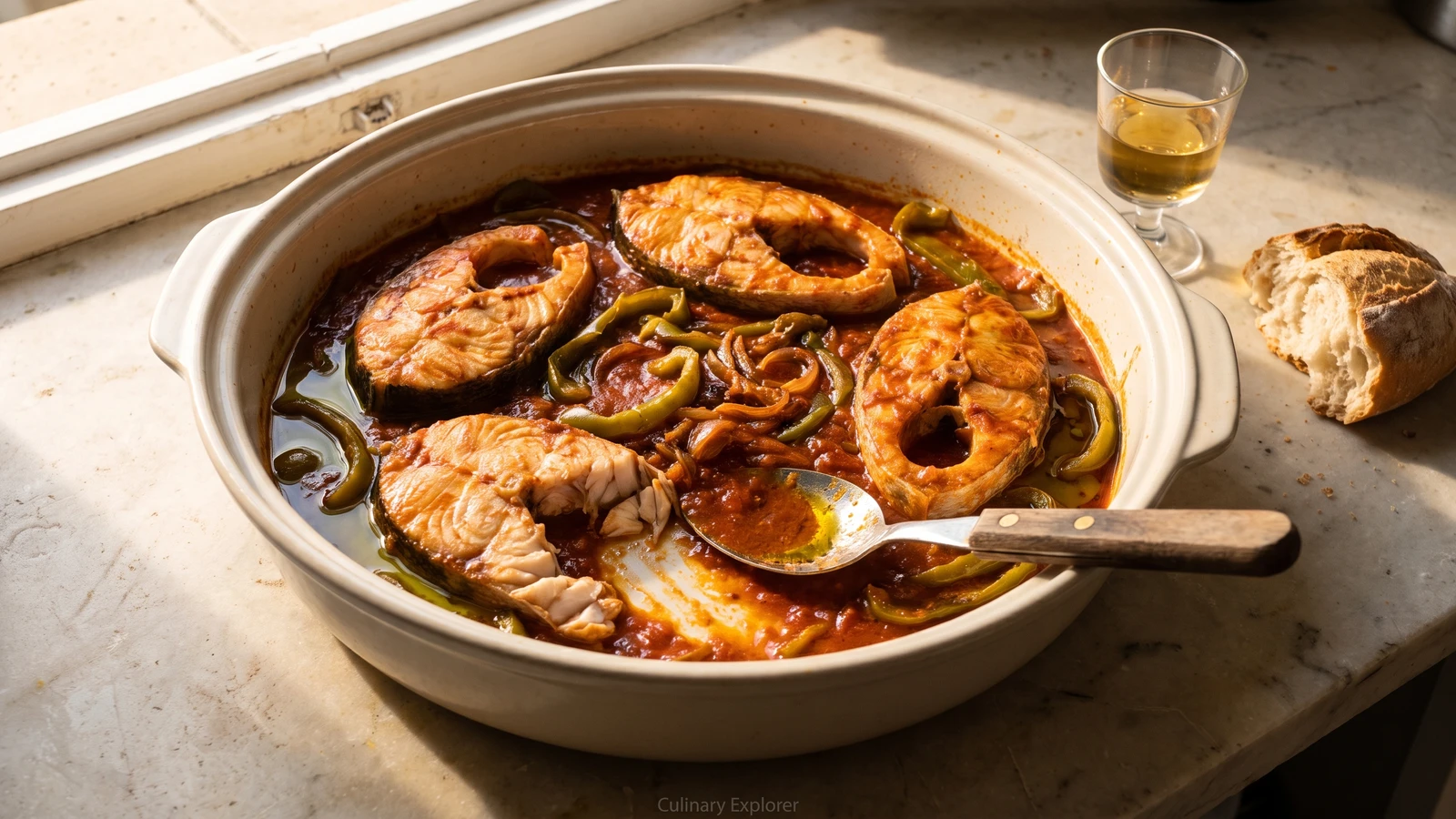
Urta a la roteña belongs to Cádiz: firm bream baked over onion, green pepper, ripe tomato, and dry Jerez wine, with a patient sofrito joining coast and market garden.
Urta a la roteña is Rota's, from the Cádiz coast of Andalucía: thick pieces of redbanded seabream baked over a sofrito, the slow base of onion, green pepper, ripe tomato, and dry Jerez wine. The fish is firm and sweet, the sauce deep and almost jammy. That meeting of Rota's catch with its market-garden vegetables makes the dish what it is.
The sofrito decides everything. Cook the onion and pepper gently until they collapse and begin to turn gold, then add the tomato and keep going until its water has gone and the oil shines around the edges. That slow cooking concentrates the sweetness. Rush it and the urta lands in thin tomato water, which is a poor reward for a good fish.
If urta doesn't reach your market, use whole red porgy of the same size. It is the nearest substitute. Gilthead bream also cooks properly this way, though its flesh is milder and lacks some of the shellfish sweetness that marks urta. No hace falta haber pisado España. Buy the freshest firm bream you can, and ask the fishmonger to cut it through the bone into thick steaks.
I don't let the fish near the cazuela until the sauce is ready; the Margin beside this recipe says exactly that. Once the sofrito is dark and concentrated, the oven work is short. Keep the pieces in one layer, take them out as soon as they are pearly at the bone, and serve from the cooking dish. Siempre sale, si lo sigues.
Urta a la roteña belongs to Rota, the fishing town on the Bay of Cádiz where the catch from rocky coastal waters met the onions, peppers, and tomatoes grown by the local mayetos, small market-garden farmers. Urta is the redbanded seabream, Pagrus auriga, a firm-fleshed fish whose diet of crustaceans and molluscs gives it a distinct sweetness. Rota's annual Fiesta de la Urta preserves the dish as a public emblem of the town, with cooks judged on this union of fish and slow vegetable sauce.
Quantity
1.5 to 1.8kg before cleaning
scaled, gutted, and cut across the bone into 4cm steaks; red porgy may be substituted
Quantity
14g
divided
Quantity
1g
Quantity
120ml
Quantity
350g
thinly sliced into half-moons
Quantity
300g
cored, seeded, and cut into thin strips
Quantity
15g
thinly sliced
Quantity
1kg
coarsely grated, skins discarded
Quantity
1
Quantity
150ml
| Ingredient | Quantity |
|---|---|
| whole urta (redbanded seabream)scaled, gutted, and cut across the bone into 4cm steaks; red porgy may be substituted | 1.5 to 1.8kg before cleaning |
| fine sea saltdivided | 14g |
| freshly ground black pepper | 1g |
| extra virgin olive oil | 120ml |
| yellow onionsthinly sliced into half-moons | 350g |
| long green frying pepperscored, seeded, and cut into thin strips | 300g |
| garlicthinly sliced | 15g |
| ripe tomatoescoarsely grated, skins discarded | 1kg |
| dried bay leaf | 1 |
| dry fino de Jerez | 150ml |
Check the fish for stray scales and pat every piece dry. Season it evenly with 9g of the salt and all the black pepper, including the cut faces. Keep it refrigerated while you make the sofrito. Pésalo, no lo adivines; evenly seasoned thick fish is much kinder to a beginner than salt scattered by hope.
Pour the olive oil into a wide 30 to 32cm ovenproof casserole and set it over medium-low heat. Add the onions, green peppers, and remaining 5g salt. Cook for 18 minutes, turning them every few minutes, until the vegetables have collapsed and the onion is deep gold at the edges. Add the sliced garlic for the final 2 minutes; it should smell sweet but take no dark colour.
Add the grated tomato and bay leaf. Raise the heat just enough to establish a steady bubbling, then return it to medium-low. Cook uncovered for 22 to 25 minutes, stirring more often toward the end, until the tomato darkens to brick red, a spoon drawn through it leaves a channel, and green-gold oil appears around the edges. This is the step that decides the dish. Stop while the sauce is watery and the whole plate tastes thin.
Pour in the fino de Jerez and scrape the bottom of the casserole with a wooden spoon. Simmer for 5 minutes, until the sharp smell of raw wine has gone and the sofrito is thick enough to mound softly on the spoon. Remove the bay leaf and taste the sauce. It should be full-flavoured but only moderately salty, because the seasoned fish is still to come.
Heat the oven to 200°C, or 180°C fan. Spread the sofrito evenly across the casserole and arrange the fish steaks over it in one layer, leaving a little space between them. Spoon some sauce around the sides and just over the cut faces, but don't bury the pieces. If your sauté pan cannot go into the oven, transfer the sauce to a wide, shallow baking dish first.
Bake uncovered for 14 to 18 minutes. Begin checking at 14 minutes: the flesh should have turned opaque and pearly beside the central bone, separate in moist flakes under gentle pressure, and reach 63°C in the thickest part. Take thinner pieces out first if necessary. The fish has no prize waiting for it after it dries.
Let the cazuela stand for 5 minutes so the fish juices settle into the sofrito. Carry it straight to the table and spoon plenty of onion, pepper, tomato, and glossy sauce around each portion. Serve with plain country bread for the juices. Nothing else is needed.
1 serving (about 500g)
Culinary guides, cultural storytelling, and the editorial depth that makes cooking meaningful.
Discover Culinary ExplorerChef Isabel
Extremadura's dehesa gives us this fan-shaped, marbled rib cut: salt it at the last moment, lay it on a fierce plancha, and count in seconds so the centre stays juicy.

Chef Isabel
Aletría Murciana is Murcia's humble noodle guiso: fine fideos, pork ribs, potato, saffron, and a dark sweet sofrito. Get that base right and the pot knows where it's going.

Chef Isabel
Andrajos are Andalucía's dough-rag stew from Jaén and Granada: a slow rabbit guiso thickened with torn sheets of flour dough, rolled thin so they cook tender instead of gummy.
Chef Isabel
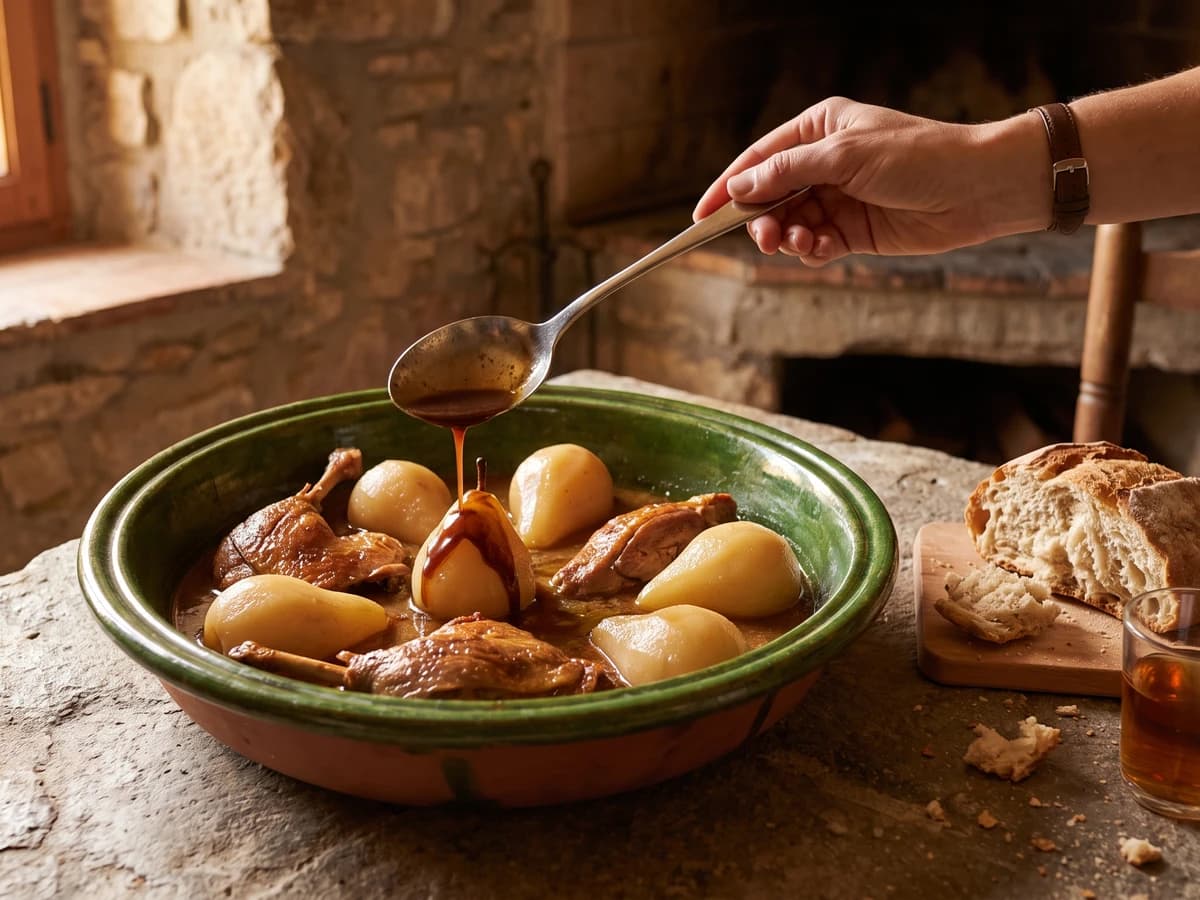
Ànec amb peres is Catalan celebration cooking: duck braised in a dark sofregit, firm autumn pears added near the end, and an almond-garlic picada that turns the juices into a close, glossy sauce.