Chef Isabel
Duelos y Quebrantos Manchegos
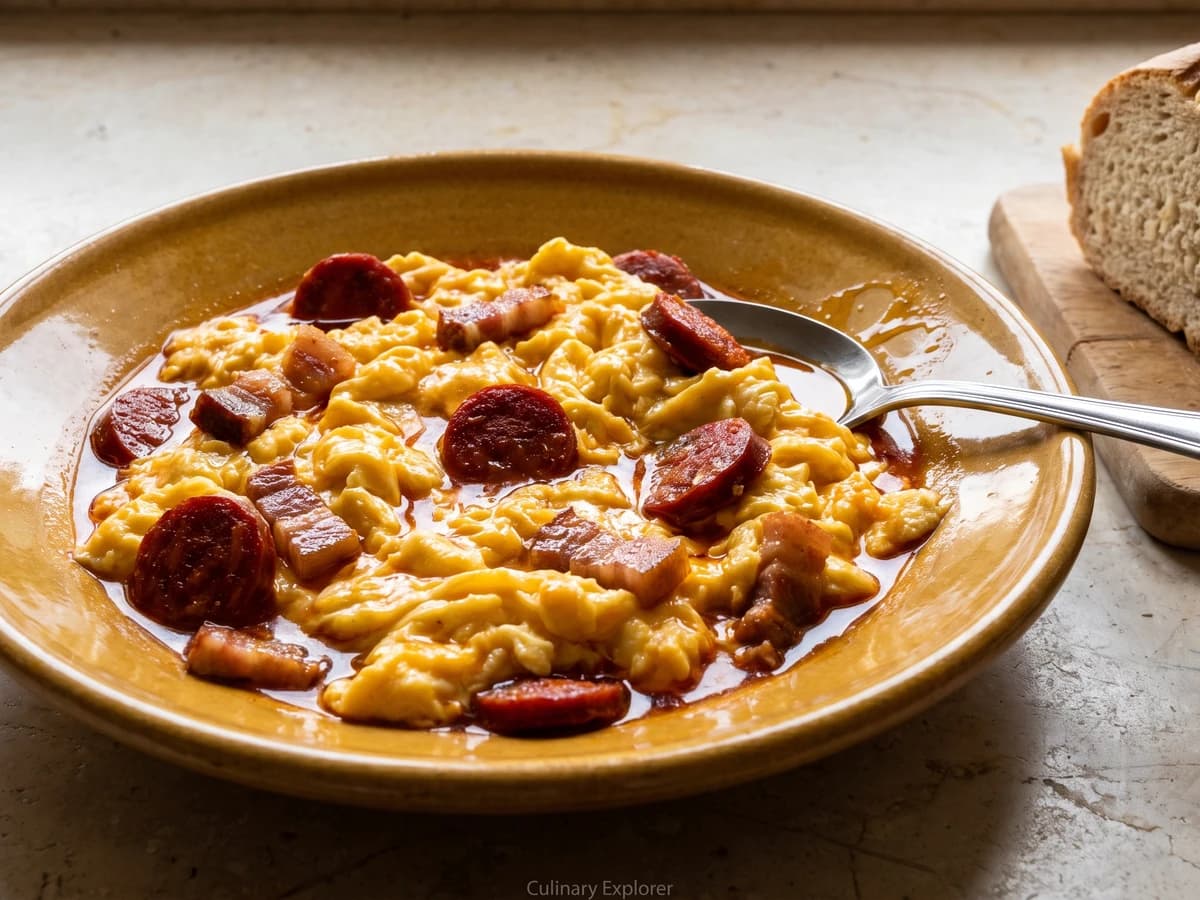
Duelos y quebrantos is Castilla-La Mancha in one pan: chorizo and bacon rendered slowly, then eggs folded through until soft, the plain Saturday meal Cervantes set on Don Quixote's table.
A cooking platform built around craft, culture, and the stories behind what we eat.
Created by
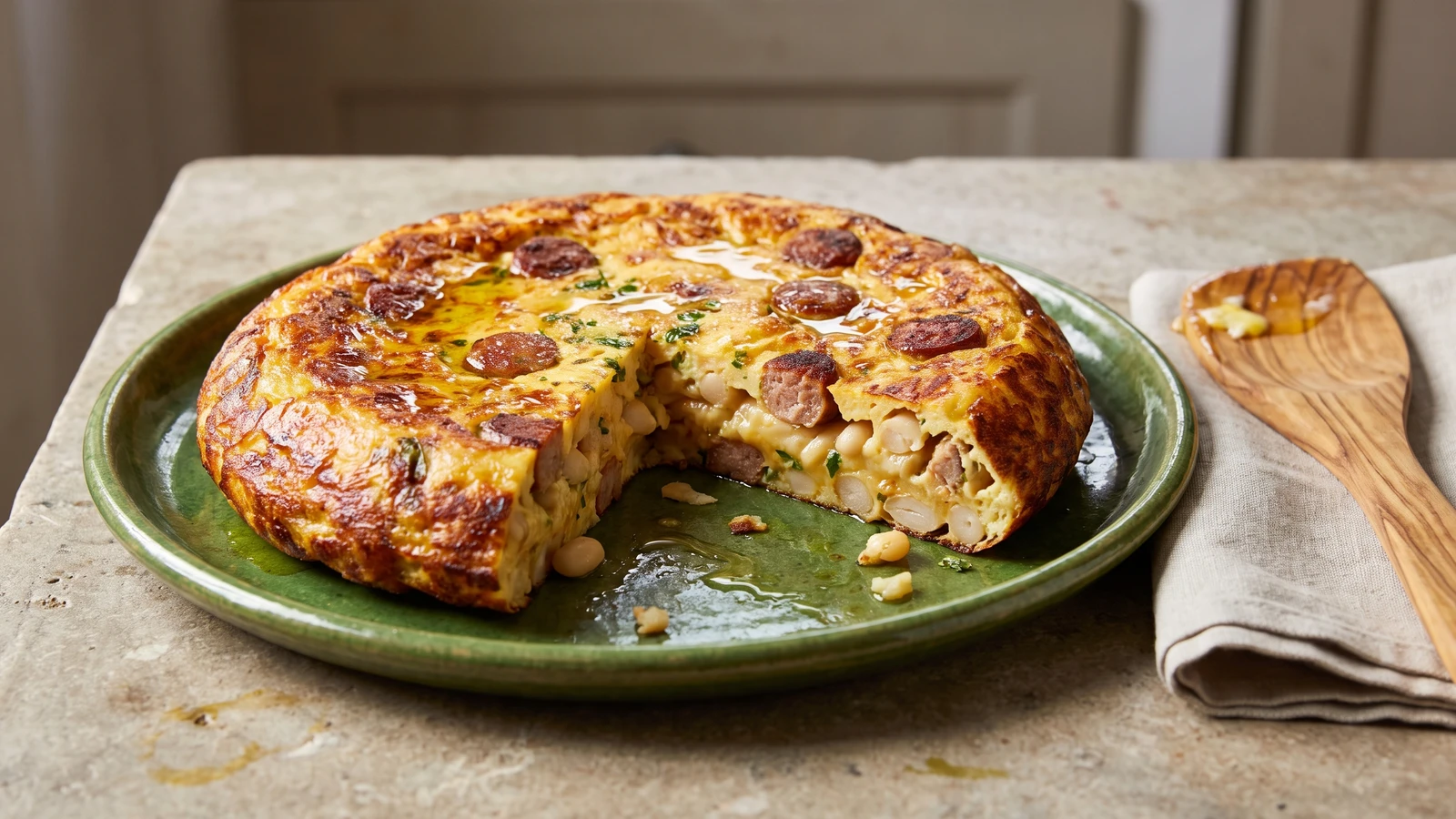
Truita a la catalana brings Catalonia's old pairing of mongetes and botifarra into one thick omelette: brown the sausage and beans first, then add the eggs and flip with conviction.
Truita a la catalana belongs to Catalonia, where mongetes, cooked dried white beans, and botifarra have long shared the plate. Here they go into a thick egg omelette, substantial enough for breakfast, lunch, or a plain weeknight supper. That familiar pairing is what makes it Catalan, not simply another bean omelette.
The method that decides it is the browning. Drain the beans well, dry them, and give them time in the sausage fat until their edges turn golden and lightly crisp. Wet beans make the eggs watery; properly browned beans stay creamy inside and give the omelette some backbone. Only then does the beaten egg go into the pan.
Mongeta del ganxet, the thin-skinned, hook-shaped bean prized in Catalonia, is excellent here. If you can't find it, use a small cannellini or Great Northern bean. The skin will be a little firmer, but the dish still works. For the botifarra, choose a mild fresh pork sausage without smoke, paprika, or fennel if the Catalan sausage isn't sold where you live. No hace falta haber pisado España. Dry the beans, brown the filling, and make the flip in one movement. Siempre sale, si lo sigues.
Truita a la catalana grows from botifarra amb mongetes, the Catalan pairing served in fondes and taverns as sturdy everyday food. The prized mongeta del ganxet is rooted in the comarques of Vallès, Maresme, and La Selva, while botifarra came from the matança, the household pig slaughter that preserved the animal for the months ahead. Folding cooked beans and sliced sausage into egg is a thrifty home-kitchen treatment of that same larder, turning a little of each into a complete meal.
Quantity
120g
soaked in cold water for 8 to 12 hours
Quantity
1
Quantity
180g
well chilled and cut into 1cm slices
Quantity
6, about 300g without shells
Quantity
1 small clove, about 5g
finely chopped
Quantity
8g
finely chopped
Quantity
30ml
divided
Quantity
5g
divided
| Ingredient | Quantity |
|---|---|
| dried white beans, preferably mongeta del ganxetsoaked in cold water for 8 to 12 hours | 120g |
| bay leaf | 1 |
| fresh botifarrawell chilled and cut into 1cm slices | 180g |
| large eggs | 6, about 300g without shells |
| garlicfinely chopped | 1 small clove, about 5g |
| flat-leaf parsley leavesfinely chopped | 8g |
| extra virgin olive oildivided | 30ml |
| fine sea saltdivided | 5g |
Cover the dried beans with at least three times their volume of cold water and soak them for 8 to 12 hours. They should swell evenly and lose their wrinkled appearance. Drain and discard the soaking water.
Put the drained beans and bay leaf in a saucepan and cover them with fresh cold water by 5cm. Bring slowly to a simmer, skim away any foam, and lower the heat until the water barely trembles. Cook for 45 to 70 minutes, depending on the bean, until one crushes creamy between your fingers but still holds its shape. Add 2g of the salt for the final 10 minutes.
Drain the beans carefully and discard the bay leaf. Spread the beans on a clean tea towel or a wide plate for 10 minutes so their surfaces dry. You should have about 280g cooked beans. Don't skip the drying: surface water makes them spit in the pan and leaves the omelette wet.
Crack the eggs into a large bowl. Add the remaining 3g salt and beat just until the whites and yolks are fully joined, without whipping in a great deal of air. Stir in the chopped parsley and set the bowl beside the stove.
Heat 15ml olive oil in a 24cm non-stick or well-seasoned frying pan over medium heat. Add the chilled botifarra slices in one layer and cook for 6 to 8 minutes, turning once, until browned at the edges and cooked through. The centre should no longer be pink, or should register 71°C. Lift the sausage onto a plate, leaving its rendered fat in the pan.
Add the remaining 15ml olive oil to the pan, followed by the dried beans. Spread them out and leave them untouched for 2 minutes, then turn them gently and cook for another 4 to 5 minutes. They should be golden at several edges while remaining creamy inside. Return the botifarra, add the garlic, and cook for 30 seconds, just until the garlic smells sweet.
Spread the beans and sausage evenly across the pan and lower the heat to medium-low. Pour in the beaten eggs, moving the pan so they run between the pieces. Draw a spatula around the edge once or twice during the first minute, then leave the omelette alone for 4 to 5 minutes. It is ready to turn when the base is golden, the rim is firm, and the top remains moist but no longer liquid.
Loosen the edge with a spatula. Cover the pan with a flat plate wider than the rim, hold the two firmly together, and invert them in one committed movement. Slide the omelette back into the pan and cook the second side for 1 to 2 minutes, until the centre is just set. If the edge catches, tuck it underneath with the spatula. Nadie nace sabiendo. Rest the truita for 5 minutes before cutting it into wedges.
1 serving (about 190g)
Culinary guides, cultural storytelling, and the editorial depth that makes cooking meaningful.
Discover Culinary ExplorerChef Isabel
Duelos y quebrantos is Castilla-La Mancha in one pan: chorizo and bacon rendered slowly, then eggs folded through until soft, the plain Saturday meal Cervantes set on Don Quixote's table.
Chef Isabel
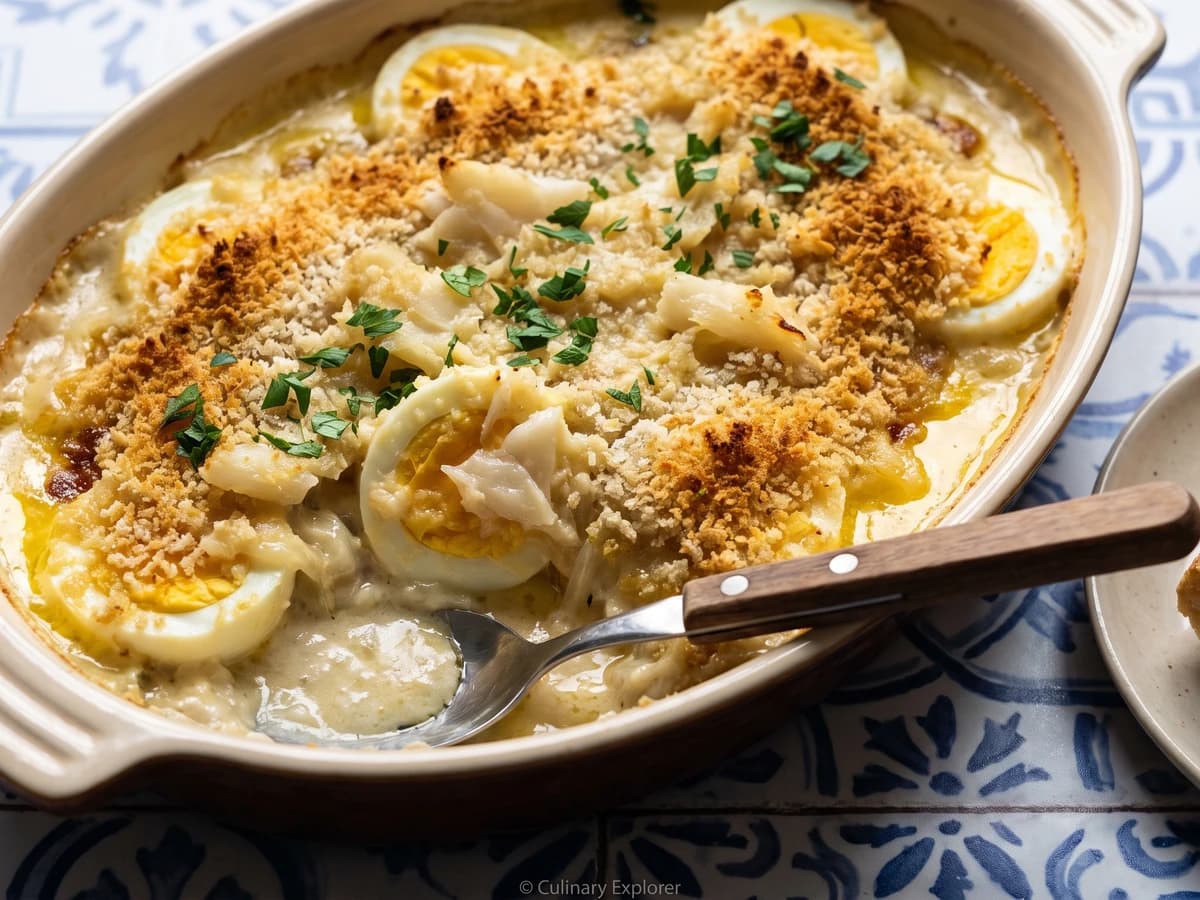
Donostia's baked eggs sit beneath a slow, sweet onion and bacalao sauce, with a fine breadcrumb crust browned under the grill. Desalt the cod properly and the rest is straightforward.
Chef Isabel
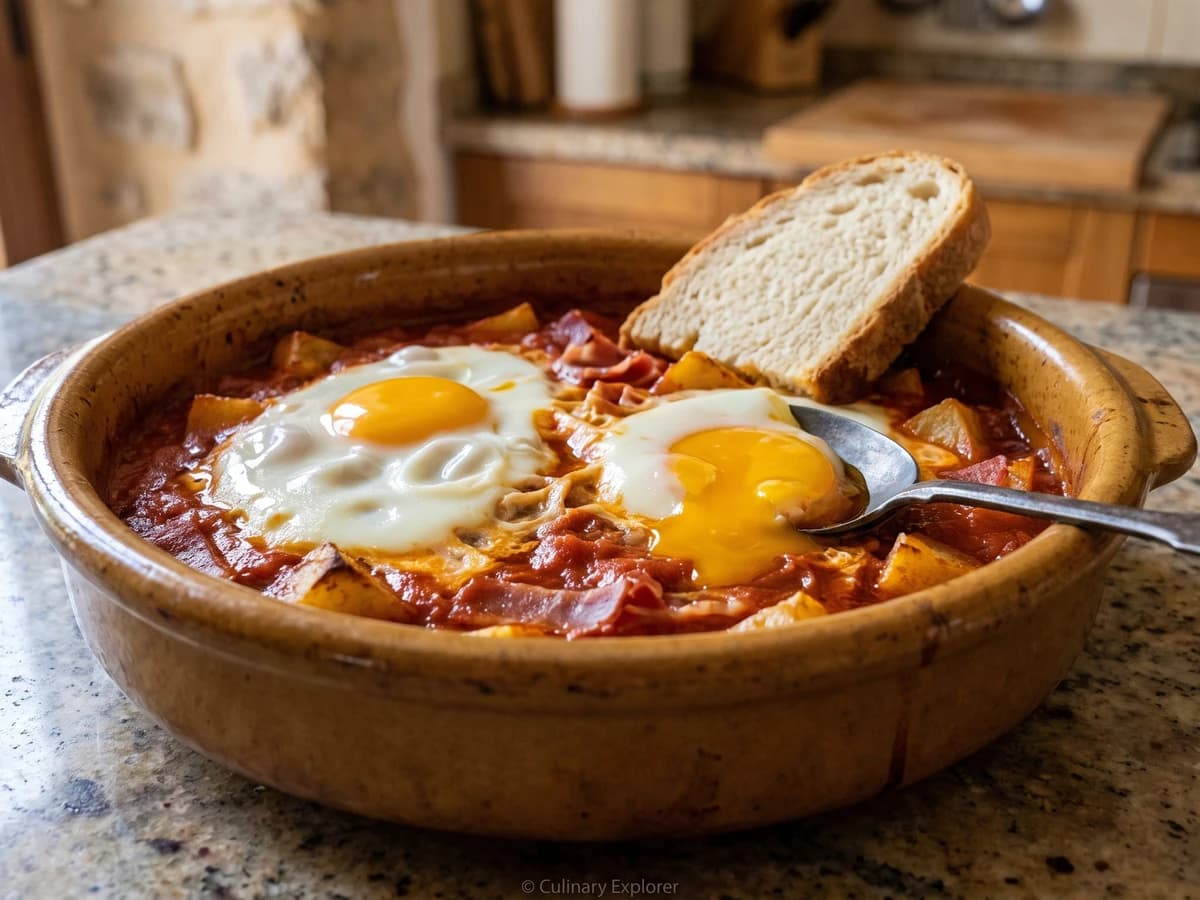
Extremadura sets eggs into a thick bed of fried potato, tomato sofrito, jamón, and its own smoky pimentón, then bakes them just until the whites hold and the yolks stay soft.
Chef Isabel
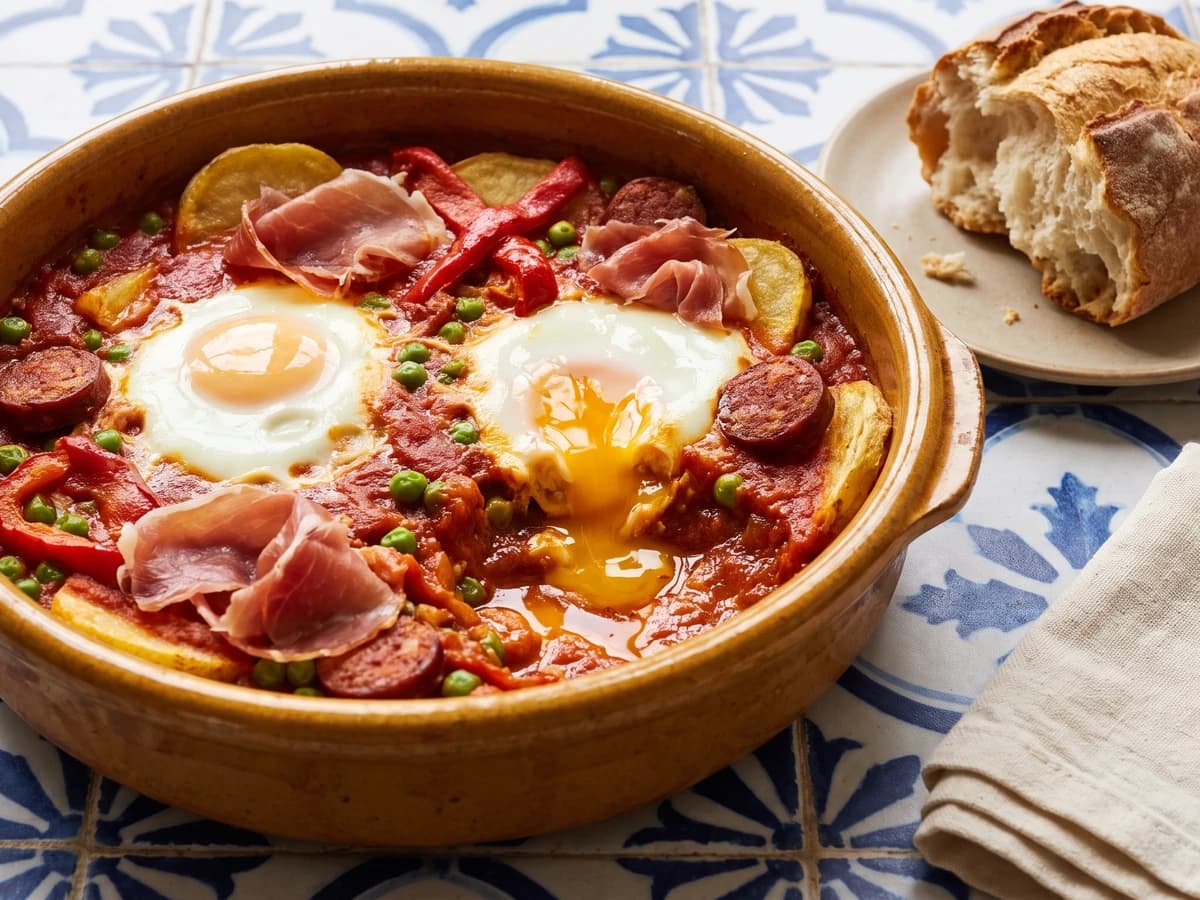
Huevos a la flamenca are Seville in a cazuela: eggs baked over a dark, sweet tomato sofrito with potatoes, peas, peppers, jamón and chorizo, pulled while the whites set and the yolks still run.