Chef Isabel
Duelos y Quebrantos Manchegos
Duelos y quebrantos is Castilla-La Mancha in one pan: chorizo and bacon rendered slowly, then eggs folded through until soft, the plain Saturday meal Cervantes set on Don Quixote's table.
A cooking platform built around craft, culture, and the stories behind what we eat.
Created by
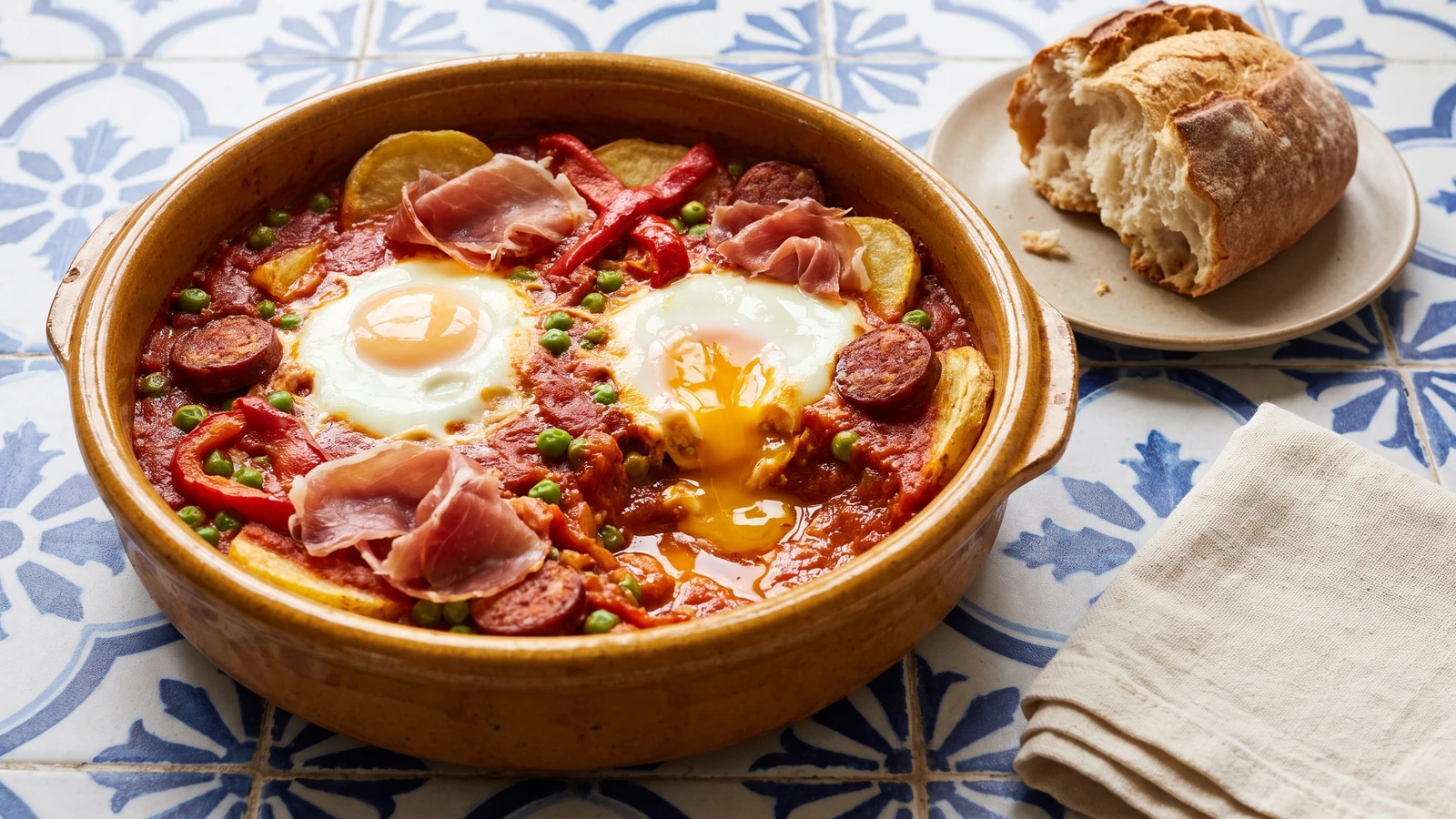
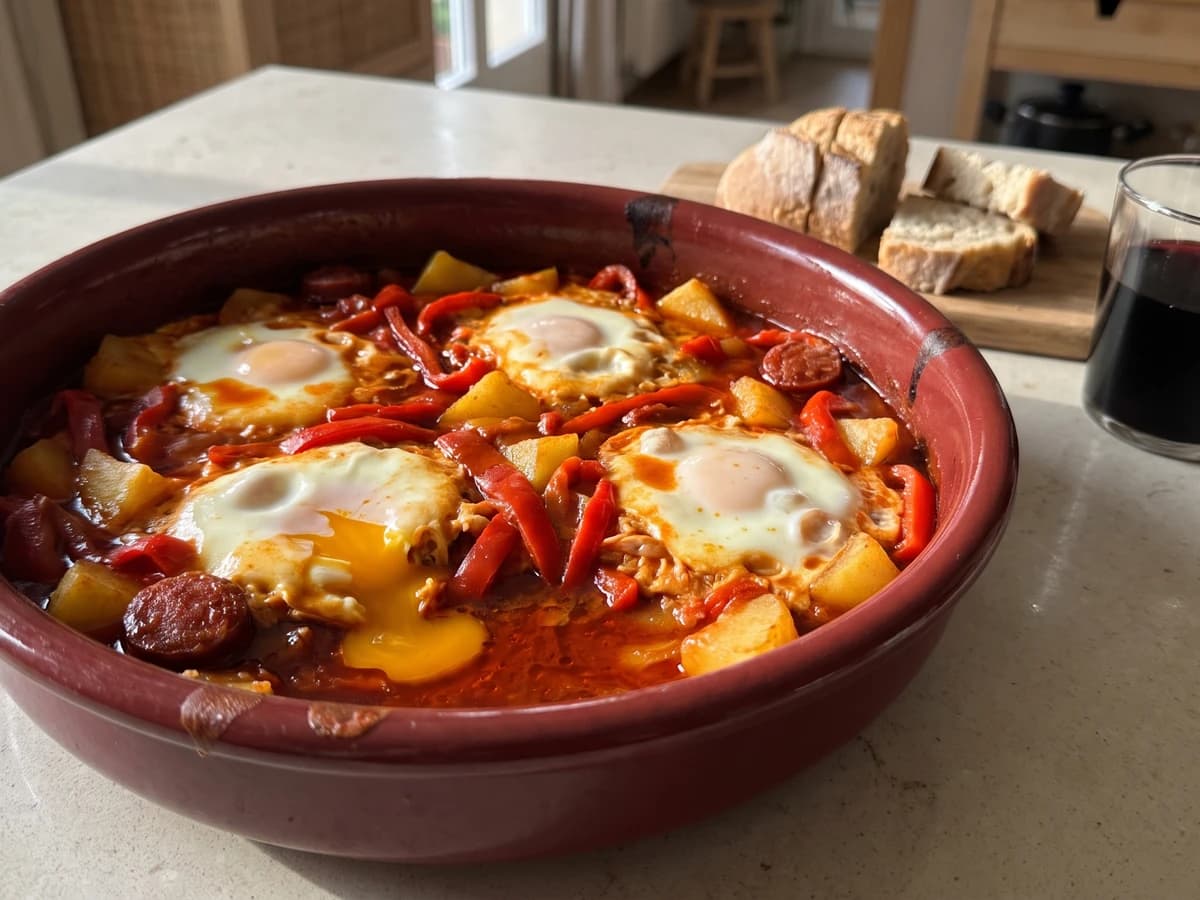
Huevos a la flamenca are Seville in a cazuela: eggs baked over a dark, sweet tomato sofrito with potatoes, peas, peppers, jamón and chorizo, pulled while the whites set and the yolks still run.
Huevos a la flamenca are Sevillian, an Andalusian cazuela of eggs baked over tomato, potatoes, peas, peppers, jamón and chorizo. What marks them out from other baked eggs is that generous vegetable base and the cured larder tucked through it. The eggs cook in the same shallow cazuela that comes to the table, their whites settling into the sauce while the yolks stay loose enough for the bread.
The method that decides the dish is the sofrito, the slow-cooked onion and tomato base. Cook the onion low until dark gold and soft, then reduce the tomato until a spoon drawn across the pan leaves a clean path. That concentration gives the sauce its sweetness and keeps it from leaking water around the eggs. Rush it and you get pale onion, wet tomato and wandering whites. Nobody asked for that.
Far from Seville, use good tinned tomatoes when fresh ones aren't fragrant and heavy; the flavour will be rounder and less bright, but much better than a poor raw tomato. Look for firm, paprika-red Spanish-style chorizo rather than loose raw chorizo. If you can't find it, leave it out and add a little more jamón. My Margin has one warning here: pull the eggs sooner than your eye wants, because the hot barro keeps cooking them at the table. Siempre sale, si lo sigues, it turns out if you follow it.
Huevos a la flamenca belong particularly to Seville, where eggs go into shallow earthenware cazuelas over a tomato base enriched with vegetables from the Andalusian huerta and meats from the cured larder. The dish has never required one fixed vegetable list: peas and asparagus mark spring, while potatoes, artichokes or green beans enter according to the household and market. What stays constant is the Sevillian form, a substantial vegetable sofrito beneath eggs baked in the same cazuela in which they are served.
Quantity
180ml
Quantity
400g
peeled and cut into 1.5cm dice
Quantity
180g
finely diced
Quantity
3 cloves (about 12g)
finely chopped
Quantity
150g
trimmed and cut into 2cm pieces
Quantity
3g (1 teaspoon)
Quantity
800g
crushed by hand with their juice
Quantity
150g
Quantity
150g
drained and cut into strips
Quantity
120g
sliced into 5mm coins
Quantity
80g
cut into short strips
Quantity
8
Quantity
6g
divided
Quantity
1g
Quantity
240g
thickly sliced for serving
| Ingredient | Quantity |
|---|---|
| extra virgin olive oil | 180ml |
| waxy potatoespeeled and cut into 1.5cm dice | 400g |
| onionfinely diced | 180g |
| garlicfinely chopped | 3 cloves (about 12g) |
| green asparagustrimmed and cut into 2cm pieces | 150g |
| sweet pimentón de la Vera | 3g (1 teaspoon) |
| tinned whole peeled tomatoescrushed by hand with their juice | 800g |
| frozen peas | 150g |
| roasted red pimiento morróndrained and cut into strips | 150g |
| semi-cured Spanish chorizosliced into 5mm coins | 120g |
| jamón serranocut into short strips | 80g |
| large eggs | 8 |
| fine sea saltdivided | 6g |
| freshly ground black pepper | 1g |
| rustic bread (optional)thickly sliced for serving | 240g |
Heat the oven to 200°C conventional, 180°C fan, or 400°F. Set four room-temperature 14 to 16cm oven-safe cazuelas de barro on a rimmed baking sheet. Have every vegetable cut before you begin; once the pimentón reaches the pan, the tomato must follow quickly so it cannot scorch.
Warm the olive oil in a 30cm frying pan over medium heat. Add the diced potatoes and fry for 12 to 15 minutes, turning gently, until tender inside and pale gold at the edges. They should hold their shape, not become crisp. Lift them into a sieve with a slotted spoon, season with 2g of the salt and leave them to drain. Strain the oil and measure 45ml back into the pan; keep the remainder for another savoury dish.
Set the pan with the reserved 45ml oil over medium-low heat. Add the chorizo and cook for 2 minutes, just until it releases a little red oil, then lift it out and reserve it. Add the onion with 2g salt. Cook gently for 12 to 15 minutes, stirring often, until dark gold, soft and almost jammy. Add the asparagus and cook for 3 minutes, then add the garlic for 1 minute. Take the pan off the heat, stir in the pimentón for 20 seconds, and immediately add the crushed tomatoes.
Return the pan to medium heat until the tomato bubbles, then lower the heat and cook uncovered for 20 to 25 minutes. Stir more frequently as it thickens. It is ready when the colour has deepened to brick red, the oil glints at the edges, and a wooden spoon drawn through the middle leaves a clean path for two seconds. Add the remaining 2g salt and the black pepper. This is the point that decides the dish: a wet sofrito gives you watery eggs.
Stir the fried potatoes, peas, roasted pepper strips and reserved chorizo into the thick sofrito. Cook for 3 minutes so the peas lose their raw chill and everything is hot. Divide the mixture among the four cazuelas and scatter the jamón through it. Make two broad wells in each dish. Crack each egg into a small cup first, then slide one into every well, keeping the yolks whole.
Bake for 7 to 10 minutes, watching closely from the seventh minute. Pull the cazuelas when the whites are opaque and set at the edges but still tremble faintly beside the glossy yolks. The barro carries on cooking after it leaves the oven, so wait only 2 minutes before serving. Put each cazuela on a heatproof plate and bring it to the table with thick bread for the yolk and sofrito.
1 serving (about 610g)
Culinary guides, cultural storytelling, and the editorial depth that makes cooking meaningful.
Discover Culinary ExplorerChef Isabel
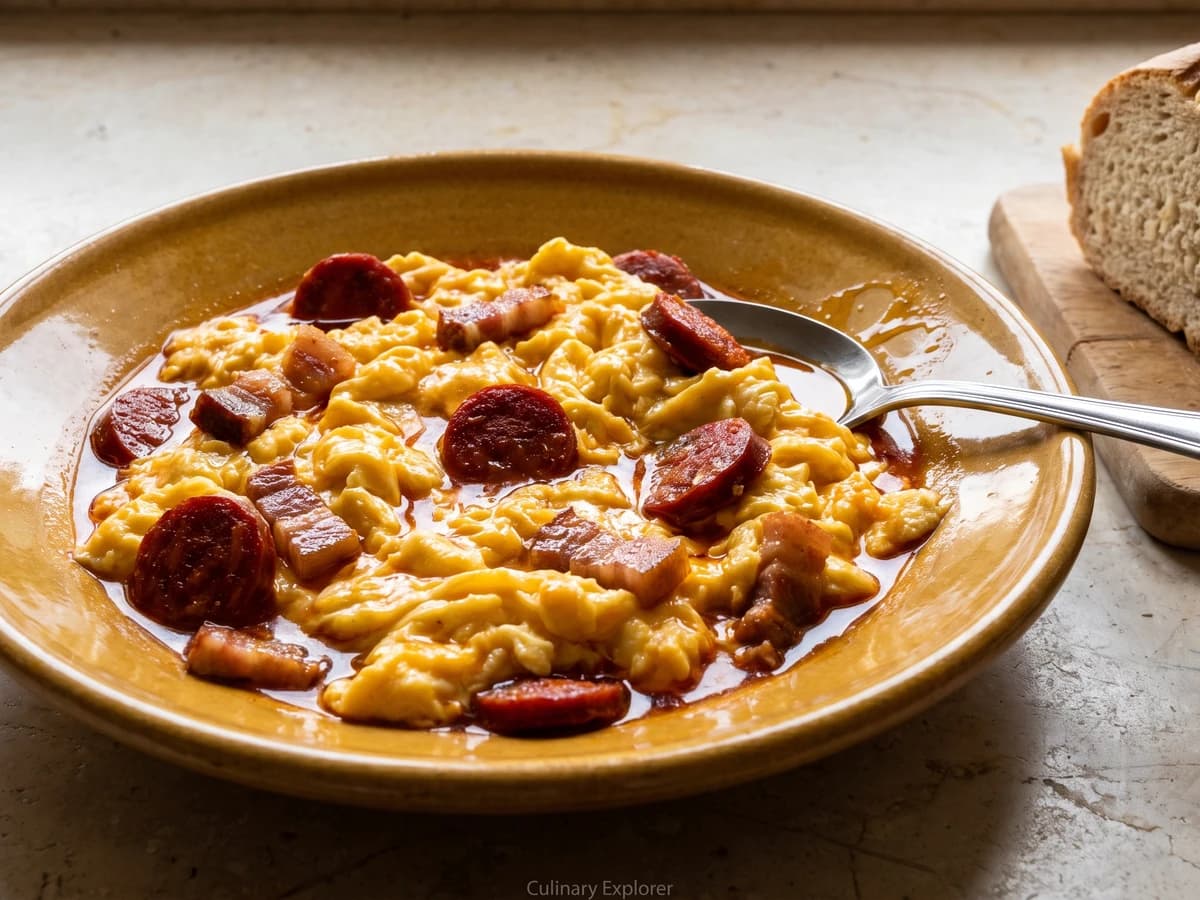
Duelos y quebrantos is Castilla-La Mancha in one pan: chorizo and bacon rendered slowly, then eggs folded through until soft, the plain Saturday meal Cervantes set on Don Quixote's table.
Chef Isabel
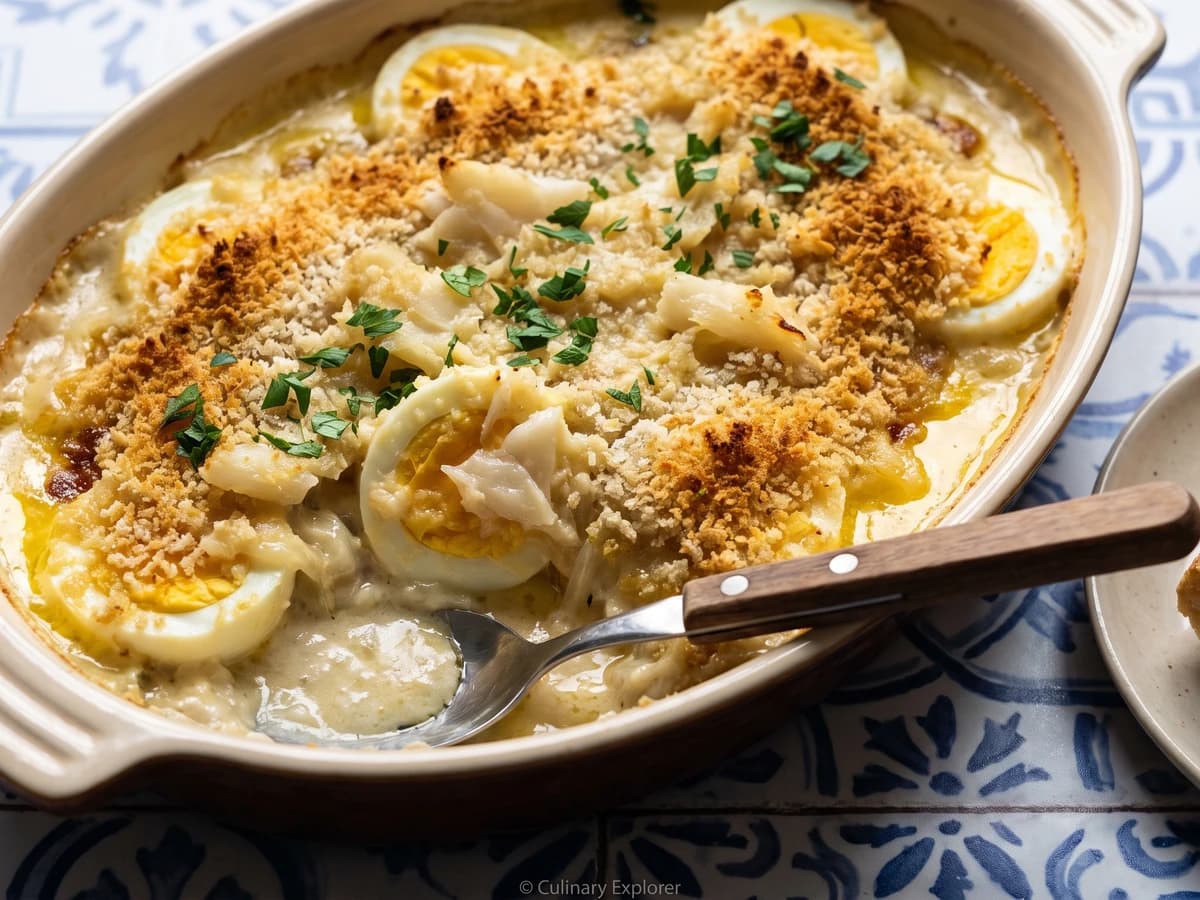
Donostia's baked eggs sit beneath a slow, sweet onion and bacalao sauce, with a fine breadcrumb crust browned under the grill. Desalt the cod properly and the rest is straightforward.
Chef Isabel
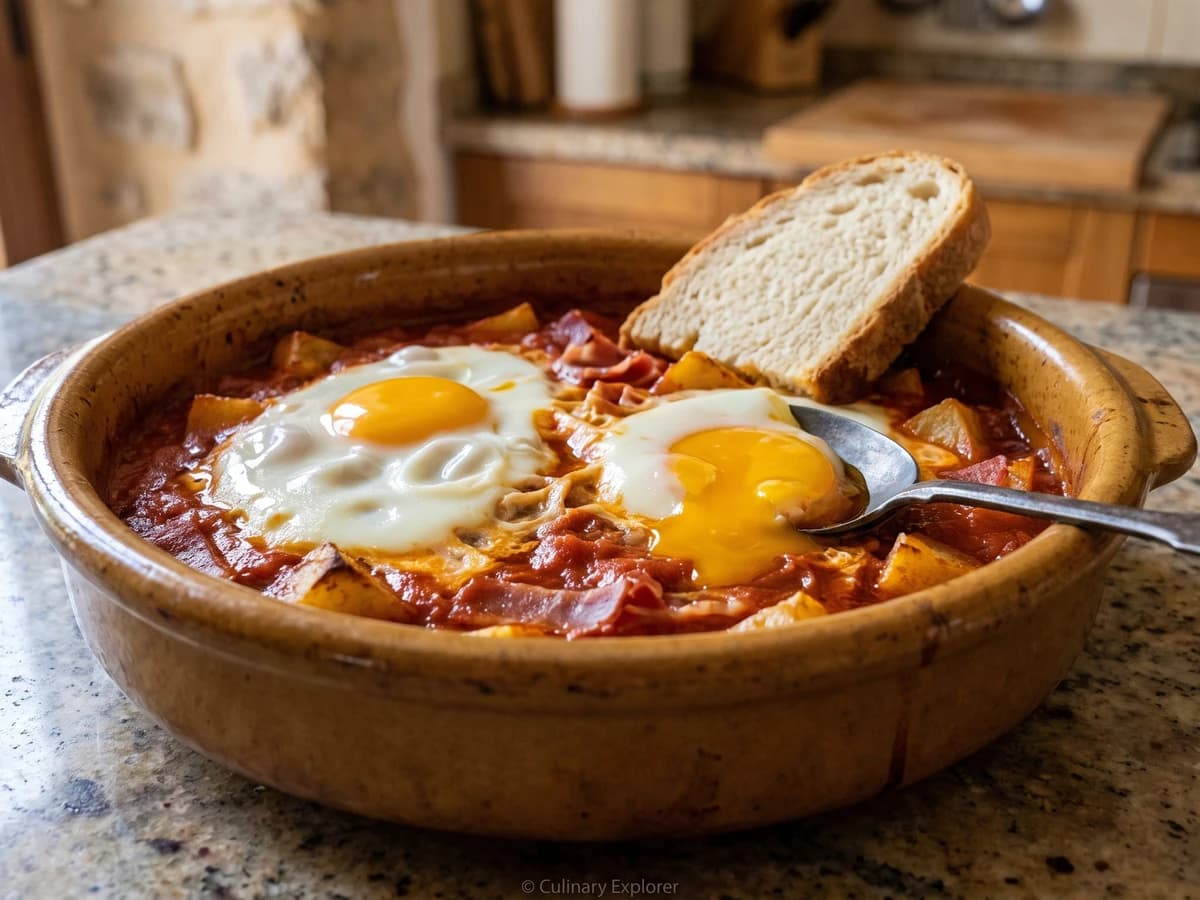
Extremadura sets eggs into a thick bed of fried potato, tomato sofrito, jamón, and its own smoky pimentón, then bakes them just until the whites hold and the yolks stay soft.
Chef Isabel
Huevos a la Riojana turns the Ebro valley larder into supper: potatoes and roasted red peppers simmer with chorizo until glossy, then four eggs set gently in the same cazuela.