Chef Isabel
Duelos y Quebrantos Manchegos
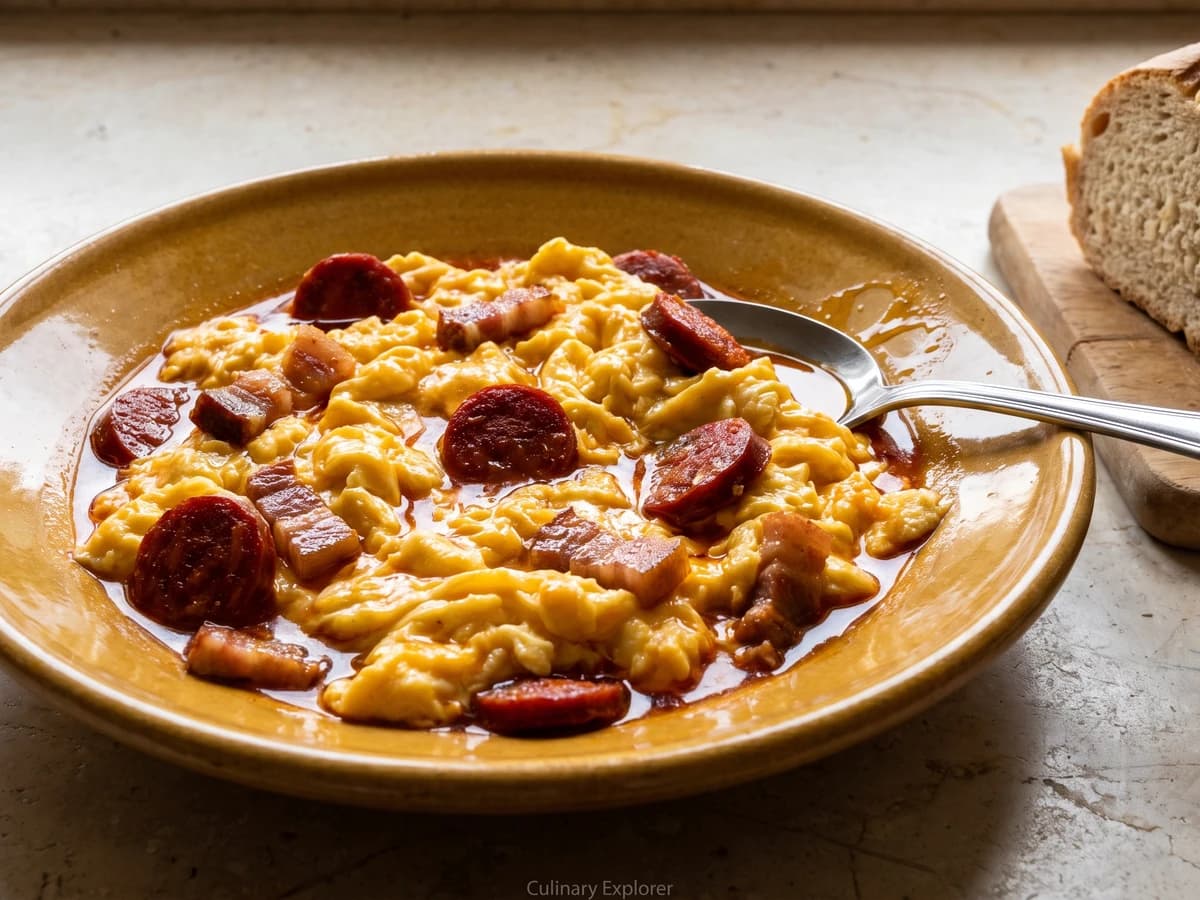
Duelos y quebrantos is Castilla-La Mancha in one pan: chorizo and bacon rendered slowly, then eggs folded through until soft, the plain Saturday meal Cervantes set on Don Quixote's table.
A cooking platform built around craft, culture, and the stories behind what we eat.
Created by
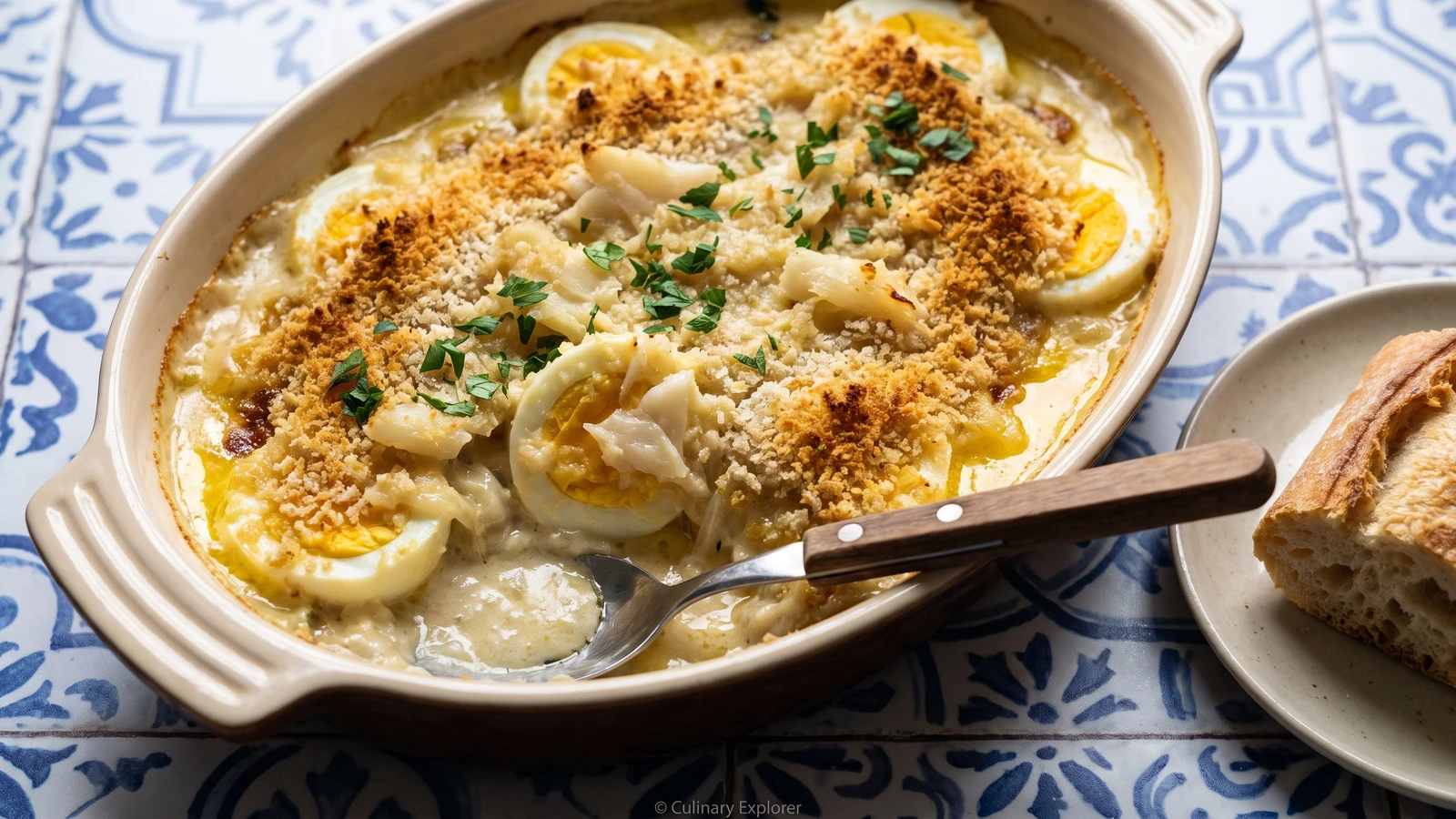
Donostia's baked eggs sit beneath a slow, sweet onion and bacalao sauce, with a fine breadcrumb crust browned under the grill. Desalt the cod properly and the rest is straightforward.
Huevos a la Donostiarra are Basque, and more precisely from Donostia, the Basque name for San Sebastián. Hard-boiled egg halves are covered with bacalao, sweet onion, and a light besamel, then gratinéed until the breadcrumbs turn gold. It is richer than a stuffed egg and gentler than the tomato-based egg dishes found elsewhere. Here the salt cod provides the backbone, while the onion and milk soften its cured edge.
The method that decides the dish is the onion. Cook it low and patiently until it is very soft, pale gold, and sweet, with no raw bite left. Rush it over high heat and the outside browns before the centre softens, leaving a sharp sauce that makes the remaining salt in the cod seem harsher. Once the onion is right, the besamel is straightforward and the eggs need only a few minutes under the grill.
If dried bacalao is difficult to find, use frozen salt cod sold already desalted. Thaw it in the refrigerator and taste it before seasoning. Salted pollock, abadejo salado, is the honest second choice; it is firmer and a little less deep in flavour, but the method stays the same. Fresh cod lacks the cured taste that makes this Donostiarra dish what it is. My Margin says only this: taste the fish before reaching for the salt. Siempre sale, si lo sigues.
Donostiarra means a person or thing from Donostia, the Basque name for San Sebastián, and the city gives this dish its surname. Basque seafarers and merchants made long-keeping salt cod a foundation of the regional larder, carrying bacalao far beyond the coast where it was landed and traded. Combining it with boiled eggs, sweet onion, and a gratinéed milk sauce belongs to Donostia's generous home and gastronomic-society cooking, where preserved fish could become a dish fit for company.
Quantity
300g
weighed before soaking and desalted for 36 to 48 hours
Quantity
8
Quantity
400g
peeled and thinly sliced
Quantity
30ml
Quantity
50g
divided between the sauce, dish, and topping
Quantity
35g
Quantity
500ml
warmed
Quantity
0.5g (about 1/4 teaspoon)
Quantity
0.25g (about 1/8 teaspoon)
Quantity
25g
Quantity
5g
finely chopped
Quantity
only if needed after tasting
| Ingredient | Quantity |
|---|---|
| thick dried salt cod filletweighed before soaking and desalted for 36 to 48 hours | 300g |
| large eggs | 8 |
| onionspeeled and thinly sliced | 400g |
| extra virgin olive oil | 30ml |
| unsalted butterdivided between the sauce, dish, and topping | 50g |
| plain flour | 35g |
| whole milkwarmed | 500ml |
| ground white pepper | 0.5g (about 1/4 teaspoon) |
| freshly grated nutmeg | 0.25g (about 1/8 teaspoon) |
| fine dry breadcrumbs | 25g |
| flat-leaf parsley (optional)finely chopped | 5g |
| fine salt (optional) | only if needed after tasting |
Rinse the salt crystals from the cod under cold running water. Put it skin-side up in a non-reactive container, cover with at least 5cm of cold water, and refrigerate for 36 to 48 hours. Change the water every 8 to 12 hours. At the final change, pull a small flake from the thickest part, cook it for one minute in simmering water, and taste it. It should remain pleasantly seasoned but not aggressively salty.
Put the eggs in a saucepan and cover them by 3cm with cold water. Bring to a boil, lower the heat, and simmer for 9 minutes. Transfer them immediately to cold water and leave for 10 minutes. Peel carefully, cut each egg lengthwise, and arrange the 16 halves cut-side up in a buttered 30 by 22cm gratin dish.
Warm the olive oil with 30g of the butter in a wide frying pan over low heat. Add the sliced onions without salt and cook for 25 to 30 minutes, stirring every few minutes, until collapsed, pale gold, and sweet. They must soften all the way through without crisp edges. If they begin catching before they are tender, add 15ml water and lower the heat. This slow cooking is what mellows the salt cod later.
Drain the cod and pat it thoroughly dry. Remove the skin and every bone, then break the flesh into flakes about 2cm wide. Fold the cod into the onion and cook gently for 3 minutes, just until the flakes become opaque. Do not fry it hard or it will tighten and turn woolly.
Sprinkle the flour evenly over the onion and cod. Stir over low heat for 2 minutes so the flour loses its raw taste. Add the warm milk in four additions, stirring well after each one. Simmer gently for 5 to 7 minutes, stirring along the base of the pan, until the sauce is smooth and thick enough to coat the eggs without running straight to the bottom of the dish. Season with the white pepper and nutmeg. Taste before adding any salt; properly desalted bacalao usually supplies enough.
Spoon the onion and bacalao sauce over the egg halves, making sure each receives several flakes of fish. Spread the remaining sauce between them in an even layer. Mix the breadcrumbs with the remaining 15g butter, rubbing them together with your fingertips, and scatter the mixture lightly over the top.
Heat the grill to high and set the dish 12 to 15cm below it. Grill for 3 to 5 minutes, watching continuously, until the breadcrumbs are golden in patches and the sauce bubbles around the edges. The eggs are already cooked, so leave them only long enough to colour the surface. Rest for 5 minutes, scatter with parsley if using, and serve from the baking dish.
1 serving (about 440g)
Culinary guides, cultural storytelling, and the editorial depth that makes cooking meaningful.
Discover Culinary ExplorerChef Isabel
Duelos y quebrantos is Castilla-La Mancha in one pan: chorizo and bacon rendered slowly, then eggs folded through until soft, the plain Saturday meal Cervantes set on Don Quixote's table.
Chef Isabel
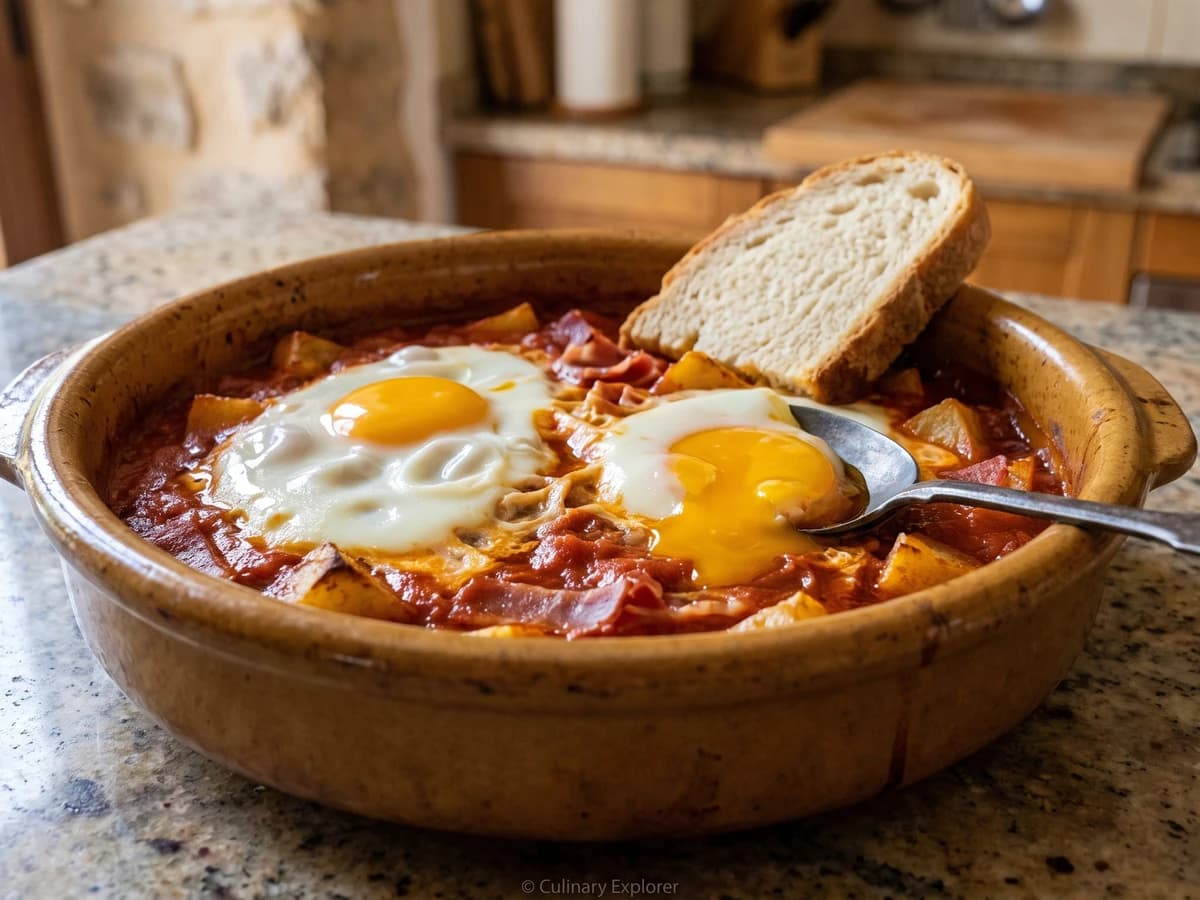
Extremadura sets eggs into a thick bed of fried potato, tomato sofrito, jamón, and its own smoky pimentón, then bakes them just until the whites hold and the yolks stay soft.
Chef Isabel
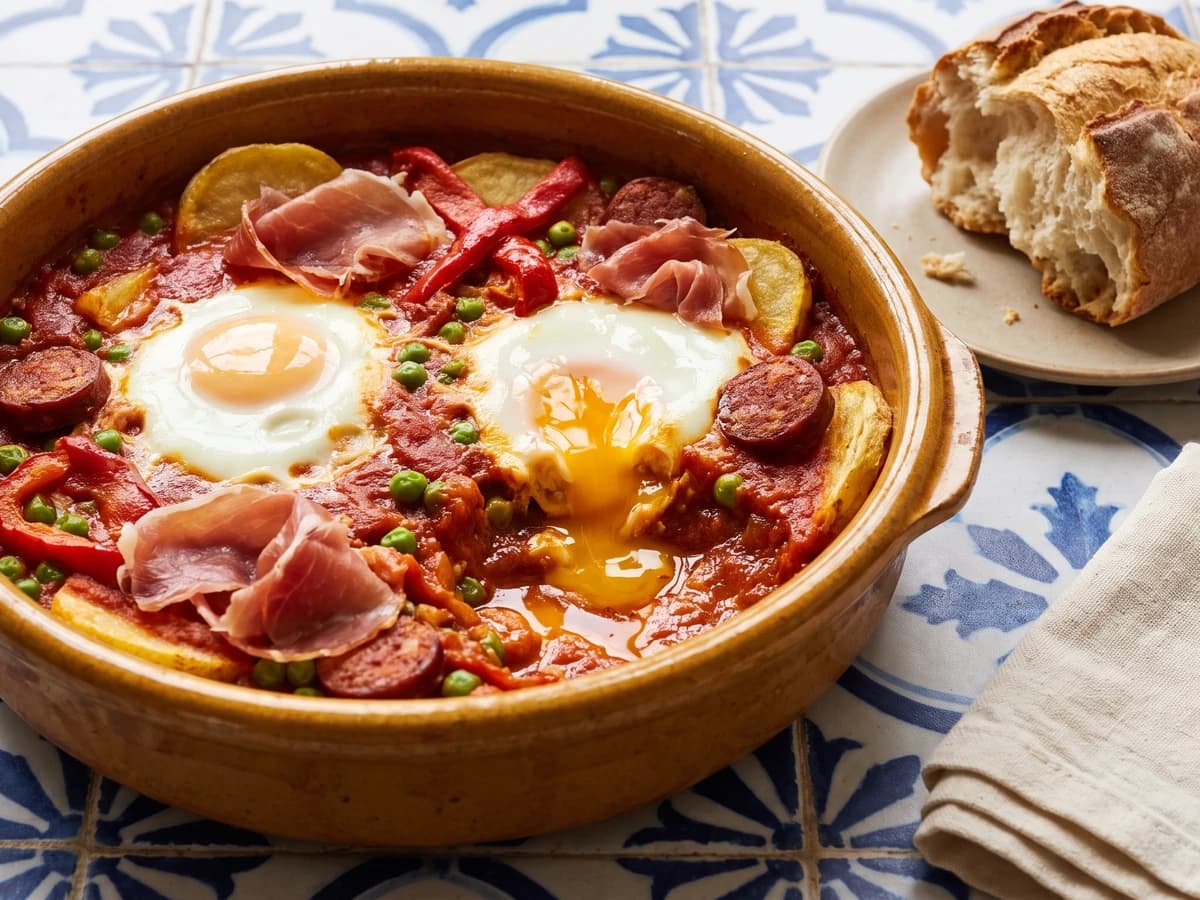
Huevos a la flamenca are Seville in a cazuela: eggs baked over a dark, sweet tomato sofrito with potatoes, peas, peppers, jamón and chorizo, pulled while the whites set and the yolks still run.
Chef Isabel
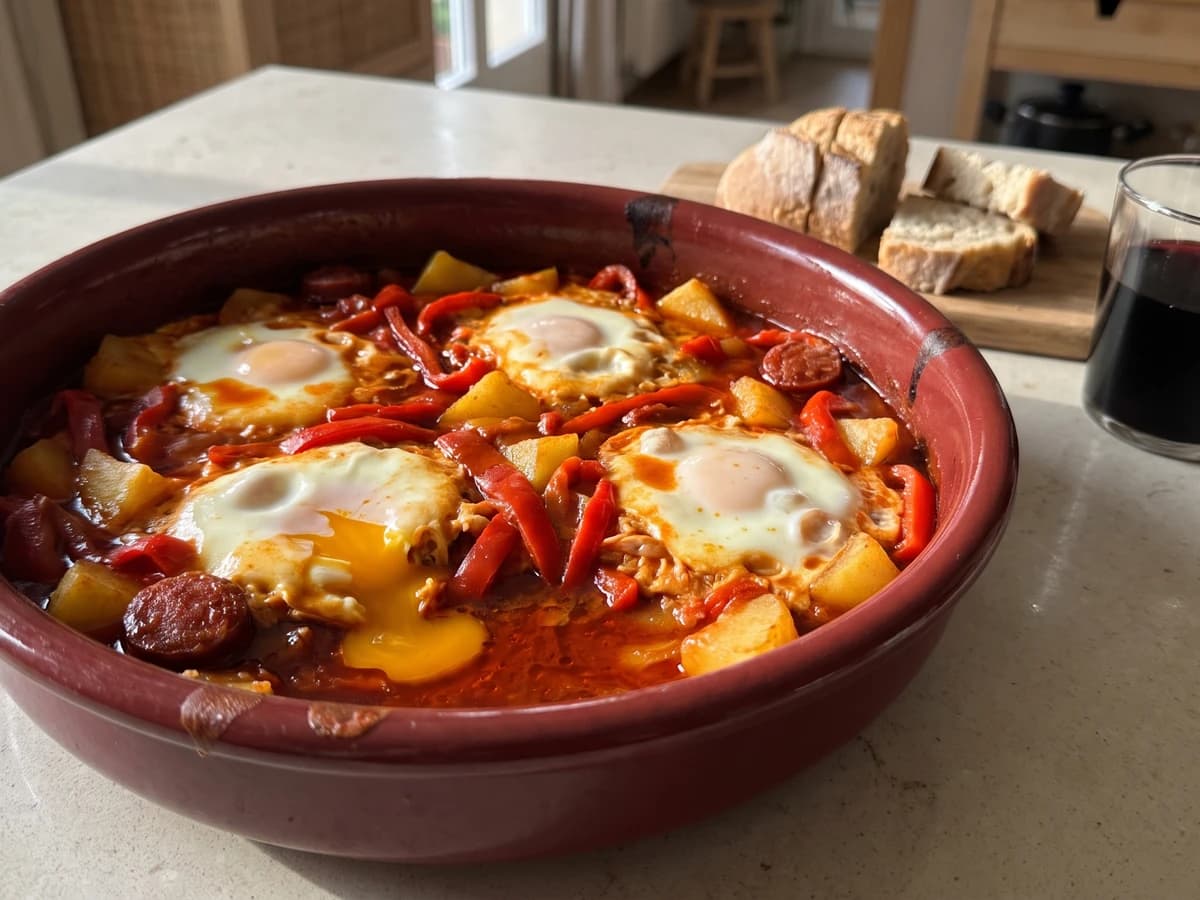
Huevos a la Riojana turns the Ebro valley larder into supper: potatoes and roasted red peppers simmer with chorizo until glossy, then four eggs set gently in the same cazuela.