Chef Isabel
Huevos a la Donostiarra
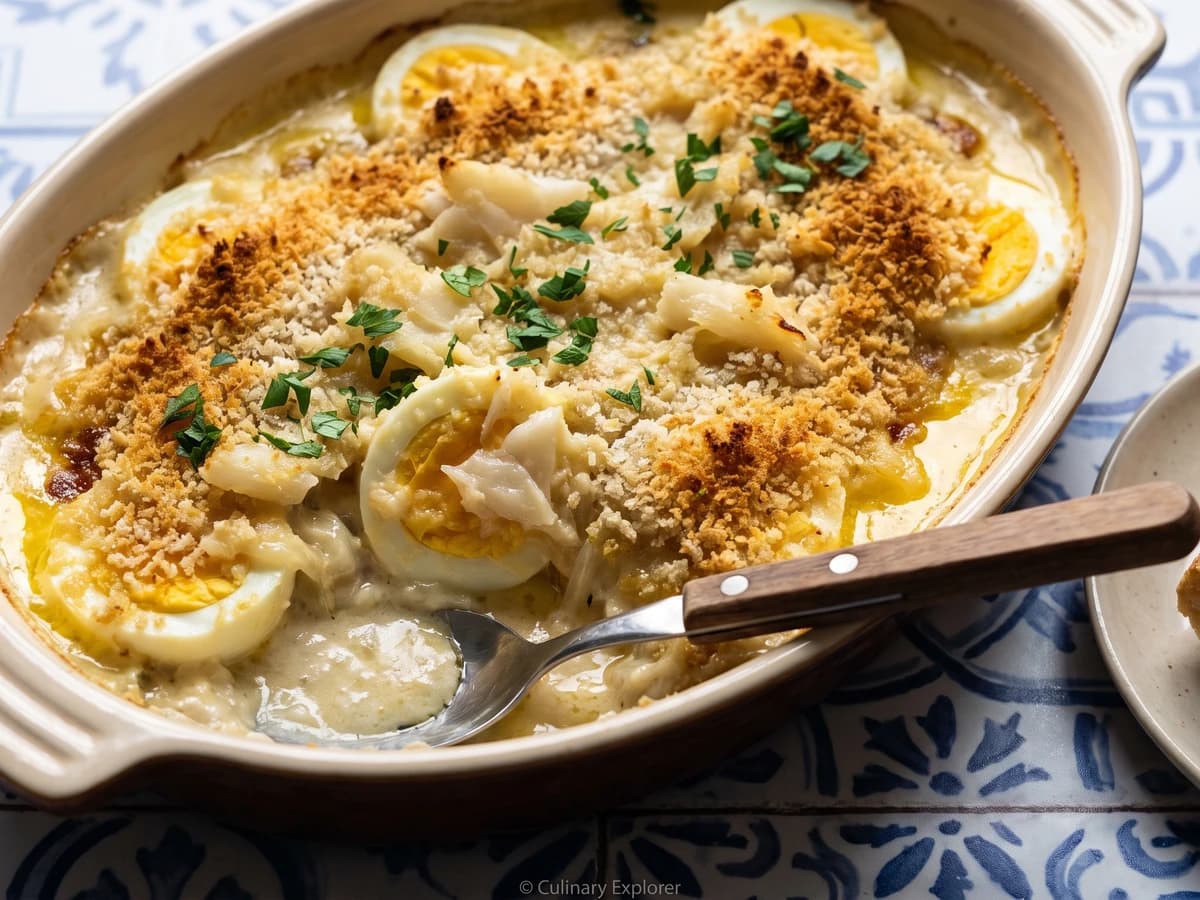
Donostia's baked eggs sit beneath a slow, sweet onion and bacalao sauce, with a fine breadcrumb crust browned under the grill. Desalt the cod properly and the rest is straightforward.
A cooking platform built around craft, culture, and the stories behind what we eat.
Created by
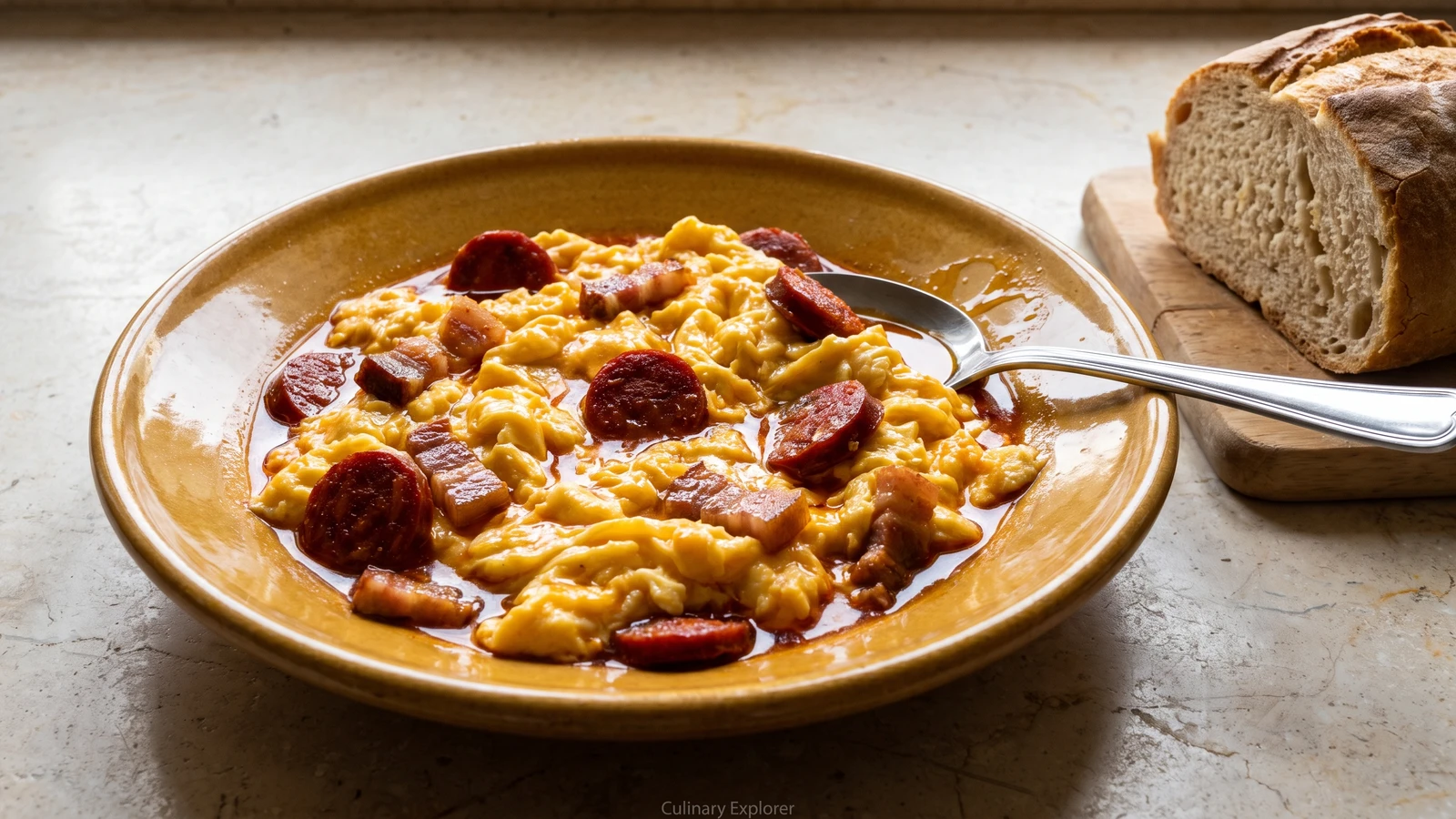
Duelos y quebrantos is Castilla-La Mancha in one pan: chorizo and bacon rendered slowly, then eggs folded through until soft, the plain Saturday meal Cervantes set on Don Quixote's table.
Duelos y quebrantos belongs to Castilla-La Mancha: a loose revuelto, or soft scramble, of eggs, chorizo, and panceta. It isn't a tortilla, and it shouldn't set like one. The pork seasons the eggs with its rendered fat and pimentón, making a plain, rich pan meant for bread and immediate eating.
The method that decides it is the rendering. Start the panceta in a cold pan and cook it slowly, giving the fat time to melt before the edges brown. Add the chorizo afterward so its paprika doesn't scorch. Only then do the eggs go in, over low heat, folded into broad soft curds. Rush the pork and it stays rubbery; rush the eggs and you've made crumbs.
If you can't find Spanish panceta, use unsmoked slab bacon or ordinary streaky bacon. Smoked bacon will work, but its smoke becomes more noticeable than it would be in La Mancha. For the chorizo, a firm Spanish chorizo is best; chistorra is the honest substitute, though it gives a softer, redder scramble and must be cooked through. No hace falta haber pisado España. Keep the heat low and serve it at once. Siempre sale, si lo sigues.
Duelos y quebrantos is rooted in Castilla-La Mancha and appears in the opening chapter of Miguel de Cervantes's Don Quixote as Saturday fare at Alonso Quijano's modest table. Old glosses and household traditions do not agree on one fixed pan: some describe eggs with torreznos, pieces of cured pork belly, while others include lamb brains, and the familiar chorizo-and-panceta revuelto carries forward the same frugal use of the household larder. The often repeated tale that its name records the grief of converts made to eat pork is an explanation, not a settled fact.
Quantity
120g
rind removed and cut into 8mm lardons
Quantity
150g
casing removed and cut into 5mm half-moons
Quantity
8 (about 400g without shells)
Quantity
1g (about 1/4 teaspoon)
use only if needed
Quantity
15ml
use only if the panceta is very lean
Quantity
240g
thickly sliced, for serving
| Ingredient | Quantity |
|---|---|
| cured panceta or unsmoked streaky baconrind removed and cut into 8mm lardons | 120g |
| firm Spanish chorizo, preferably Manchegocasing removed and cut into 5mm half-moons | 150g |
| large eggs | 8 (about 400g without shells) |
| fine sea salt (optional)use only if needed | 1g (about 1/4 teaspoon) |
| extra virgin olive oil (optional)use only if the panceta is very lean | 15ml |
| pan candeal or rustic country bread (optional)thickly sliced, for serving | 240g |
Crack the eggs into a bowl and beat them just until the whites and yolks join. Don't add milk or cream. This is a revuelto held together by egg and rendered pork fat, and dairy only dulls the chorizo and makes the pan watery. Leave the salt out for now because both meats may provide enough.
Put the panceta into a cold 26cm heavy frying pan and set it over low heat. Cook for 7 to 8 minutes, turning occasionally, until the fat has melted into the pan and the edges are lightly browned while the centres remain tender. This slow rendering is the step that decides the dish: it gives you seasoned fat for the eggs instead of tough pieces of hurried bacon.
Add the chorizo and raise the heat to medium-low. Cook for 3 to 4 minutes, turning the pieces, until their edges darken slightly and the fat in the pan turns red with pimentón. Don't let the paprika blacken or it will taste bitter. If more than about 30ml fat has collected, spoon off the excess and keep it for frying potatoes.
Turn the heat to low and pour in the beaten eggs. Wait 10 seconds, then draw a wooden spoon slowly across the bottom and fold the setting egg over itself. Continue with broad, unhurried folds for 2 to 3 minutes. Stop when the curds are soft and glossy with no pool of liquid egg remaining; the heat of the pan will finish them. Taste and add the measured salt only if the pork hasn't already done the job.
Take the pan off the heat at once and transfer the revuelto to a warm shallow dish so it doesn't continue cooking against the hot metal. Set it down with thick slices of bread for carrying the soft egg and pimentón-stained fat. Duelos y quebrantos waits for nobody, which is sensible advice for most scrambled eggs.
1 serving (about 210g)
Culinary guides, cultural storytelling, and the editorial depth that makes cooking meaningful.
Discover Culinary ExplorerChef Isabel
Donostia's baked eggs sit beneath a slow, sweet onion and bacalao sauce, with a fine breadcrumb crust browned under the grill. Desalt the cod properly and the rest is straightforward.
Chef Isabel
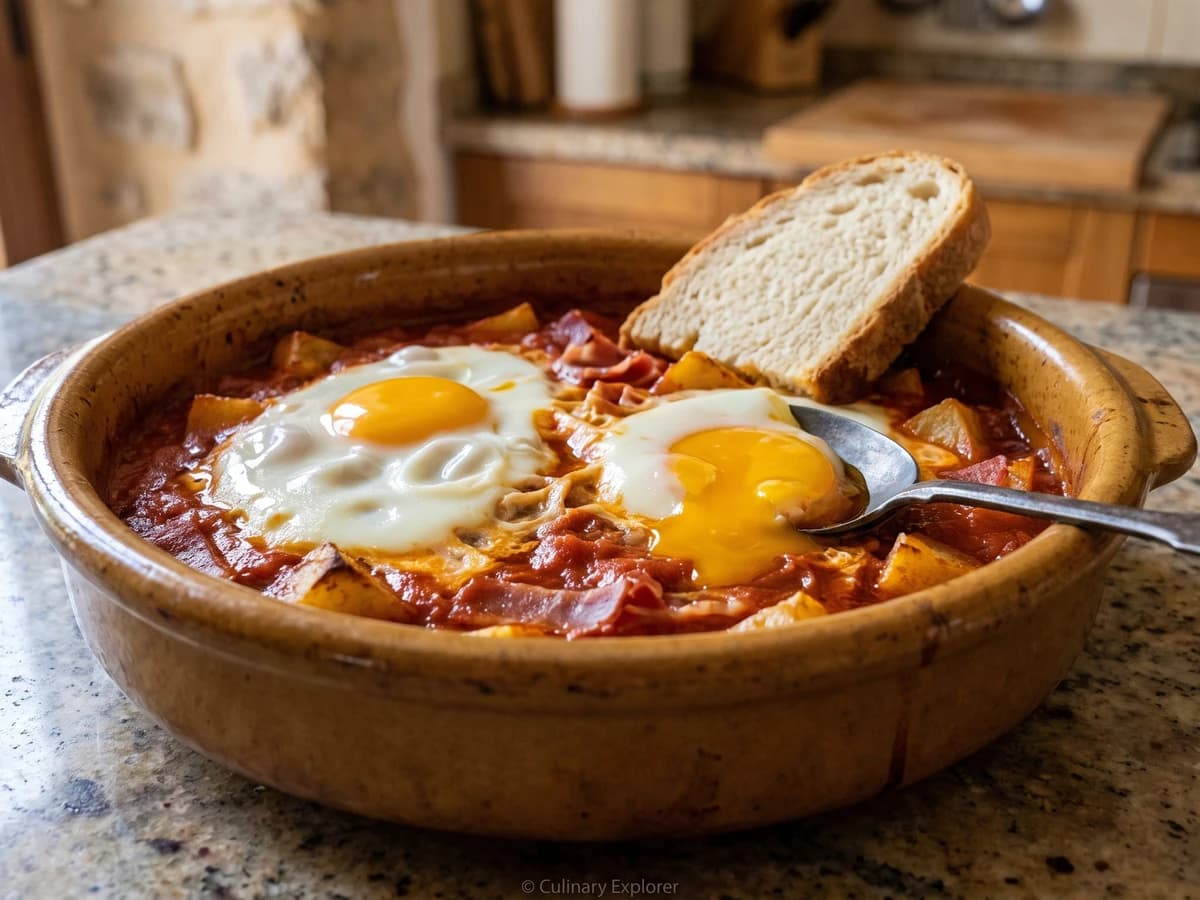
Extremadura sets eggs into a thick bed of fried potato, tomato sofrito, jamón, and its own smoky pimentón, then bakes them just until the whites hold and the yolks stay soft.
Chef Isabel
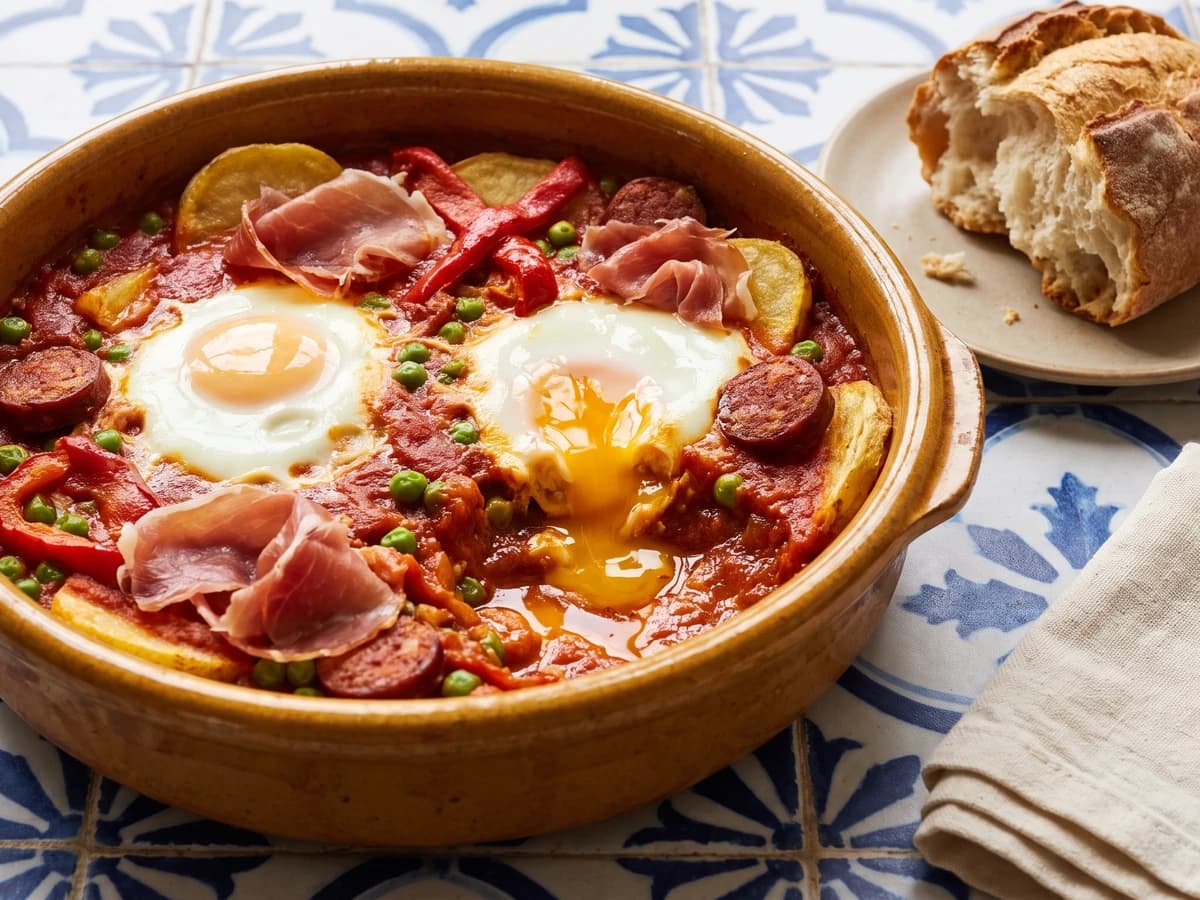
Huevos a la flamenca are Seville in a cazuela: eggs baked over a dark, sweet tomato sofrito with potatoes, peas, peppers, jamón and chorizo, pulled while the whites set and the yolks still run.
Chef Isabel
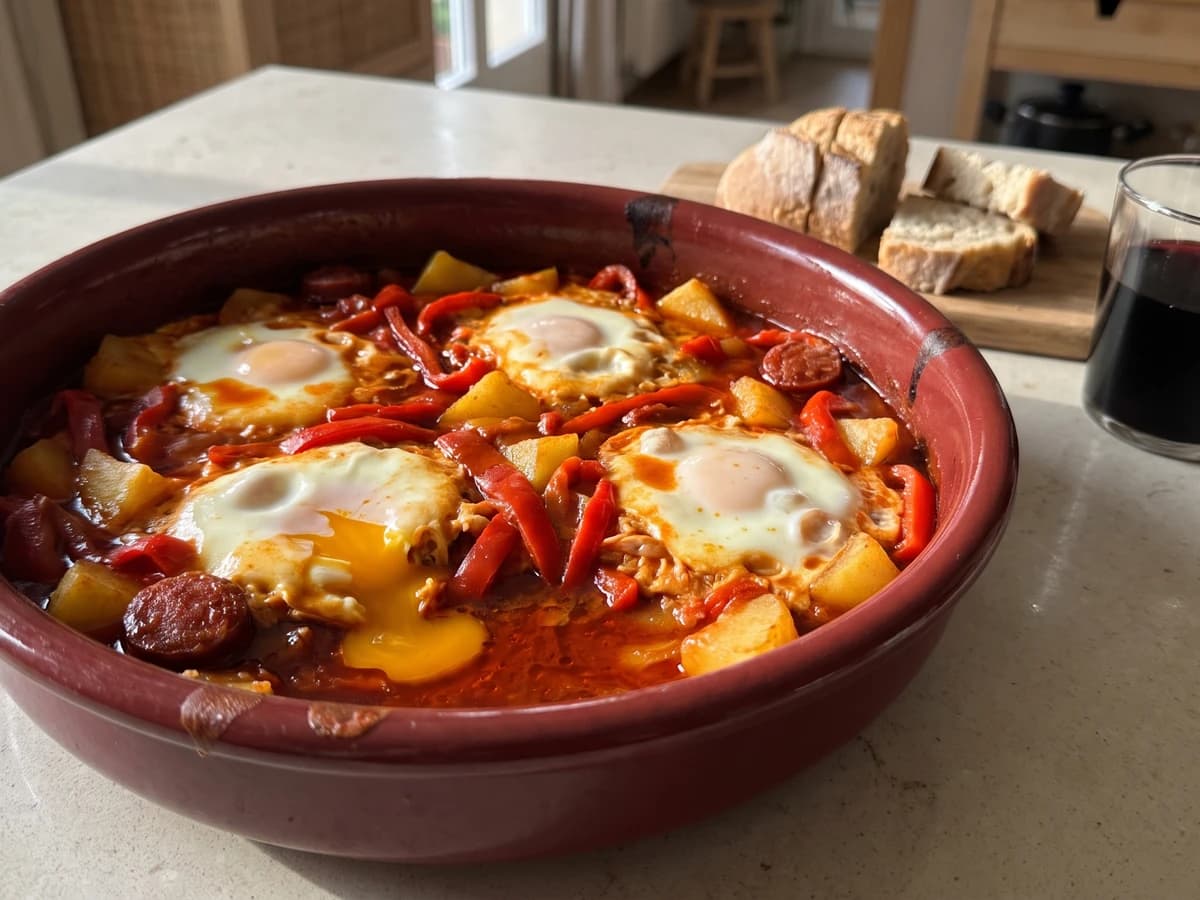
Huevos a la Riojana turns the Ebro valley larder into supper: potatoes and roasted red peppers simmer with chorizo until glossy, then four eggs set gently in the same cazuela.