Chef Isabel
Duelos y Quebrantos Manchegos
Duelos y quebrantos is Castilla-La Mancha in one pan: chorizo and bacon rendered slowly, then eggs folded through until soft, the plain Saturday meal Cervantes set on Don Quixote's table.
A cooking platform built around craft, culture, and the stories behind what we eat.
Created by
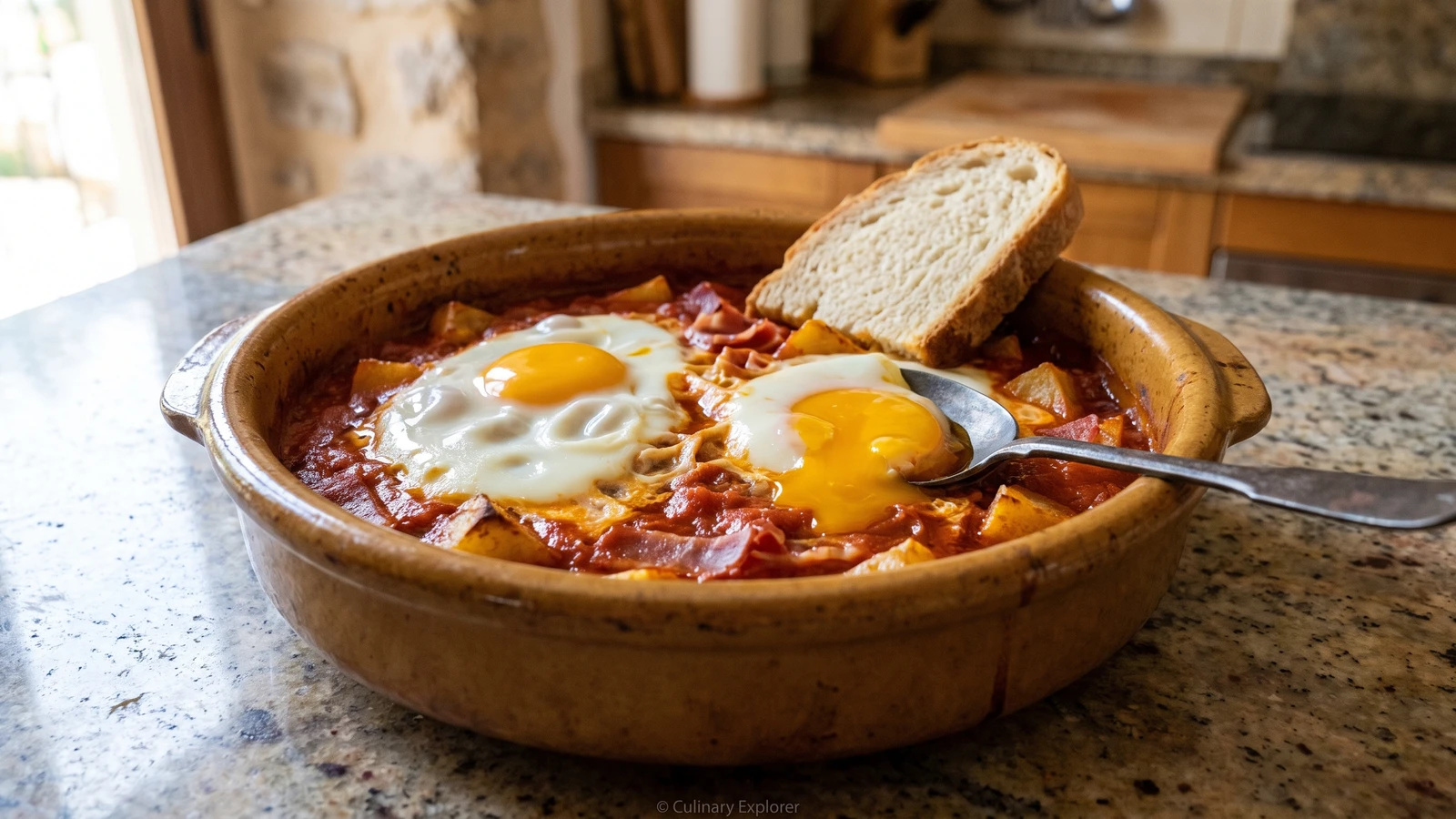
Extremadura sets eggs into a thick bed of fried potato, tomato sofrito, jamón, and its own smoky pimentón, then bakes them just until the whites hold and the yolks stay soft.
Huevos a la extremeña belong to Extremadura: eggs baked in shallow earthenware over fried potatoes and tomato sofrito, with jamón curado and the oak-smoked pimentón de la Vera that gives the dish its regional surname. It is frugal, substantial food, as sensible for a weeknight supper as for a late breakfast. This isn't merely eggs in tomato sauce. The potatoes carry it, the cured ham seasons it, and Extremadura's pimentón marks it.
The method that decides the dish is the sofrito, the slow vegetable base. Cook the onion and pepper until soft and dark gold, then reduce the tomato until a spoon leaves a clean path across the pan. A watery sauce makes the eggs simmer from below while their tops stay raw. A thick one holds them properly, so the whites set and the yolks remain soft. Stir the pimentón in off the heat before the tomato goes in, because scorched pimentón is bitter and no amount of jamón will argue it back into good sense.
Use ripe tomatoes when the market has them. In colder months, whole peeled tomatoes from a tin are the honest choice; they need a few more minutes in the pan and taste deeper, but they are better than a hard winter tomato. Away from Spain, any unsmoked dry-cured ham can stand in for jamón serrano, though it may be softer and less nutty. A good smoked paprika works at a pinch, but it lacks the rounded oak smoke of pimentón de la Vera. No hace falta haber pisado España. My Margin beside this recipe says only: thick sauce, soft yolk.
Huevos a la extremeña come from Extremadura's pastoral and agricultural larder, where potatoes and eggs stretched the cured pork kept after the household matanza. The dehesa, the region's oak pasture, sustained the pigs that became jamón, while peppers in the comarca of La Vera were dried slowly over oak smoke, a method well suited to its humid autumn air and the source of the dish's characteristic pimentón. Household cazuelas vary according to what the curing room held, sometimes jamón and sometimes chorizo, but eggs, potatoes, tomato, and smoked pepper form the regional spine.
Quantity
600g
peeled and cut into 1.5cm cubes
Quantity
120ml
Quantity
180g
finely diced
Quantity
1 medium (about 120g)
seeded and diced
Quantity
2 cloves (about 8g)
minced
Quantity
500g
grated, with the skins discarded
Quantity
400g
crushed by hand
Quantity
3g (about 1 1/2 teaspoons)
Quantity
120g
cut into small strips
Quantity
8
brought to room temperature
Quantity
4g
divided
| Ingredient | Quantity |
|---|---|
| yellow or all-purpose potatoespeeled and cut into 1.5cm cubes | 600g |
| extra virgin olive oil | 120ml |
| onionfinely diced | 180g |
| green frying pepperseeded and diced | 1 medium (about 120g) |
| garlicminced | 2 cloves (about 8g) |
| ripe tomatoesgrated, with the skins discarded | 500g |
| canned whole peeled tomatoes (optional)crushed by hand | 400g |
| sweet pimentón de la Vera | 3g (about 1 1/2 teaspoons) |
| jamón serranocut into small strips | 120g |
| large eggsbrought to room temperature | 8 |
| fine sea saltdivided | 4g |
Set four shallow 15 to 16cm oven-safe cazuelas on a rimmed baking tray. Rub their insides with 5ml of the olive oil. Keep the eggs at room temperature while you cook the base so the whites set promptly in the oven.
Heat the remaining olive oil in a wide frying pan over medium heat. Add the potato cubes and cook for 12 to 15 minutes, turning often, until tender through and lightly golden at the edges. They need colour, not a hard crust, because they still have to drink in the tomato. Lift them out with a slotted spoon, drain well, and season with 2g of the salt.
Pour off the frying oil, leaving 30ml in the pan. Lower the heat to medium-low and add the onion, green pepper, and 1g of the salt. Cook for 12 to 15 minutes, stirring regularly, until the pepper is soft and the onion is dark gold and jammy. Add the garlic and cook for 1 minute. This slow base is the sofrito, and rushing it leaves the whole dish thin and sharp.
Take the pan off the heat, stir in the pimentón for about 10 seconds, then immediately add the grated tomato. Return the pan to medium-low heat and cook for 15 to 20 minutes, stirring more often toward the end, until the sauce is dark, concentrated, and a spoon drawn through it leaves a clean path. Canned tomato may need 5 minutes longer. This thickness decides the dish: watery sofrito boils the eggs from underneath instead of letting them set cleanly. Heat the oven to 220°C conventional or 200°C fan while the tomato reduces.
Fold the fried potatoes and jamón through the finished sofrito, keeping a few pieces of jamón visible on top. Divide the mixture among the four cazuelas and make two shallow hollows in each. Crack an egg into every hollow, keeping the yolks whole.
Scatter the remaining 1g of salt over the whites, avoiding the yolks, and bake for 7 to 10 minutes. Take the cazuelas out when the whites are opaque at the edges and barely set beside the yolks, which should still wobble. Rest for 2 minutes, as the hot barro carries on cooking them. Serve at once with bread for the tomato and yolk. Siempre sale, si lo sigues.
1 serving (about 420g)
Culinary guides, cultural storytelling, and the editorial depth that makes cooking meaningful.
Discover Culinary ExplorerChef Isabel
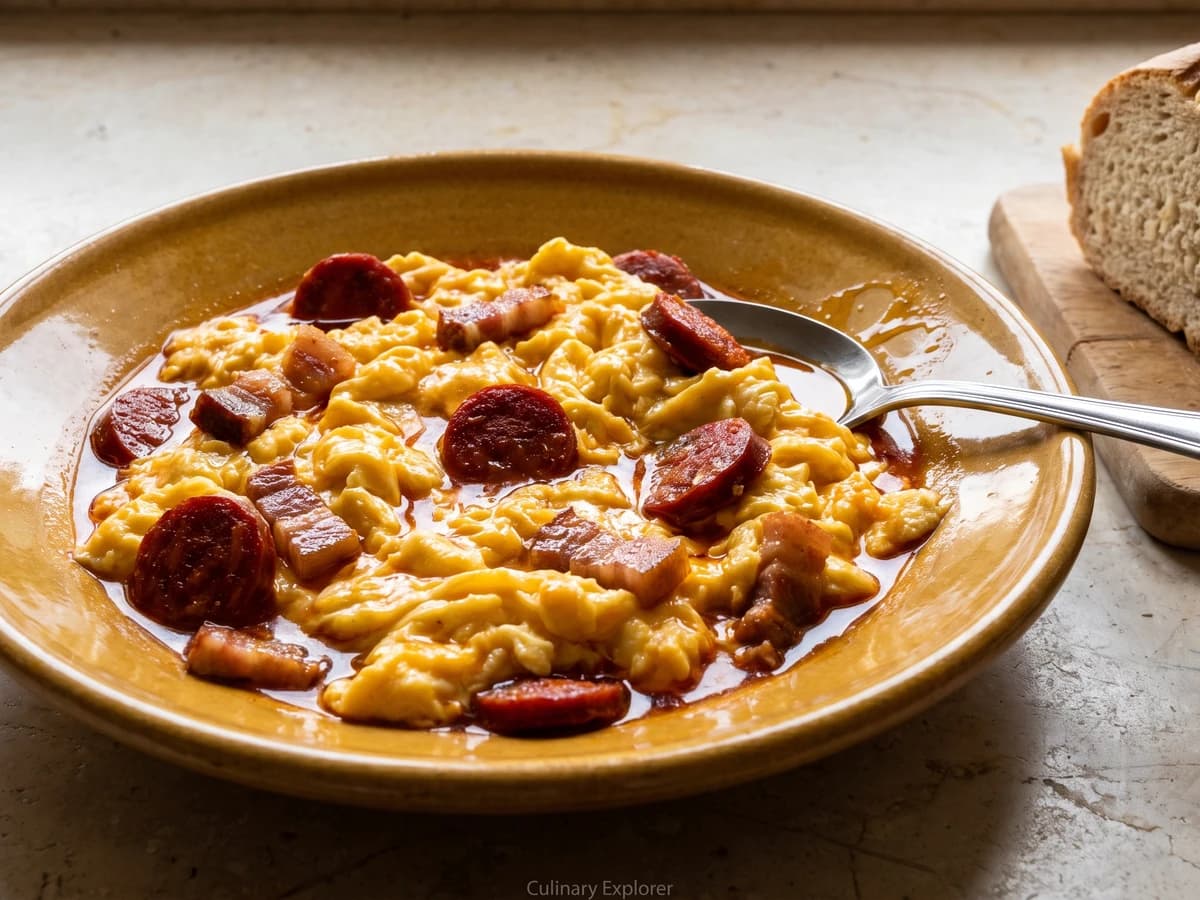
Duelos y quebrantos is Castilla-La Mancha in one pan: chorizo and bacon rendered slowly, then eggs folded through until soft, the plain Saturday meal Cervantes set on Don Quixote's table.
Chef Isabel
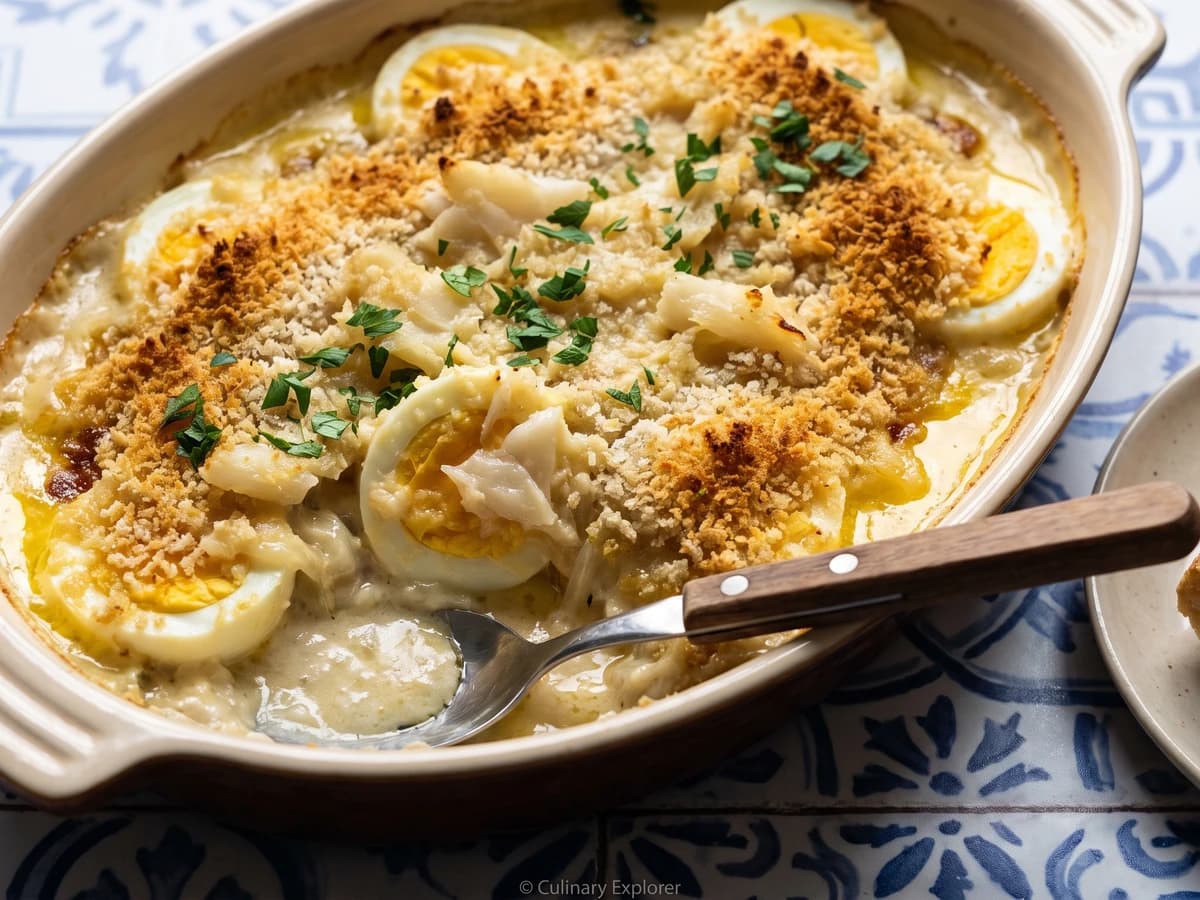
Donostia's baked eggs sit beneath a slow, sweet onion and bacalao sauce, with a fine breadcrumb crust browned under the grill. Desalt the cod properly and the rest is straightforward.
Chef Isabel
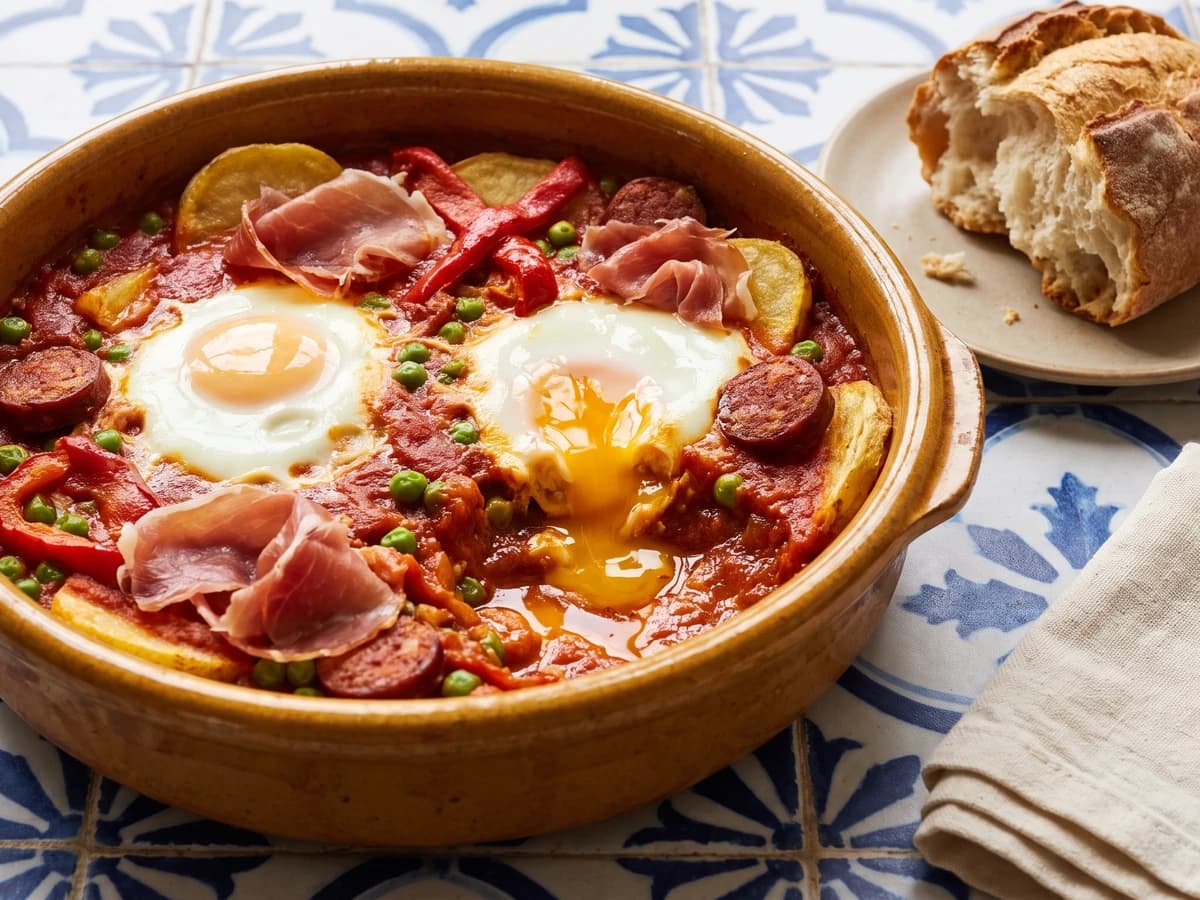
Huevos a la flamenca are Seville in a cazuela: eggs baked over a dark, sweet tomato sofrito with potatoes, peas, peppers, jamón and chorizo, pulled while the whites set and the yolks still run.
Chef Isabel
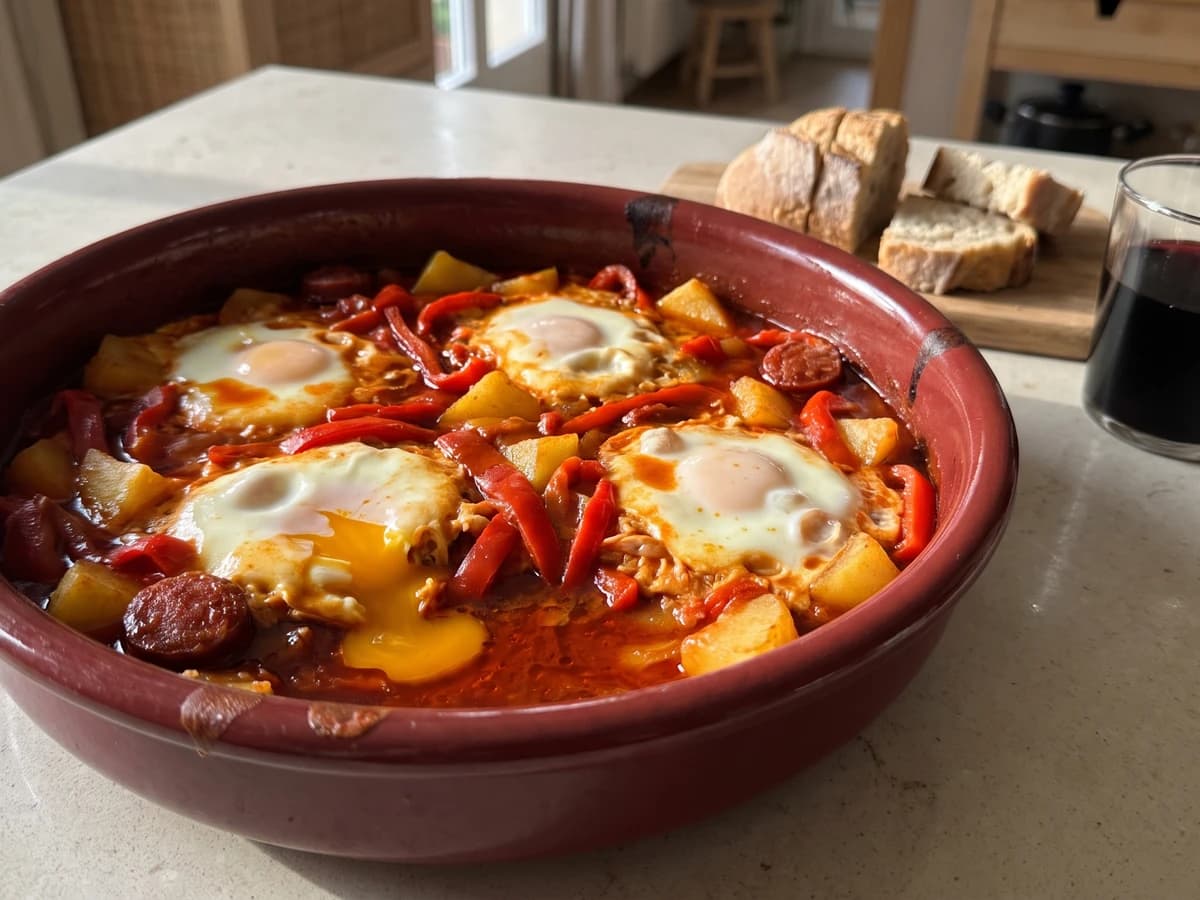
Huevos a la Riojana turns the Ebro valley larder into supper: potatoes and roasted red peppers simmer with chorizo until glossy, then four eggs set gently in the same cazuela.