Chef Isabel
Duelos y Quebrantos Manchegos
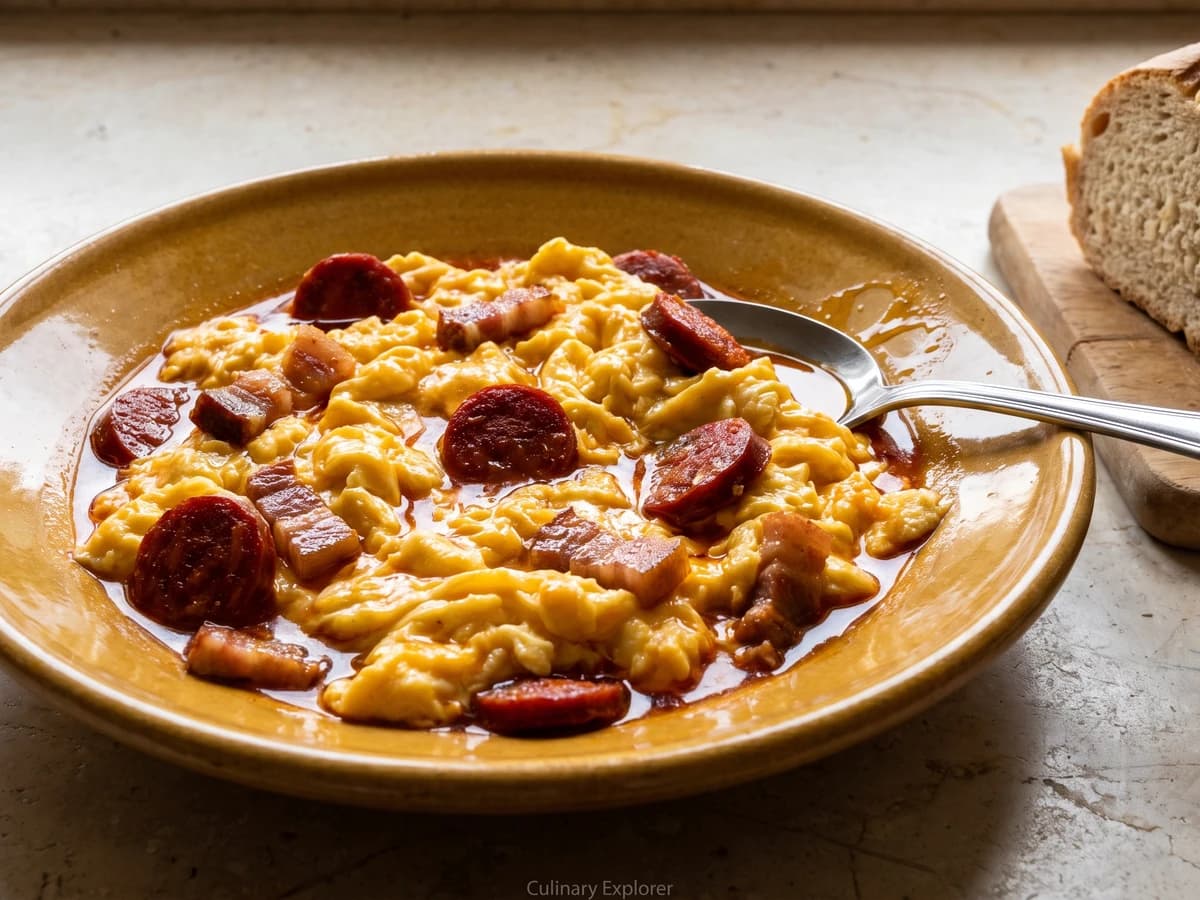
Duelos y quebrantos is Castilla-La Mancha in one pan: chorizo and bacon rendered slowly, then eggs folded through until soft, the plain Saturday meal Cervantes set on Don Quixote's table.
A cooking platform built around craft, culture, and the stories behind what we eat.
Created by
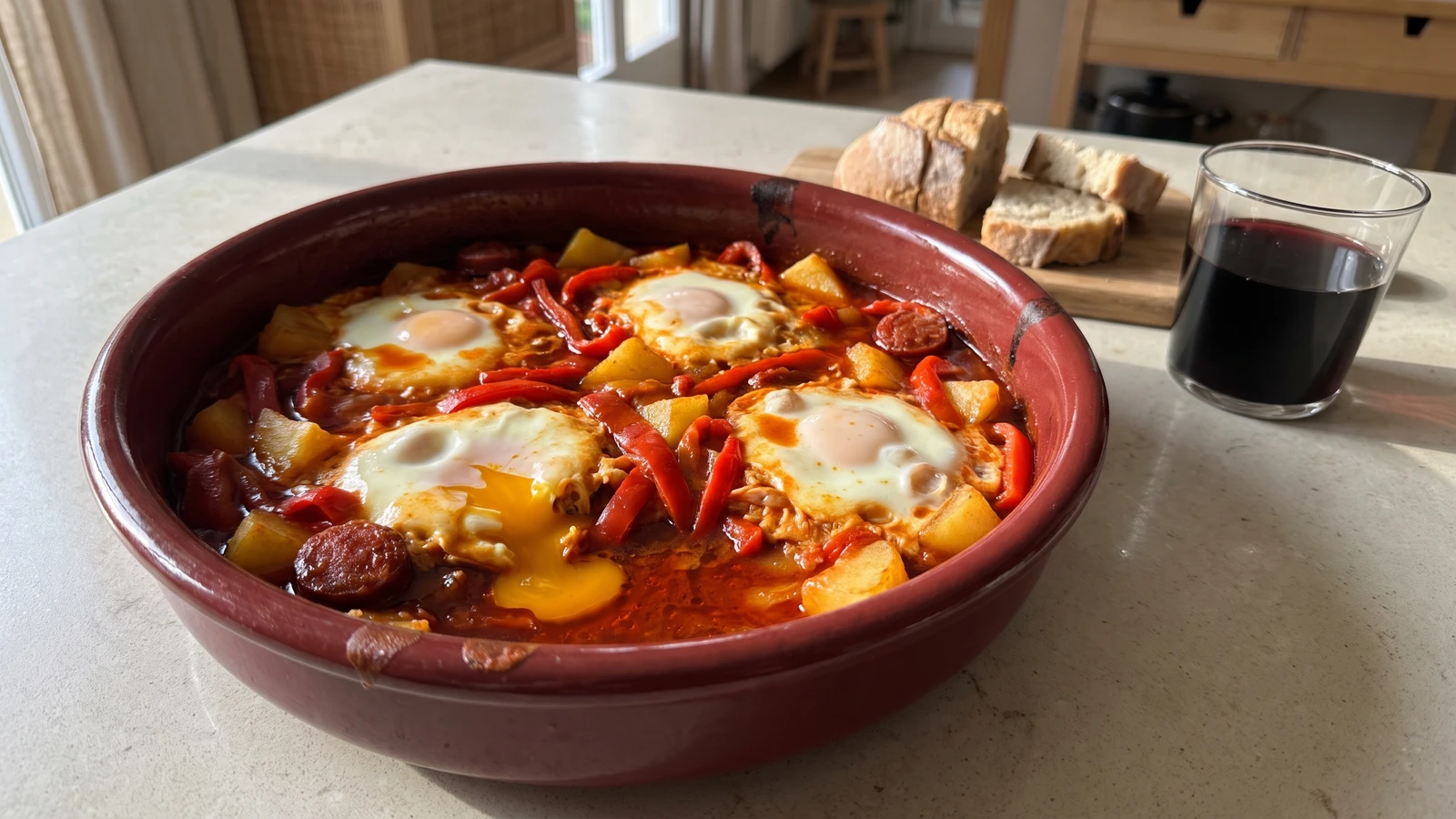
Huevos a la Riojana turns the Ebro valley larder into supper: potatoes and roasted red peppers simmer with chorizo until glossy, then four eggs set gently in the same cazuela.
Huevos a la Riojana belongs to La Rioja: eggs set over a soft stew of potatoes, roasted red peppers, tomato, and chorizo. The peppers of the Ebro and Najerilla valleys aren't decoration here. They melt into the sauce, while the chorizo stains the oil brick red and seasons the potatoes. That pepper-heavy cazuela is what gives the eggs their surname.
The method that decides the dish is the sofrito, the slow onion and tomato base. Cook it low until the onion is dark gold, the tomato has lost its water, and beads of red oil return around the edges. That slow cooking gives the sauce its sweetness. Hurry it and the potatoes sit in thin tomato water instead of a proper stew.
Far from La Rioja, use jarred whole roasted red peppers that haven't been pickled. They're fleshier and a little sweeter than pimiento riojano, but they soften into the sauce correctly. A mild, semi-cured Spanish cooking chorizo can stand in for chorizo riojano; a hard cured sausage gives less fat and stays firmer. My Margin says only this: wait for the egg white, not the yolk. Cover the pan, keep the heat low, and lift it as soon as the whites turn opaque. Siempre sale, si lo sigues.
Huevos a la Riojana belongs to the practical cazuela cooking of La Rioja, where potatoes, preserved peppers, tomatoes, and pork from the household matanza formed the everyday larder. The Najerilla valley around Nájera is especially tied to pimiento riojano, a thin-fleshed red pepper traditionally roasted, peeled, and preserved for cooking beyond its short season. Setting eggs directly over the pepper and potato stew turned those stores into a complete and economical meal in one dish.
Quantity
45ml
Quantity
160g
casing removed and cut into 8mm slices
Quantity
180g
finely diced
Quantity
12g
thinly sliced
Quantity
3g
Quantity
250g
crushed by hand
Quantity
300g
drained and torn into strips
Quantity
700g
peeled and cracked into 3cm pieces
Quantity
400ml
Quantity
1
Quantity
6g
divided
Quantity
4
Quantity
200g
sliced
| Ingredient | Quantity |
|---|---|
| extra virgin olive oil | 45ml |
| semi-cured chorizo riojano or mild Spanish cooking chorizocasing removed and cut into 8mm slices | 160g |
| yellow onionfinely diced | 180g |
| garlicthinly sliced | 12g |
| sweet pimentón | 3g |
| canned whole peeled tomatoescrushed by hand | 250g |
| roasted pimientos riojanos or whole roasted red peppersdrained and torn into strips | 300g |
| waxy potatoespeeled and cracked into 3cm pieces | 700g |
| water | 400ml |
| bay leaf | 1 |
| fine sea saltdivided | 6g |
| large eggs | 4 |
| rustic country bread (optional)sliced | 200g |
Drain the roasted peppers well and tear them lengthwise into strips about 1cm wide. Cut partway into each peeled potato with a small knife, then twist the blade so the piece breaks away rather than making a clean cut. This is chascar las patatas, cracking the potatoes; the rough edges release enough starch to give the stew body without flour.
Set a wide, heavy lidded pan or 28cm cazuela over medium-low heat. Add 15ml of the olive oil and the chorizo. Cook for 4 to 5 minutes, turning once, until the slices glisten and their red fat runs into the oil. Lift the chorizo onto a plate. Don't fry it hard or it will become leathery while the potatoes stew.
Add the remaining 30ml olive oil, the onion, and 3g salt to the chorizo fat. Cook over low heat for 14 to 16 minutes, stirring now and then, until the onion is dark gold, soft, and sweet. Add the garlic and cook for 1 minute. Pull the pan from the heat, stir in the pimentón for 10 seconds, then immediately add the crushed tomato so the spice cannot scorch. Return to low heat and cook for 10 to 12 minutes, until the tomato is thick and red oil beads around the edges. Fold in the pepper strips and cook for another 5 minutes. This slow base is the part you mustn't rush.
Add the cracked potatoes and turn them through the sofrito for 2 minutes. Return the chorizo, then add the water, bay leaf, and remaining 3g salt. Bring to a gentle bubble, cover with the lid slightly ajar, and cook over low heat for 18 minutes. Uncover and simmer for another 7 to 10 minutes, shaking the pan rather than stirring hard, until a knife enters the potatoes easily and the sauce coats them. Add 30ml water if the pan becomes dry before the potatoes are tender.
Remove the bay leaf. Make four shallow hollows among the potatoes. Crack each egg into a small cup, then slip one into every hollow without breaking the yolk. Cover the pan and cook over the lowest heat for 5 to 7 minutes, rotating the pan once if your burner heats unevenly. Lift the lid as soon as the whites are opaque and the yolks still move when the pan is shaken. Take the pan off the heat and rest it uncovered for 2 minutes before serving with bread.
1 serving (about 550g)
Culinary guides, cultural storytelling, and the editorial depth that makes cooking meaningful.
Discover Culinary ExplorerChef Isabel
Duelos y quebrantos is Castilla-La Mancha in one pan: chorizo and bacon rendered slowly, then eggs folded through until soft, the plain Saturday meal Cervantes set on Don Quixote's table.
Chef Isabel
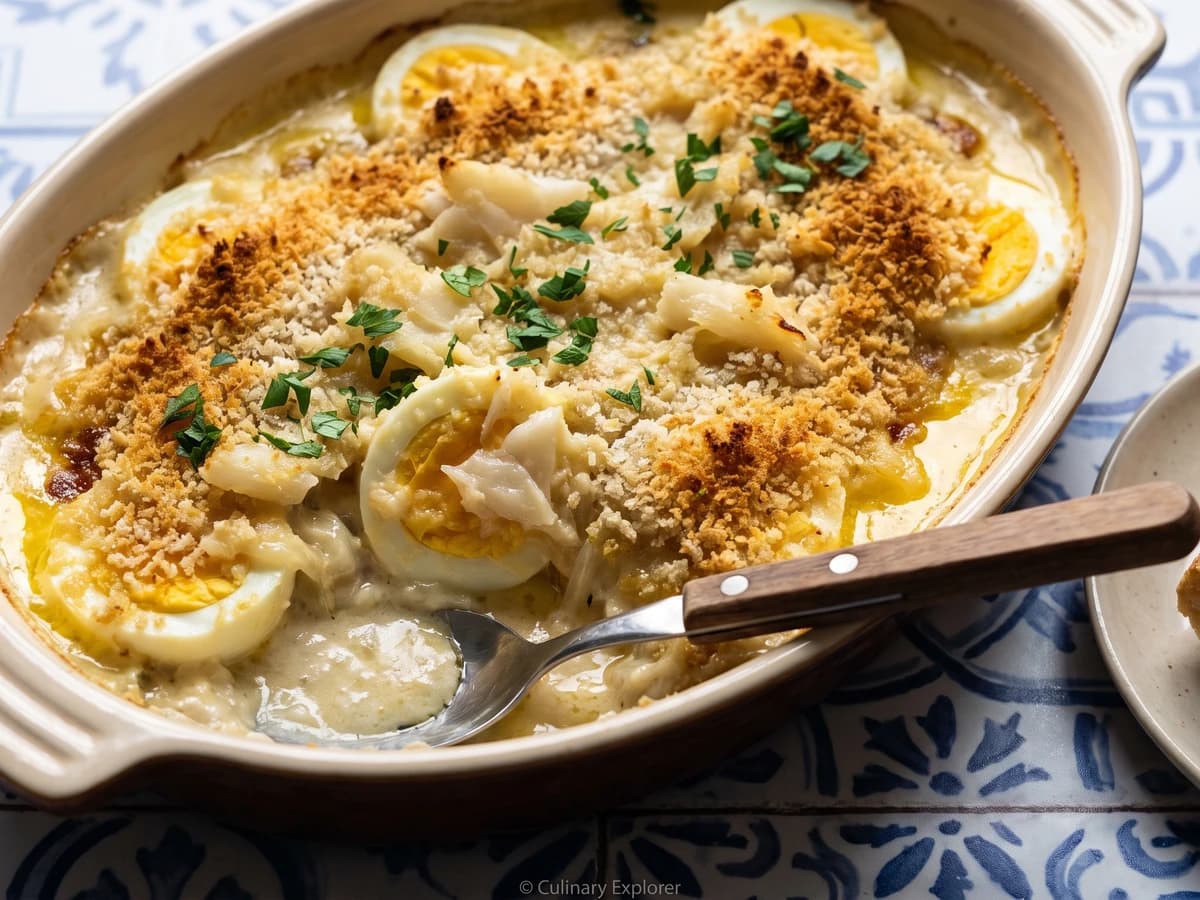
Donostia's baked eggs sit beneath a slow, sweet onion and bacalao sauce, with a fine breadcrumb crust browned under the grill. Desalt the cod properly and the rest is straightforward.
Chef Isabel
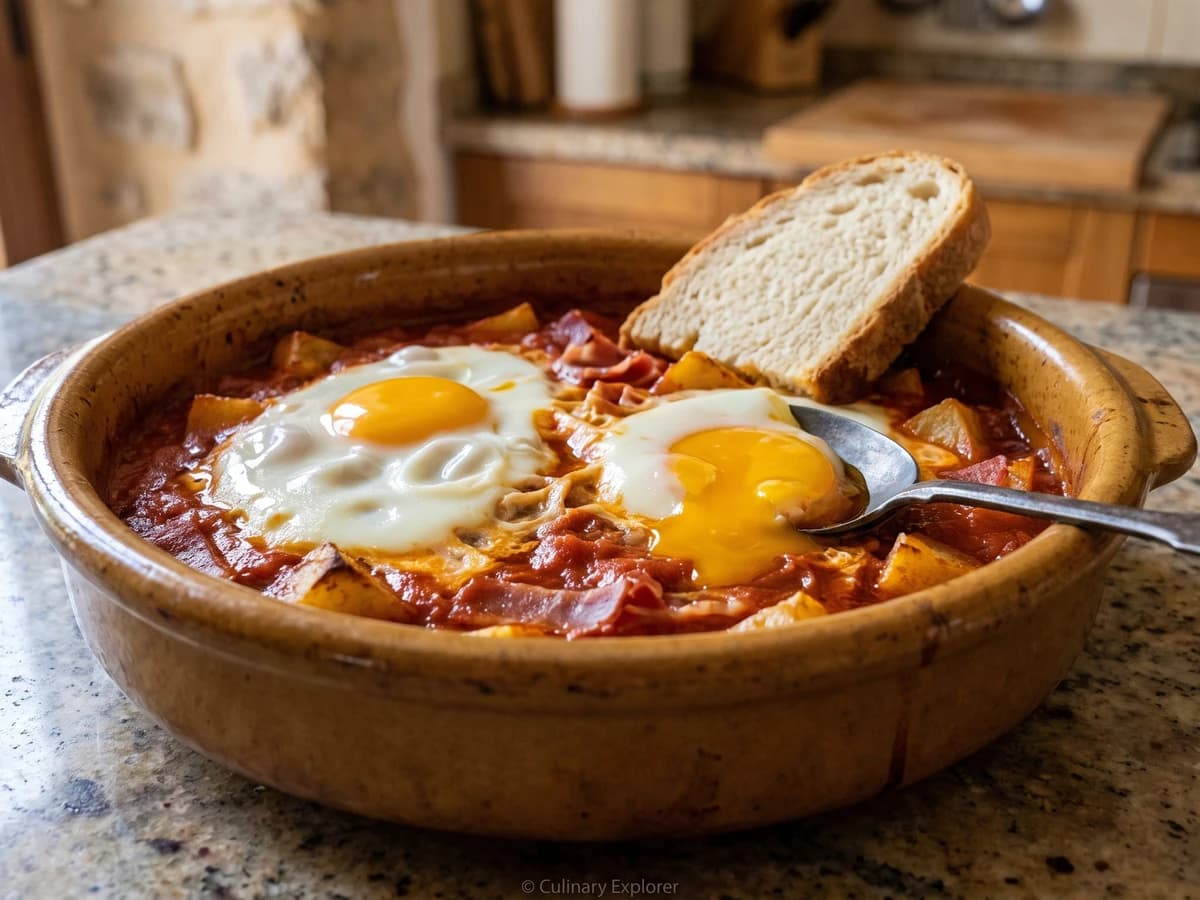
Extremadura sets eggs into a thick bed of fried potato, tomato sofrito, jamón, and its own smoky pimentón, then bakes them just until the whites hold and the yolks stay soft.
Chef Isabel
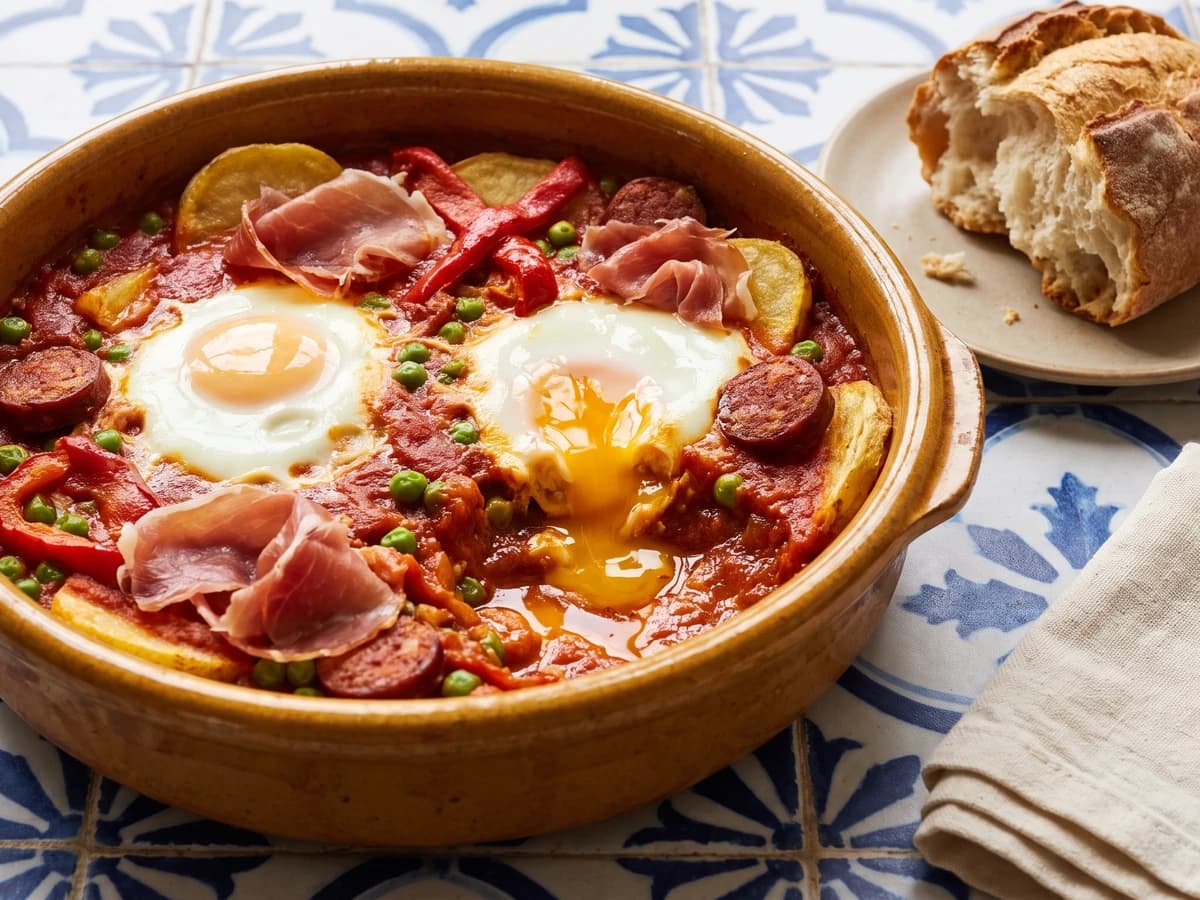
Huevos a la flamenca are Seville in a cazuela: eggs baked over a dark, sweet tomato sofrito with potatoes, peas, peppers, jamón and chorizo, pulled while the whites set and the yolks still run.