Chef Isabel
Aceitunas Aliñadas Andaluzas
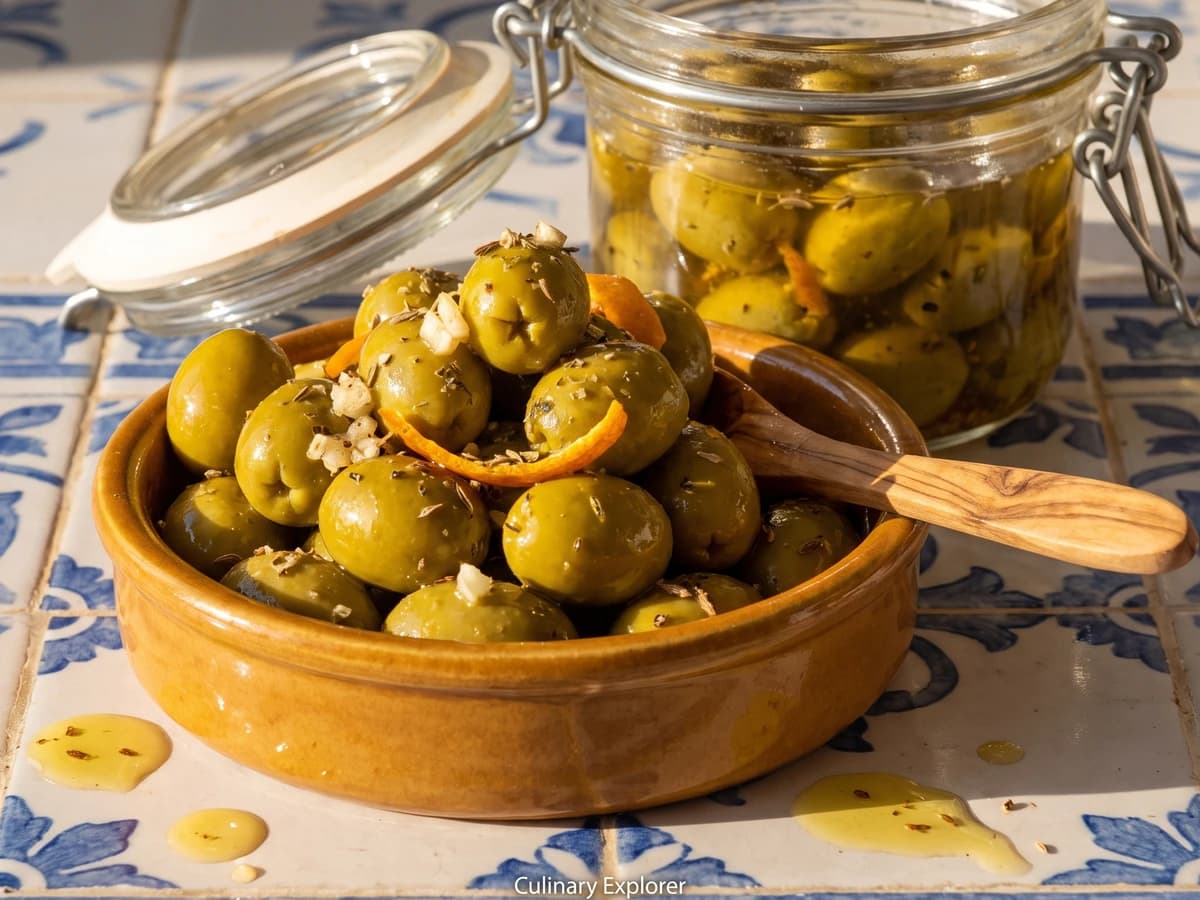
Andalucía's green olives are cracked just enough to drink in garlic, cumin, oregano and sherry vinegar, then left two days until the brine turns fragrant and every bite carries the aliño.
A cooking platform built around craft, culture, and the stories behind what we eat.
Created by
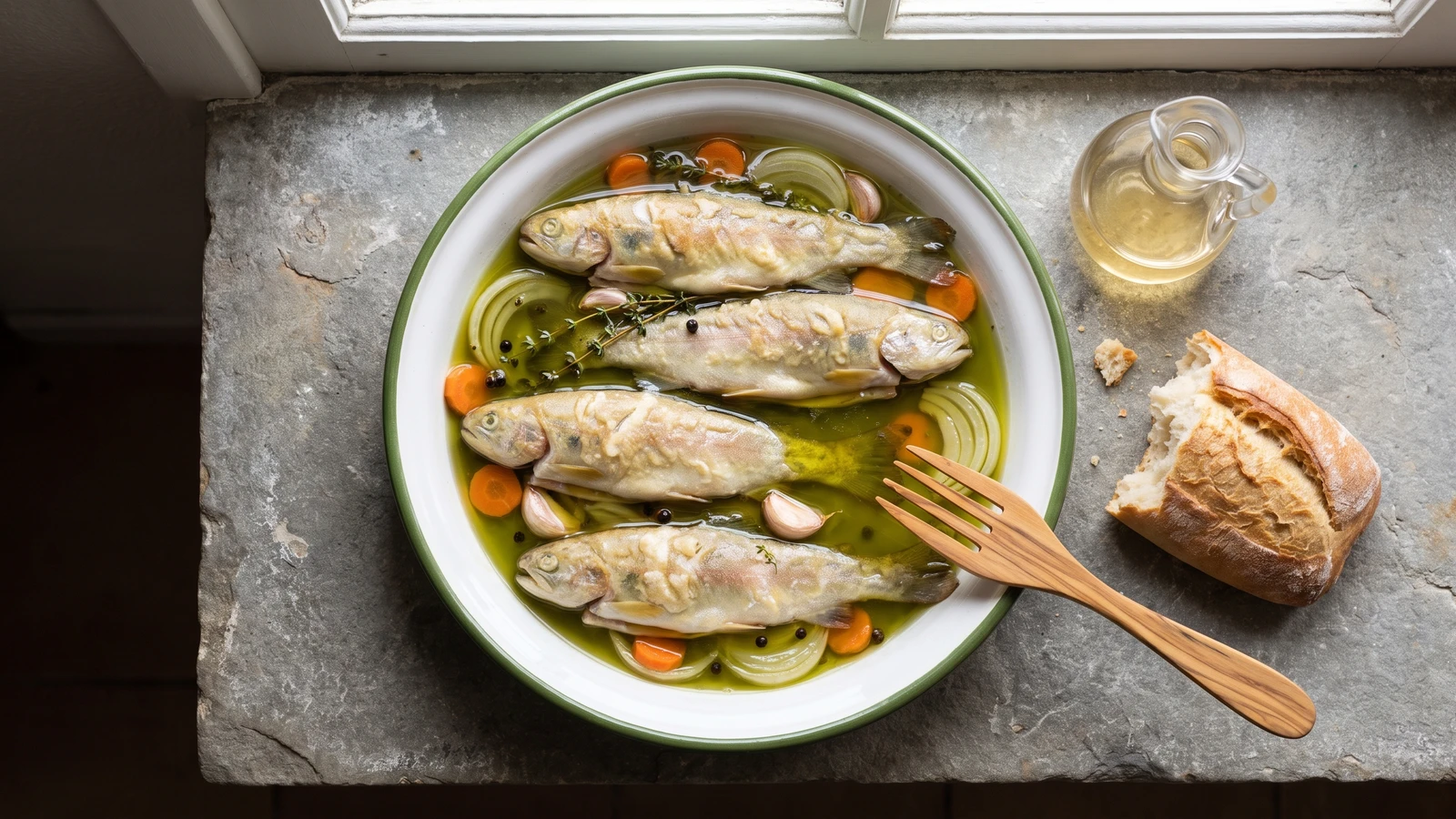
Navarra and León turn river trout into larder food: fry it gently, cover it with warm vinegar, olive oil, garlic and thyme, then leave it a full day for the sharp edges to soften.
Trucha en escabeche belongs to the river country of Navarra and León: small trout, lightly floured and fried, then covered with escabeche, the warm vinegar-and-oil preserve scented with garlic, onion, bay and thyme. It is fish made for tomorrow, bright with vinegar but rounded by olive oil, and served cool. This is not fried trout with a sharp sauce added at the table. The full day's rest is what makes the dish.
The method that decides it is simple. Fry the trout only until the flesh has turned opaque, then pour the escabeche over while both are still warm. The cooling fish draws in the seasoning; fry it hard first and the vinegar leaves it dry and tight. I want pale-golden skin, tender flesh and enough oil to soften the vinegar without smothering it.
If river-caught brown trout isn't available, use farmed rainbow trout. That is the sensible substitute a home kitchen reaches for, though it is a little fattier and milder, so watch the pan closely. Fillets also work, but whole small trout holds together better through the long rest. No hace falta haber pisado España. Give it its full day in the refrigerator and it comes out. The Margin beside this one says only sin prisa, without hurry.
Trucha en escabeche belongs to the inland river kitchens around León's Esla and Órbigo and the cold Pyrenean waters of Navarra, where a short trout season met the need to keep a catch beyond the day it was taken. The fish was fried, covered with wine vinegar, oil, garlic and field herbs, then held in the cool larder before household refrigeration was common. The word escabeche came through Andalusi Arabic from the Persian sikbaj, but these mountain kitchens made the method their own with freshwater trout.
Quantity
4, about 225g each (900g total)
cleaned and scaled, with gills removed; heads left on if the pan and dish allow
Quantity
12g
divided
Quantity
60g
for a light coating
Quantity
300ml
for shallow-frying; strain and reserve 150ml for the escabeche
Quantity
200g
thinly sliced
Quantity
100g
sliced into 3mm rounds
Quantity
8 cloves (about 30g)
unpeeled and lightly crushed
Quantity
2
Quantity
6 small sprigs
Quantity
12
Quantity
150ml
Quantity
100ml
| Ingredient | Quantity |
|---|---|
| small whole troutcleaned and scaled, with gills removed; heads left on if the pan and dish allow | 4, about 225g each (900g total) |
| fine sea saltdivided | 12g |
| plain flourfor a light coating | 60g |
| mild olive oilfor shallow-frying; strain and reserve 150ml for the escabeche | 300ml |
| onionthinly sliced | 200g |
| carrotsliced into 3mm rounds | 100g |
| garlicunpeeled and lightly crushed | 8 cloves (about 30g) |
| bay leaves | 2 |
| thyme | 6 small sprigs |
| black peppercorns | 12 |
| white wine vinegar, 6% acidity | 150ml |
| dry white wine | 100ml |
Pat the trout thoroughly dry inside and out. Make two shallow diagonal cuts through the skin on each side, stopping before the bone. Season with 8g of the salt, including a little inside each cavity, and leave for 10 minutes. Coat lightly with flour and shake off every loose patch. You want a thin veil, not a coat of batter.
Heat the olive oil in a 30cm frying pan over medium heat to about 175°C. Fry the trout without crowding the pan, working in two batches if necessary. Cook for 3 to 4 minutes on the first side and 2 to 3 minutes on the second, until pale gold and opaque beside the backbone. The thickest part must reach 63°C. Lift each trout carefully into a shallow nonreactive dish, arranging them in one layer.
Let the frying oil stand for 2 minutes so the flour settles, then strain it through a fine sieve. Measure 150ml, topping up with fresh olive oil only if needed, and return it to the wiped pan. Add the onion, carrot and garlic. Cook over low heat for 10 to 12 minutes, stirring occasionally, until supple and pale gold without browning. This is a bright escabeche, so don't take the vegetables as dark as a sofrito.
Add the bay leaves, thyme and peppercorns and cook for 1 minute. Take the pan off the heat, pour in the vinegar and white wine slowly, then return it to medium-low heat. Add the remaining 4g salt and let the escabeche bubble gently for 5 minutes. It will taste sharper now than it does tomorrow. That is as it should be.
Pour the hot escabeche and all its vegetables over the warm trout, distributing the onion, carrot and garlic between the fish. The liquid should reach at least halfway up their sides; move them to a narrower dish if it does not. Leave uncovered for 30 minutes, then cover and refrigerate for at least 24 hours. After 6 to 8 hours, spoon the cold escabeche over any exposed surfaces. Don't turn the softened fish unless you must.
Take the dish from the refrigerator 20 minutes before serving. Lift the trout with a wide fish slice and spoon over the softened vegetables and enough escabeche to gloss the flesh. Serve cool with bread for the sharp, fragrant oil. Whole trout still contains fine bones, so tell everyone at the table. Siempre sale, si lo sigues.
1 serving (about 290g)
Culinary guides, cultural storytelling, and the editorial depth that makes cooking meaningful.
Discover Culinary ExplorerChef Isabel
Andalucía's green olives are cracked just enough to drink in garlic, cumin, oregano and sherry vinegar, then left two days until the brine turns fragrant and every bite carries the aliño.
Chef Isabel
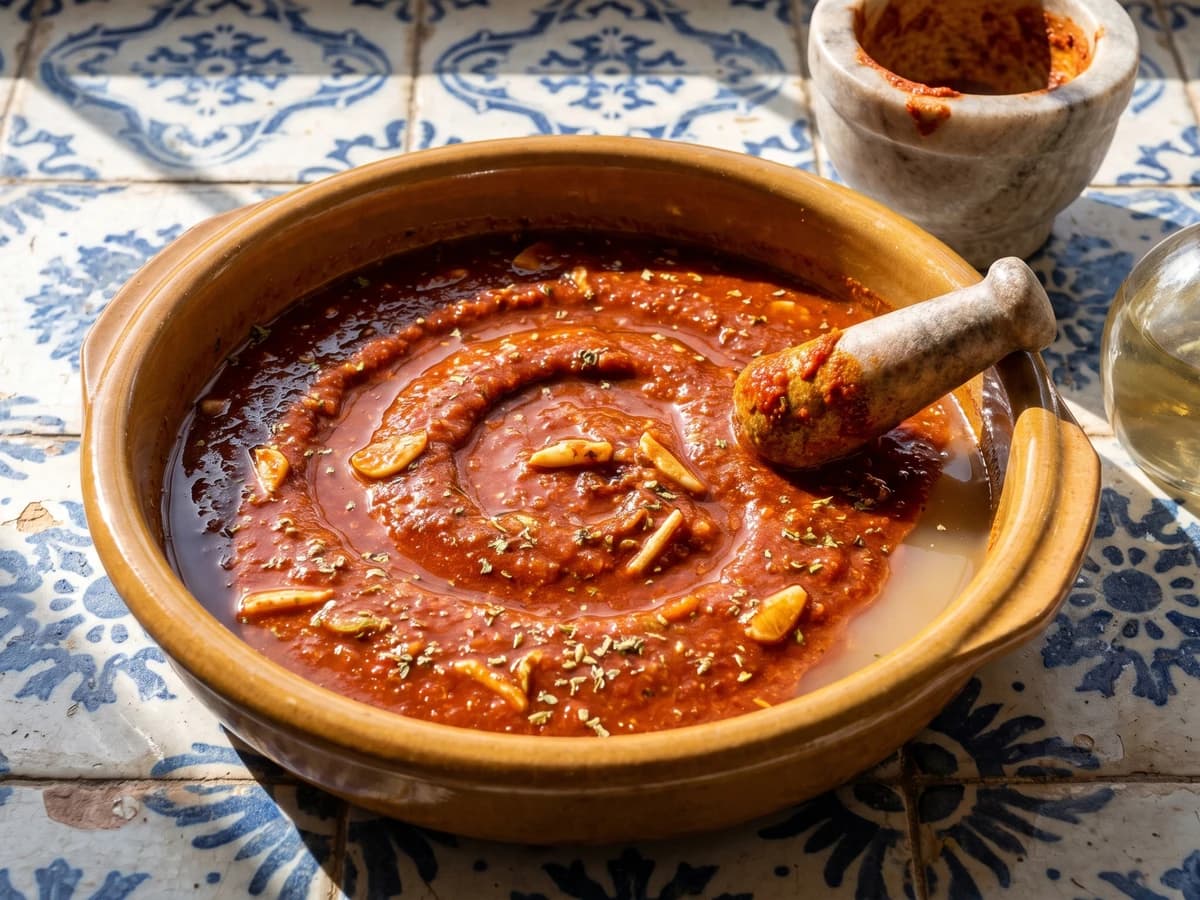
Andalucía's sharp, brick-red marinade brings vinegar, garlic, oregano, cumin and pimentón to fish and pork; pound the seasonings first, then give the acid time to carry them through.
Chef Isabel
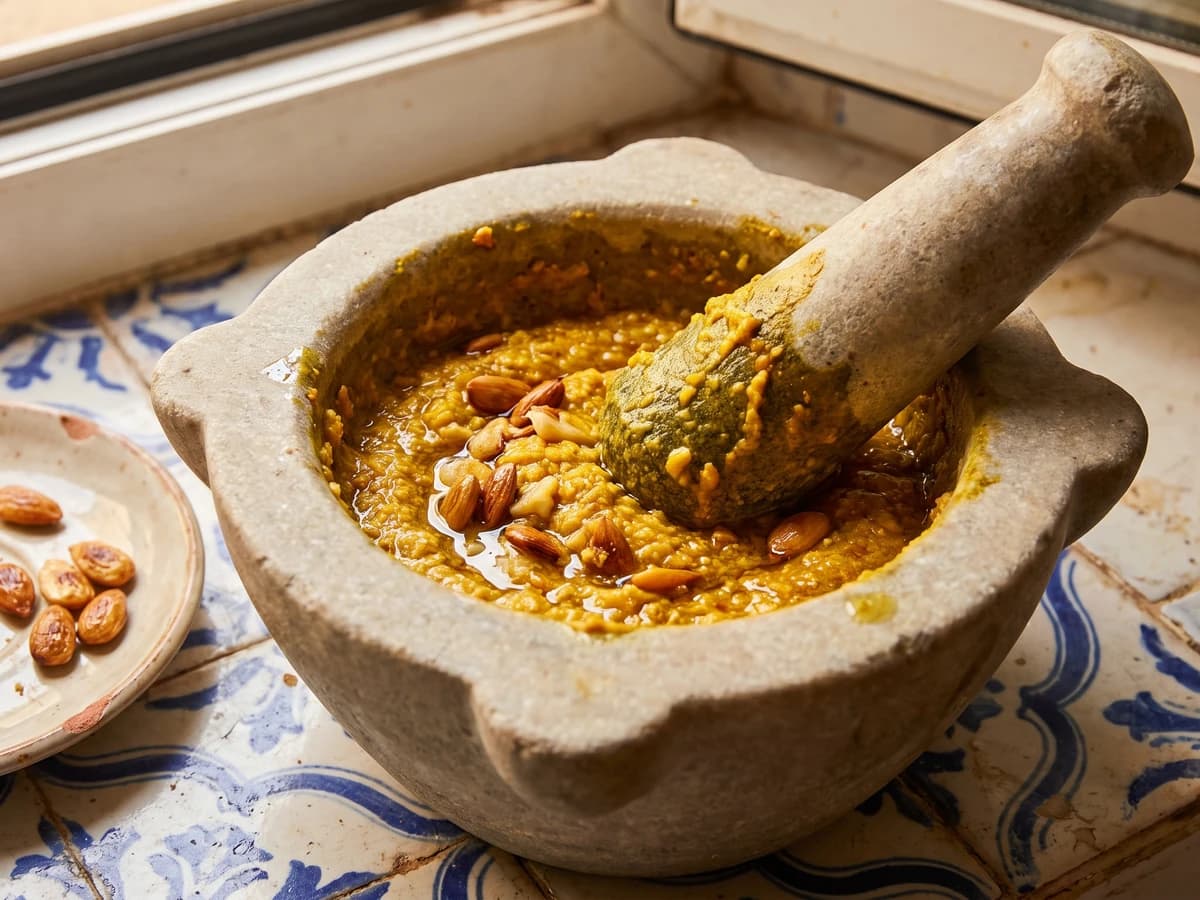
Almería's ajopollo turns fried garlic, almonds, bread and saffron into a golden mortar paste that gives modest fish and potato guisos their body, richness and unmistakable southern depth.
Chef Isabel
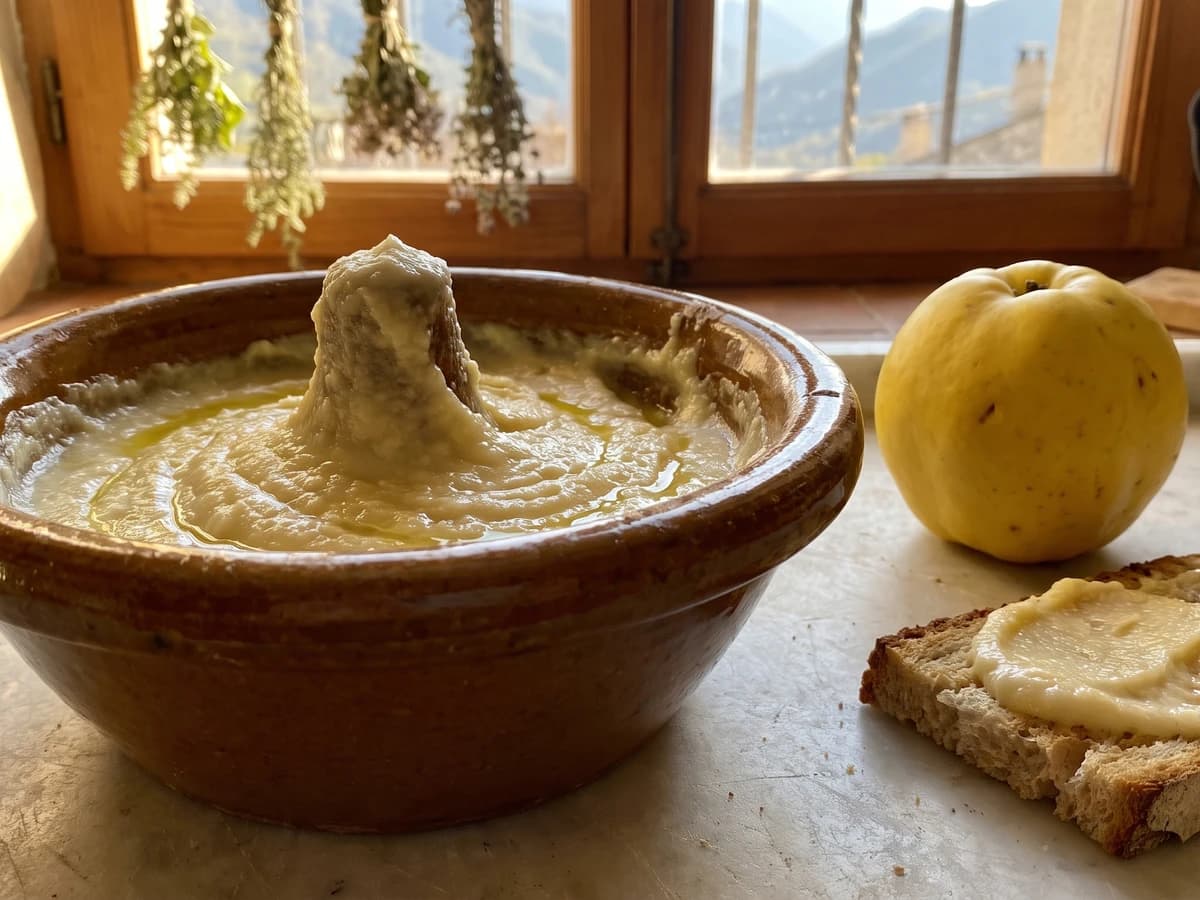
Allioli de codony belongs to the Catalan Pyrenees: boiled quince, raw garlic, salt, and olive oil worked into a thick, fragrant sauce for grilled meat, sausages, bread, and the autumn table.