Chef Isabel
Aceitunas Aliñadas Andaluzas
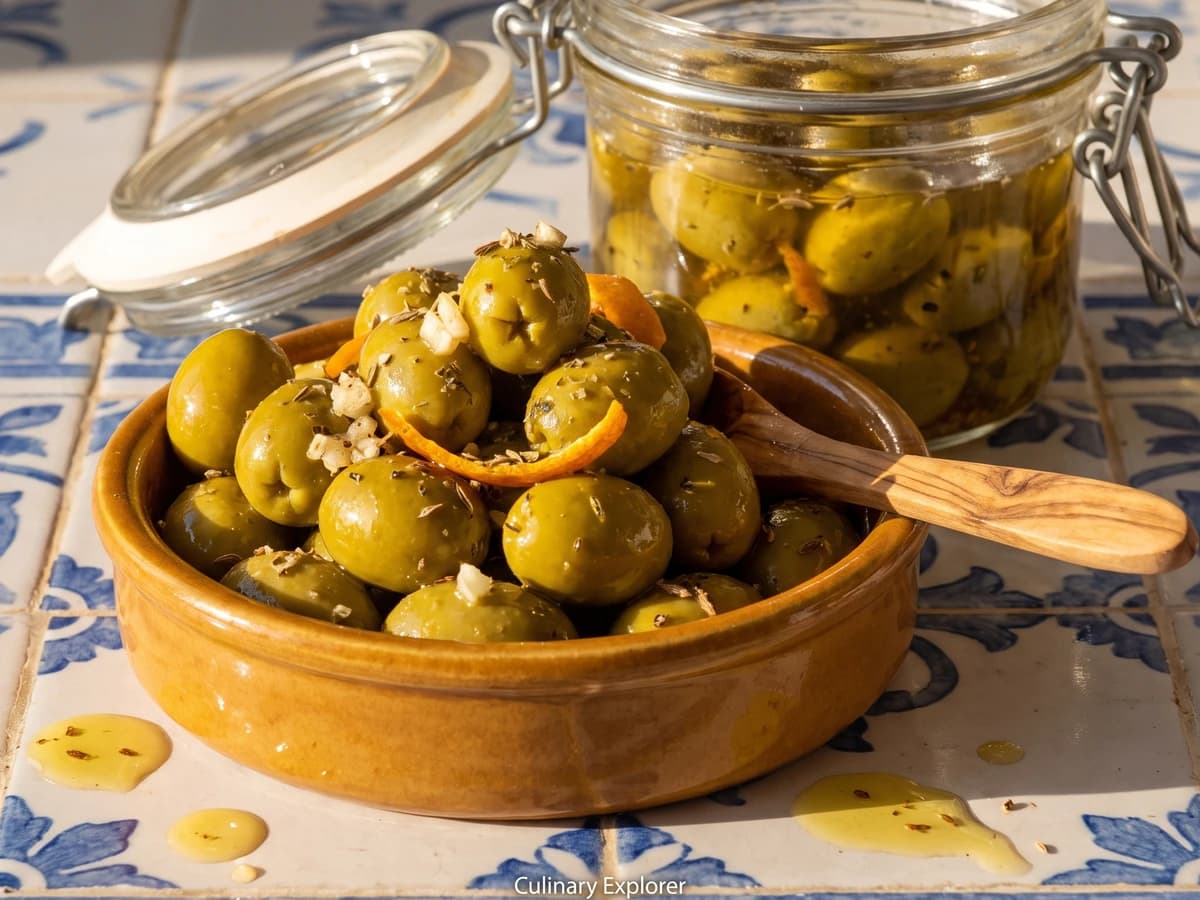
Andalucía's green olives are cracked just enough to drink in garlic, cumin, oregano and sherry vinegar, then left two days until the brine turns fragrant and every bite carries the aliño.
A cooking platform built around craft, culture, and the stories behind what we eat.
Created by
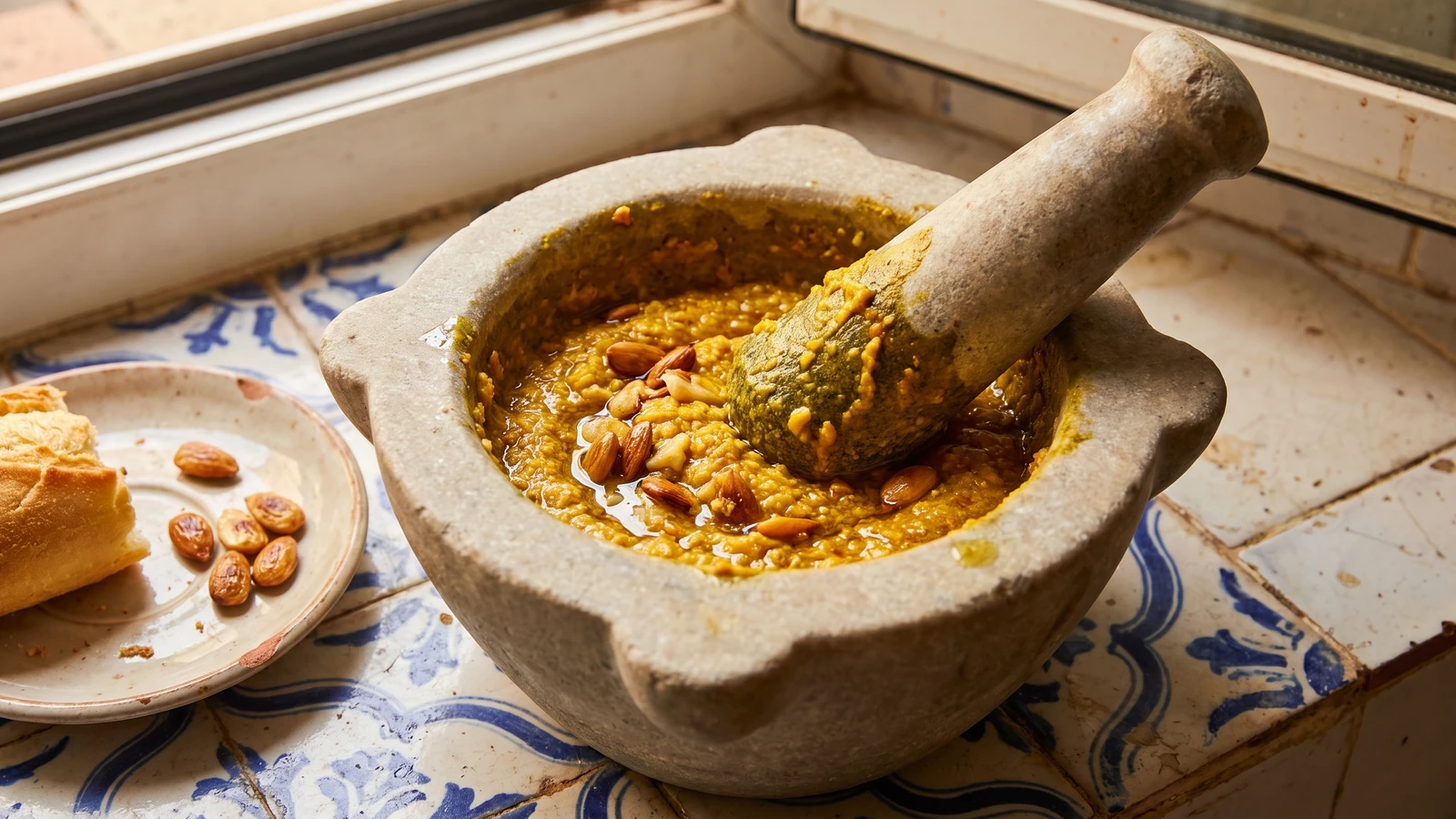
Almería's ajopollo turns fried garlic, almonds, bread and saffron into a golden mortar paste that gives modest fish and potato guisos their body, richness and unmistakable southern depth.
Ajopollo is Almería's garlic-and-almond majao, the mortar paste that turns a plain pot of potatoes or fish into cocina de cuchara, spoon food, with real body. Garlic, almonds and day-old bread are fried in olive oil, then pounded with saffron until the mixture becomes golden and spoonable. The almonds and fried bread mark the Almerían base; leave either out and you've made another garlic sauce. There is no chicken in it, despite the name. That's one less thing to shop for.
The frying decides it. Cook the garlic, almonds and bread separately because each browns at a different speed, and stop while everything is golden. Garlic or almonds taken too dark make the whole mortar bitter, and no amount of broth will mend it. Pound them while they're still warm, adding the almonds before the bread so the nuts release their oil and the bread becomes the binder. The Margin beside this one says only: "Gold, never brown."
Ordinary blanched sweet almonds work if Almerían almonds aren't sold where you live; the paste will be a little firmer and less buttery, so allow the extra spoonful of liquid. A plain day-old baguette stands in well for pan de pueblo, country bread. Saffron grown outside Spain is fine if the threads are fragrant, but yellow coloring and turmeric are not substitutes. No hace falta haber pisado España. Add the paste to a simmering guiso for its final minutes and it thickens without flour. Siempre sale, si lo sigues: it turns out if you follow it.
Ajopollo belongs to Almería, where a mortarful of garlic, almonds and fried bread gave body to coastal fish pots and frugal inland potato guisos without requiring a costly piece of meat. Its pounding method is an heir to the Roman moretum tradition of garlic worked in a mortar, while the almonds and saffron reflect the Andalusi larder that marked the southeast. Despite pollo in the name, the preparation contains no chicken; its purpose is to make a lean pot taste full.
Quantity
75g
Quantity
60g
cut into 1.5cm slices
Quantity
20g (4 to 5 medium cloves)
peeled and halved lengthwise
Quantity
100ml
for shallow-frying; reserve 30ml after frying
Quantity
0.1g
Quantity
3g
Quantity
100ml, plus up to 30ml if needed
| Ingredient | Quantity |
|---|---|
| blanched raw sweet almonds | 75g |
| day-old plain country breadcut into 1.5cm slices | 60g |
| garlicpeeled and halved lengthwise | 20g (4 to 5 medium cloves) |
| extra virgin olive oilfor shallow-frying; reserve 30ml after frying | 100ml |
| saffron threads | 0.1g |
| fine sea salt | 3g |
| hot water or unsalted cooking liquid from the guiso | 100ml, plus up to 30ml if needed |
Set an 18 to 20cm frying pan over medium-low heat and add the olive oil. Heat it to about 150°C. Without a thermometer, drop in a crumb of bread: it should fizz steadily and turn gold in about 30 seconds, not darken at once. Keep a slotted spoon and three separate plates beside the pan.
Fry the garlic first for 2 to 3 minutes, turning it, until pale gold and soft through the centre. Lift it out. Add the almonds and fry for 3 to 4 minutes, stirring constantly, until evenly golden and nutty-smelling. Lift those out too. Fry the bread for 45 to 60 seconds per side until crisp and deep gold. Pour the remaining oil into a heatproof cup and measure out 30ml for the paste.
Wipe the frying pan dry and return it to very low heat. Add the saffron threads and warm them for 10 to 15 seconds, moving the pan, just until fragrant and slightly brittle. Tip them out before their color darkens. Saffron needs waking, not scorching; burnt saffron is expensive bitterness.
Put the salt, warm garlic and saffron in the mortar. Pound for 1 to 2 minutes until smooth. Add the almonds in three batches and pound each addition before adding the next, working for 4 to 5 minutes in all, until only a fine grain remains. Tear in the fried bread and pound for another 2 to 3 minutes. Work in the reserved 30ml frying oil until the majao is cohesive and glossy. Pound, don't merely stir: the crushed almonds release their oil and the bread becomes the binder that will thicken the broth.
Add the 100ml hot water or cooking liquid about 15ml at a time, pounding after each addition. The finished ajopollo should mound softly on a spoon rather than run. If ordinary almonds or very dry bread leave it stiff, add up to 30ml more liquid. For a 1.25 to 1.5 litre potato or fish guiso, stir in the whole batch and simmer gently for 8 to 10 minutes, until the broth lightly coats a spoon. Add delicate fish late enough that it finishes without breaking apart.
1 serving (about 60g)
Culinary guides, cultural storytelling, and the editorial depth that makes cooking meaningful.
Discover Culinary ExplorerChef Isabel
Andalucía's green olives are cracked just enough to drink in garlic, cumin, oregano and sherry vinegar, then left two days until the brine turns fragrant and every bite carries the aliño.
Chef Isabel
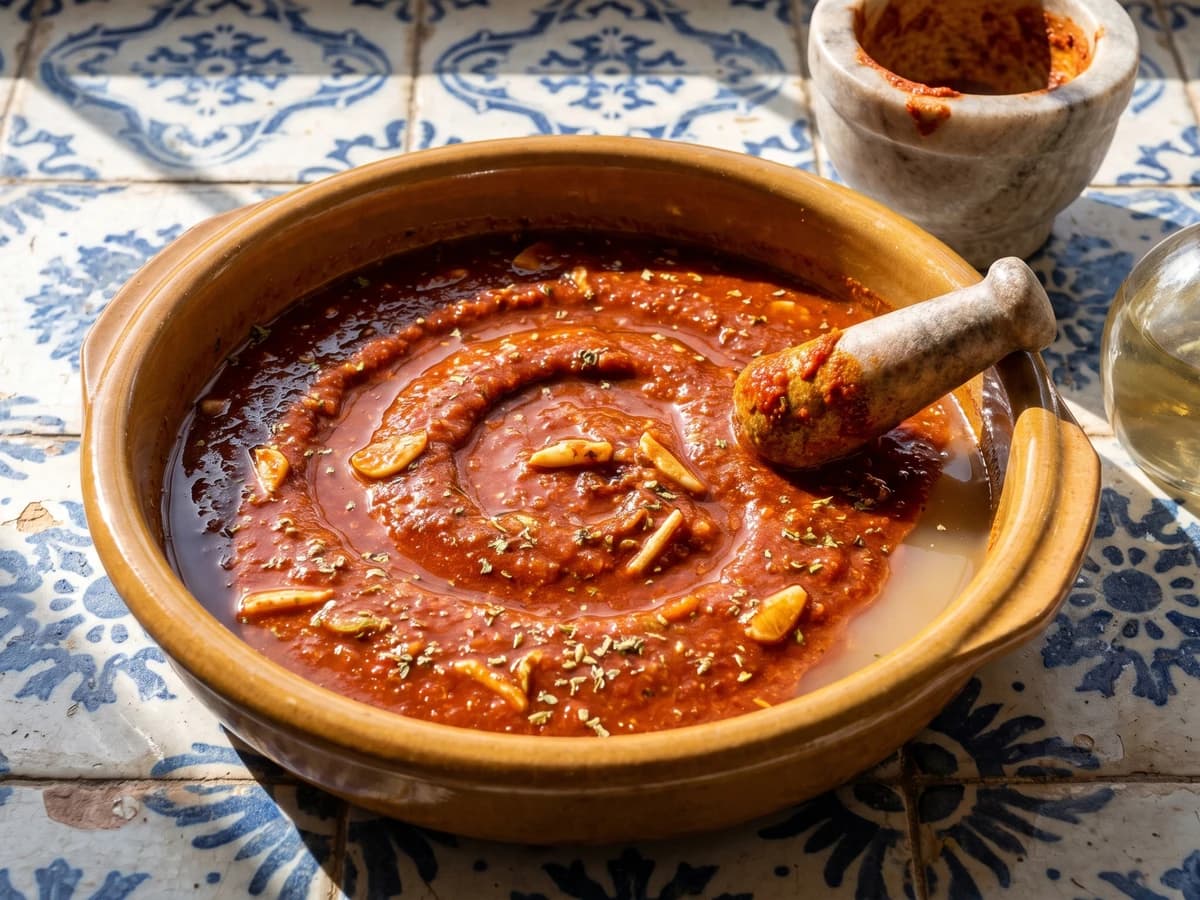
Andalucía's sharp, brick-red marinade brings vinegar, garlic, oregano, cumin and pimentón to fish and pork; pound the seasonings first, then give the acid time to carry them through.
Chef Isabel
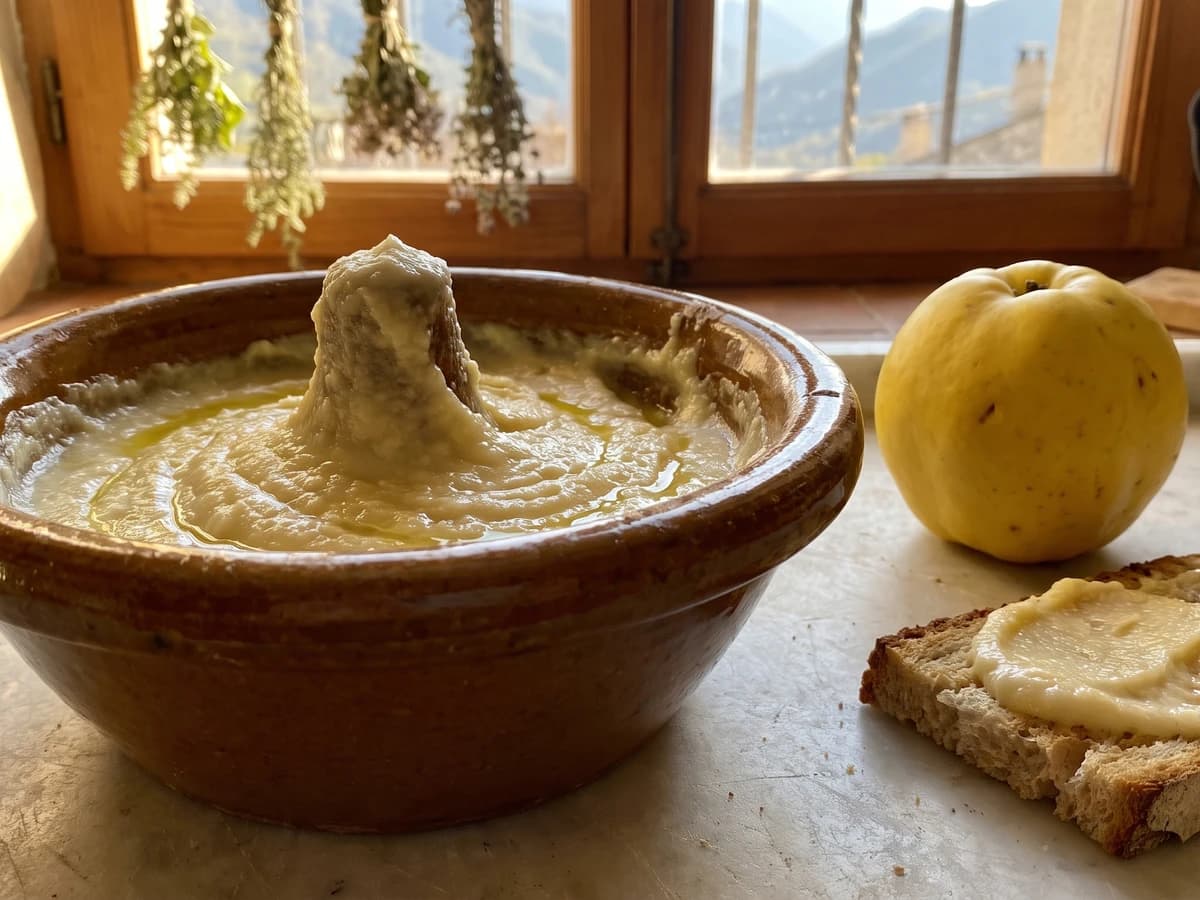
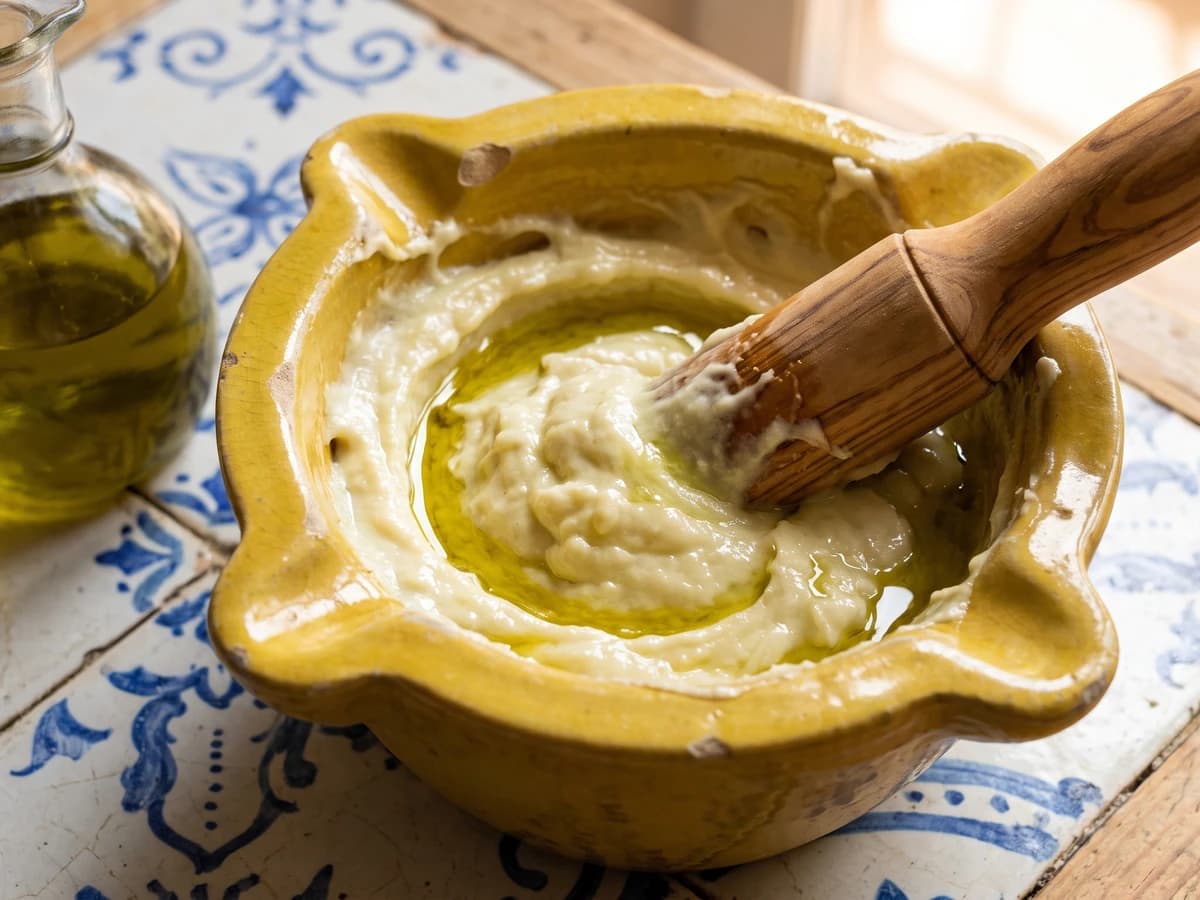
Allioli de codony belongs to the Catalan Pyrenees: boiled quince, raw garlic, salt, and olive oil worked into a thick, fragrant sauce for grilled meat, sausages, bread, and the autumn table.
Chef Isabel
Allioli belongs to Catalonia and Valencia: garlic, salt, and olive oil worked patiently in a mortar until thick and glossy. No egg, no trick, just slow first drops that make the emulsion hold.