Chef Isabel
Aceitunas Aliñadas Andaluzas
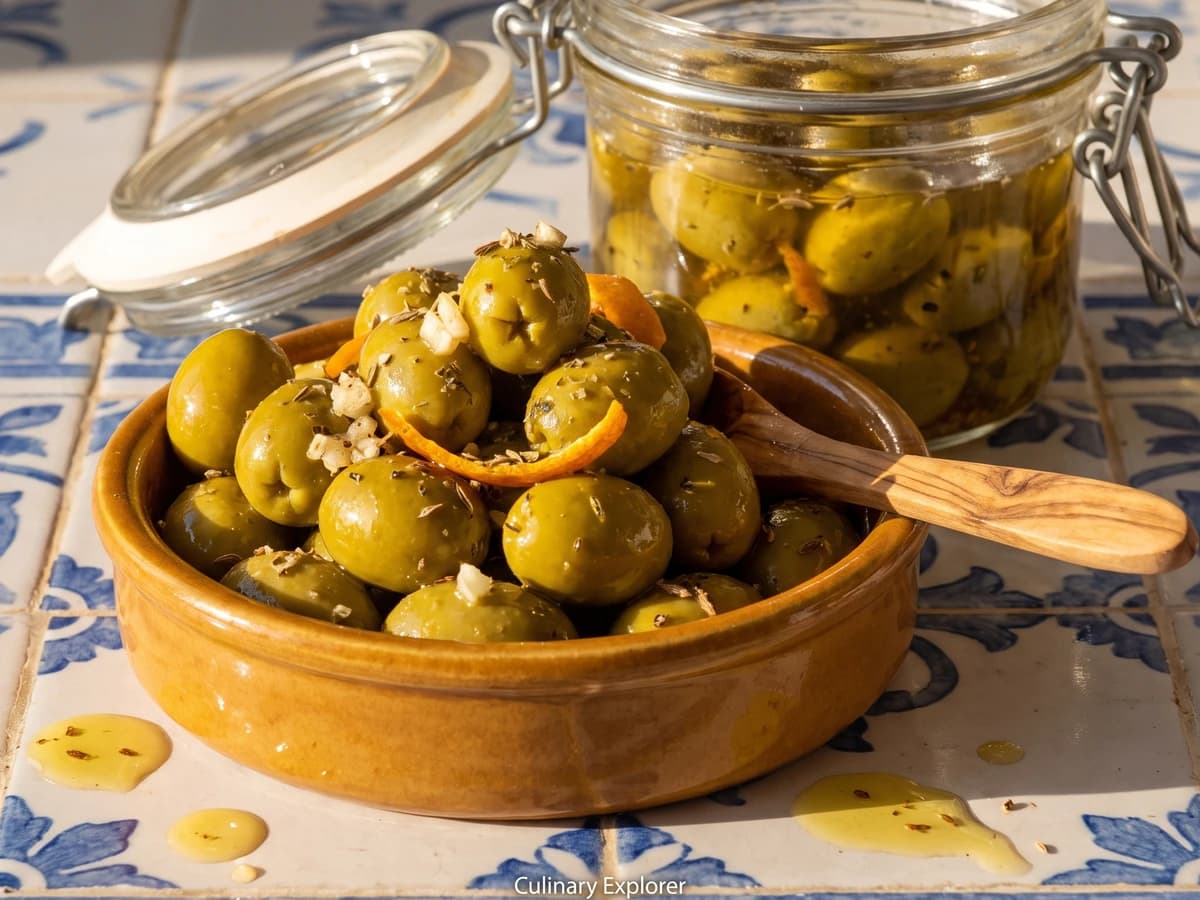
Andalucía's green olives are cracked just enough to drink in garlic, cumin, oregano and sherry vinegar, then left two days until the brine turns fragrant and every bite carries the aliño.
A cooking platform built around craft, culture, and the stories behind what we eat.
Created by
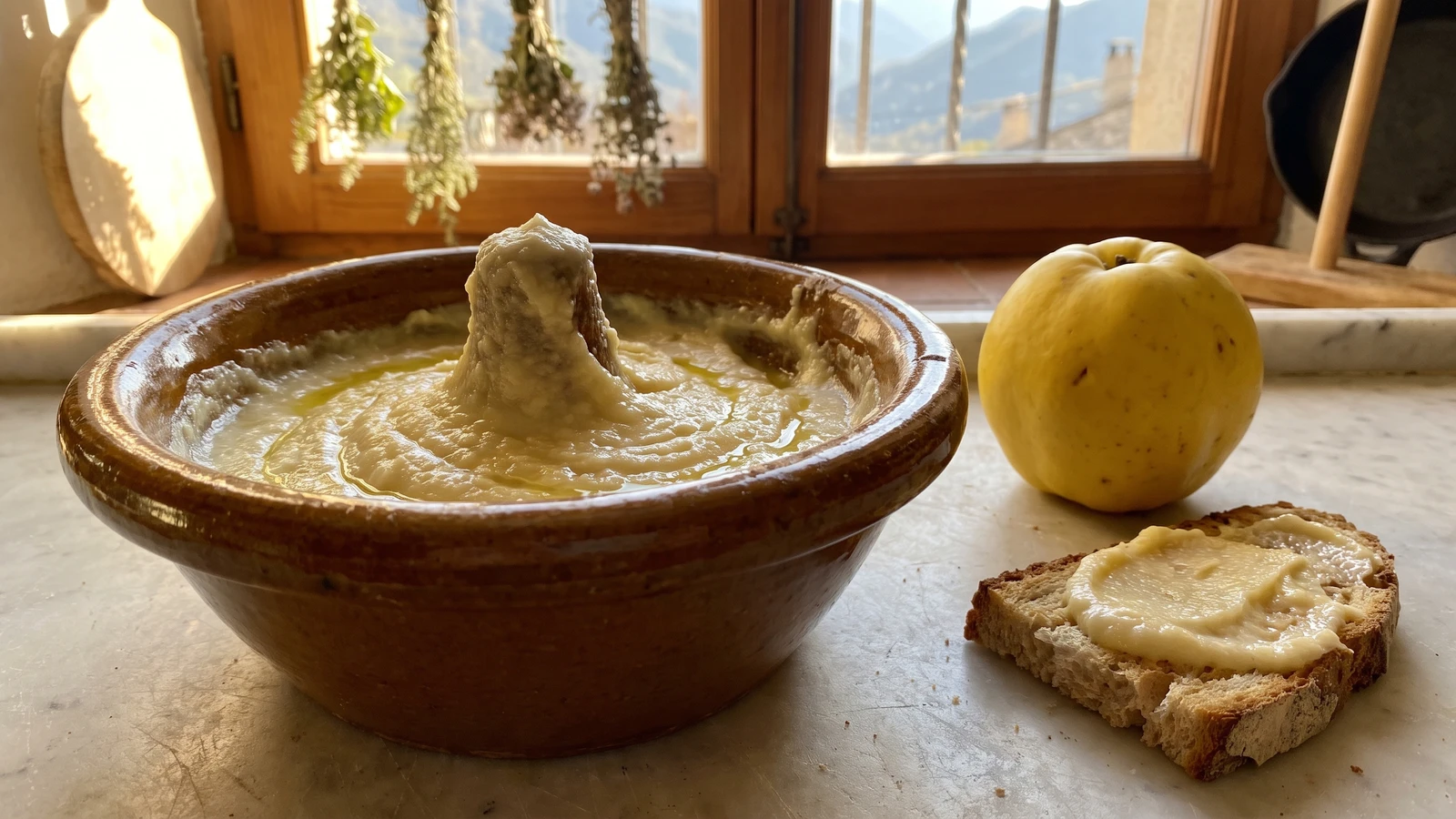
Allioli de codony belongs to the Catalan Pyrenees: boiled quince, raw garlic, salt, and olive oil worked into a thick, fragrant sauce for grilled meat, sausages, bread, and the autumn table.
Allioli de codony belongs to the Catalan Pyrenees, where autumn quince is boiled and worked with raw garlic, salt, and olive oil into a thick sauce for butifarra, lamb, boiled meats, potatoes, and bread. It isn't ordinary allioli with something sweet stirred through it. The quince forms the body of the sauce, softening the garlic without hiding it and leaving its own floral, slightly tart perfume behind.
The method that decides it is simple: drain the cooked quince until its surface is dry, cool it completely, then add the oil slowly. Quince carries plenty of pectin, so the sauce is more forgiving than a plain garlic-and-oil allioli, but waterlogged fruit or a hurried pour still leaves oil gathering around the edges. Pound each addition in before giving it the next. In my Margin, the warning beside this one is only three words: dry the quince.
If quince doesn't reach your market, use a firm reineta apple, or a tart Granny Smith at a pinch. The sauce will be softer, sharper, and less perfumed, and its proper name becomes allioli de poma, the neighbouring Catalan apple version. Don't use sweetened membrillo paste; that gives you quince preserve with raw garlic, which is as odd as it sounds. Pésalo, no lo adivines. Weigh it, add the oil patiently, and it comes together. Siempre sale, si lo sigues.
Allioli de codony belongs to the mountain and foothill comarques of Catalonia, particularly Pallars, Alt Urgell, Cerdanya, and Berguedà, where fragrant quinces ripen as the cold weather arrives. It forms part of an old family of Catalan fruit alliolis that also includes versions made with apple or pear, each served with grilled sausages, meat, potatoes, or bread. The older mortar preparation needs no egg because the cooked fruit supplies enough body to hold the garlic and olive oil together.
Quantity
350g
peeled, cored, and cut into 2cm pieces
Quantity
1 litre, or enough to cover by 2cm
Quantity
12g, about 3 medium cloves
peeled
Quantity
4g, about 3/4 teaspoon
Quantity
150ml
| Ingredient | Quantity |
|---|---|
| ripe yellow quince fleshpeeled, cored, and cut into 2cm pieces | 350g |
| cold water | 1 litre, or enough to cover by 2cm |
| garlicpeeled | 12g, about 3 medium cloves |
| fine sea salt | 4g, about 3/4 teaspoon |
| mild extra virgin olive oil, preferably Arbequina | 150ml |
Rub away any fuzz, rinse the quinces, and cut them in half on a steady board. They are hard, so set each half cut-side down before trimming it further. Peel, remove every bit of the woody core, and weigh 350g of clean flesh. Cut it into even 2cm pieces so it cooks at the same rate.
Put the quince in a medium saucepan and cover it with cold water by about 2cm. Bring to a boil, lower to a gentle simmer, and cook for 25 to 30 minutes. It is ready when a small knife slides through the thickest piece without grainy resistance, but the pieces have not collapsed. Drain in a sieve for 10 minutes, then return the quince to the empty warm pan over low heat for 60 to 90 seconds, shaking gently, until no surface water remains. Do not brown it. Spread it on a plate and cool completely.
Put the garlic and salt in a large mortar. If a clove has a green shoot, split it and remove the shoot because it can taste harsh. Pound until the garlic becomes a smooth, sticky paste with no firm pieces. Add the cooled quince a few spoonfuls at a time, crushing and turning it into an even puree before adding more.
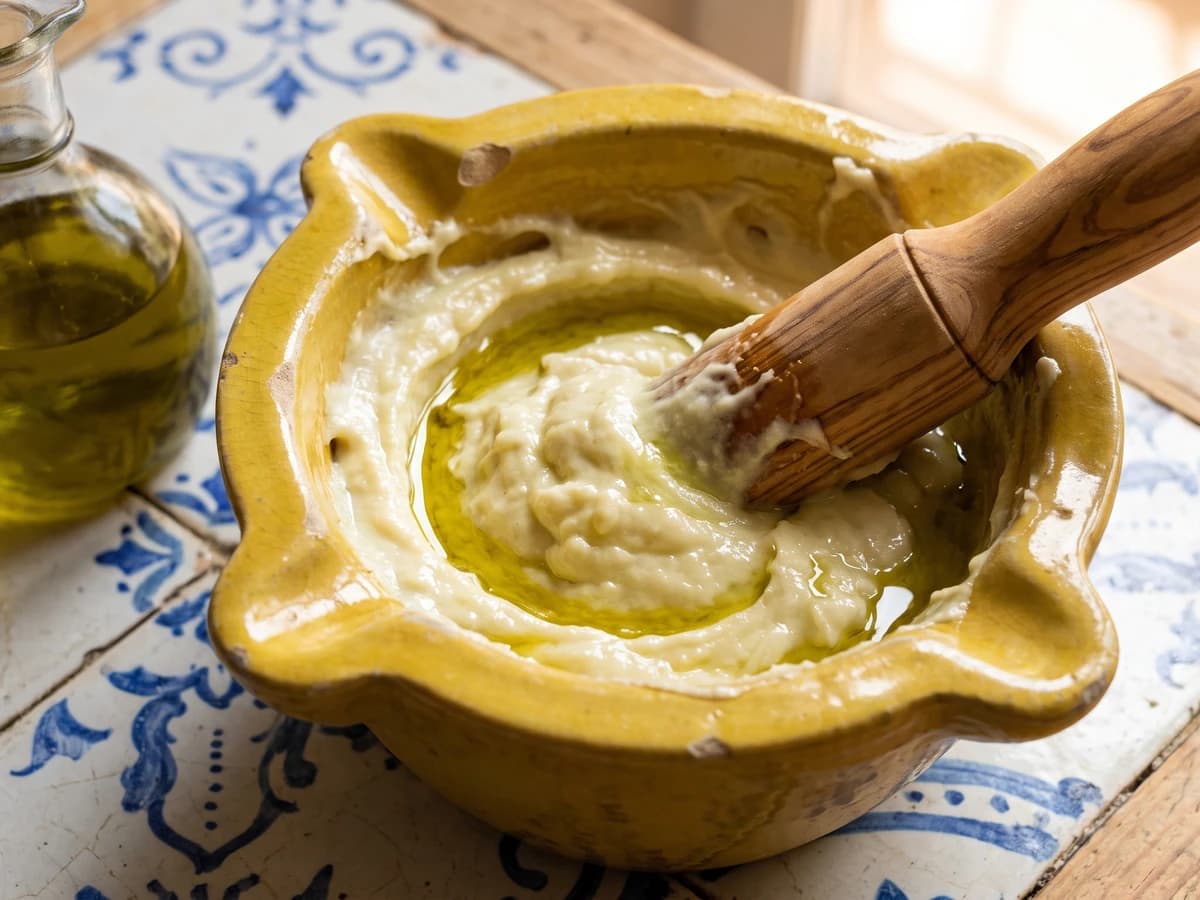
Measure the oil into a jug with a pouring lip. Work in the first 30ml almost drop by drop, moving the pestle steadily until every addition disappears. Once the sauce looks uniform, add the remaining oil in a very thin thread, never faster than the quince can take it. The finished allioli should be pale quince-gold, glossy without looking greasy, and thick enough to hold the ridge left by the pestle.
Taste and adjust the salt by a pinch if needed. Let the allioli rest for 15 minutes so the raw garlic settles into the quince, then serve at cool room temperature. It should spread generously rather than pour. Set it beside grilled butifarra, lamb, boiled potatoes, roasted vegetables, or thick country bread, tal como se hace allí.
1 serving (about 53g)
Culinary guides, cultural storytelling, and the editorial depth that makes cooking meaningful.
Discover Culinary ExplorerChef Isabel
Andalucía's green olives are cracked just enough to drink in garlic, cumin, oregano and sherry vinegar, then left two days until the brine turns fragrant and every bite carries the aliño.
Chef Isabel
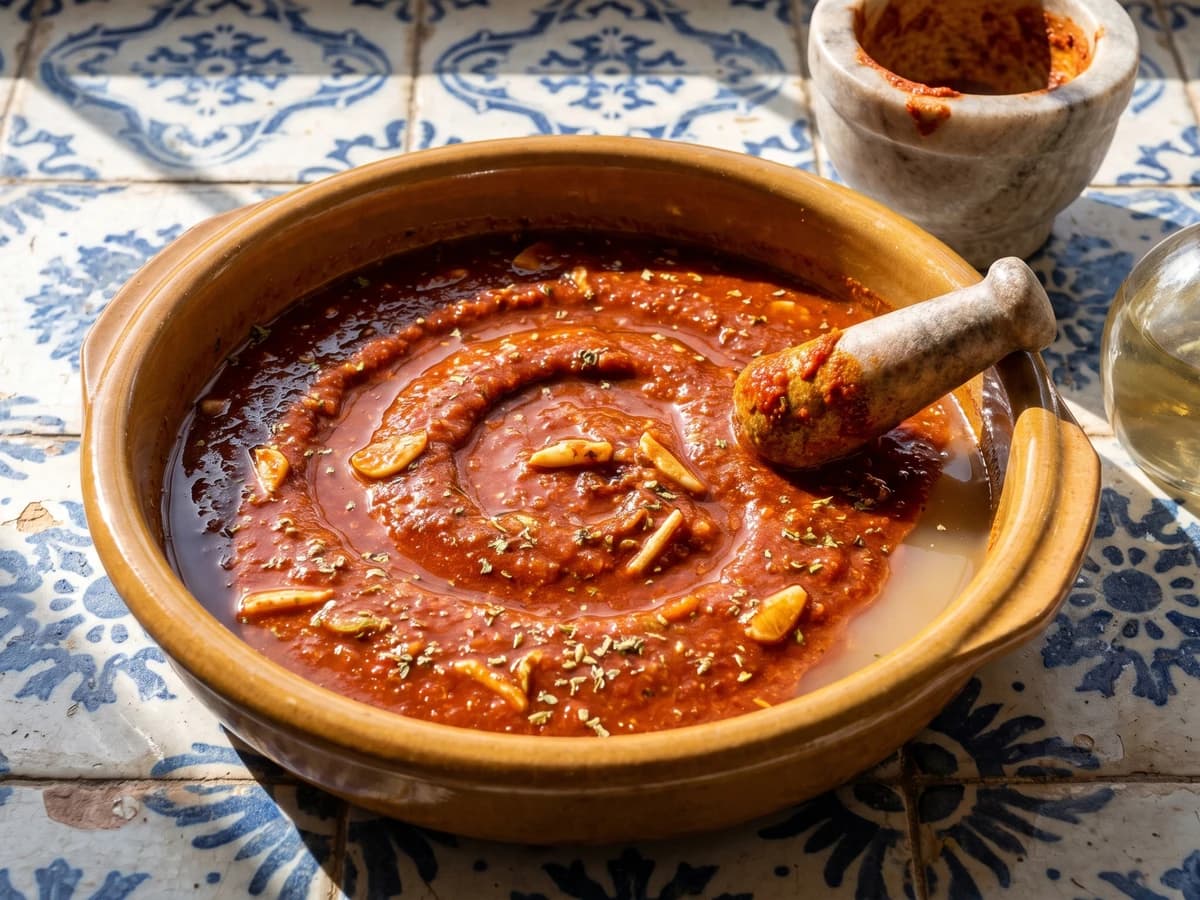
Andalucía's sharp, brick-red marinade brings vinegar, garlic, oregano, cumin and pimentón to fish and pork; pound the seasonings first, then give the acid time to carry them through.
Chef Isabel
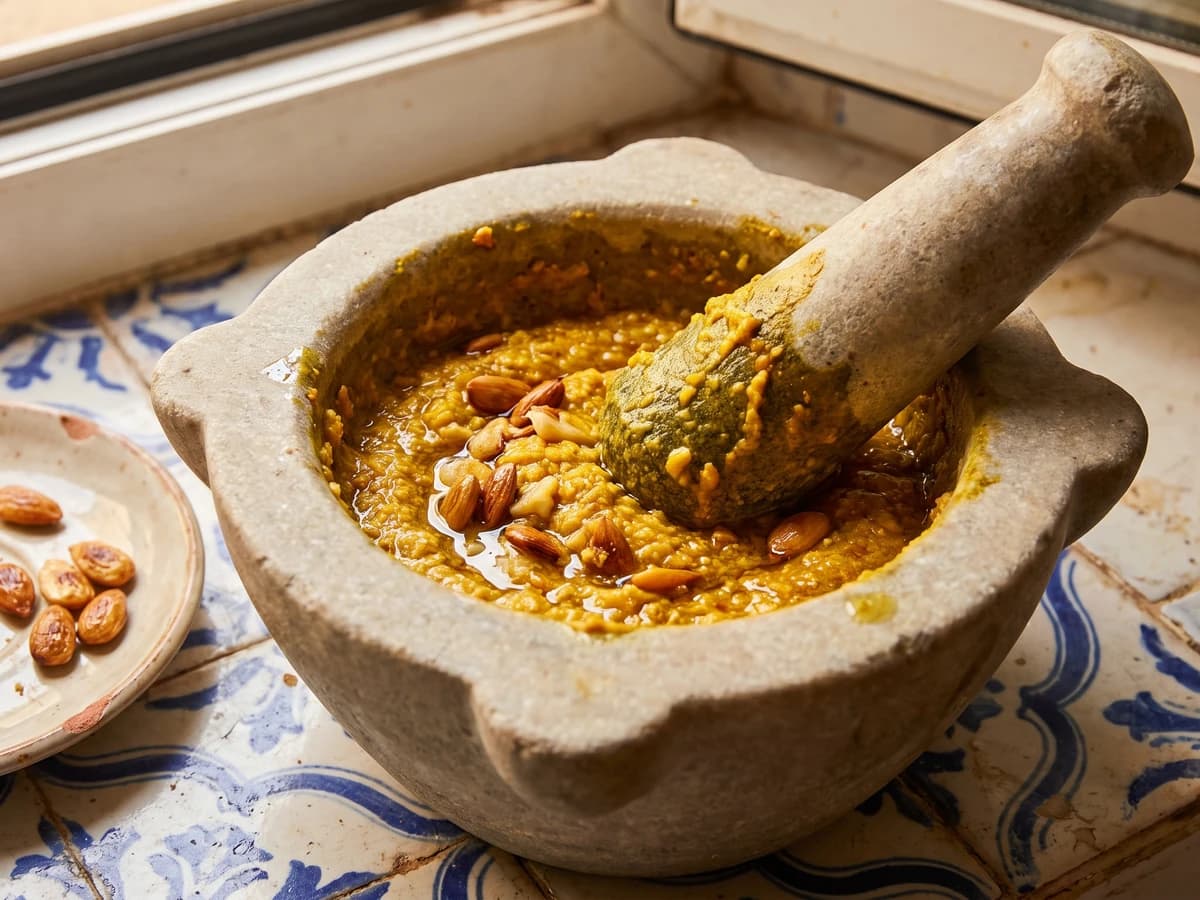
Almería's ajopollo turns fried garlic, almonds, bread and saffron into a golden mortar paste that gives modest fish and potato guisos their body, richness and unmistakable southern depth.
Chef Isabel
Allioli belongs to Catalonia and Valencia: garlic, salt, and olive oil worked patiently in a mortar until thick and glossy. No egg, no trick, just slow first drops that make the emulsion hold.