Chef Isabel
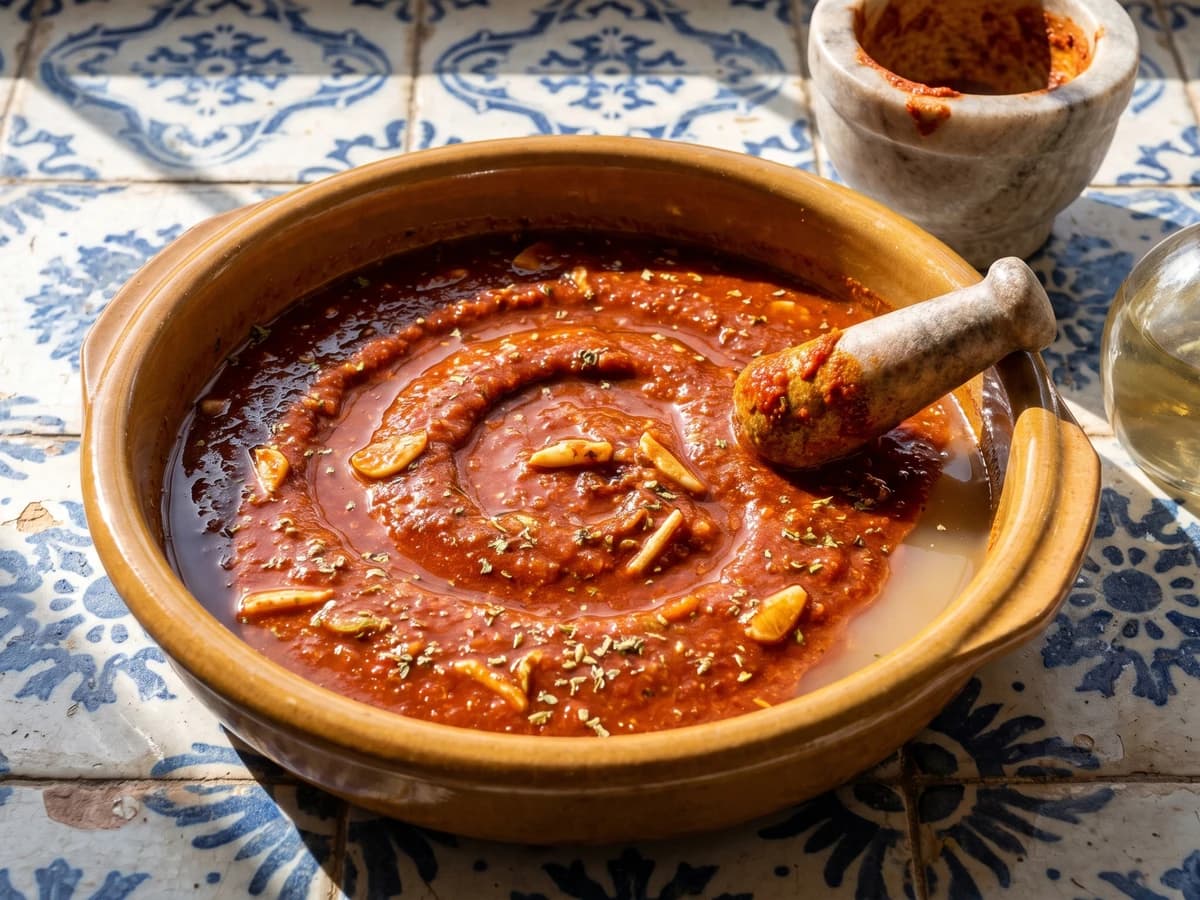
Adobo Andaluz (Andalusian Marinade)
Andalucía's sharp, brick-red marinade brings vinegar, garlic, oregano, cumin and pimentón to fish and pork; pound the seasonings first, then give the acid time to carry them through.
A cooking platform built around craft, culture, and the stories behind what we eat.
Created by
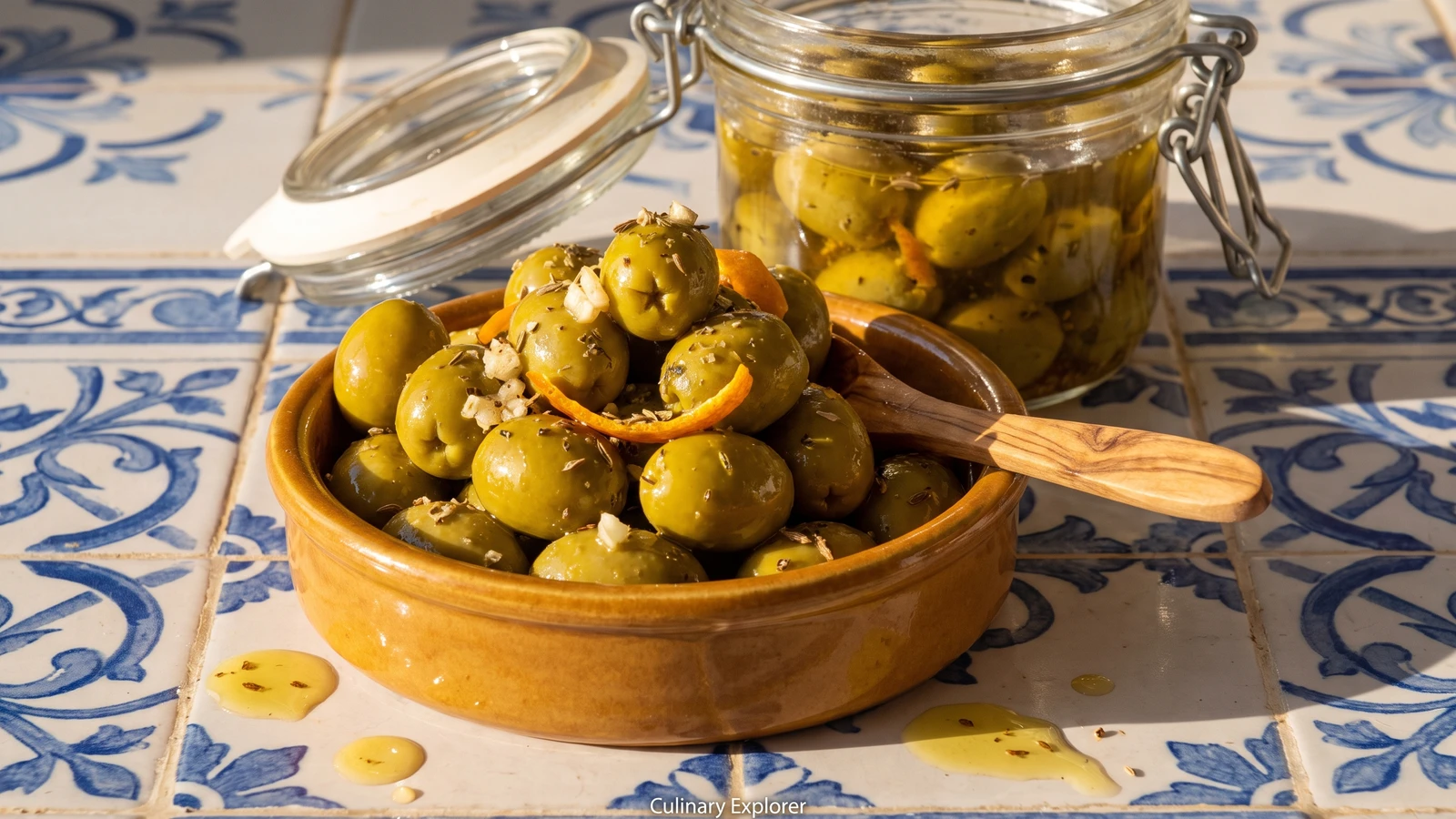
Andalucía's green olives are cracked just enough to drink in garlic, cumin, oregano and sherry vinegar, then left two days until the brine turns fragrant and every bite carries the aliño.
Aceitunas aliñadas are Andalusian green olives dressed after curing: lightly cracked, then steeped with garlic, cumin, oregano and vinagre de Jerez, sherry vinegar. The aliño, the dressing, is bold and fragrant, but the olive still has to taste of olive. Every household changes a leaf or a peel. The structure stays put: cured green fruit, aromatic seasoning, brine and only a little vinegar.
The crack decides it. Tap each olive just until the flesh splits around the stone, because an unbroken skin keeps the seasoning outside and a crushed olive turns soft and muddy. Pound the garlic and cumin into a rough majao, a mortar paste, add oregano and orange peel, then give the jar two full days. I don't rush that rest. There is nothing to be gained.
Manzanilla is the proper easy choice, with Gordal for a fleshier bite. If neither reaches your shop, use any firm, unstuffed and unpitted green olive sold in brine. A mild supermarket olive will have less of Andalucía's clean bitterness, but it will carry the aliño well. These must already be cured; raw olives need a separate debittering cure, and this jar won't do that work. No hace falta haber pisado España. Follow the crack, the measure and the rest, and they come out.
In Andalucía, the autumn verdeo, the early harvest of green table olives, fills household jars only after the raw fruit has been debittered in repeated water or brine. Seasoning changes by comarca: cumin and oregano are common in household aliños, while bitter orange, thyme or fennel appear where those plants grow close at hand. In Málaga, the Aloreña tradition cracks the fruit before natural brining and seasons it with thyme, fennel, garlic and pepper, a distinct local branch of the wider Andalusian practice.
Quantity
600g
unstuffed, unpitted and drained
Quantity
400ml
Quantity
20g
Quantity
60ml
Quantity
4 cloves (about 16g)
peeled
Quantity
3g (about 1 1/2 teaspoons)
Quantity
2g (about 2 teaspoons)
Quantity
3 wide strips (about 8g)
white pith removed
Quantity
1
Quantity
15ml
for serving
| Ingredient | Quantity |
|---|---|
| ready-cured Manzanilla or Gordal green olives in brineunstuffed, unpitted and drained | 600g |
| filtered water | 400ml |
| fine sea salt | 20g |
| vinagre de Jerez (sherry vinegar) | 60ml |
| garlicpeeled | 4 cloves (about 16g) |
| cumin seeds | 3g (about 1 1/2 teaspoons) |
| dried oregano | 2g (about 2 teaspoons) |
| unwaxed bitter-orange or ordinary orange peelwhite pith removed | 3 wide strips (about 8g) |
| bay leaf | 1 |
| extra virgin olive oilfor serving | 15ml |
Wash a 1.25-litre glass jar and its lid in hot soapy water, rinse them well and leave them to dry. Taste one olive before you begin. It should be firm, pleasantly salty and completely cured, with no hard raw bitterness. Drain the olives and rinse them briefly under cold water.
Place a few olives between the folds of a clean tea towel and tap them one at a time with a rolling pin or flat-bottomed glass. Stop as soon as each skin splits and the flesh opens slightly around the stone. The crack decides the dish: leave the skins whole and the aliño stays outside; crush the flesh and the olives turn soft and muddy.
Put the garlic and cumin seeds in a mortar and pound them into a rough majao, a coarse mortar paste. The garlic should be bruised and broken down, not made perfectly smooth. Rub the oregano between your palms to wake its scent, then stir it into the mortar.
Stir the 20g salt into the 400ml filtered water until every crystal dissolves. Add the sherry vinegar, then scrape in the garlic and cumin majao. Stir in the oregano, orange peel and bay leaf. The liquid should taste salty, aromatic and lightly sharp, not like a jar of vinegar.
Pack the cracked olives into the clean jar and pour over all the seasoned brine, distributing the garlic and herbs as you go. Press the olives beneath the liquid with a clean glass pickle weight if they float. Close the jar and refrigerate it upright.
Leave the olives in the refrigerator for at least 48 hours, gently turning the closed jar morning and evening so the aliño moves through it. Taste one after two days. The seasoning should reach the flesh beside the stone, with garlic first, then earthy cumin, oregano and a clean edge of vinegar. If the centre still tastes plain, give them another day.
Lift out the amount you intend to serve and let it lose the hard refrigerator chill for 15 minutes. For the full batch, spoon over 15ml extra virgin olive oil and include a little crushed garlic, oregano and orange peel from the jar. Serve with the stones still in. Siempre sale, si lo sigues.
1 serving (about 50g)
Culinary guides, cultural storytelling, and the editorial depth that makes cooking meaningful.
Discover Culinary ExplorerChef Isabel
Andalucía's sharp, brick-red marinade brings vinegar, garlic, oregano, cumin and pimentón to fish and pork; pound the seasonings first, then give the acid time to carry them through.
Chef Isabel
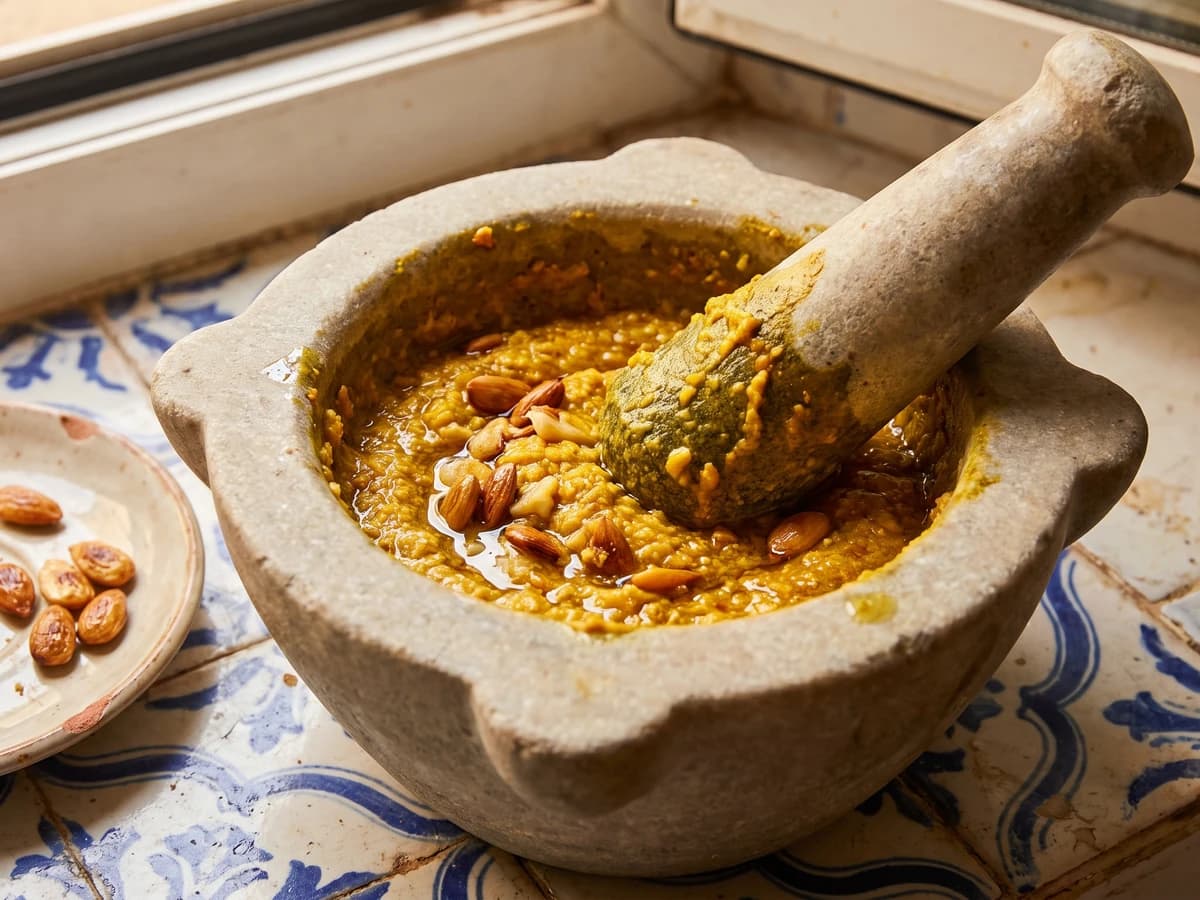
Almería's ajopollo turns fried garlic, almonds, bread and saffron into a golden mortar paste that gives modest fish and potato guisos their body, richness and unmistakable southern depth.
Chef Isabel
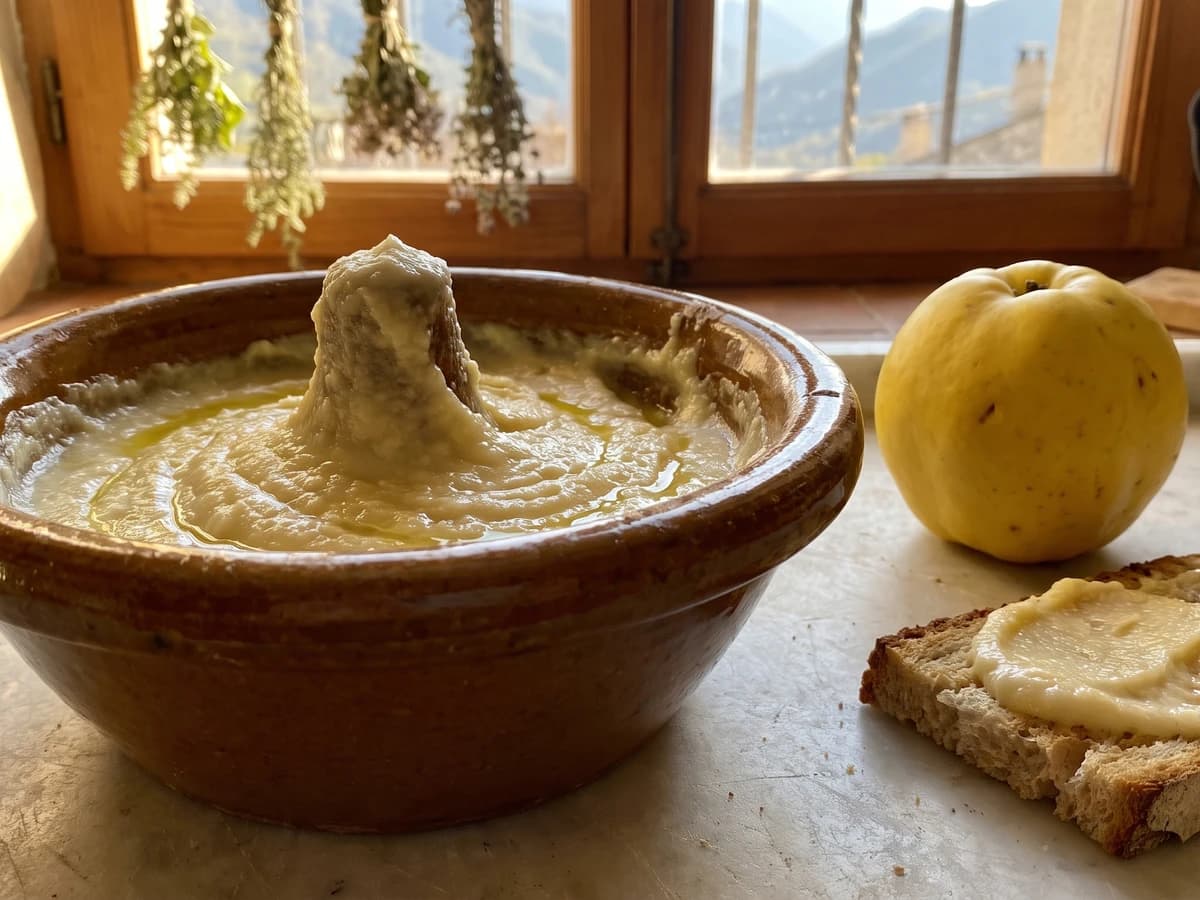
Allioli de codony belongs to the Catalan Pyrenees: boiled quince, raw garlic, salt, and olive oil worked into a thick, fragrant sauce for grilled meat, sausages, bread, and the autumn table.
Chef Isabel
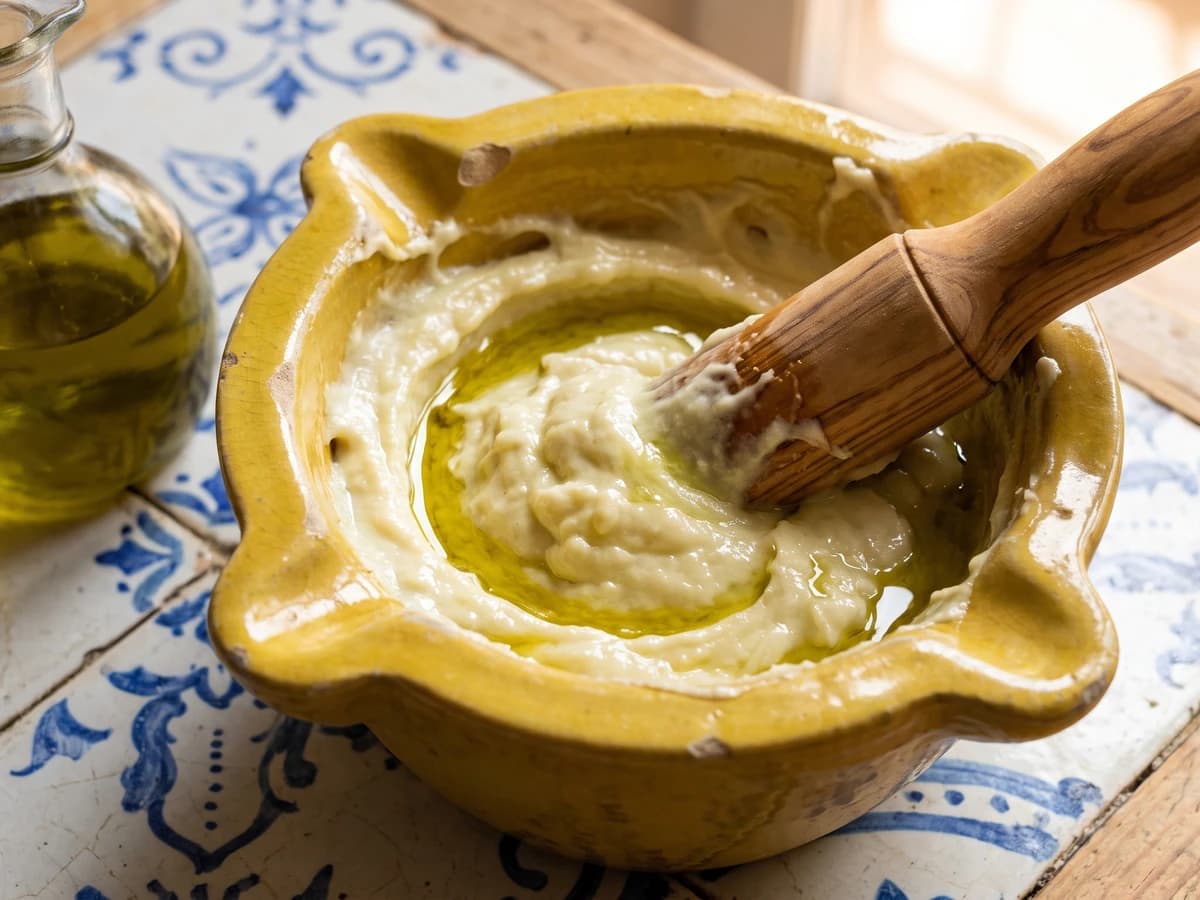
Allioli belongs to Catalonia and Valencia: garlic, salt, and olive oil worked patiently in a mortar until thick and glossy. No egg, no trick, just slow first drops that make the emulsion hold.