Chef Isabel
Duelos y Quebrantos Manchegos
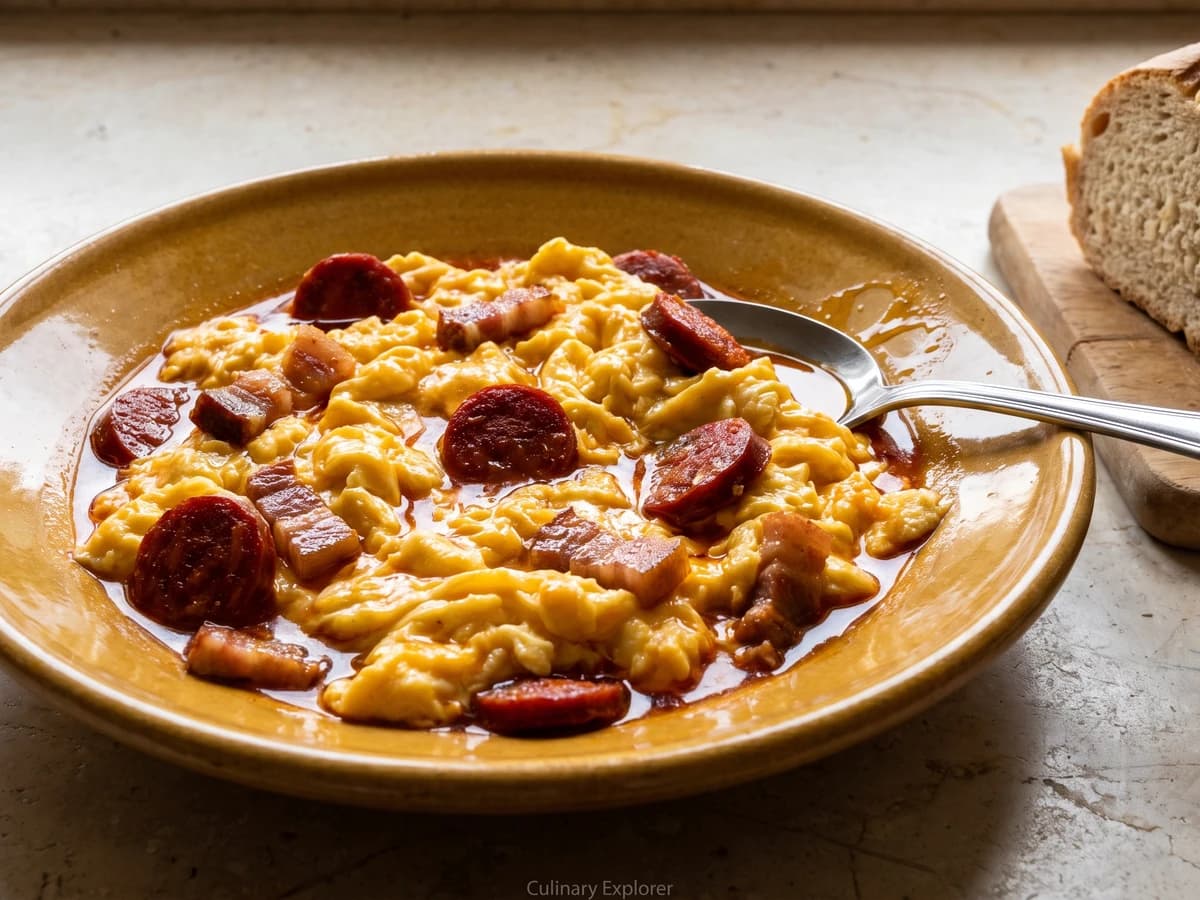
Duelos y quebrantos is Castilla-La Mancha in one pan: chorizo and bacon rendered slowly, then eggs folded through until soft, the plain Saturday meal Cervantes set on Don Quixote's table.
A cooking platform built around craft, culture, and the stories behind what we eat.
Created by
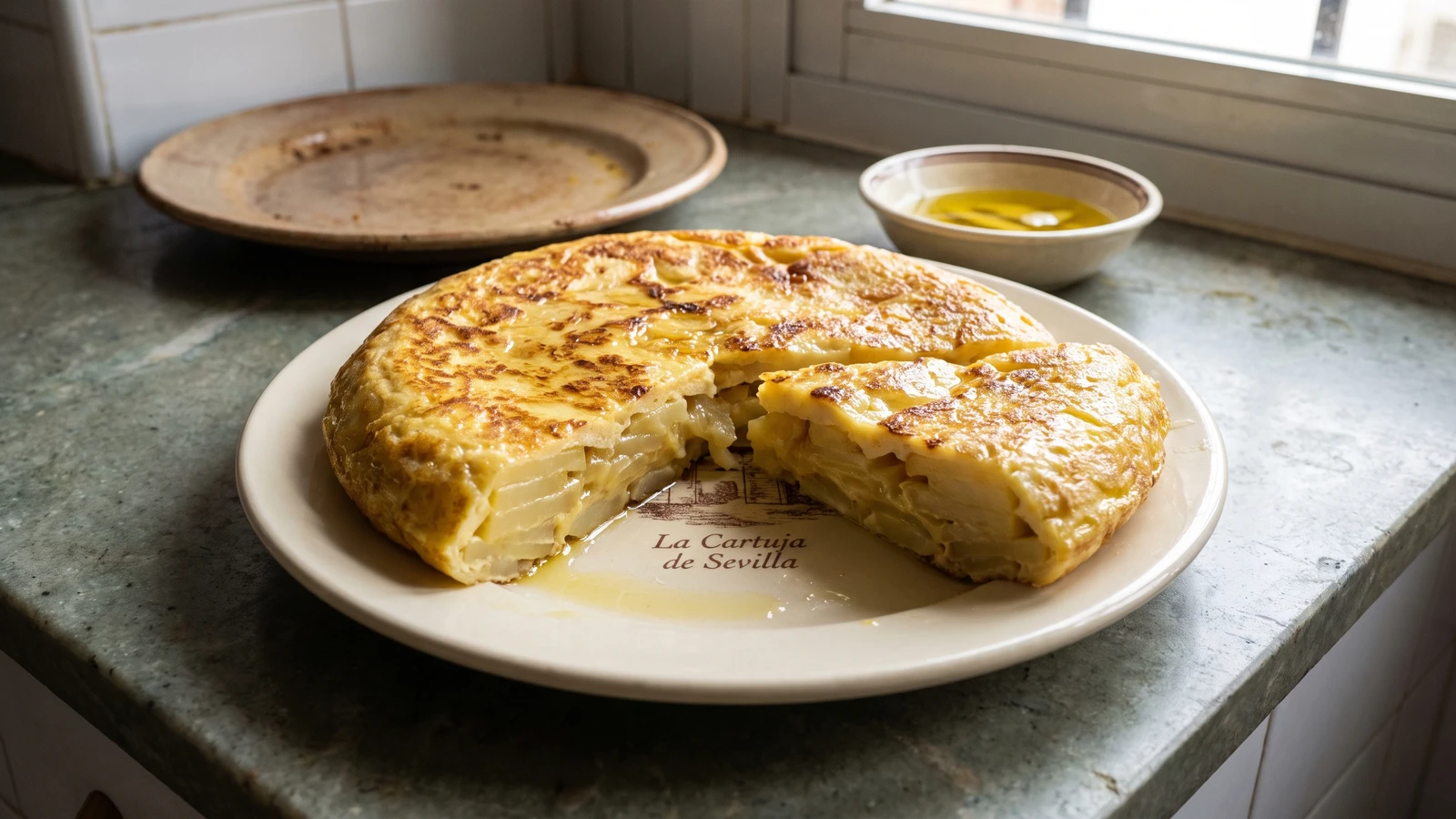
Tortilla de patatas belongs to every region of Spain: potatoes softened slowly in olive oil, folded through egg, and turned in one committed flip for a golden outside and tender centre.
Tortilla de patatas has no single regional surname. Navarra gives us one of its earliest written records, but every region of Spain has taken the dish into its home kitchens. What makes it tortilla is the thick, round marriage of potato and egg, browned gently on both sides and tender within, not crisp potatoes with an omelette poured over them.
The potatoes decide whether it works. Slice them about 3mm thick and cook them slowly in plenty of olive oil until they bend, crush easily, and taste almost sweet. You're poaching, not crisping. That soft potato absorbs the beaten egg and gives the tortilla its close, creamy middle. Drain it well, salt it away from the hot oil, and let it sit in the egg for ten minutes before it returns to the pan.
If you can't find the Monalisa or Kennebec potatoes common in Spanish kitchens, use Yukon Gold or another yellow all-purpose potato. It will be a little firmer, but it holds together well and absorbs the egg properly. Use fresh eggs and ordinary good olive oil. No hace falta haber pisado España, you don't need to have set foot in Spain.
Then comes the flip. Use a flat plate wider than the pan, cover the pan completely, and turn it in one clean movement. Hesitation makes more trouble than speed. My Margin says only this: dry plate, hot pan, commit. Siempre sale, si lo sigues, it turns out if you follow it.
Tortilla de patatas is claimed by no single region, though one of its earliest clear written descriptions appears in an anonymous Navarrese petition describing poor households stretching a few eggs with potatoes. The often repeated tale that the Basque general Tomás de Zumalacárregui invented it during the Carlist Wars is a legend, not a settled origin. Its enduring argument is la cebolla, con cebolla or sin cebolla, with onion or without, and both versions have long belonged to Spanish home kitchens.
Quantity
700g peeled weight
cut into irregular 3mm slices
Quantity
180g
halved and thinly sliced
Quantity
7, about 350g without shells
Quantity
500ml
for poaching and setting the tortilla
Quantity
10g
divided
| Ingredient | Quantity |
|---|---|
| waxy or all-purpose potatoescut into irregular 3mm slices | 700g peeled weight |
| yellow onion (optional)halved and thinly sliced | 180g |
| large eggs | 7, about 350g without shells |
| extra virgin olive oilfor poaching and setting the tortilla | 500ml |
| fine sea saltdivided | 10g |
Cut the peeled potatoes into irregular slices about 3mm thick. Keep them close in size so they soften together, but don't fuss over perfect rounds. Halve the onion and slice it thinly if you're making the con cebolla version.
Pour the olive oil into a 26cm frying pan and warm it over medium-low heat. Add the potatoes carefully, then the onion. The oil should bubble softly around them, never spit fiercely or smoke. Cook for 22 to 28 minutes, turning the mixture gently every few minutes, until the potato slices bend without breaking and crush easily against the side of the pan. Keep them pale. Brown, crisp edges belong to fried potatoes, not inside this tortilla.
Set a sieve over a heatproof bowl. Lift in the potatoes and onion with a slotted spoon, then leave them to drain for 5 minutes. Sprinkle the warm mixture with 7g of the salt after it leaves the oil. Seasoning it here gives you control and keeps salt away from the hot oil, where moisture makes it spit. Let the strained oil cool and save it.
Crack the eggs into a large bowl, add the remaining 3g salt, and beat only until the whites and yolks come together. Fold in the drained potatoes and onion without mashing them. Rest the mixture for 10 minutes. The warm potato drinks in a little egg during this pause, which helps the centre set evenly instead of separating into dry egg and loose slices.
Film a clean 22cm non-stick or well-seasoned frying pan with 15ml of the reserved oil. Heat it over medium heat until the oil moves freely across the surface, but don't let it smoke. Pour in the mixture and spread it level. Cook for 30 seconds, lower the heat to medium-low, then tuck the edges inward with a flexible spatula. Continue for 3 to 4 minutes, until the outside is set and golden underneath while the middle still moves when you shake the pan.
Loosen the edge with the spatula. Cover the pan with a flat plate at least 2cm wider than its rim. Hold the plate firmly against the pan with a dry hand or folded cloth, then turn everything over in one quick, committed movement. Set the pan down, add another teaspoon of reserved oil if it looks dry, and slide the tortilla back in with the uncooked side underneath. Shape the edge into a neat round.
Cook the second side for 2 minutes for a softly set centre or 3 to 4 minutes for a firm one. Slide the tortilla onto a clean plate and rest it for 5 to 10 minutes before cutting six wedges. The egg finishes settling during the rest, while the potato stays tender. Serve warm or at room temperature, with nothing scattered over it. The tortilla is already complete.
1 serving (about 180g)
Culinary guides, cultural storytelling, and the editorial depth that makes cooking meaningful.
Discover Culinary ExplorerChef Isabel
Duelos y quebrantos is Castilla-La Mancha in one pan: chorizo and bacon rendered slowly, then eggs folded through until soft, the plain Saturday meal Cervantes set on Don Quixote's table.
Chef Isabel
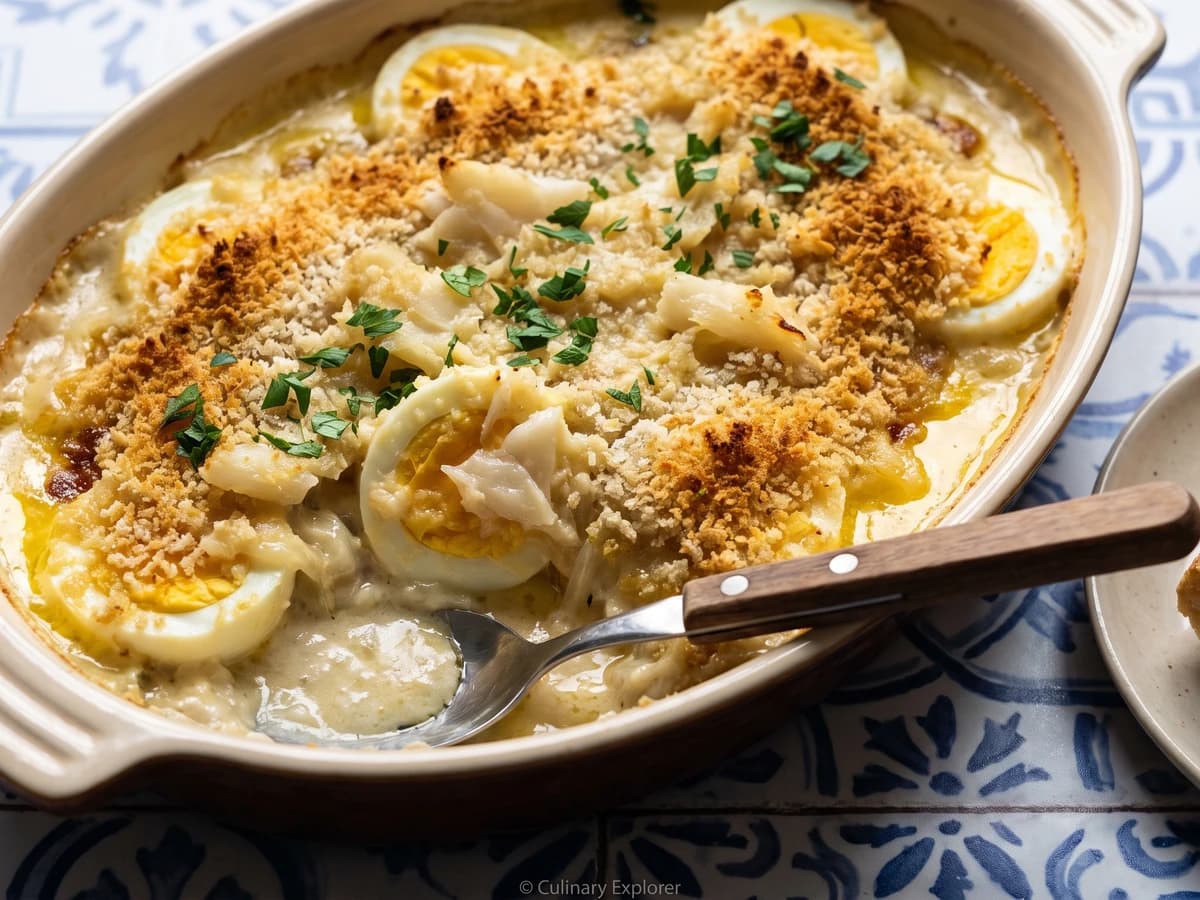
Donostia's baked eggs sit beneath a slow, sweet onion and bacalao sauce, with a fine breadcrumb crust browned under the grill. Desalt the cod properly and the rest is straightforward.
Chef Isabel
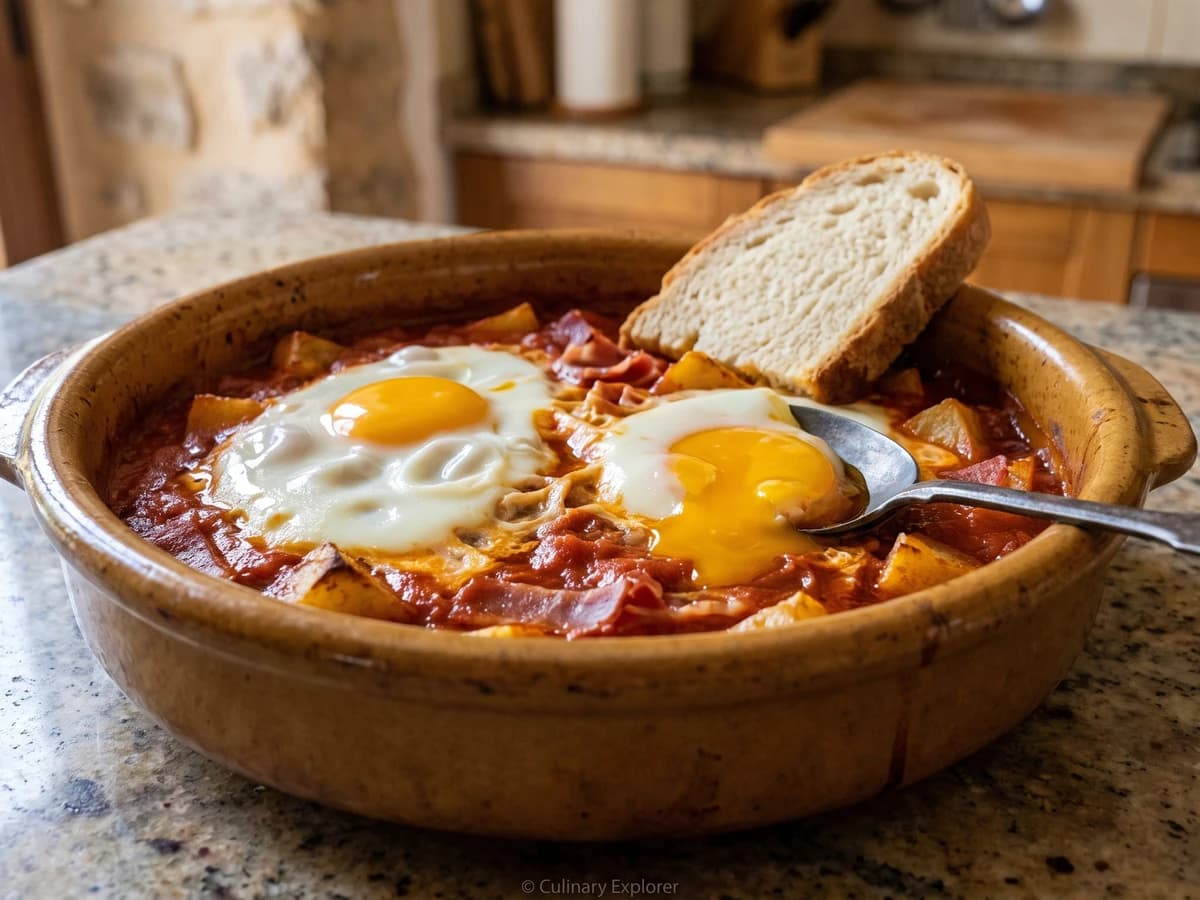
Extremadura sets eggs into a thick bed of fried potato, tomato sofrito, jamón, and its own smoky pimentón, then bakes them just until the whites hold and the yolks stay soft.
Chef Isabel
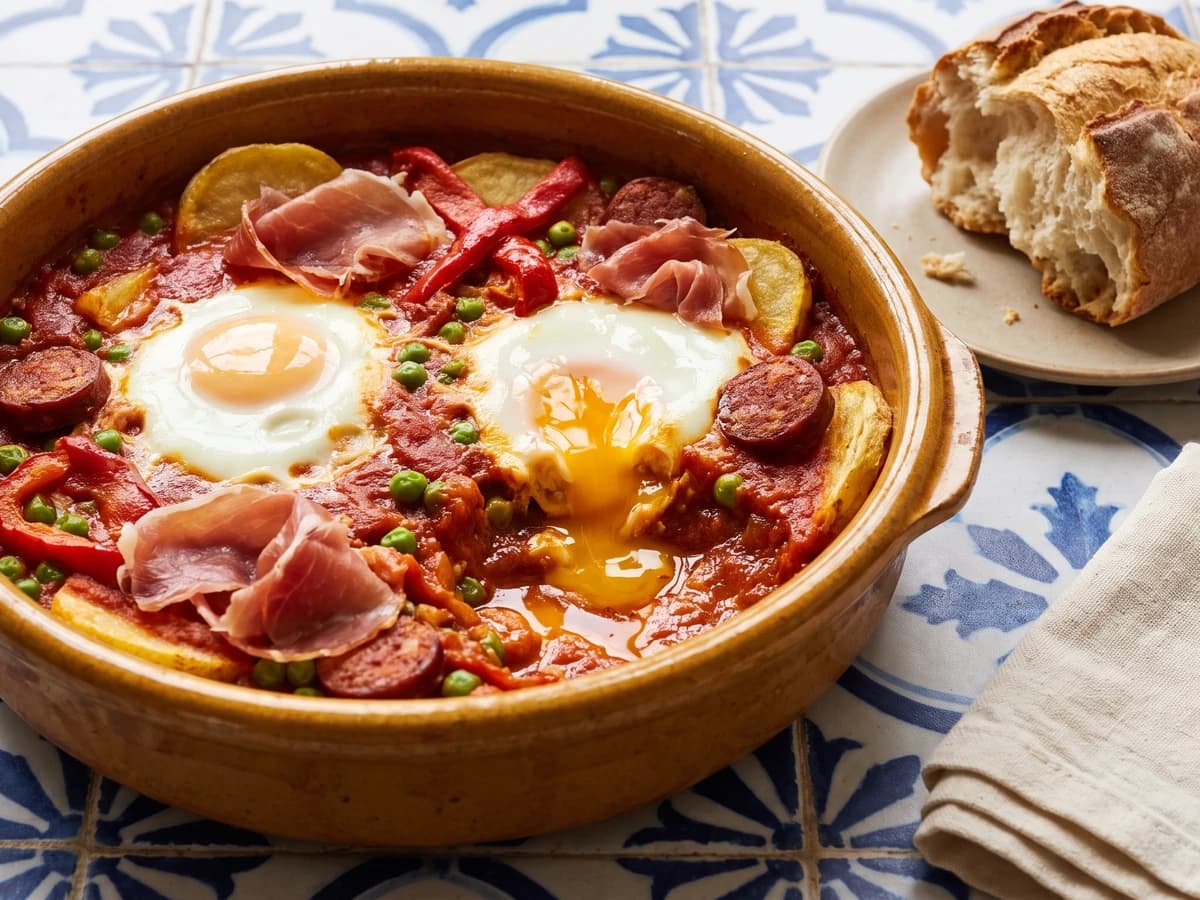
Huevos a la flamenca are Seville in a cazuela: eggs baked over a dark, sweet tomato sofrito with potatoes, peas, peppers, jamón and chorizo, pulled while the whites set and the yolks still run.