Chef Isabel
Duelos y Quebrantos Manchegos
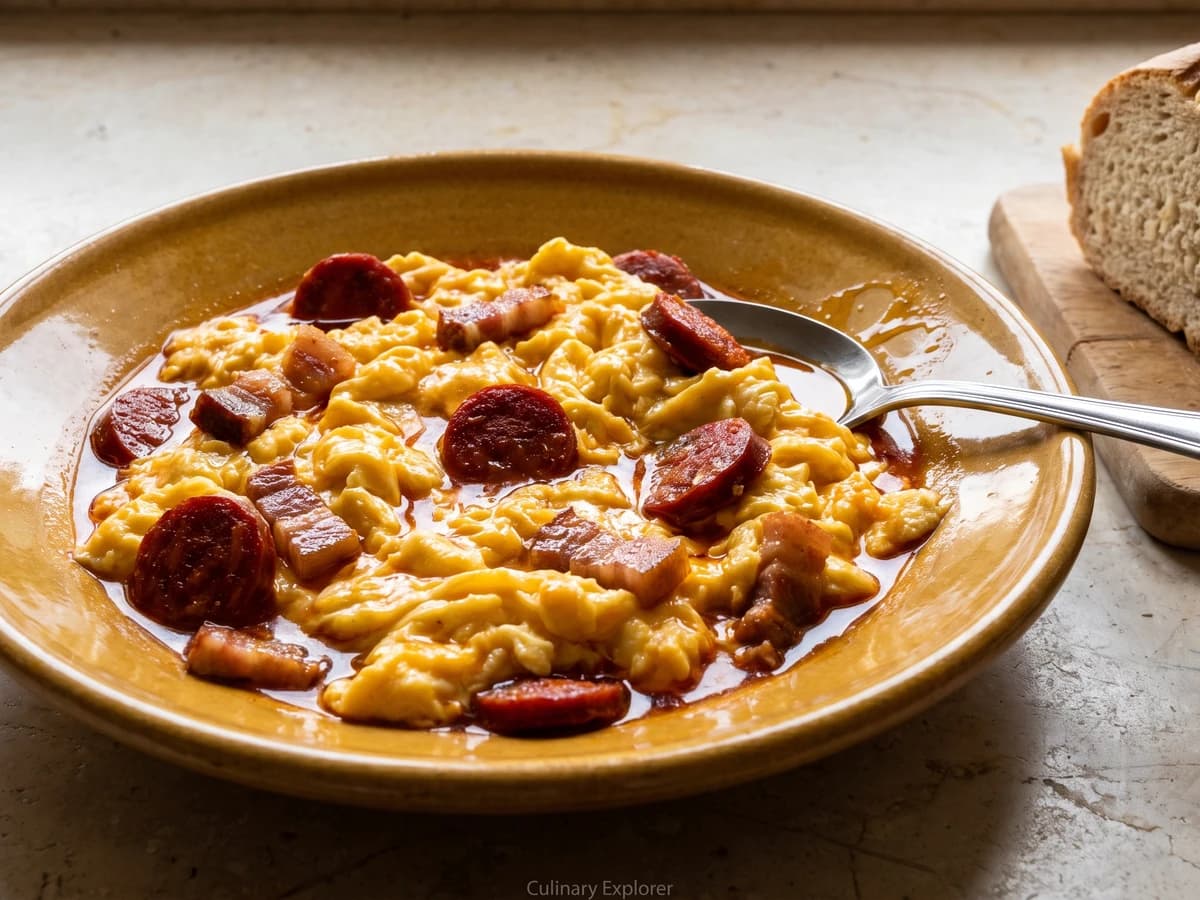
Duelos y quebrantos is Castilla-La Mancha in one pan: chorizo and bacon rendered slowly, then eggs folded through until soft, the plain Saturday meal Cervantes set on Don Quixote's table.
A cooking platform built around craft, culture, and the stories behind what we eat.
Created by
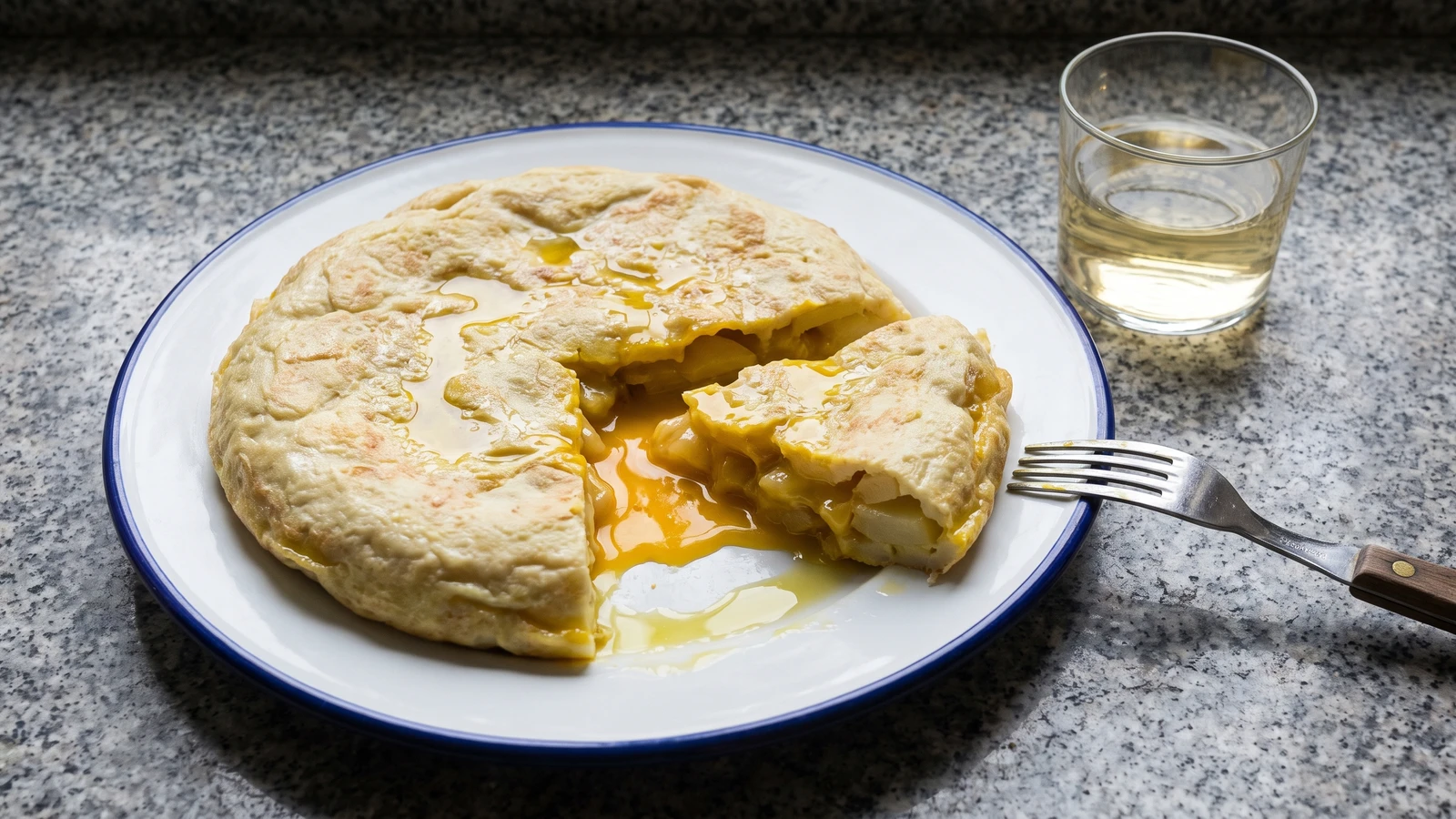
Betanzos, in Galicia, cooks its potato tortilla fast and barely set: tender fried potatoes held in abundant egg, with a thin golden skin and a loose, glossy centre that waits for no one.
Tortilla de Betanzos is Galician, from the town of Betanzos in A Coruña, and its centre is meant to run onto the plate. It uses only potato, egg, olive oil, and salt. No onion. Compared with the thicker tortilla de patatas cooked across the peninsula, this one wears only a thin golden skin around a loose, glossy middle.
The method that decides it is the final minute in the pan. Fry the potatoes gently until tender without making them crisp, fold them warm into eggs beaten only enough to break the whites, then use lively heat to seal the outside quickly. The pan keeps cooking the egg after the flip. Wait until the middle looks set and you've waited too long.
Kennebec is the potato used around Galicia, but Yukon Gold or another yellow all-purpose potato will do when that's what your market has. The result will be a little firmer, not a different dish. No hace falta haber pisado España. Use pasteurized eggs, keep to the pan size, and cut the tortilla while it still trembles. Siempre sale, si lo sigues.
Tortilla de Betanzos belongs to Betanzos, a market town in the Galician comarca of As Mariñas, in A Coruña, where inns and family eating houses made the very loose potato omelette a local emblem. The town's tortilla competition permits only egg, potato, olive oil, and salt; onion excludes an entry, which settles the local argument even if it settles nothing elsewhere. Its almost liquid centre is not an accident but the defining point by which the Betanzos version is recognized.
Quantity
500g peeled weight
cut into irregular slices 2 to 3mm thick
Quantity
8, about 400g without shells
brought to room temperature
Quantity
500ml
for frying, with 15ml reserved for setting the tortilla
Quantity
8g
| Ingredient | Quantity |
|---|---|
| Kennebec potatoes, or Yukon Gold potatoescut into irregular slices 2 to 3mm thick | 500g peeled weight |
| large pasteurized eggsbrought to room temperature | 8, about 400g without shells |
| mild olive oilfor frying, with 15ml reserved for setting the tortilla | 500ml |
| fine sea salt | 8g |
Cut the peeled potatoes into irregular slices 2 to 3mm thick, breaking some pieces from the knife rather than making perfect coins. Pésalo, no lo adivines: use 500g after peeling. Pat the slices completely dry and season them with 5g of the salt.
Heat the olive oil in a deep 24cm frying pan to about 150°C. Add the potatoes carefully and keep them at a gentle, steady sizzle for 18 to 22 minutes, turning them without crushing them. They should yield completely when pressed and show only a few pale-gold edges. Crisp, brown potatoes belong elsewhere; Betanzos needs them soft enough to surrender to the egg.
Lift the potatoes into a sieve with a slotted spoon and drain for 3 minutes. Reserve the oil. The slices should remain warm and glossy, but there must be no pool of oil waiting to thin the eggs.
Crack the eggs into a wide bowl, add the remaining 3g salt, and beat for only 10 to 12 strokes. Break up every strand of clear white, but leave the yolk and white lightly streaked. Fold in the warm potatoes without mashing them and let the mixture stand for no more than 2 minutes.
Put a clean 20cm non-stick or well-seasoned frying pan over medium-high heat. Add 15ml of the reserved oil and heat until it moves freely and glistens. Pour in the mixture, shake the pan once to level it, and use a spatula to draw the edge inward. Cook for 45 to 60 seconds, until a narrow rim is set and pale gold while the top remains decidedly liquid.
Cover the pan with a flat plate wider than the rim. Hold the plate firmly against the pan and invert in one committed movement. Slide the tortilla straight back into the pan and tuck in the edges. Cook the second side for 20 to 30 seconds. The tortilla should sway as one soft mass when the pan is shaken.
Slide the tortilla onto its serving plate and rest it for only 1 minute. Cut a wedge at once. The outside should hold a thin golden skin while the deep-yellow centre flows slowly around tender pieces of potato. Serve immediately, before the remaining heat turns that loose centre firm.
1 serving (about 170g)
Culinary guides, cultural storytelling, and the editorial depth that makes cooking meaningful.
Discover Culinary ExplorerChef Isabel
Duelos y quebrantos is Castilla-La Mancha in one pan: chorizo and bacon rendered slowly, then eggs folded through until soft, the plain Saturday meal Cervantes set on Don Quixote's table.
Chef Isabel
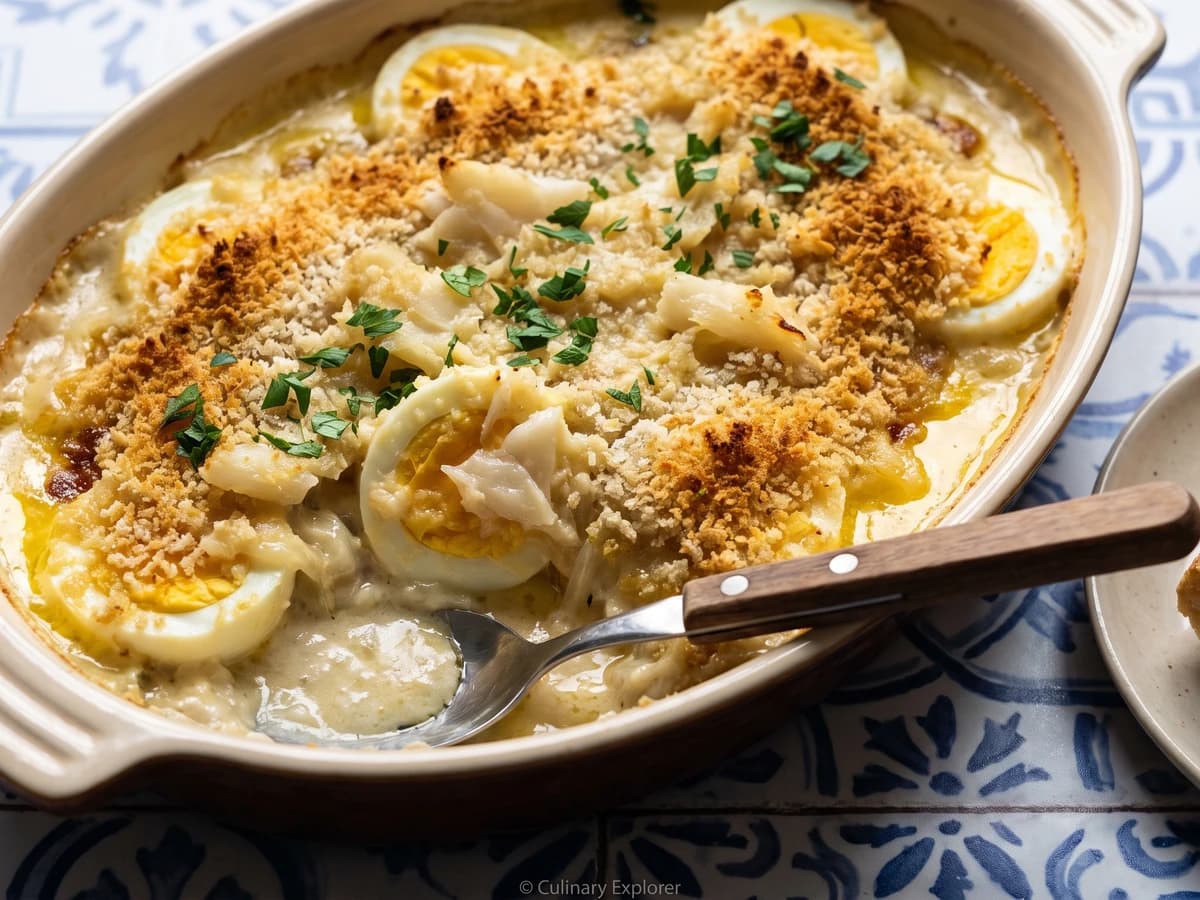
Donostia's baked eggs sit beneath a slow, sweet onion and bacalao sauce, with a fine breadcrumb crust browned under the grill. Desalt the cod properly and the rest is straightforward.
Chef Isabel
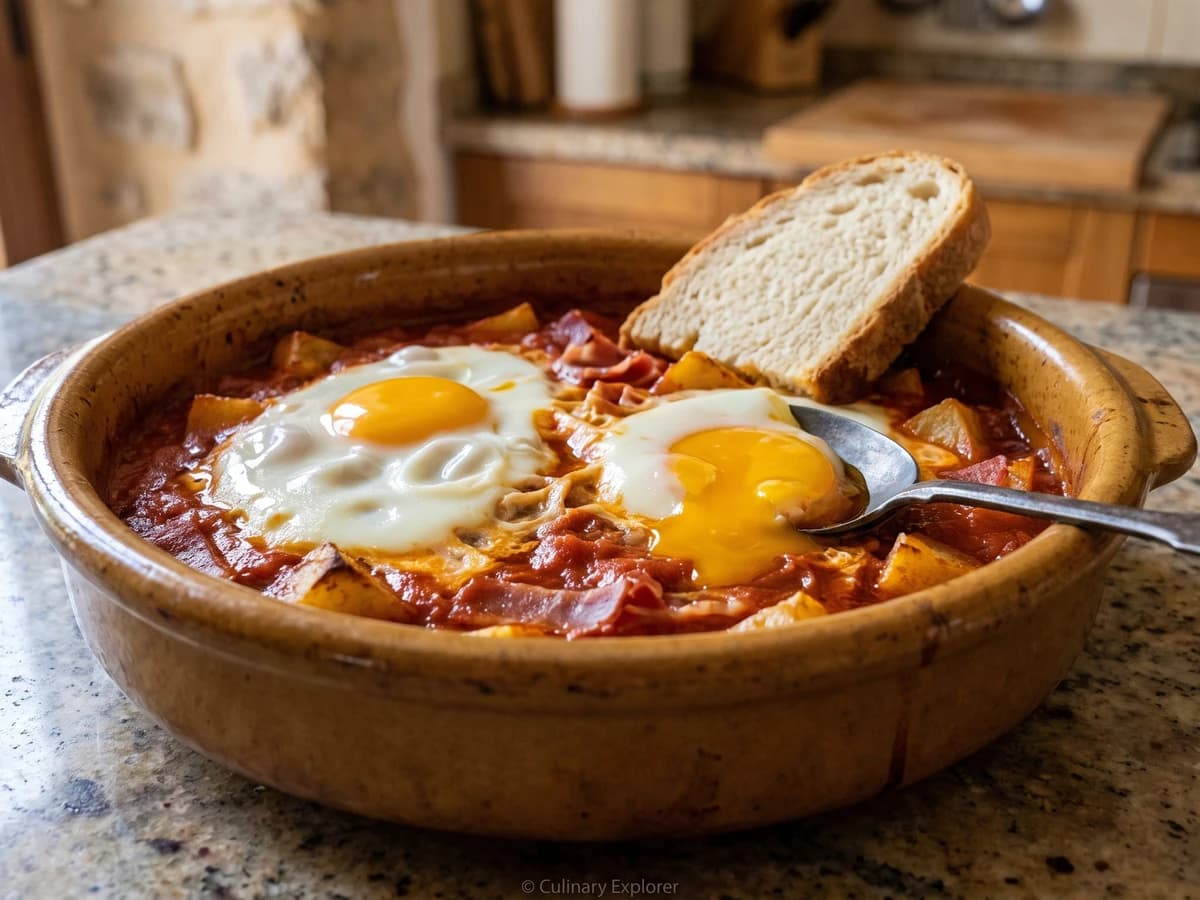
Extremadura sets eggs into a thick bed of fried potato, tomato sofrito, jamón, and its own smoky pimentón, then bakes them just until the whites hold and the yolks stay soft.
Chef Isabel
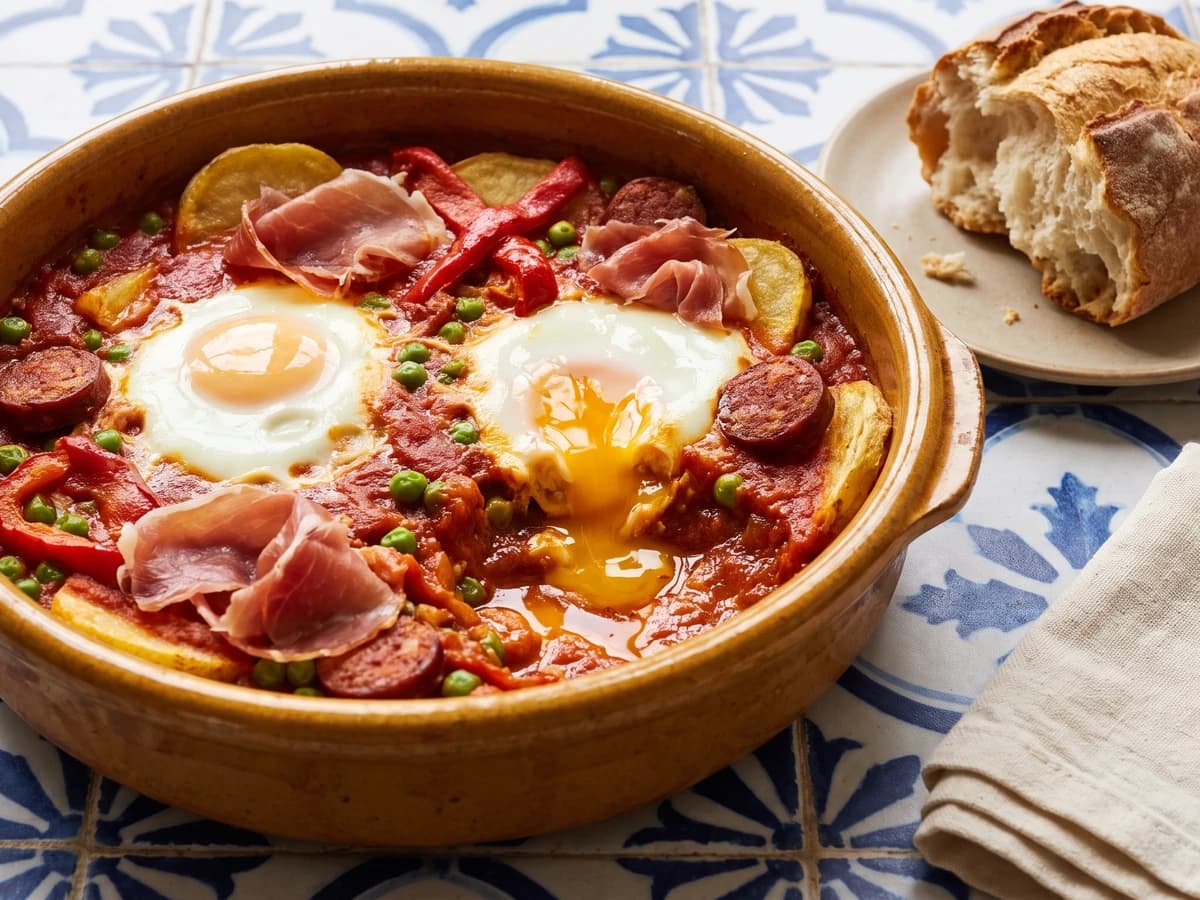
Huevos a la flamenca are Seville in a cazuela: eggs baked over a dark, sweet tomato sofrito with potatoes, peas, peppers, jamón and chorizo, pulled while the whites set and the yolks still run.