Chef Isabel
Bollo Preñao Asturiano
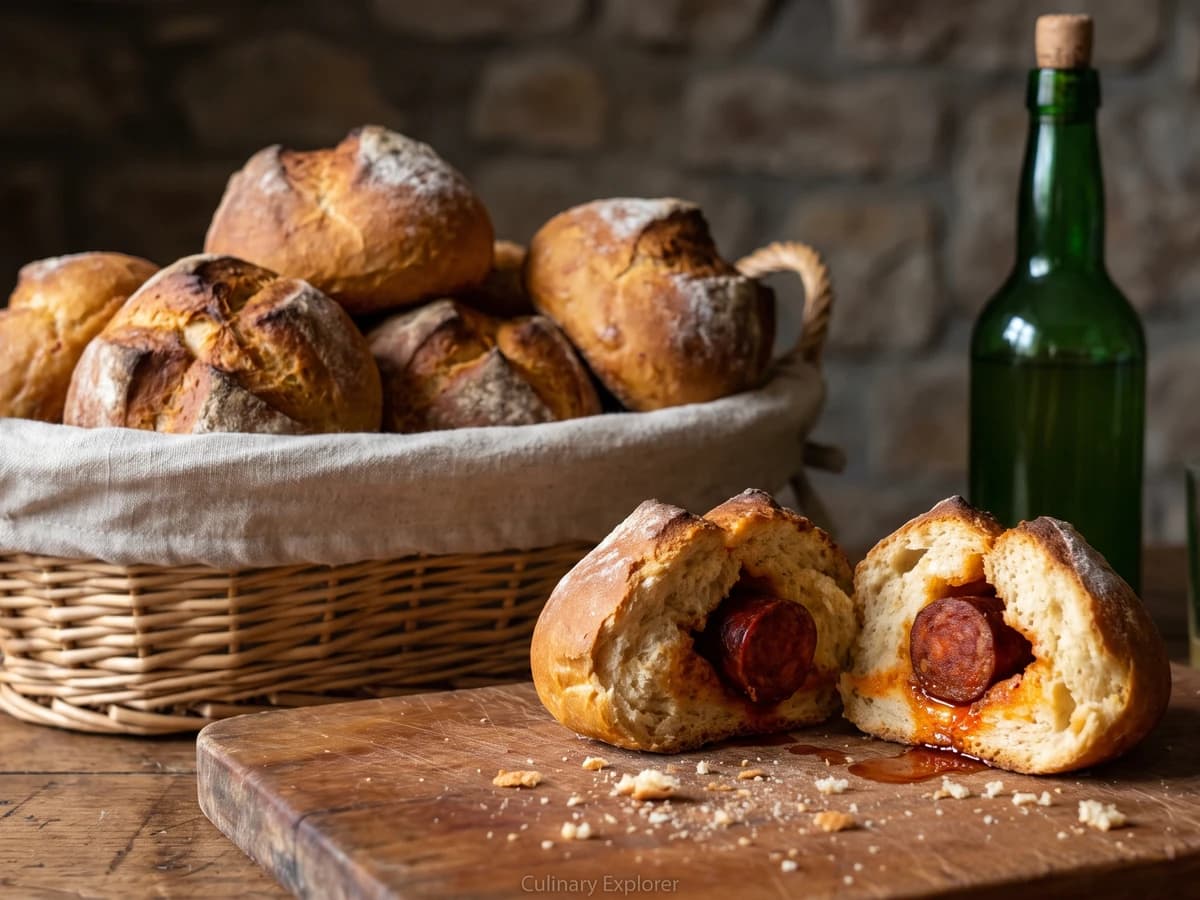
Asturias tucks a whole smoky chorizo inside each bread roll, so its pimentón-red fat seasons the crumb as it bakes. Seal the dough well, and you have the proper food of romerías and picnics.
A cooking platform built around craft, culture, and the stories behind what we eat.
Created by
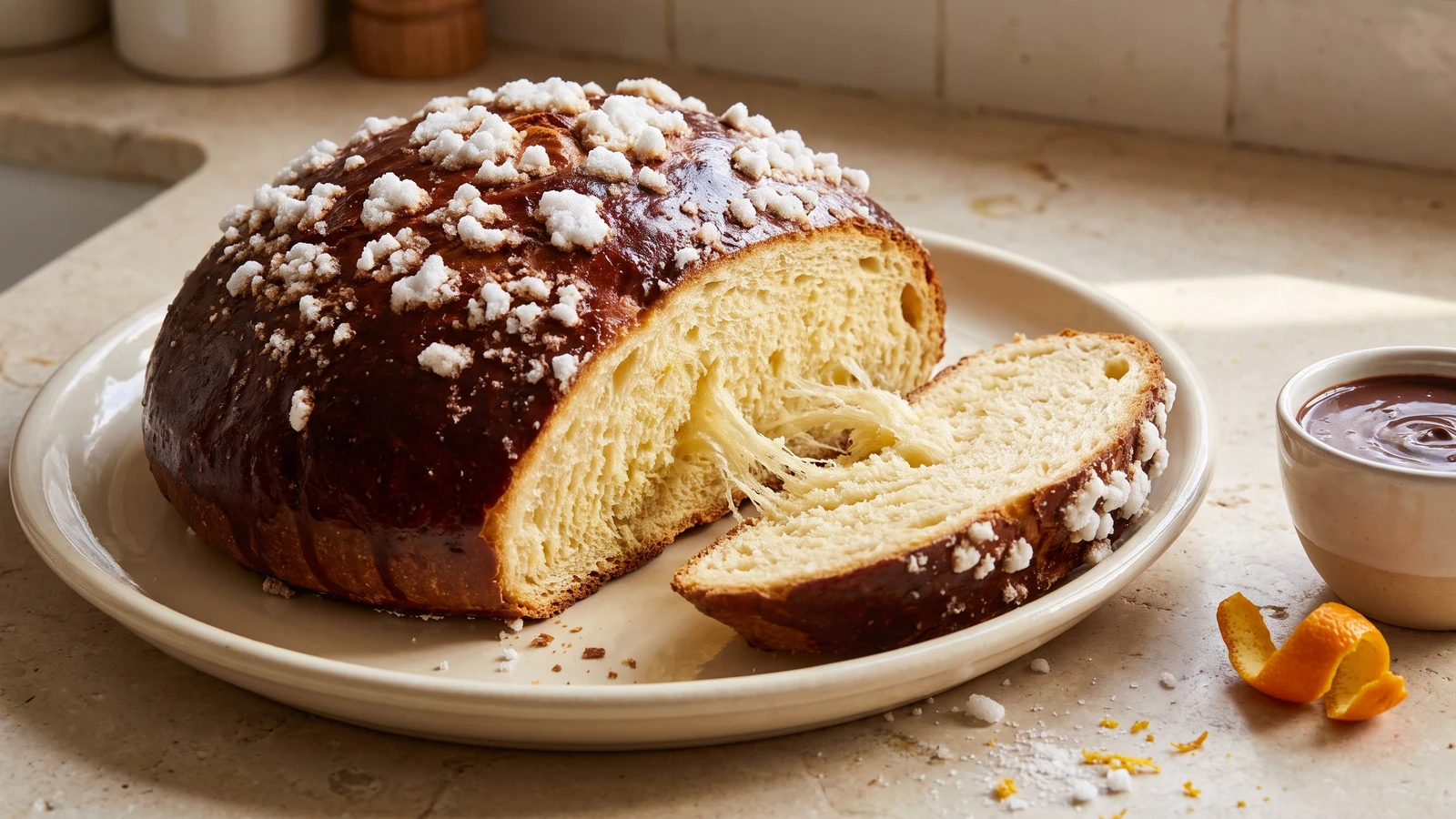
Valencian toña, also called panquemao or panou, is the domed Easter loaf of eggs, olive oil, sugar, and citrus, risen patiently until feather-light beneath its dark, sugared crown.
Toña, also called panquemao or panou, is Valencian: a tall, round Easter loaf with an olive-oil crumb, the perfume of orange and lemon, and a dark egg-glazed crown rough with sugar. It isn't brioche. Butter isn't the point here. The same family of dough may become a mona de Pascua when shaped around a hard-boiled egg, but the toña stands plain and high, ready for breakfast or the Easter merienda, the afternoon meal.
The slow rise is the whole job. Sugar, egg, and oil weigh upon the yeast, so this dough won't be hurried by a warm oven or an impatient cook. Let the first rise reach a true double, then wait again after shaping until the round feels full of air and a light dent returns slowly. Bake it too soon and you get a handsome brown loaf with a heavy ring inside. Give it its time and the crumb pulls apart in long, soft strands.
No hace falta haber pisado España. Fresh baker's yeast gives the familiar gentle fermentation, but 7g of instant yeast works reliably. If strong bread flour isn't sold where you are, use plain all-purpose flour and hold back 15ml of the milk; the loaf will spread a little more and its crumb won't be quite as fibrous, but it will still be tender. Orange blossom water is used in some Valencian kitchens and not in others. If you can't find it, omit it rather than reaching for vanilla, because the fresh citrus already belongs here. In the Margin beside mine there are only three words: "deja que suba," let it rise.
Toña and panquemao belong to the same Valencian Easter family of enriched breads, with the name changing from town to town: toña is especially common in Alicante, while Alberic in the Ribera Alta is closely identified with panquemao. The dough also gives rise to the mona de Pascua, often shaped around a hard-boiled egg for the Easter outing, while toña is usually left as a tall, round loaf with a sugared dark crown. Eggs, oil, and sugar returned to the festive table after the restraint of Lent, which is why so rich a bread belongs to Pascua.
Quantity
500g
divided
Quantity
120ml
warmed to 27°C
Quantity
20g
or 7g instant yeast
Quantity
125g
divided
Quantity
3 (about 150g without shells)
at room temperature
Quantity
80ml
Quantity
zest of 1 orange
finely grated
Quantity
zest of 1 lemon
finely grated
Quantity
10ml
Quantity
8g
Quantity
1
Quantity
5ml
Quantity
30g
Quantity
5ml
| Ingredient | Quantity |
|---|---|
| strong bread flourdivided | 500g |
| whole milkwarmed to 27°C | 120ml |
| fresh baker's yeastor 7g instant yeast | 20g |
| caster sugardivided | 125g |
| large eggsat room temperature | 3 (about 150g without shells) |
| mild extra virgin olive oil | 80ml |
| unwaxed orange zestfinely grated | zest of 1 orange |
| unwaxed lemon zestfinely grated | zest of 1 lemon |
| food-grade orange blossom water (optional) | 10ml |
| fine sea salt | 8g |
| egg, for glazing | 1 |
| whole milk, for glazing | 5ml |
| granulated sugar, for the crown | 30g |
| water, for moistening the crown sugar | 5ml |
Put the warm milk in a large bowl and dissolve the fresh yeast in it. Stir in 60g of the flour and 10g of the caster sugar, both taken from the measured amounts. Cover and leave for 15 to 20 minutes, until swollen and lightly bubbled. Instant yeast may make only a faint froth, so don't wait for a great cap of foam.
Whisk the three eggs with the remaining 115g caster sugar, the orange and lemon zests, and the orange blossom water. Add this to the yeast mixture, then mix in the remaining 440g flour and the salt. Knead for 5 minutes before adding any oil. Pour in the olive oil in four additions, kneading until each one disappears before adding the next, then continue for 10 to 12 minutes in a mixer or 15 to 18 minutes by hand. The finished dough should be smooth, elastic, and tacky, but it should pull into a thin translucent membrane when stretched.
Set the dough in a lightly oiled bowl, cover it, and leave it at 24 to 26°C until fully doubled, about 2 to 3 hours. Sugar, egg, and oil make the yeast work slowly. This rise decides the loaf: shape it too early and the crumb stays close and heavy, however well you bake it. In a cool kitchen it may need another hour. The dough decides, not the clock.
Turn the risen dough onto an unfloured worktop and press it gently into a thick disc. Fold the outside edges into the centre, turn it seam-side down, and draw it across the worktop several times to tighten the surface into a smooth, high round. Set it on a parchment-lined heavy baking sheet. Cover loosely and keep it away from draughts.
Leave the shaped loaf for 1 hour 30 minutes to 2 hours 30 minutes, until nearly doubled, softly trembling, and visibly full of air. A light fingertip dent should return slowly and leave a shallow mark. If it springs back at once, wait. If it collapses, it has gone too far. Heat the oven to 180°C conventional or 170°C fan during the final 30 minutes.
Beat the glazing egg with 5ml milk and brush it gently over the whole loaf without pressing out the air. Mix the granulated sugar with 5ml water until it forms damp, craggy clumps, then scatter these generously over the crown. That sugared, deeply browned top is part of the panquemao, not decoration added for show.
Bake on the lower-middle shelf for 30 to 35 minutes, turning the tray once after 20 minutes. The loaf should be deep chestnut on top, sound hollow underneath, and register 92 to 94°C at the centre. If the crown is dark enough before the middle is baked, cover it loosely with foil for the remaining time. Panquemao means burned bread, but it wants a dark crown, not charcoal.
Move the loaf to a wire rack and leave it for at least 1 hour before cutting. The crumb is still setting as it cools; slice too soon and you press those light strands into a damp band. When ready, the inside should be pale gold, tender, and fragrant with citrus. Siempre sale, si lo sigues.
1 serving (about 90g)
Culinary guides, cultural storytelling, and the editorial depth that makes cooking meaningful.
Discover Culinary ExplorerChef Isabel
Asturias tucks a whole smoky chorizo inside each bread roll, so its pimentón-red fat seasons the crumb as it bakes. Seal the dough well, and you have the proper food of romerías and picnics.
Chef Isabel
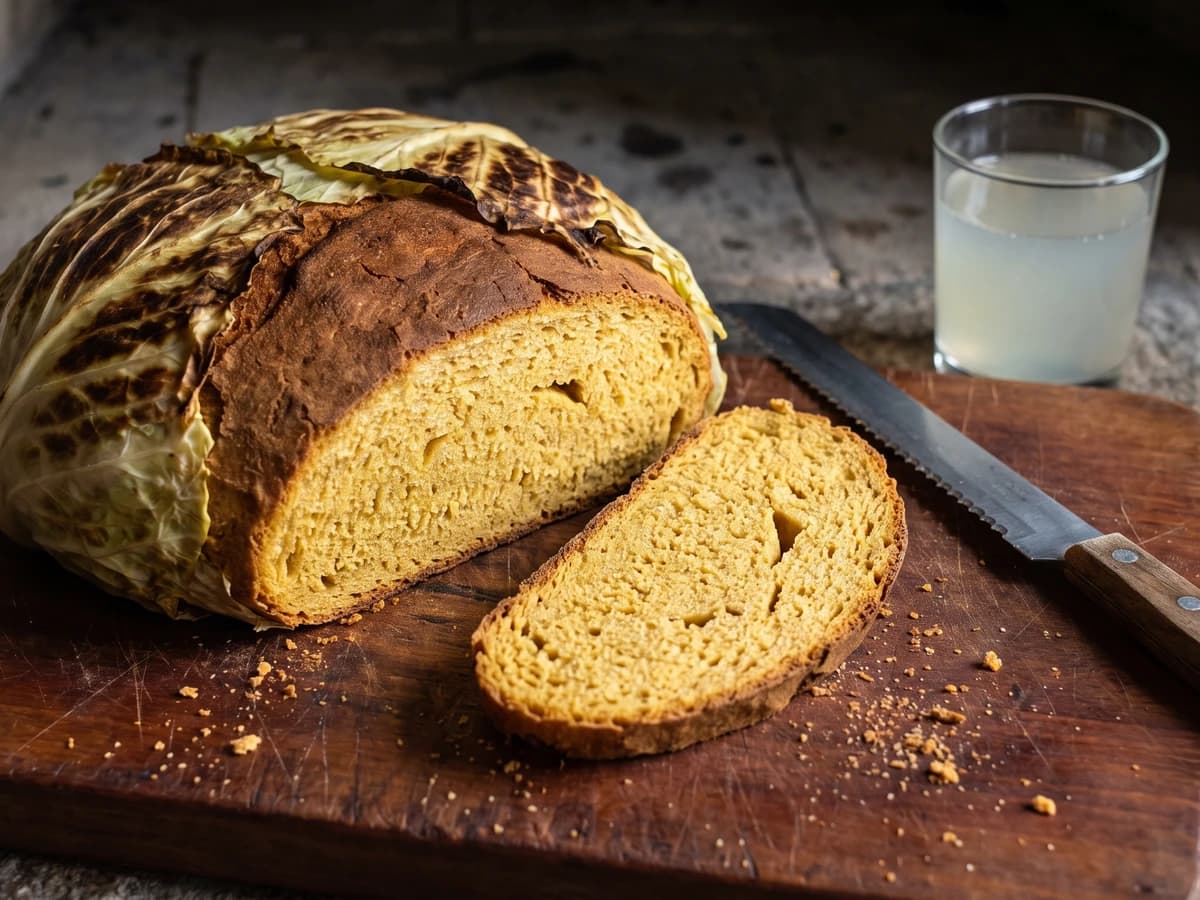
Asturian boroña is the plain corn loaf of the wet north, scalded with salted water and baked inside cabbage leaves until the crust darkens and the crumb stays close, gold, and moist.
Chef Isabel
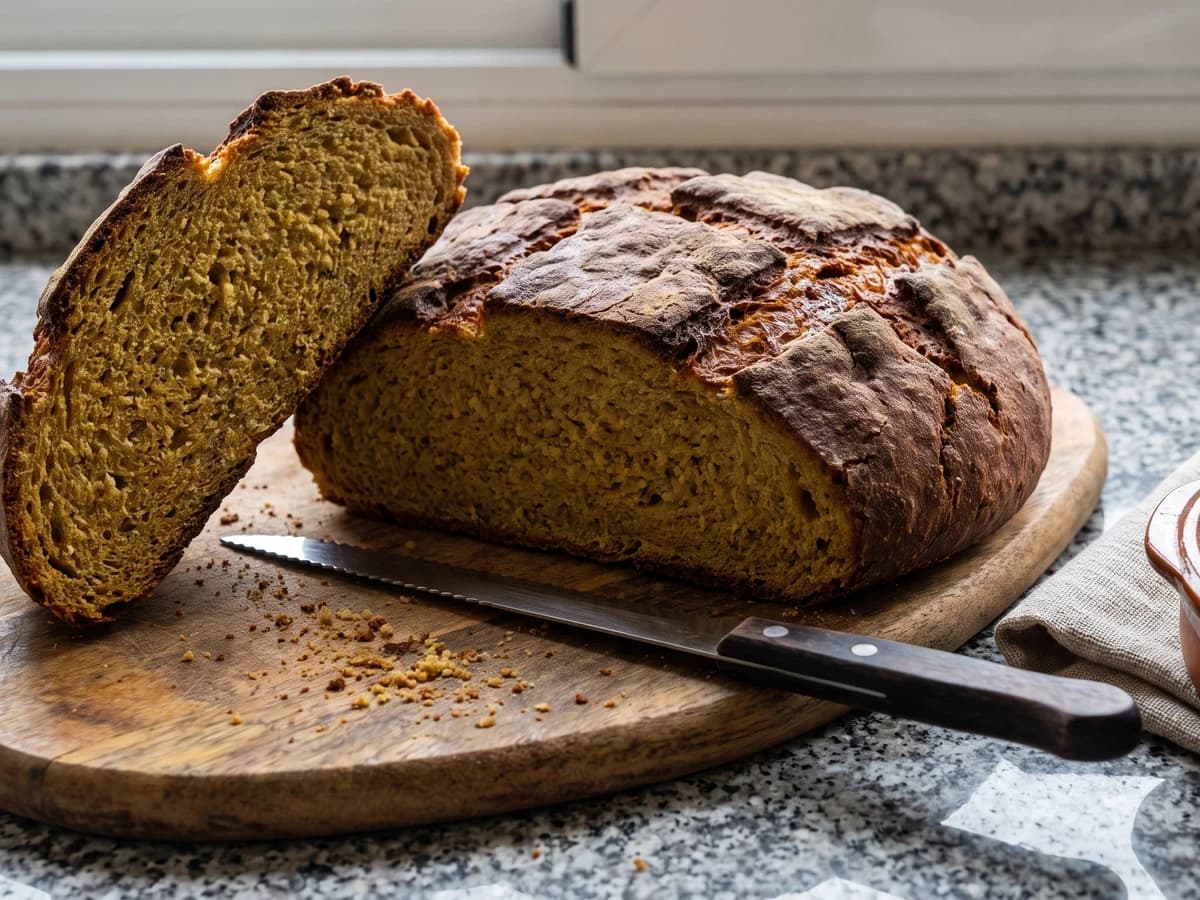
Broa Galega is Galicia's sturdy maize-and-rye loaf: scald the corn flour, give the damp dough time to rise, and the oven gives back a cracked crust and close, faintly sweet crumb.
Chef Isabel
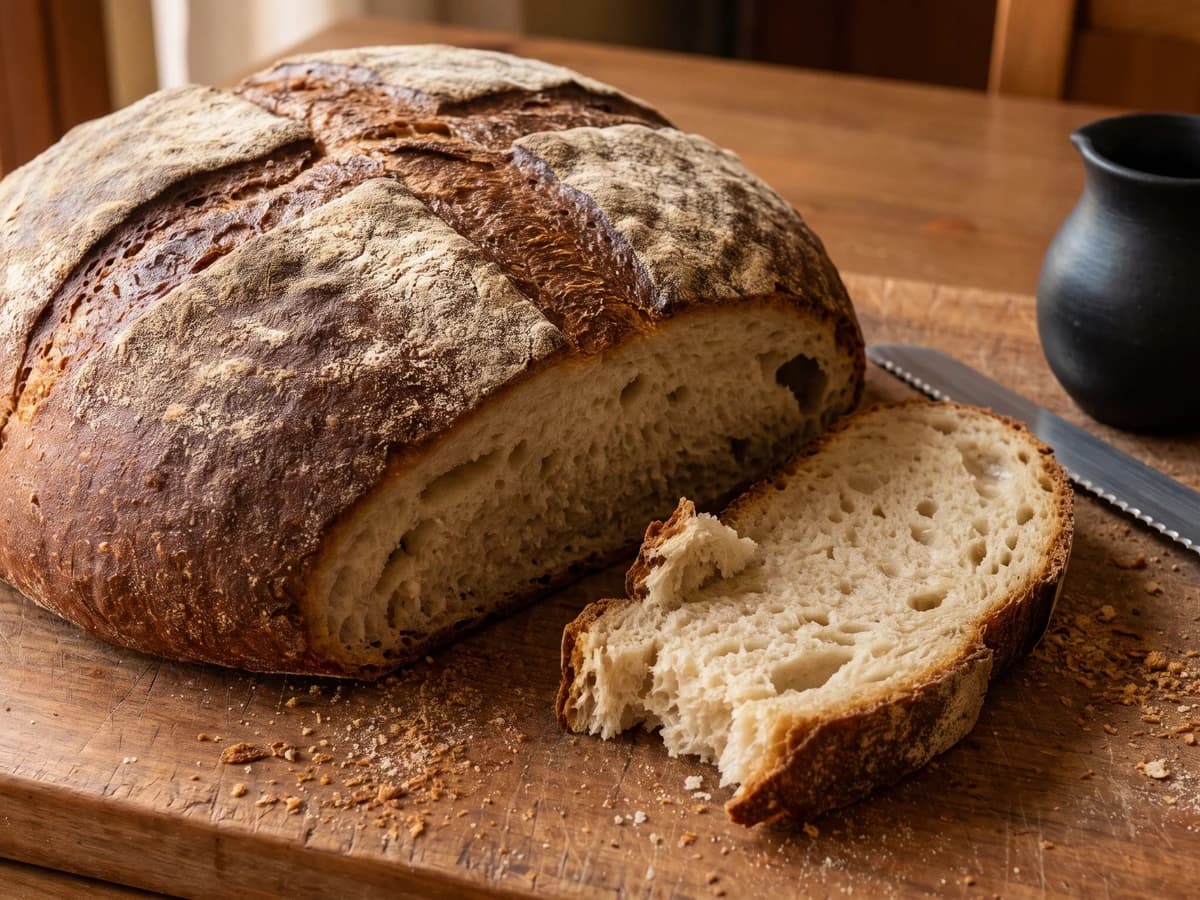
León's great pan de flama is a one-and-a-half-kilo round, slowly fermented and baked dark, with a thick crust that protects its moist, irregular crumb for days.