Chef Isabel
Bollo Preñao Asturiano
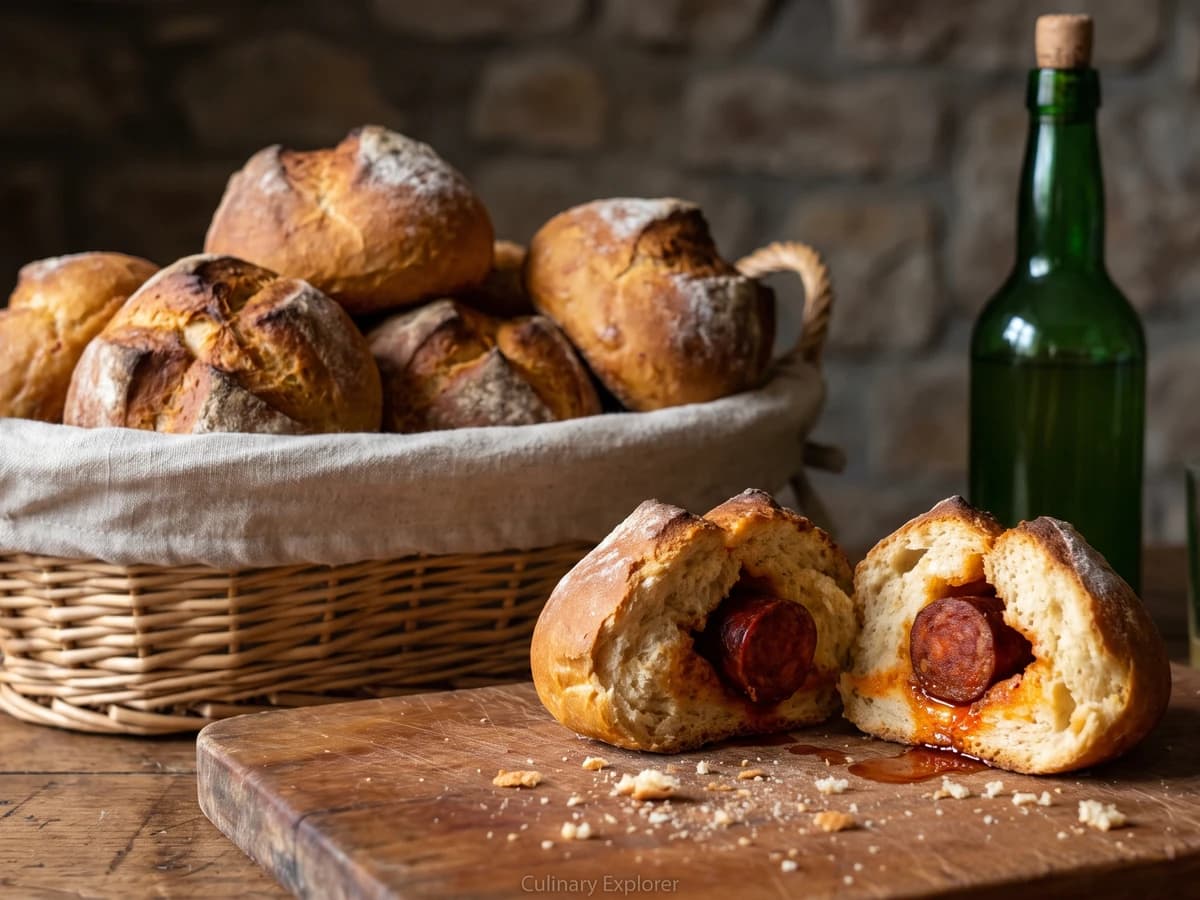
Asturias tucks a whole smoky chorizo inside each bread roll, so its pimentón-red fat seasons the crumb as it bakes. Seal the dough well, and you have the proper food of romerías and picnics.
A cooking platform built around craft, culture, and the stories behind what we eat.
Created by
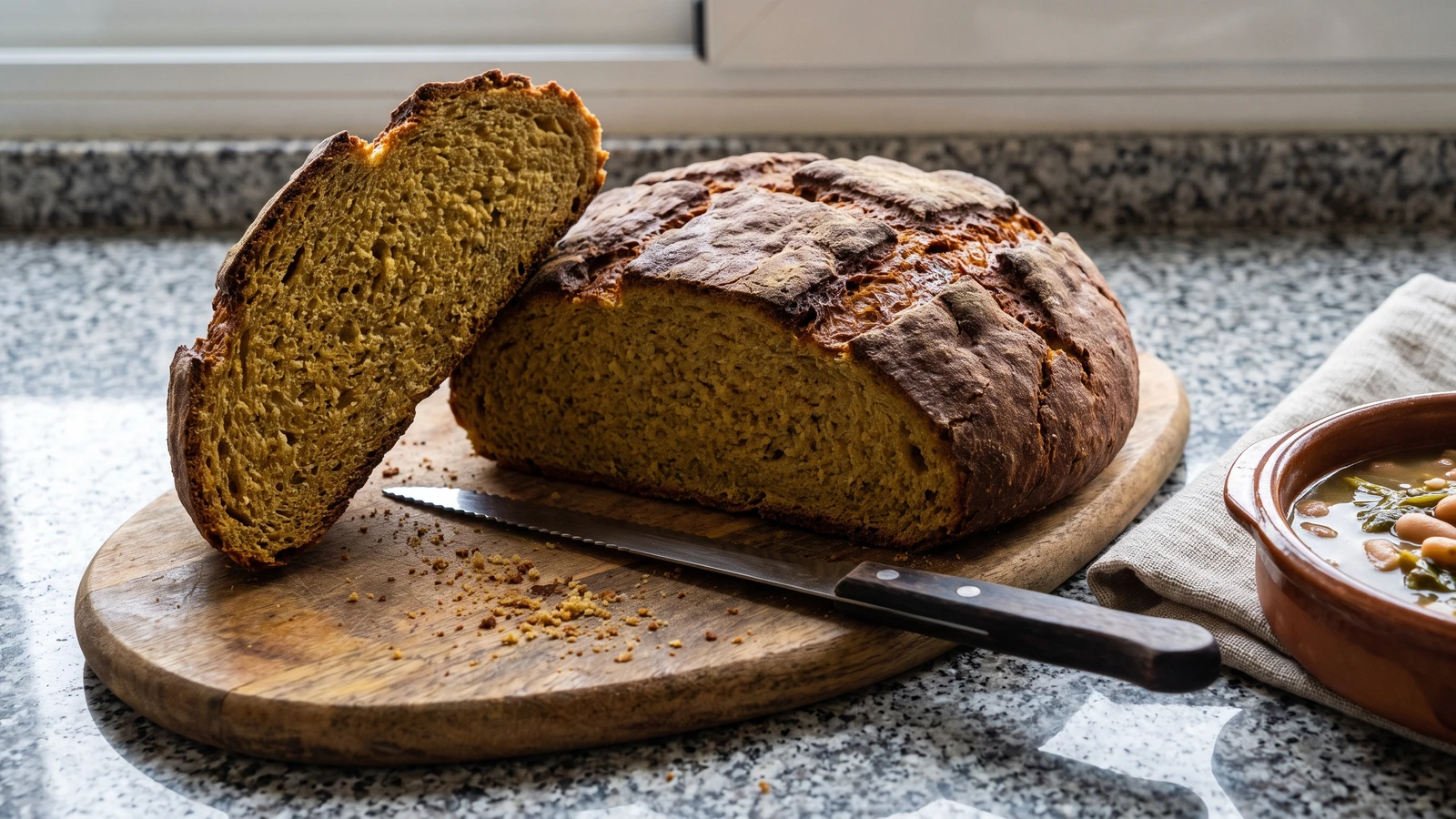
Broa Galega is Galicia's sturdy maize-and-rye loaf: scald the corn flour, give the damp dough time to rise, and the oven gives back a cracked crust and close, faintly sweet crumb.
Broa Galega is Galicia's corn-and-rye bread, a low round loaf with a thick, deeply cracked crust and a close crumb made faintly sweet by maize. This is bread for caldo galego and pote, sturdy enough to soak up the broth without collapsing into it. The maize leads and the rye gives it depth. It isn't a wheat loaf merely colored yellow.
The scald decides the bread. Pour boiling water over the maize flour and mix until every grain is damp, then let it cool before adding the rye and yeast. Maize forms no stretchy gluten of its own; scalding swells its starch so the crumb holds together and stays moist instead of falling apart beneath the knife. There is no useful kneading trick to replace this step.
For fariña de millo, Galician maize flour, use finely or medium ground whole-grain cornmeal wherever you're standing. If yours is sold as coarse polenta, grind it finer first; left coarse, it makes a rougher, more fragile loaf. Cornstarch is not corn flour here, and masa harina has been treated with lime and tastes of another bread entirely.
Old household loaves were raised with formento, fermented dough saved from one baking for the next. The measured baker's yeast here gives a milder loaf, but it is dependable and lets the grain remain the point. Don't cut the broa while it's warm, however persuasive the smell becomes. The crumb finishes setting as it cools. Siempre sale, si lo sigues.
Broa belongs to the maize country of western Galicia, where hórreos kept harvested cobs dry above the wet ground and the grain was milled for the household loaf. Maize from the Americas thrived in Galicia's damp Atlantic climate, but because it forms no elastic dough, cooks scalded the meal and joined it with rye and formento, fermented dough held back from the previous baking. The same loaf crosses the Miño into northern Portugal as broa, evidence of an older maize-and-rye bread country whose food habits do not stop neatly at the border.
Quantity
500g
not cornstarch or masa harina
Quantity
300g
Quantity
20g
Quantity
520g
Quantity
180g
30 to 35°C
Quantity
7g
Quantity
16g
| Ingredient | Quantity |
|---|---|
| finely or medium ground whole-grain maize flour (fariña de millo)not cornstarch or masa harina | 500g |
| whole rye flour | 300g |
| whole rye flour, for dusting | 20g |
| freshly boiled water | 520g |
| lukewarm water30 to 35°C | 180g |
| instant dried yeast | 7g |
| fine sea salt | 16g |
Put the 500g maize flour in a large heatproof bowl. Pour over the 520g freshly boiled water while stirring firmly with a wooden spoon. Keep mixing until no dry pockets remain and you have a stiff, sandy paste. Cover the bowl and leave it for 35 to 45 minutes, until the mixture has cooled below 38°C.
Stir the yeast into the 180g lukewarm water. Add the 300g rye flour and the salt to the cooled maize mixture, then pour in the yeast water. Mix firmly for 6 to 8 minutes, scraping the bottom and sides of the bowl, until no dry flour remains. The dough will be heavy, soft, and very sticky, more like a firm paste than a wheat-bread dough. That is correct.
Gather the dough into a rough mound with a wet scraper. Cover the bowl and leave it in a comfortably warm place, around 23 to 25°C, for 1 hour 30 minutes to 2 hours 30 minutes. It will not double. Look instead for an increase of roughly half its volume, a lighter feel, and fine fissures beginning across the surface.
Line a flat baking tray with parchment. Wet your hands and scrape the dough onto the center, then tuck and smooth it into a round mound about 20cm wide and 8cm high. Dust the surface with the additional rye flour. Cover it with an upturned large bowl and leave it for 45 to 75 minutes, until slightly swollen and marked with small cracks. Do not slash it; the irregular crust should open on its own.
Slide the loaf and its parchment onto the hot tray or stone. Bake for 15 minutes, then lower the oven to 200°C conventional or 180°C fan and continue for 55 to 60 minutes. The crust should be deeply browned and firm, with broad cracks exposing the golden crumb beneath. The base should sound hollow when tapped, and the center should register 96 to 98°C on a probe thermometer.
Move the broa to a wire rack and leave it untouched for at least 4 hours, preferably until the next day. Cutting early compresses the still-setting crumb and makes it seem gummy. Once cool, cut thick slices with a serrated knife and serve them beside caldo galego, pote, sardines, or cheese.
1 serving (about 110g)
Culinary guides, cultural storytelling, and the editorial depth that makes cooking meaningful.
Discover Culinary ExplorerChef Isabel
Asturias tucks a whole smoky chorizo inside each bread roll, so its pimentón-red fat seasons the crumb as it bakes. Seal the dough well, and you have the proper food of romerías and picnics.
Chef Isabel
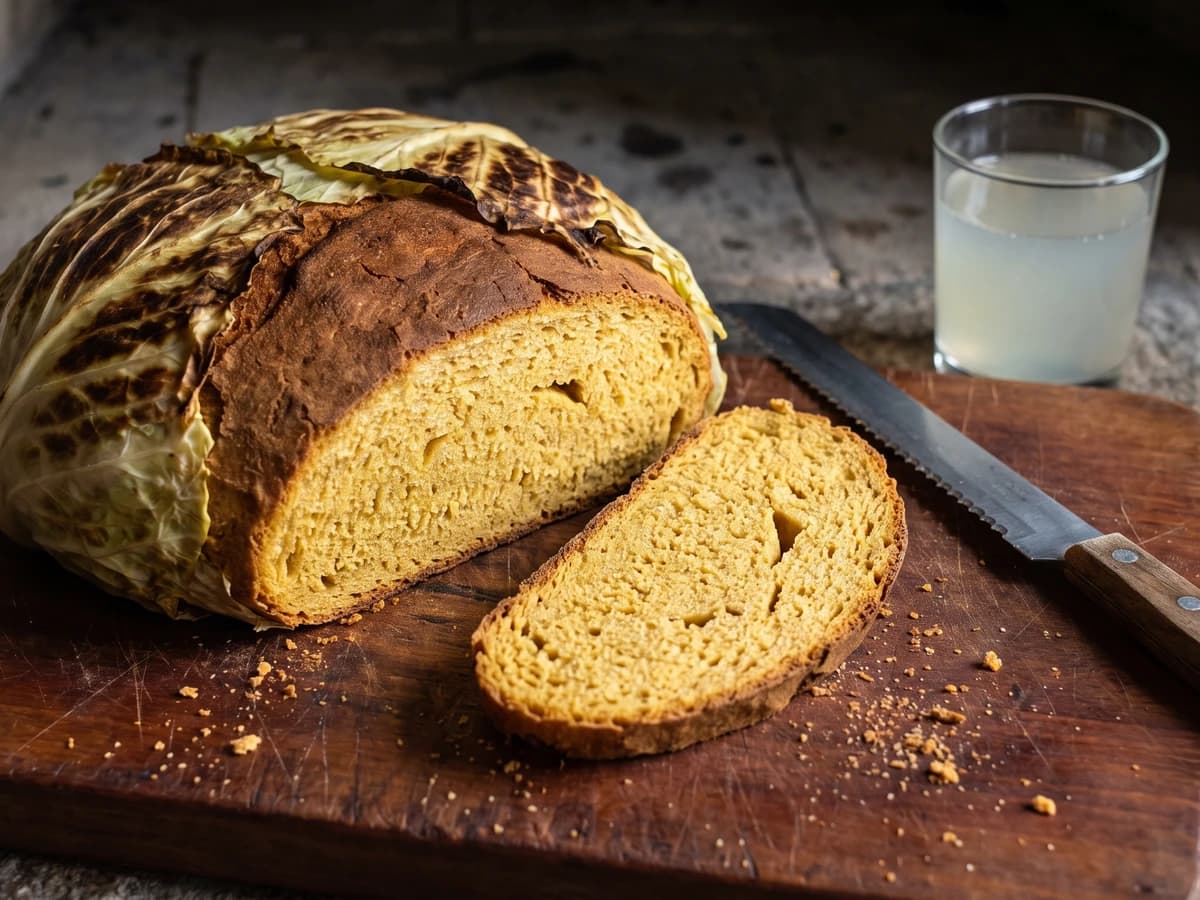
Asturian boroña is the plain corn loaf of the wet north, scalded with salted water and baked inside cabbage leaves until the crust darkens and the crumb stays close, gold, and moist.
Chef Isabel
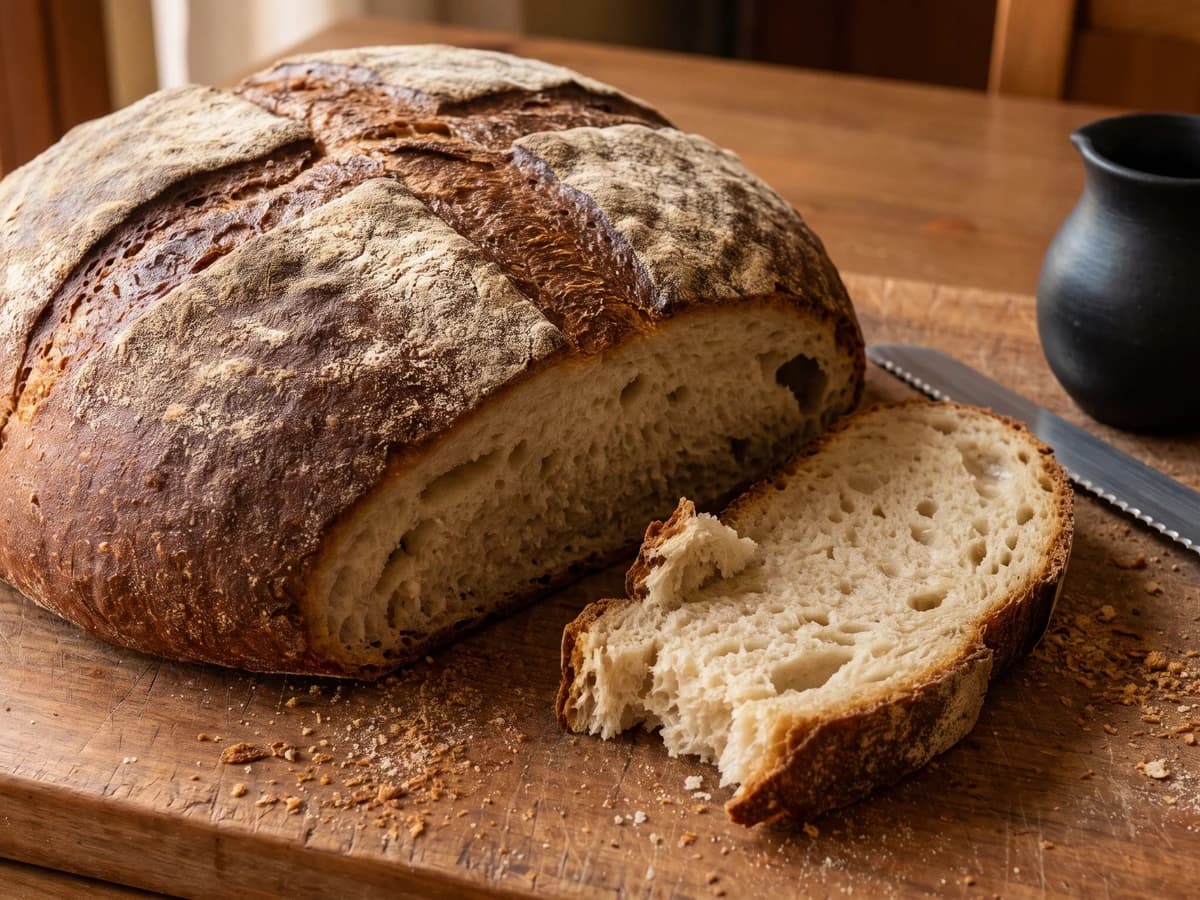
León's great pan de flama is a one-and-a-half-kilo round, slowly fermented and baked dark, with a thick crust that protects its moist, irregular crumb for days.
Chef Isabel
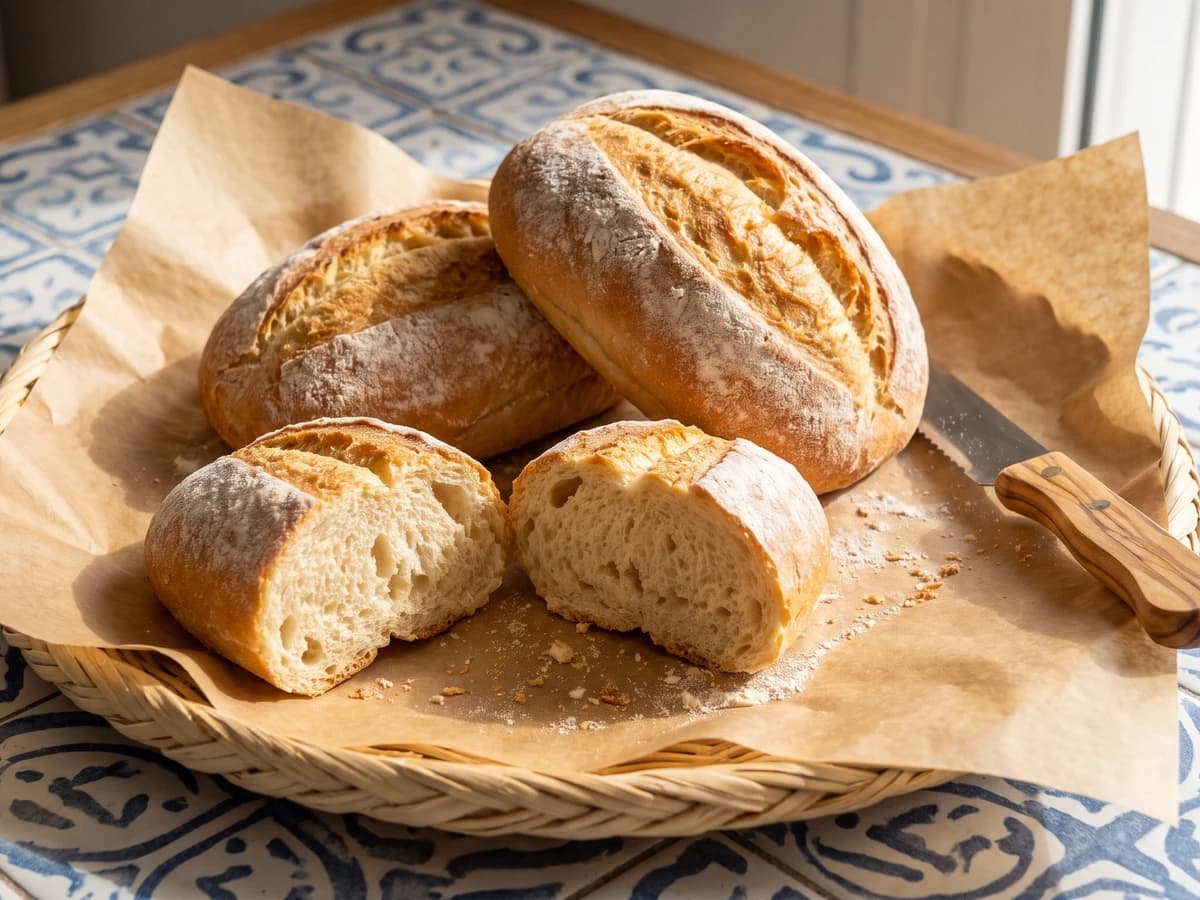
Llonguet is Palma's oval bread roll, folded and rolled so its natural seam opens into the deep split that marks it, with a light crumb and thin crust ready for a proper bocadillo.