Chef Isabel
Boroña Asturiana
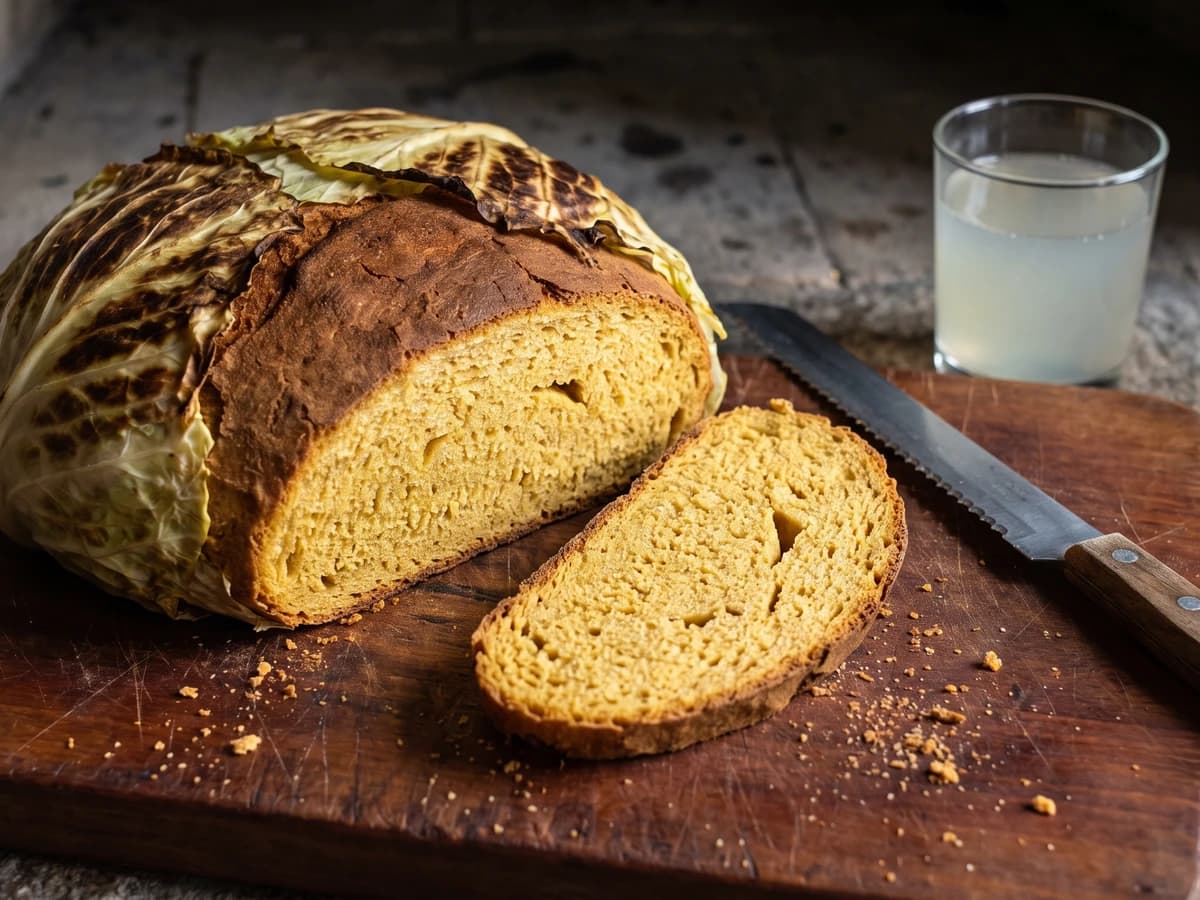
Asturian boroña is the plain corn loaf of the wet north, scalded with salted water and baked inside cabbage leaves until the crust darkens and the crumb stays close, gold, and moist.
A cooking platform built around craft, culture, and the stories behind what we eat.
Created by
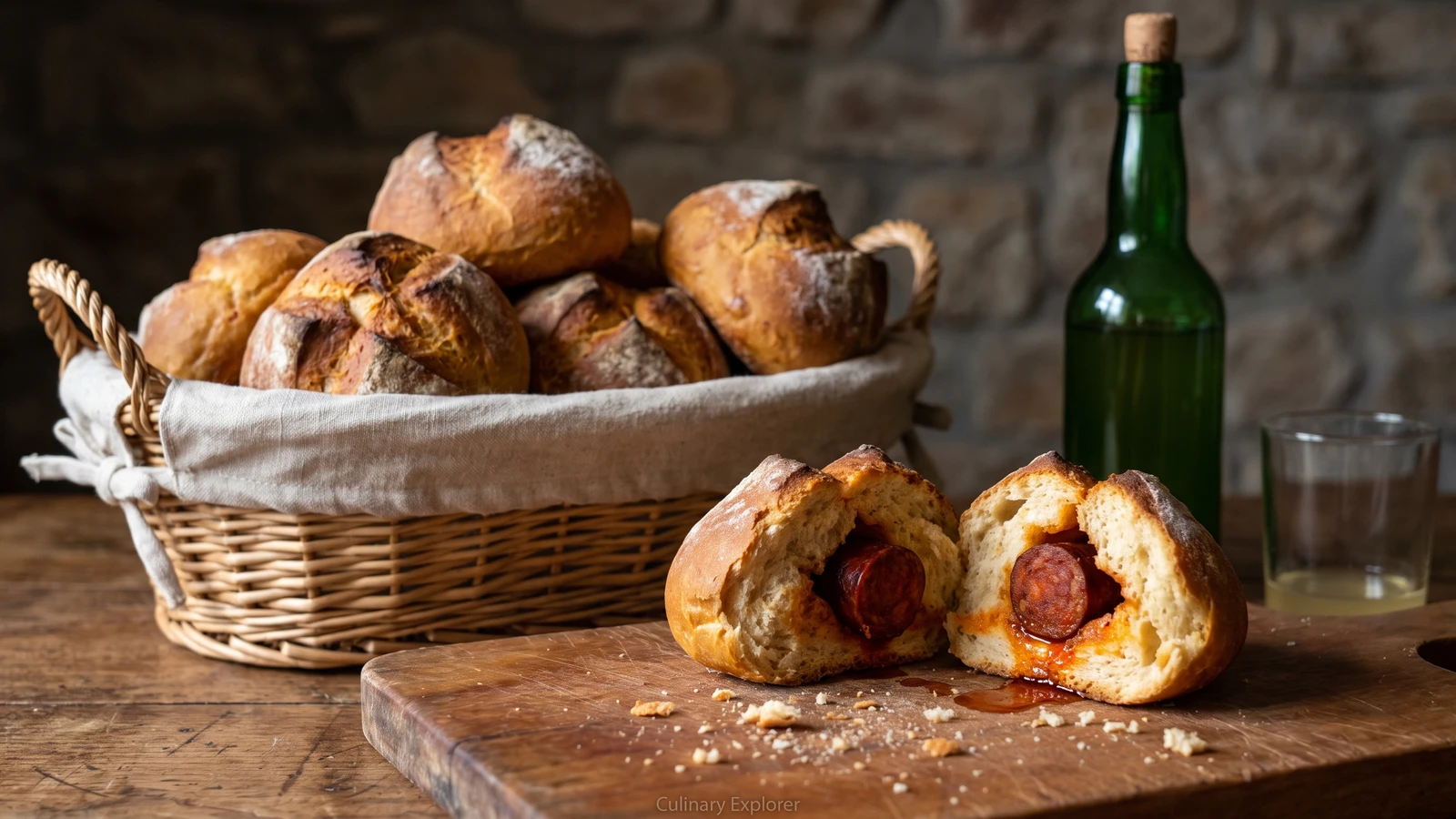
Asturias tucks a whole smoky chorizo inside each bread roll, so its pimentón-red fat seasons the crumb as it bakes. Seal the dough well, and you have the proper food of romerías and picnics.
Bollo preñao is Asturian: a palm-sized bread roll baked around one whole, smoky chorizo until the sausage's pimentón-red fat marks the crumb. The name means "pregnant bun," plain enough, and the bulge tells you why. It is bread and chorizo in one hand, built for a romería, a country pilgrimage, a picnic, or the walk home from a fiesta.
The wrapping decides whether it works. Flatten each piece of dough evenly, lay in the chorizo whole, press out the trapped air, and pinch every seam shut. A loose seam spills the fat onto the tray and leaves you with dry sausage inside pale bread. I neither prick nor cook the chorizo first. It must render inside the bollo, where the bread can catch everything worth having.
Asturian cooking chorizo is smoky, garlicky, and soft enough to release its fat in the oven. If you can't find it, use a semi-cured Spanish cooking chorizo seasoned with pimentón and garlic. An unsmoked one gives a milder roll, but the texture and rich red crumb remain right. Dry slicing chorizo stays tough, and loose Mexican-style chorizo turns the centre crumbly and greasy, so neither gives you this dish.
Give the dough both rises and let the baked rolls settle for 15 minutes. The Margin beside this recipe says only, "close the ends twice." Rendered chorizo fat is patient, but it will find a careless seam. Siempre sale, si lo sigues, it turns out if you follow it.
Bollo preñao belongs to Asturias, where bread wrapped around chorizo travels easily to romerías and open-air festivals without a plate or cutlery. In Oviedo it is tied to Martes de Campo, the outdoor feast kept by the Cofradía de La Balesquida, where a bollo and wine are traditional provisions. Its shape did practical work: the dough protected the sausage, caught its pimentón-stained fat, and kept a sturdy meal together in one hand.
Quantity
500g, plus up to 15g for dusting
Quantity
285g
at about 24°C
Quantity
7g
Quantity
10g
Quantity
35g
softened, with 30g for the dough and 5g for greasing
Quantity
8, about 55g each
natural casings intact
| Ingredient | Quantity |
|---|---|
| strong white bread flour | 500g, plus up to 15g for dusting |
| waterat about 24°C | 285g |
| instant yeast | 7g |
| fine sea salt | 10g |
| pork lardsoftened, with 30g for the dough and 5g for greasing | 35g |
| small Asturian smoked cooking chorizosnatural casings intact | 8, about 55g each |
Put the 500g flour and yeast in a large bowl. Add the water and mix until no dry flour remains. The dough will look rough and feel slightly tacky. Cover it and leave it for 15 minutes so the flour can absorb the water before you knead.
Add the salt and 30g softened lard. Knead for 8 to 10 minutes by machine on low speed, or 10 to 12 minutes by hand, until the dough is smooth, elastic, and able to stretch thin without tearing at once. It should cling lightly to your fingers but release cleanly. Use as little dusting flour as possible; a stiff dough makes a heavy bollo.
Grease the bowl with the remaining 5g lard, turn the dough once in it, and cover. Leave it in a draught-free place for 60 to 90 minutes, until it has grown to roughly one and three-quarter times its original size. It needn't quite double. A cool kitchen takes longer, and the dough, not the clock, tells you when it is ready.
Turn the dough onto a lightly floured surface and press it gently to release the largest bubbles. Weigh it and divide it into 8 pieces of about 104g each. Pésalo, no lo adivines, weigh it, don't guess. Shape each piece into a loose ball, cover, and rest for 10 minutes. Set the chorizos out during this rest and pat their casings dry.
Flatten one dough ball into an oval about 14cm long and 9cm wide, keeping the centre a little thicker than the edges. Lay one whole chorizo down the middle. Draw the long sides firmly over it, press out any trapped air, and pinch the seam closed from end to end. Pinch both tips shut, then place the roll seam-side down. Repeat with the remaining dough and chorizos. This seal decides the dish: if it opens, the red fat escapes instead of seasoning the crumb.
Arrange the rolls seam-side down on a parchment-lined baking sheet, leaving at least 5cm between them. Cover loosely and leave for 35 to 50 minutes, until rounded and puffy. A light fingertip press should rise back slowly while leaving a shallow mark. During the final 25 minutes, heat the oven to 200°C conventional or 180°C fan, with a rack in the middle.
Bake for 22 to 25 minutes, turning the sheet once, until the rolls are deep golden and browned underneath. A bead or two of pimentón-red oil around a seam is no disaster. If the chorizo was sold raw, check through the underside that its centre has reached 71°C. Move the rolls to a rack and leave them for 15 minutes before eating, so the rendered fat settles into the crumb instead of running out at the first cut.
1 serving (about 145g)
Culinary guides, cultural storytelling, and the editorial depth that makes cooking meaningful.
Discover Culinary ExplorerChef Isabel
Asturian boroña is the plain corn loaf of the wet north, scalded with salted water and baked inside cabbage leaves until the crust darkens and the crumb stays close, gold, and moist.
Chef Isabel
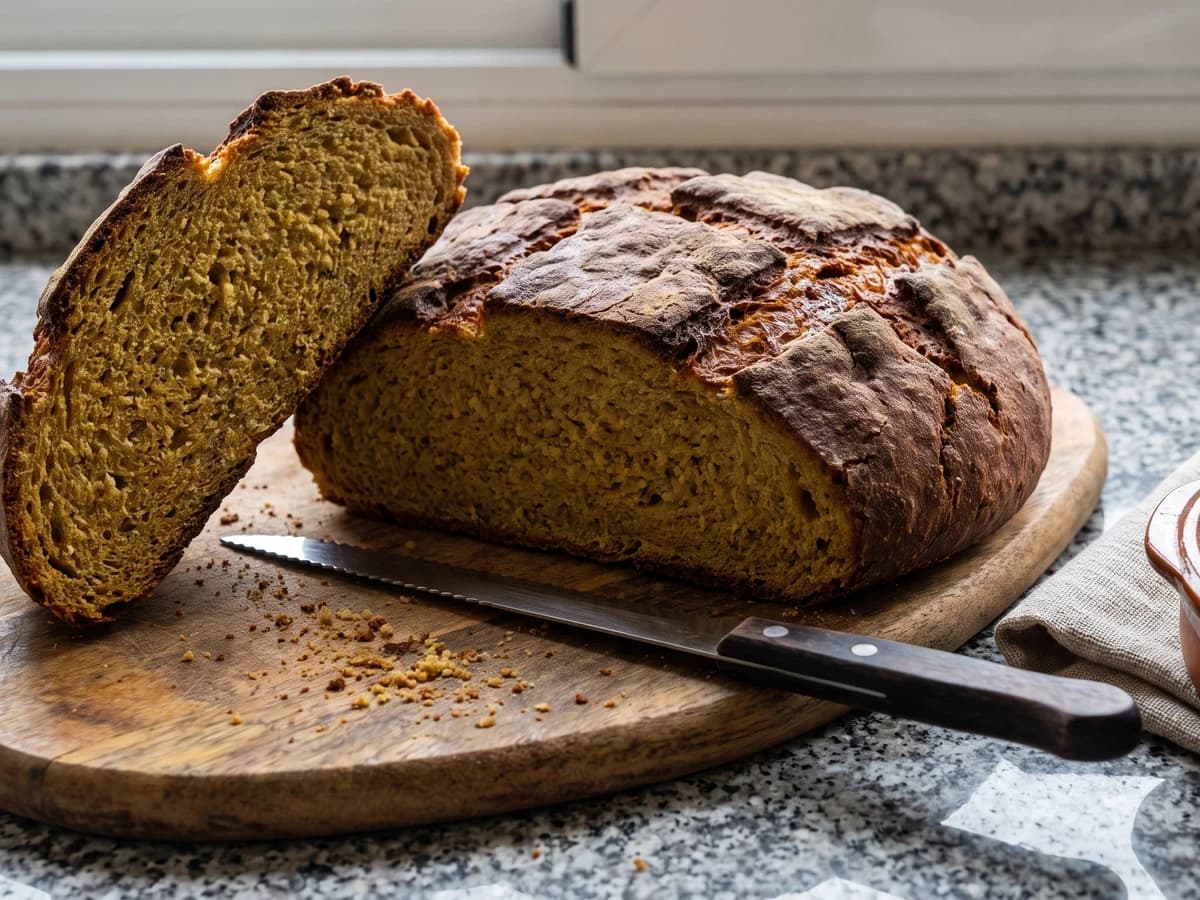
Broa Galega is Galicia's sturdy maize-and-rye loaf: scald the corn flour, give the damp dough time to rise, and the oven gives back a cracked crust and close, faintly sweet crumb.
Chef Isabel
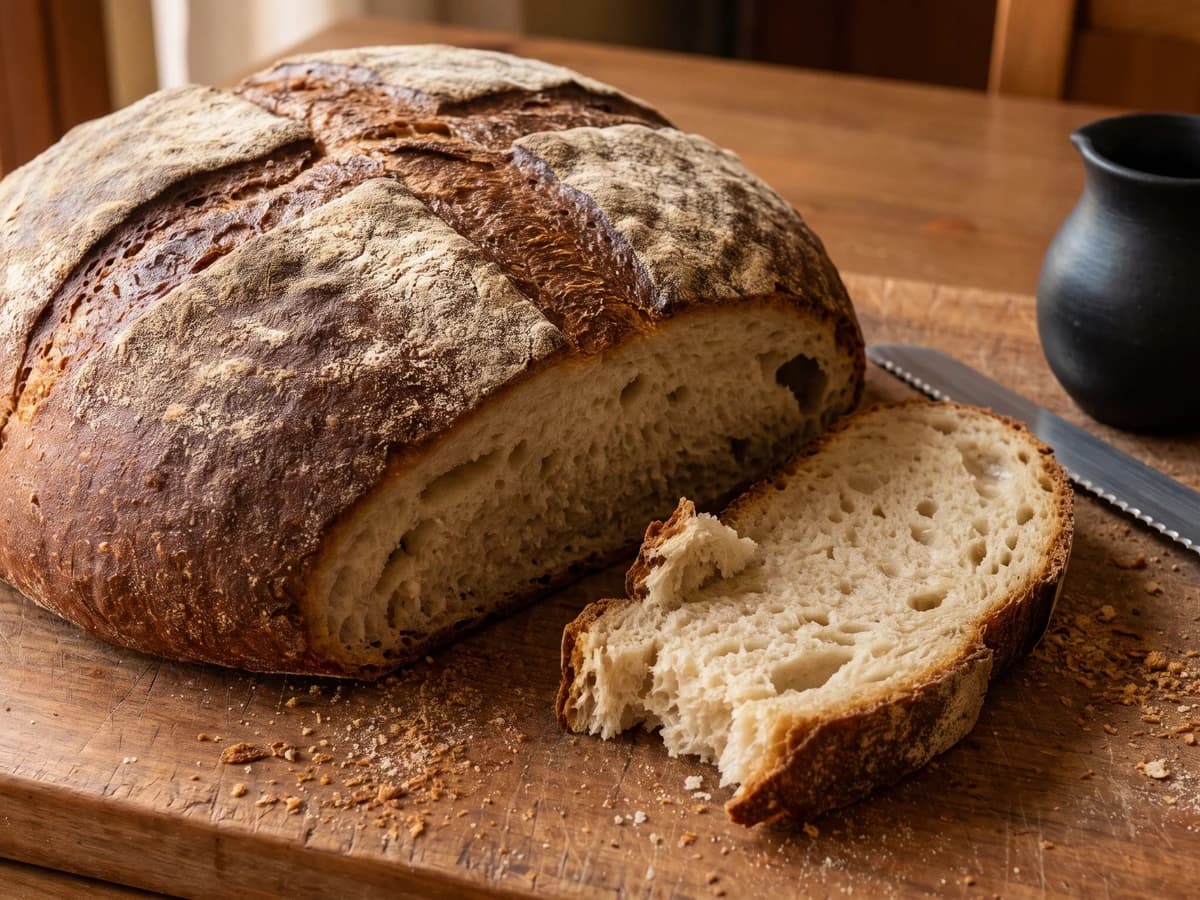
León's great pan de flama is a one-and-a-half-kilo round, slowly fermented and baked dark, with a thick crust that protects its moist, irregular crumb for days.
Chef Isabel
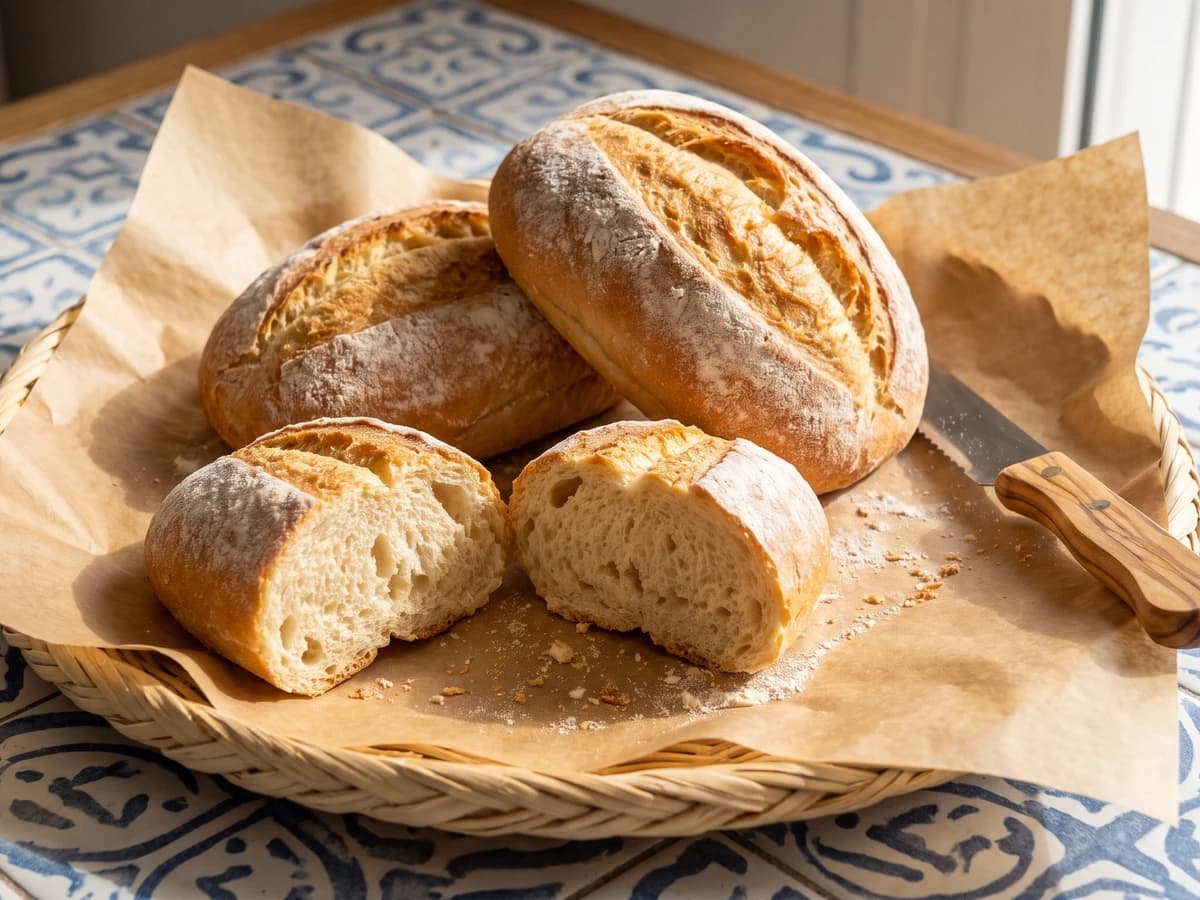
Llonguet is Palma's oval bread roll, folded and rolled so its natural seam opens into the deep split that marks it, with a light crumb and thin crust ready for a proper bocadillo.