Chef Isabel
Bollo Preñao Asturiano
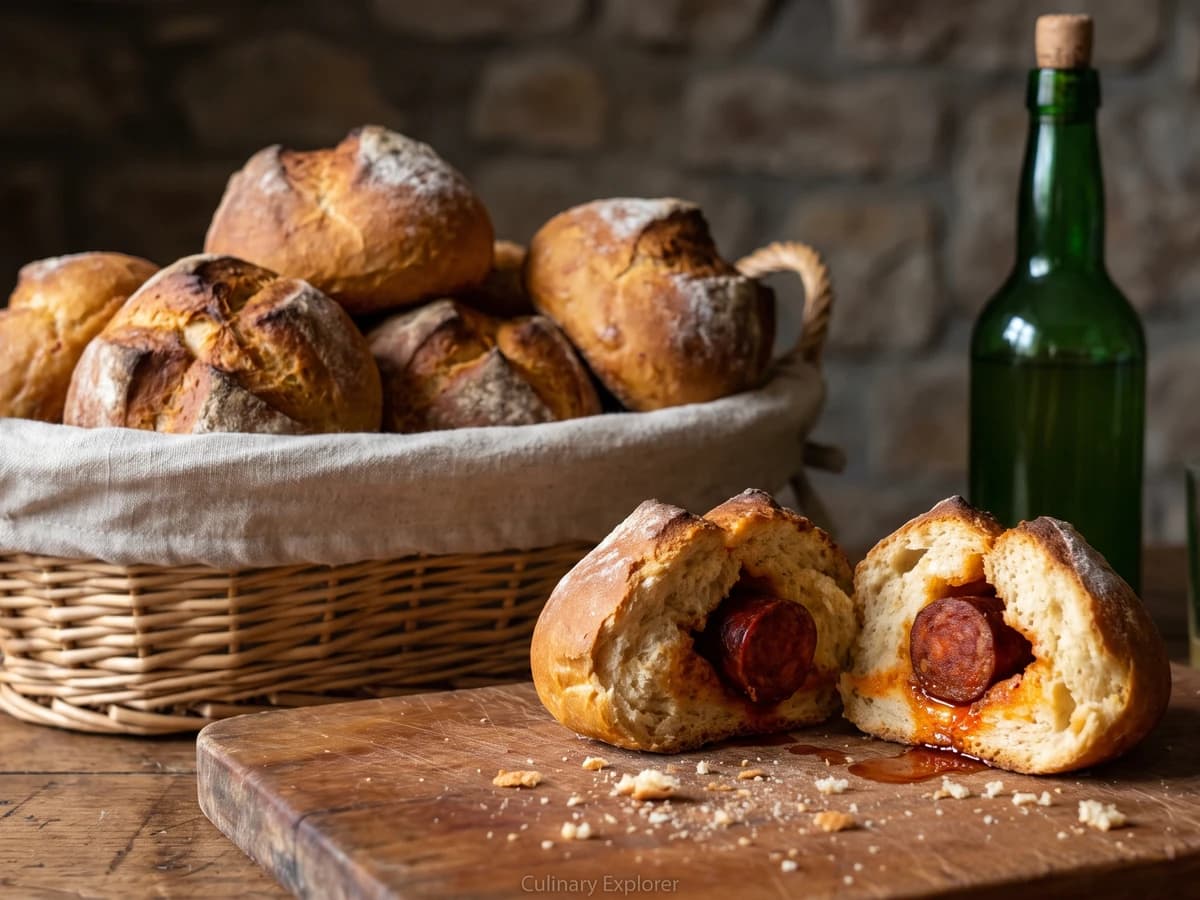
Asturias tucks a whole smoky chorizo inside each bread roll, so its pimentón-red fat seasons the crumb as it bakes. Seal the dough well, and you have the proper food of romerías and picnics.
A cooking platform built around craft, culture, and the stories behind what we eat.
Created by
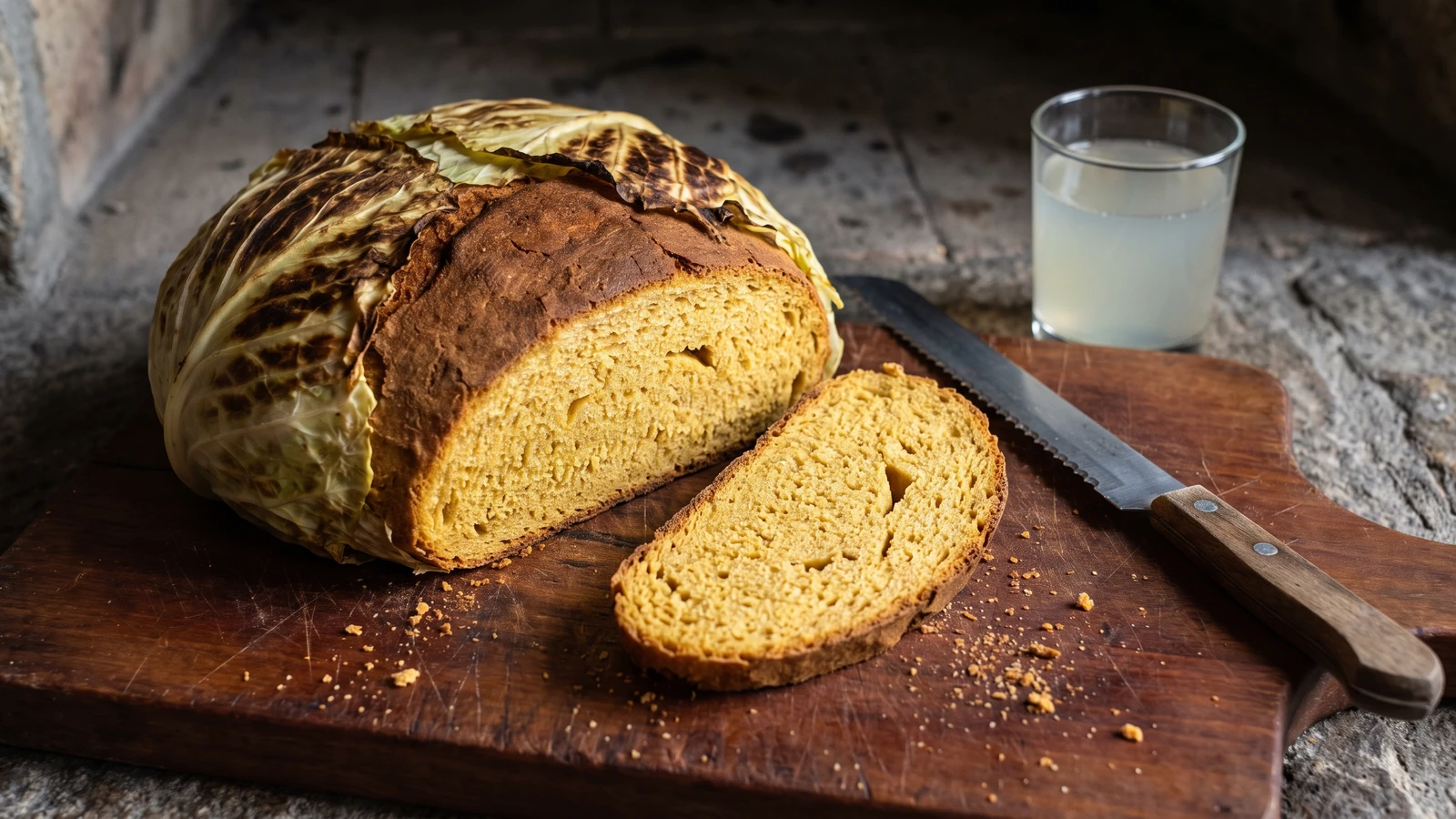
Asturian boroña is the plain corn loaf of the wet north, scalded with salted water and baked inside cabbage leaves until the crust darkens and the crumb stays close, gold, and moist.
Boroña is Asturian corn bread: a low, dense loaf of maize meal scalded with salted water, wrapped in cabbage or chestnut leaves, and baked slowly until its crust darkens. Its crumb is close and moist, made for soaking up caldo or sitting beside beans and cured pork. This is Asturias, not "Spain" plain and simple. No sugar, no eggs, and no baking powder belong in the plain household loaf.
The scalding decides it. Pour boiling water across all the cornmeal, work out every dry pocket, and let the covered dough rest before shaping. The heat swells the corn starch and gives a flour with no gluten enough strength to hold together. Miss that step and the loaf crumbles before it reaches the plate. Pésalo, no lo adivines, weigh it, don't guess.
Away from Asturias, buy finely ground whole-grain cornmeal, sometimes labelled corn flour, but check the packet carefully. Cornstarch is useless here, coarse polenta makes a rougher loaf, and nixtamalized masa harina brings a different flavour and texture. Large Savoy cabbage or collard leaves stand in well for chestnut leaves. Parchment will contain the dough at a pinch, but you lose the leaf scent and the crust becomes firmer.
Let the finished loaf cool fully, however good it smells. I have the same correction written twice in the Margin: cutting warm spoils the crumb. Give it two hours, take a serrated knife to it, and it slices cleanly. No hace falta haber pisado España. Siempre sale, si lo sigues.
The word boroña is older than American maize and once named coarse breads made from millet and other humble grains. After maize arrived from the Americas, it took readily to Asturias's wet valleys, and the old name settled on the dense yellow loaf that helped rural households stretch wheat, which was known but dear. Wrapping the dough in cabbage or chestnut leaves protected it through a long bake, while boroña preñada, the "pregnant" version filled with pork, became its richer feast-day relation.
Quantity
600g, plus 20g for dusting
Quantity
600g, plus up to 50g if needed
Quantity
12g
Quantity
6
washed and thick ribs shaved down
Quantity
10
washed, or soaked if dried
| Ingredient | Quantity |
|---|---|
| finely ground whole-grain yellow cornmeal | 600g, plus 20g for dusting |
| freshly boiled water | 600g, plus up to 50g if needed |
| fine sea salt | 12g |
| large outer Savoy cabbage or collard leaveswashed and thick ribs shaved down | 6 |
| food-safe chestnut leaves (optional)washed, or soaked if dried | 10 |
Heat the oven to 220°C conventional, or 200°C fan, with a rack in the lower middle. Blanch cabbage or collard leaves in boiling water for 90 seconds, then drain and pat them dry. If using dried chestnut leaves, cover them with boiling water for 15 minutes until pliable. Line a 20cm round metal tin with overlapping leaves, letting their ends hang over the rim.
Put 600g cornmeal in a large heatproof bowl. Dissolve the salt in 600g freshly boiled water and pour it over the meal at once. Beat firmly with a wooden spoon, scraping through to the bottom until every grain is damp and no pale, floury pockets remain. Cover and rest for 20 minutes. This scald, escaldado, swells the corn starch so the loaf binds without wheat, eggs, or baking powder. It is the step that decides the bread.
When the mixture is cool enough to handle but still warm, press and fold it for 2 to 3 minutes. It should feel like firm, damp clay and hold together when squeezed. If it breaks into dry clumps, work in additional boiling water 15g at a time, using no more than 50g. If it feels too soft to mound, leave it covered for another 10 minutes so the cornmeal can finish drinking.
Wet your hands and shape the dough into a compact dome about 17cm across and 7cm high. Pinch every surface crack closed, since open cracks widen in the oven. Scatter half the extra cornmeal over the lined tin, set the loaf in the centre, and dust it with the rest. Fold the leaves tightly across the top, overlapping them until the dough is enclosed.
Bake for 20 minutes at 220°C, then lower the oven to 180°C conventional, or 160°C fan, without opening the door. Bake for another 75 minutes. Lift the loaf from the tin, peel away the leaves with tongs, and return the bare loaf to the oven rack for 10 minutes to set its dark, leaf-marked crust. The centre should reach 96 to 98°C; without a thermometer, a skewer should emerge with damp crumbs but no raw paste.
Set the boroña on a rack and leave it untouched for at least 2 hours. The crumb finishes setting as it cools; cut it early and it will seem gummy and break under the knife. Slice it about 1cm thick with a serrated knife. Serve beside an Asturian bean or cabbage stew, cured pork, or a firm cheese.
1 serving (about 95g)
Culinary guides, cultural storytelling, and the editorial depth that makes cooking meaningful.
Discover Culinary ExplorerChef Isabel
Asturias tucks a whole smoky chorizo inside each bread roll, so its pimentón-red fat seasons the crumb as it bakes. Seal the dough well, and you have the proper food of romerías and picnics.
Chef Isabel
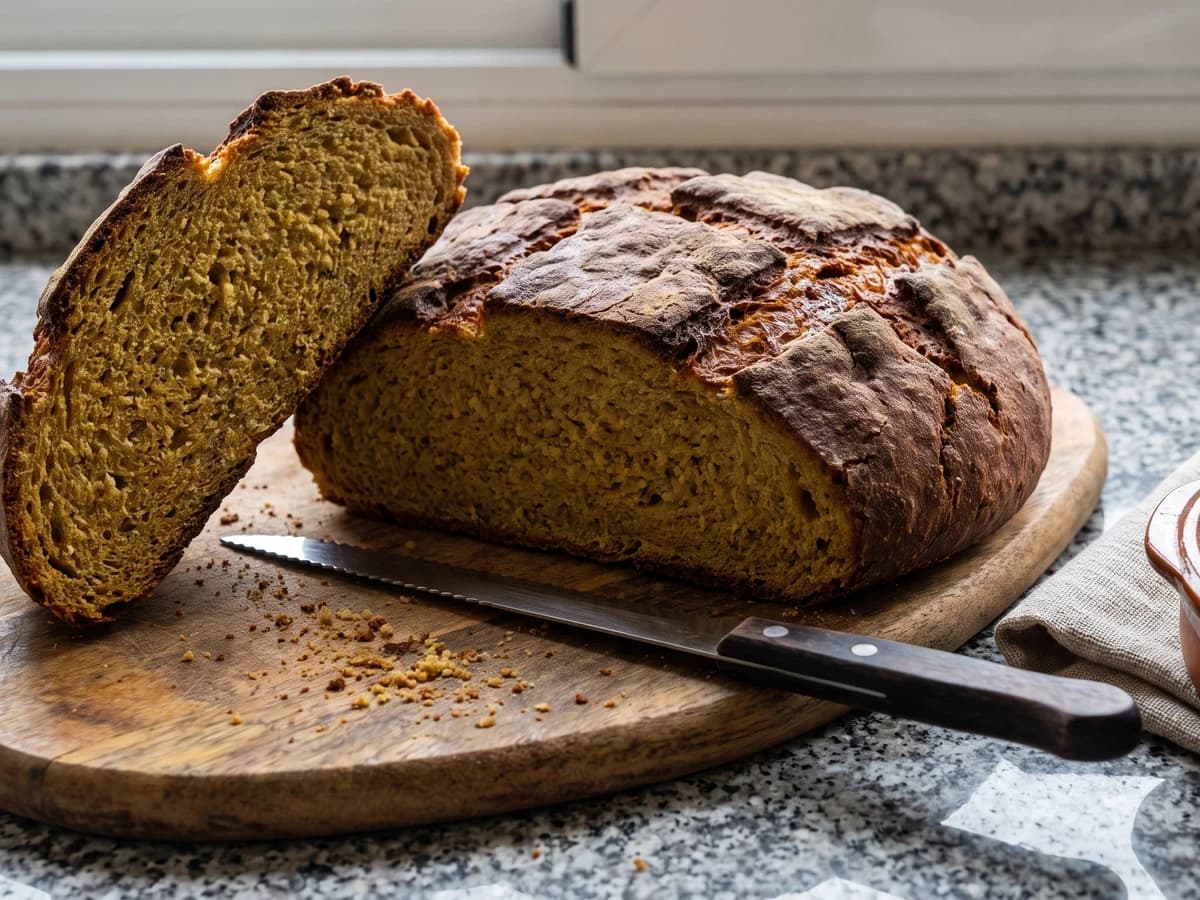
Broa Galega is Galicia's sturdy maize-and-rye loaf: scald the corn flour, give the damp dough time to rise, and the oven gives back a cracked crust and close, faintly sweet crumb.
Chef Isabel
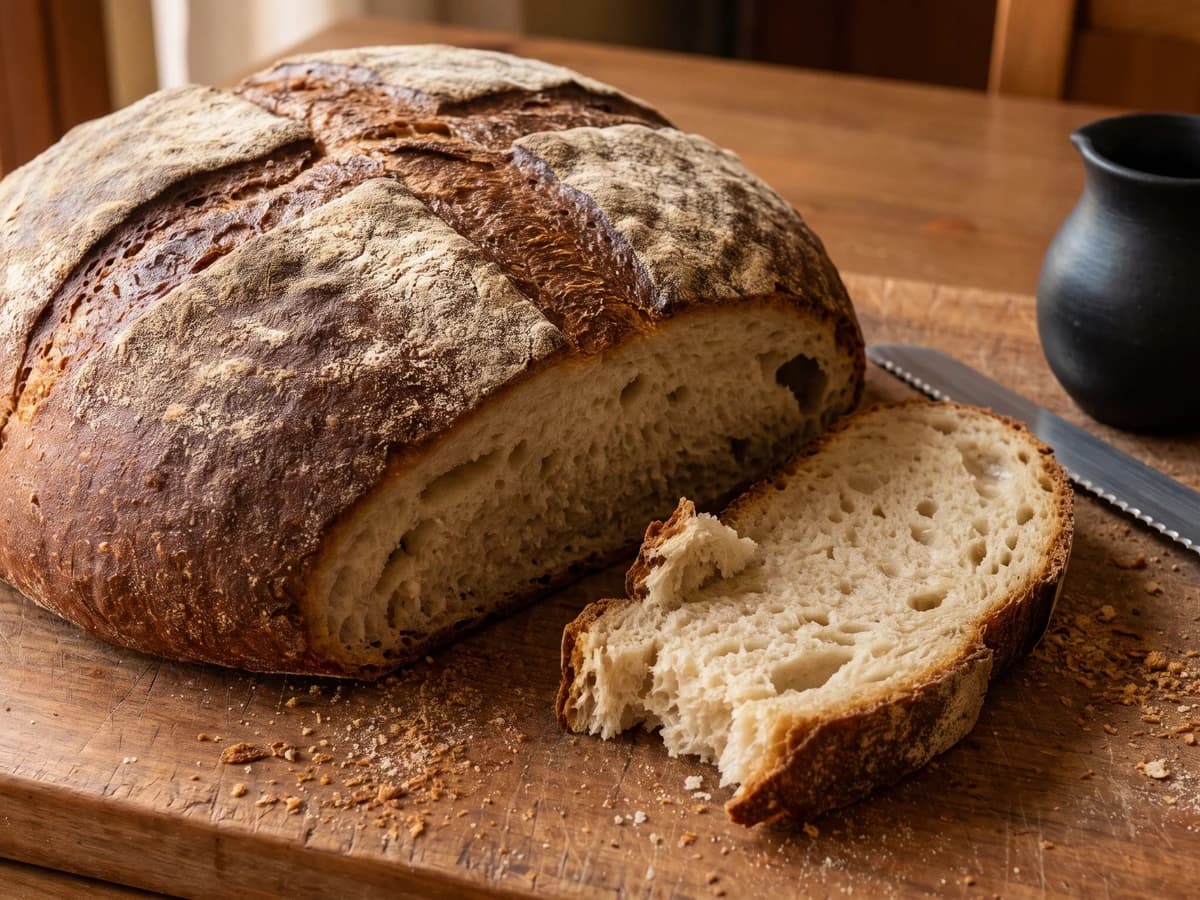
León's great pan de flama is a one-and-a-half-kilo round, slowly fermented and baked dark, with a thick crust that protects its moist, irregular crumb for days.
Chef Isabel
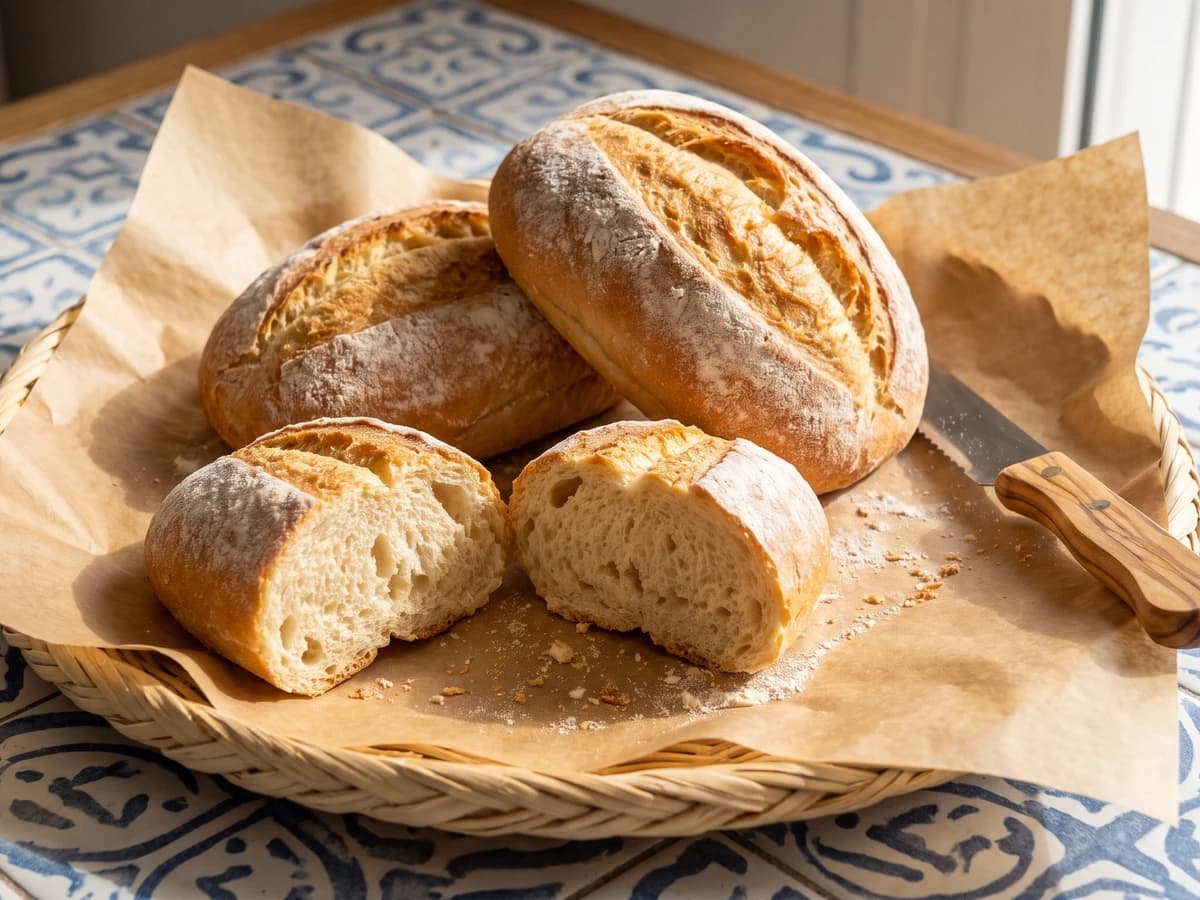
Llonguet is Palma's oval bread roll, folded and rolled so its natural seam opens into the deep split that marks it, with a light crumb and thin crust ready for a proper bocadillo.