Chef Isabel
Bollo Preñao Asturiano
Asturias tucks a whole smoky chorizo inside each bread roll, so its pimentón-red fat seasons the crumb as it bakes. Seal the dough well, and you have the proper food of romerías and picnics.
A cooking platform built around craft, culture, and the stories behind what we eat.
Created by
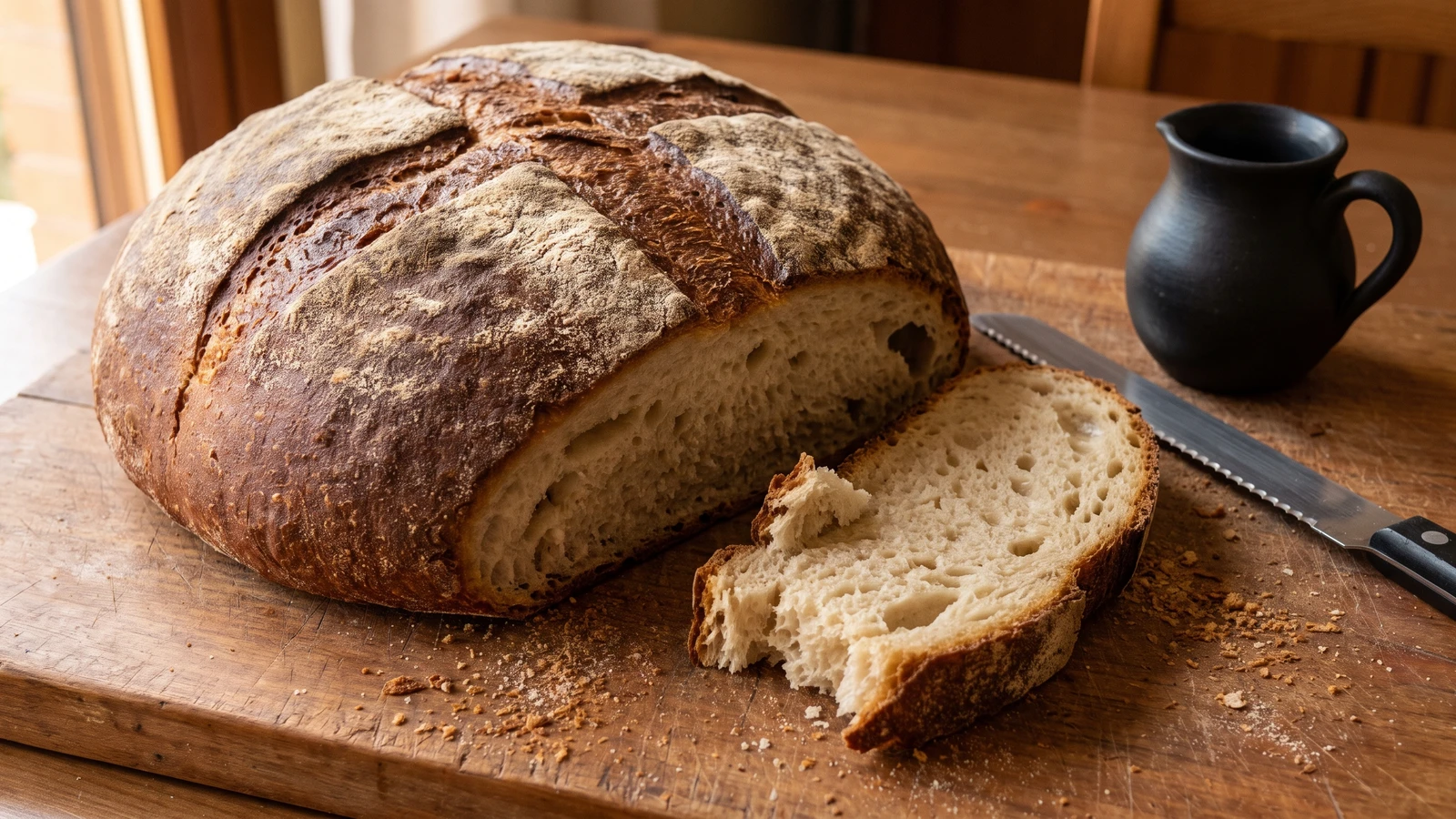
León's great pan de flama is a one-and-a-half-kilo round, slowly fermented and baked dark, with a thick crust that protects its moist, irregular crumb for days.
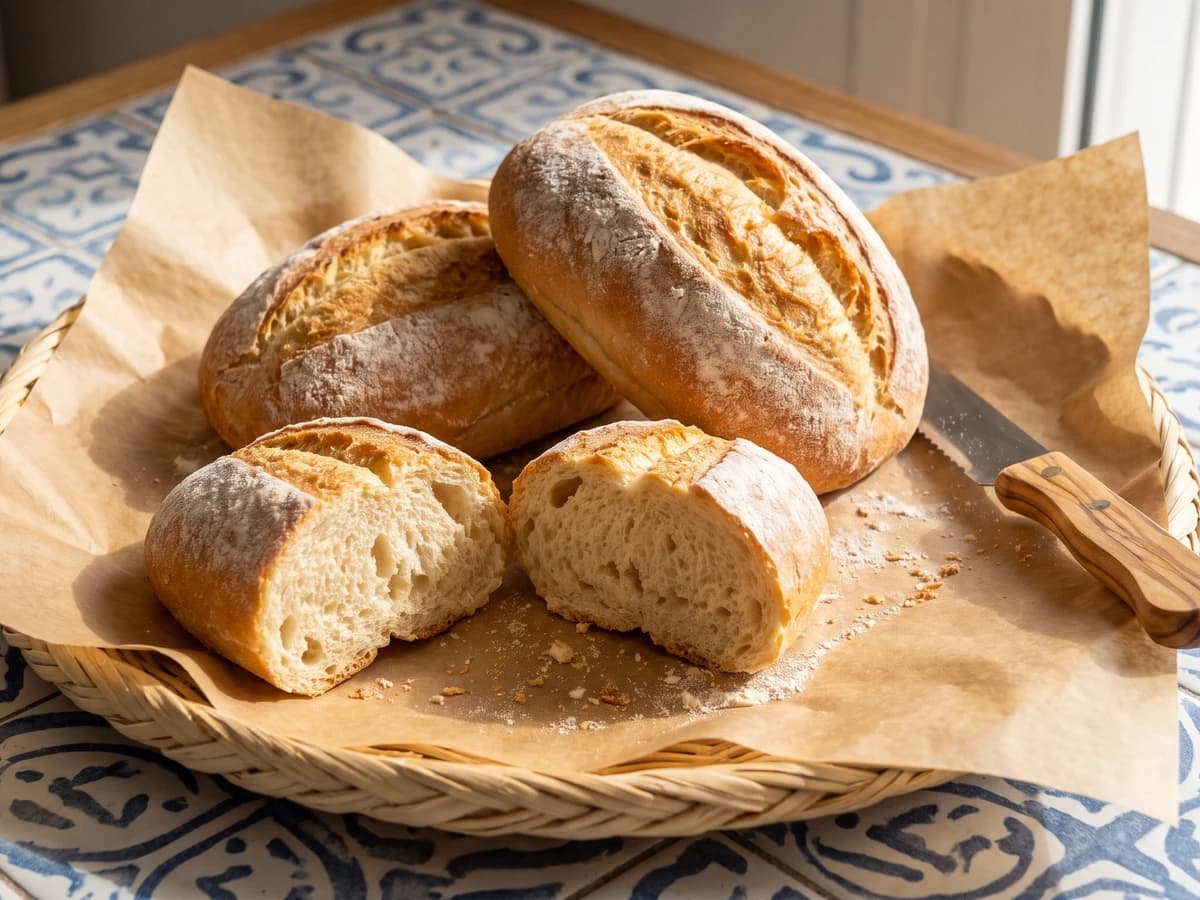
Hogaza de León belongs to León, in Castilla y León: a broad, heavy pan de flama with a moist, irregular crumb beneath a thick, well-baked crust. Its size matters. This is a loaf of one to two kilos, made to feed a household and remain good for several days. It isn't pan candeal, the firm Castilian bread worked from a drier dough until its crumb becomes close and even. A Leonese hogaza is wetter, airier and rather less obedient.
The method that decides it is simple: keep the dough supple and handle it gently. Its water and slow rise make those uneven holes, while the folds give enough strength to hold the loaf upright. If you bury a sticky dough under extra flour or knock all the air from it during shaping, you get a tight loaf. It may still be bread, but it isn't this bread. Wet your hands, use a scraper, and leave the dough some dignity.
Spanish harina panificable is a moderate-strength wheat flour. Far from León, mix ordinary unbleached bread flour with all-purpose flour rather than reaching for the strongest flour on the shelf; the crust will be just as good and the crumb less rubbery. No hace falta haber pisado España. Let the levain ripen fully, weigh everything, and cool the loaf before cutting. Siempre sale, si lo sigues.
Hogaza de León comes from the grain country and village ovens of León, where households baked large loaves because heating an oven cost fuel and labour, and bread needed to last between baking days. It belongs to the pan de flama family, made from a wetter, lightly worked dough with an open crumb, unlike the dense pan candeal found across much of the Castilian plateau. The large round and thick crust were practical preservation: less cut surface and slower moisture loss kept the household loaf edible for days.
Quantity
30g
Quantity
90g
Quantity
90g
at 22°C
Quantity
900g
or 600g unbleached bread flour mixed with 300g unbleached all-purpose flour
Quantity
620g
at 24°C, divided
Quantity
20g
Quantity
20g
| Ingredient | Quantity |
|---|---|
| active wheat sourdough starter at 100% hydration | 30g |
| unbleached wheat bread flour, for the levain | 90g |
| water, for the levainat 22°C | 90g |
| Spanish harina panificableor 600g unbleached bread flour mixed with 300g unbleached all-purpose flour | 900g |
| waterat 24°C, divided | 620g |
| fine sea salt | 20g |
| wheat flour, for dusting | 20g |
Mix the starter with the 90g water and 90g bread flour. Cover loosely and leave at 20 to 22°C for 8 to 10 hours. It is ready when it has at least doubled, the top is rounded and full of bubbles, and the aroma is pleasantly wheaten and lightly sharp. Use it before the centre collapses.
Put the 900g harina panificable in a large bowl and add 590g of the remaining water, holding back 30g. Mix until no dry flour remains. The dough will look rough and feel tacky. Cover and leave it for 30 minutes so the flour can take up the water before you ask the dough to hold its shape.
Spread the ripe levain over the dough. Dissolve the 20g salt in the reserved 30g water and add that too. Squeeze the dough through your fingers, then fold it repeatedly from the edges toward the centre until the levain and salt are evenly worked through, about 5 minutes. It should be supple and sticky, never stiff. Pésalo, no lo adivines. Adding extra flour here closes the crumb you are trying to make.
Cover the bowl and leave the dough at about 24°C for 4 to 5 hours. During the first 90 minutes, give it three folds at 30-minute intervals: wet your hands, lift one side without tearing it, fold it over the middle, and repeat around the bowl. After the third fold, leave it undisturbed. The bulk rise is finished when the dough has grown by roughly two-thirds, looks slightly domed, and shows bubbles along the sides.
Lightly flour the work surface and ease out the dough with a scraper. Do not punch it down. Draw the edges gently toward the centre to make a loose round, turn it seam-side down, and leave it uncovered for 20 minutes. For the final shape, use the scraper to pull the round toward you in short movements until the surface is taut without tearing.
Flour a 28 to 30cm round proving basket or a bowl lined with a clean cloth. Set the dough inside seam-side up, cover, and leave at 23 to 24°C for 1 1/2 to 2 1/2 hours. It is ready when it has expanded visibly and a floured fingertip pressed gently into the surface rises back slowly while leaving a shallow mark.
While the loaf proves, heat the oven to 250°C with a 7-litre cast-iron casserole and its lid inside for at least 45 minutes. Turn the dough onto baking paper, brush away loose flour, and cut a firm cross about 1cm deep across the top. Lower the loaf carefully into the hot casserole and cover it.
Bake covered at 240°C for 25 minutes. Remove the lid, lower the oven to 220°C, and bake for another 30 to 35 minutes. The hogaza is done when the crust is deep chestnut, the base sounds hollow, and the centre reaches 96 to 98°C. For the thick, dry crust that helps the loaf keep, switch off the oven and leave the bread inside for 10 minutes with the door slightly open.
Move the hogaza to a rack and leave it untouched for at least 3 hours. A loaf this large continues setting inside as it cools. Cut it early and the crumb turns gummy under the knife. The old margin beside this sort of bread says espera, wait. For once, the bread is giving the orders.
1 serving (about 75g)
Culinary guides, cultural storytelling, and the editorial depth that makes cooking meaningful.
Discover Culinary ExplorerChef Isabel
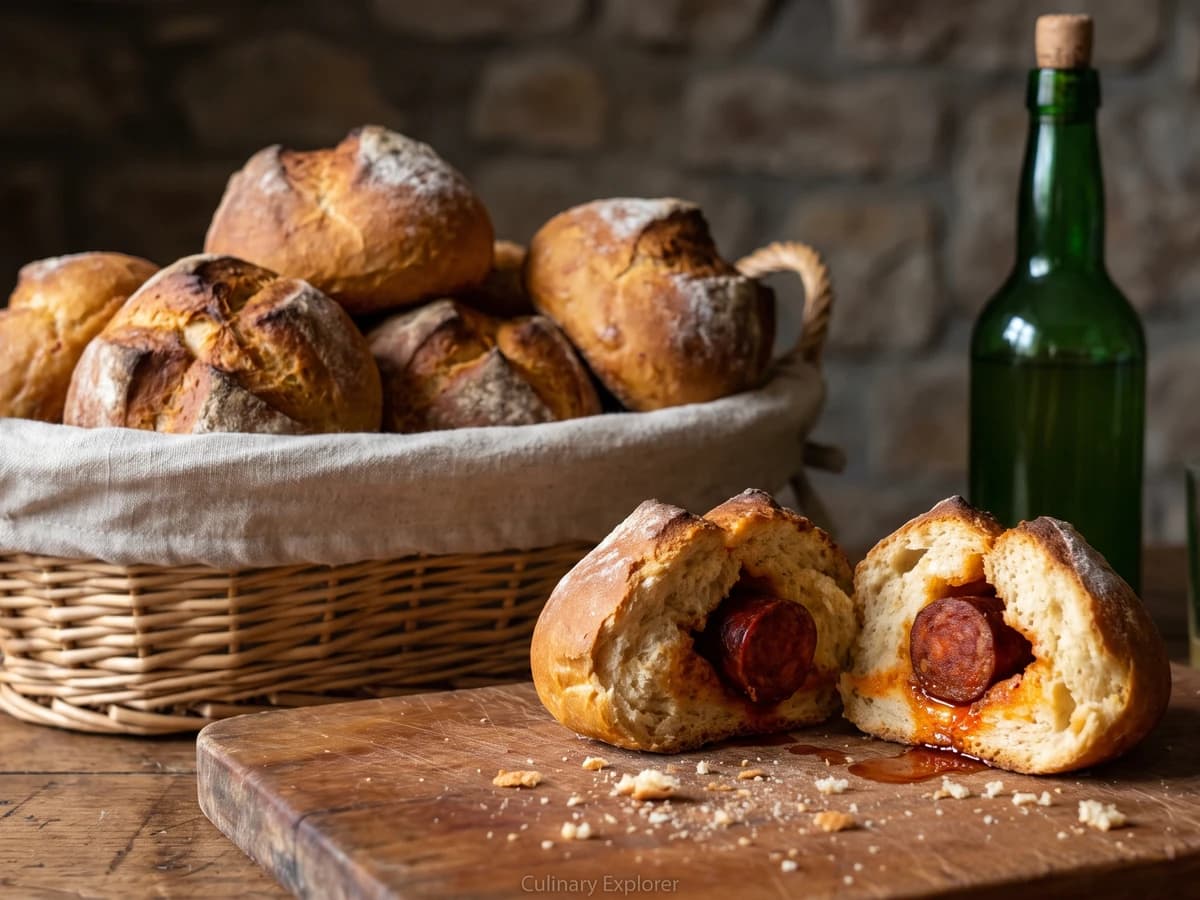
Asturias tucks a whole smoky chorizo inside each bread roll, so its pimentón-red fat seasons the crumb as it bakes. Seal the dough well, and you have the proper food of romerías and picnics.
Chef Isabel
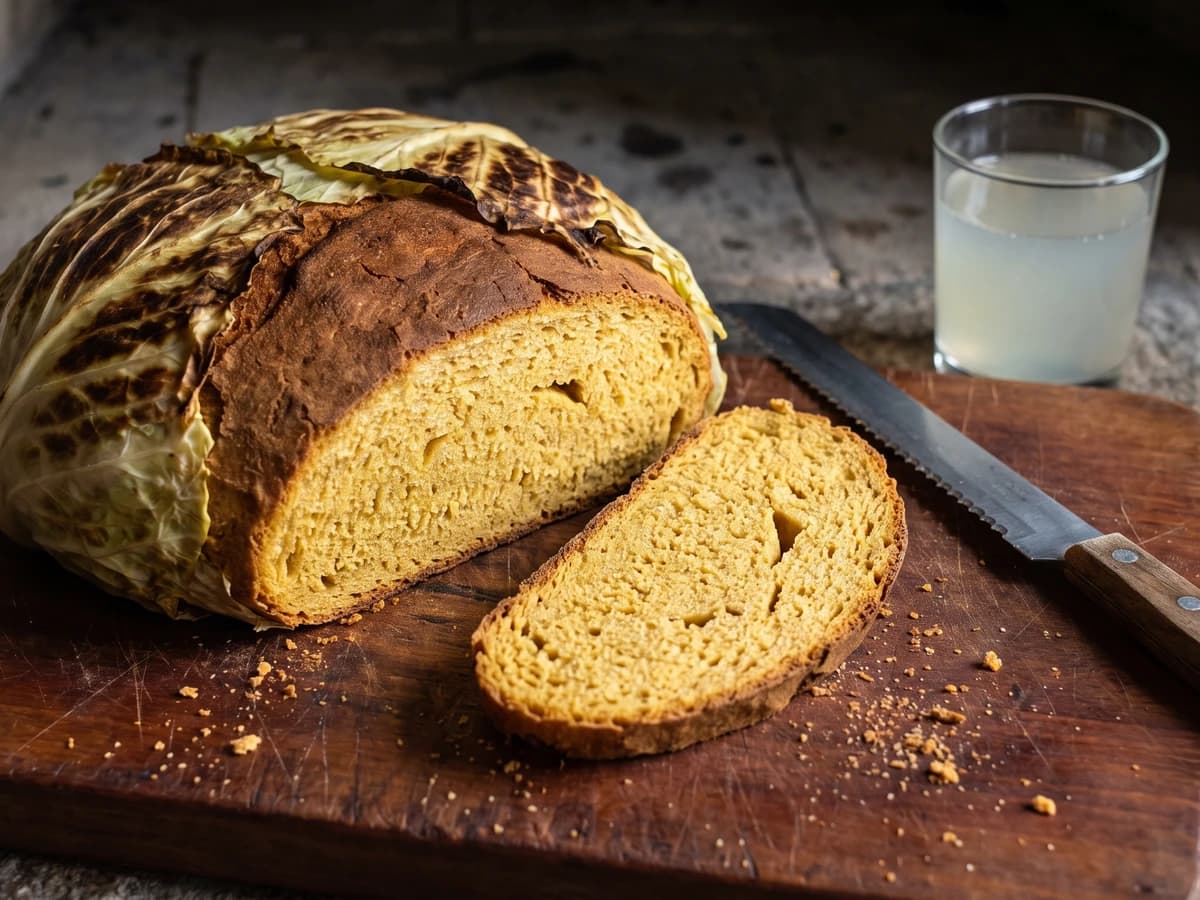
Asturian boroña is the plain corn loaf of the wet north, scalded with salted water and baked inside cabbage leaves until the crust darkens and the crumb stays close, gold, and moist.
Chef Isabel
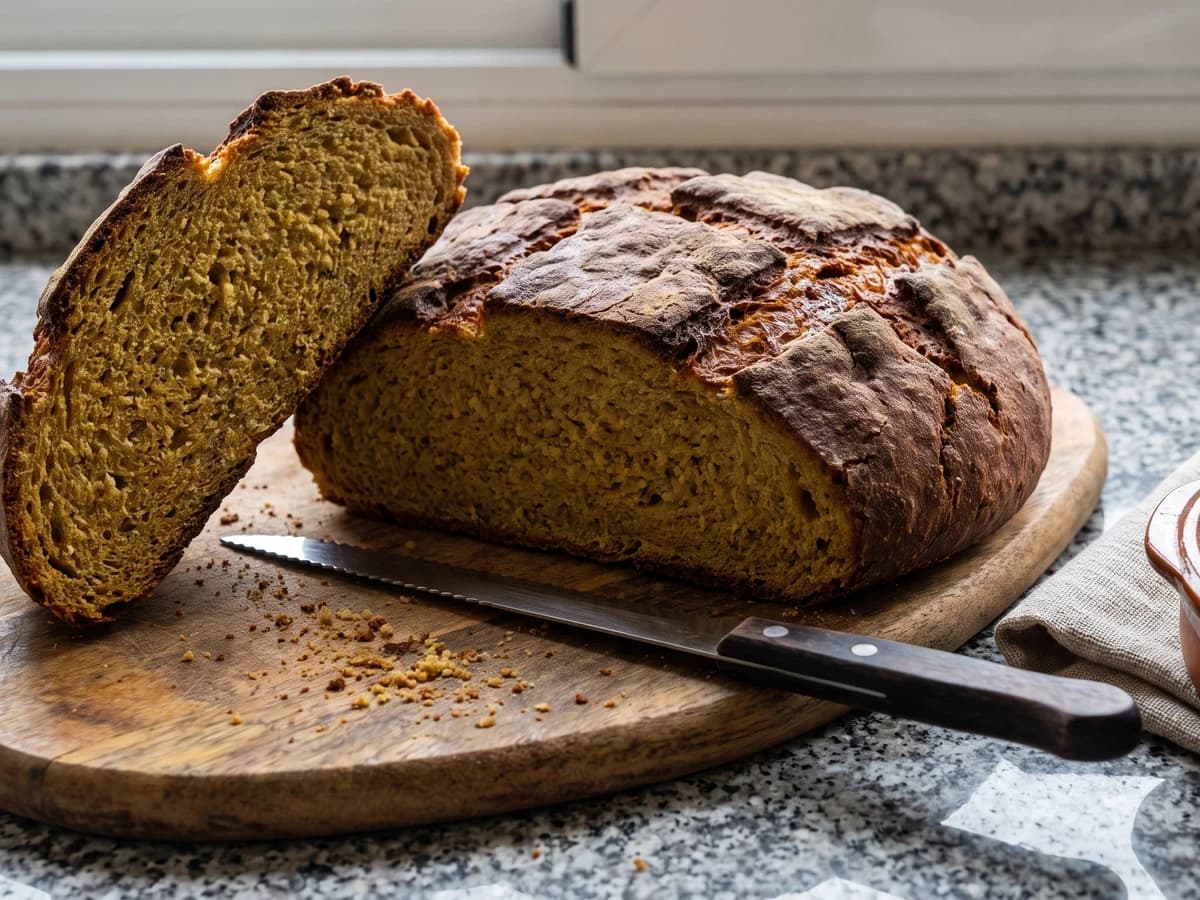
Broa Galega is Galicia's sturdy maize-and-rye loaf: scald the corn flour, give the damp dough time to rise, and the oven gives back a cracked crust and close, faintly sweet crumb.
Chef Isabel
Llonguet is Palma's oval bread roll, folded and rolled so its natural seam opens into the deep split that marks it, with a light crumb and thin crust ready for a proper bocadillo.