Chef Isabel
Abanico Ibérico a la Plancha
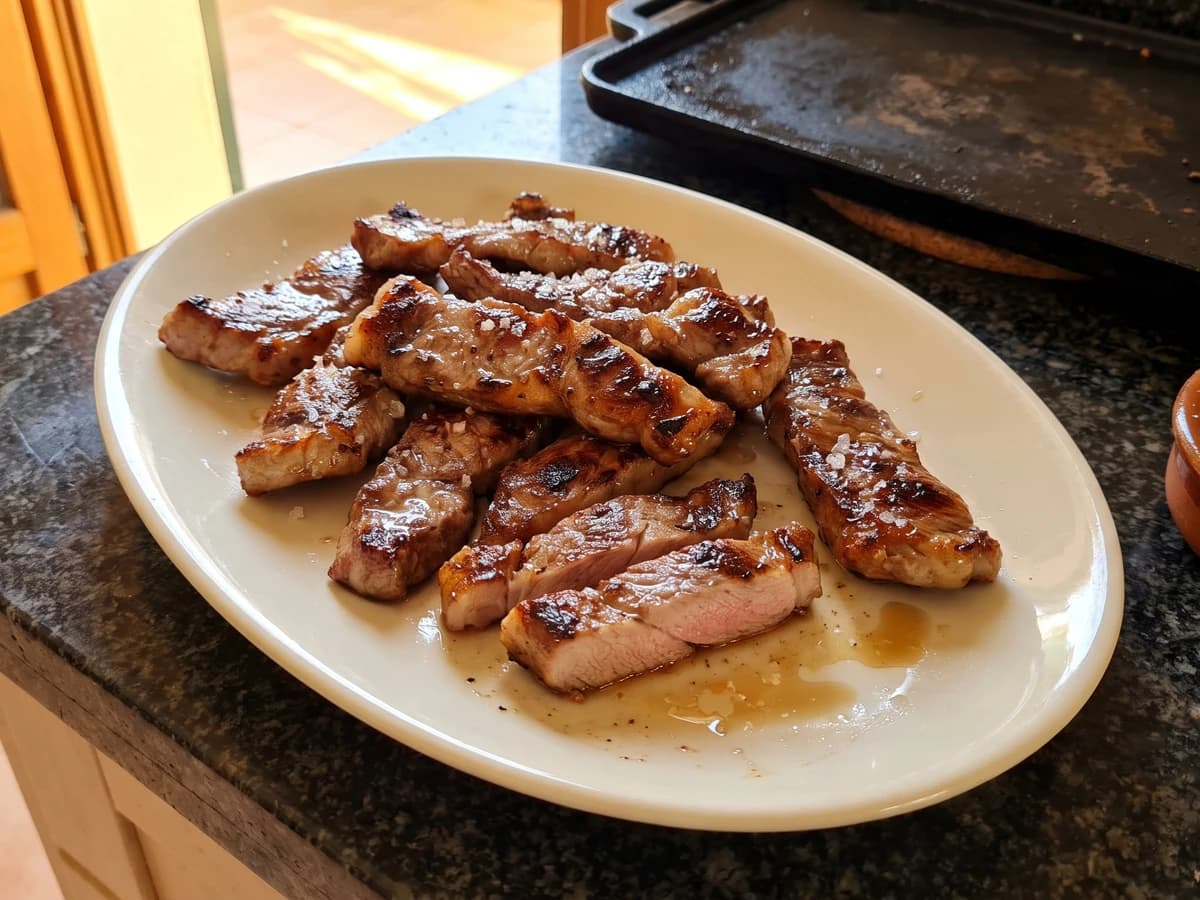
Extremadura's dehesa gives us this fan-shaped, marbled rib cut: salt it at the last moment, lay it on a fierce plancha, and count in seconds so the centre stays juicy.
A cooking platform built around craft, culture, and the stories behind what we eat.
Created by
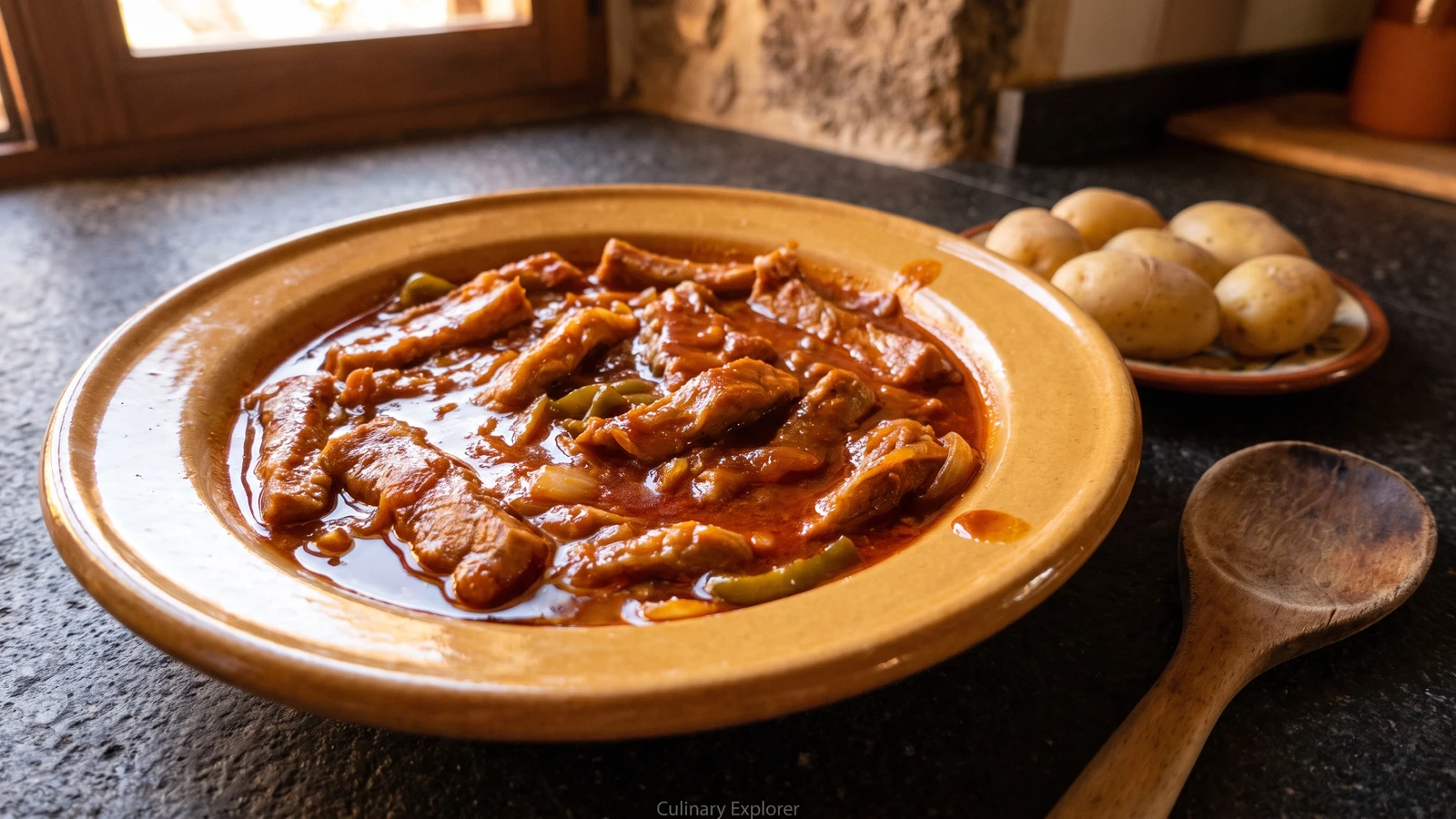
Canarian tollos en salsa turns dried dogfish into tender, meaty strips in a dark garlic, pimentón, cumin and tomato sauce. The full day's soak decides it, drawing out harsh salt before the pot.
Tollos en salsa belong to the Canary Islands: strips of dried, salted dogfish soaked back to suppleness, then simmered in a red-brown sauce of garlic, onion, green pepper, tomato, sweet pimentón and cumin. This is sturdy Canarian cooking for Lent, born from preserving the catch. Fresh fish won't give you the same firm, meaty bite. It is another preparation.
The soak decides the dish. Give the tollos a full 24 hours in cold water, inside the refrigerator, and change that water four times. Rush this and the surface softens while the middle stays fiercely salty and stiff. No sauce can mend it afterward. Once the fish is pliant, a gentle preliminary simmer finishes the work before it meets the sofrito, the slow onion and pepper base cooked until dark gold and sweet.
Far from the islands, ask a Canarian or Iberian grocer for tollos, cazón seco or dried salted shark strips from a traceable source. If none can be found, properly soaked bacalao is the honest household alternative for this sauce, but it flakes rather than chews and the finished dish is bacalao en salsa, not tollos. Skip the preliminary simmer and add salt cod only for the final 8 to 10 minutes.
Let the finished pot stand for 20 minutes. The sauce settles around the fish and tastes fuller, which is why it is better still the next day. The Margin beside this recipe says only, "Taste before the salt cellar." Dried fish has the last word there. Siempre sale, si lo sigues.
Tollos come from the fishing communities of the Canary Islands, where cazón and other small sharks were cut into long strips, salted and dried so the catch could be kept beyond the fishing day. The word names the preserved strips themselves, which had to be softened in repeated changes of water before cooking. Simmered in a pimentón sauce, they became closely tied to Semana Santa, when abstinence from meat put durable fish dishes at the centre of the table.
Quantity
500 g
Quantity
enough to cover by 5 cm
changed 4 times, plus more for simmering
Quantity
30 ml
divided
Quantity
60 ml
Quantity
300 g
finely chopped
Quantity
150 g
finely chopped
Quantity
20 g (about 5 cloves)
finely chopped
Quantity
400 g
grated if fresh, crushed if canned
Quantity
8 g (about 2 teaspoons)
Quantity
2 g (about 1 teaspoon)
lightly toasted and ground
Quantity
1 g (about 1 teaspoon)
Quantity
2
Quantity
1 small
seeded
Quantity
150 ml
Quantity
300 ml
divided
Quantity
0 to 3 g
add only after tasting
| Ingredient | Quantity |
|---|---|
| dried salted dogfish strips (tollos or cazón seco) | 500 g |
| cold waterchanged 4 times, plus more for simmering | enough to cover by 5 cm |
| white wine vinegardivided | 30 ml |
| extra virgin olive oil | 60 ml |
| onionfinely chopped | 300 g |
| green bell pepperfinely chopped | 150 g |
| garlicfinely chopped | 20 g (about 5 cloves) |
| ripe tomatoes or canned whole peeled tomatoesgrated if fresh, crushed if canned | 400 g |
| sweet pimentón | 8 g (about 2 teaspoons) |
| cumin seedslightly toasted and ground | 2 g (about 1 teaspoon) |
| dried thyme | 1 g (about 1 teaspoon) |
| bay leaves | 2 |
| dried pimienta picona or cayenne pepper (optional)seeded | 1 small |
| dry white wine | 150 ml |
| waterdivided | 300 ml |
| fine sea salt (optional)add only after tasting | 0 to 3 g |
Rinse the tollos under cold running water. Put them in a nonreactive bowl, cover with cold water by 5 cm and refrigerate for 24 hours. Change the water four times, roughly every 6 hours. The strips should bend without snapping by the end, and the final water should be much clearer than the first.
Drain and rinse the soaked tollos. Put them in a saucepan, cover with fresh cold water by 3 cm and add 15 ml of the vinegar. Bring just to a boil, lower the heat immediately and simmer gently for 18 to 25 minutes. A knife should enter the thickest strip with slight resistance. Drain, cool enough to handle, trim away any hard cartilage and cut the fish into pieces about 5 cm long.
Warm the olive oil in a wide heavy pan or cazuela over medium-low heat. Add the onion and green pepper without salt. Cook for 18 to 20 minutes, stirring often, until very soft and dark gold at the edges. Add the garlic and cook for 2 minutes. Stir in the tomato and cook for another 12 to 15 minutes, until its water has gone and the sofrito is thick enough to leave a clear trail behind the spoon.
Take the pan off the heat. Stir in the pimentón, ground cumin, thyme and pimienta picona, if using, for about 20 seconds. Return the pan to low heat, pour in the wine and the remaining 15 ml vinegar, and simmer for 3 minutes. Add the bay leaves and 250 ml of the measured water.
Set the tollos into the sauce and turn them gently to coat. Bring to a quiet simmer and cook uncovered for 20 to 25 minutes, turning the pieces once or twice, until the fish is tender but still meaty and the sauce is glossy and spoonable. If it tightens before the fish is ready, add the reserved 50 ml water a little at a time.
Remove the bay leaves and rest the tollos off the heat for 20 minutes. Taste the sauce only now, then add no more than 3 g salt if it truly needs it. Serve with papas sancochadas, plain boiled potatoes, or coarse bread for the sauce. The fish should be supple, the sauce deep red-brown and the pimentón oil just visible at the edges.
1 serving (about 450g)
Culinary guides, cultural storytelling, and the editorial depth that makes cooking meaningful.
Discover Culinary ExplorerChef Isabel
Extremadura's dehesa gives us this fan-shaped, marbled rib cut: salt it at the last moment, lay it on a fierce plancha, and count in seconds so the centre stays juicy.

Chef Isabel
Aletría Murciana is Murcia's humble noodle guiso: fine fideos, pork ribs, potato, saffron, and a dark sweet sofrito. Get that base right and the pot knows where it's going.

Chef Isabel
Andrajos are Andalucía's dough-rag stew from Jaén and Granada: a slow rabbit guiso thickened with torn sheets of flour dough, rolled thin so they cook tender instead of gummy.
Chef Isabel
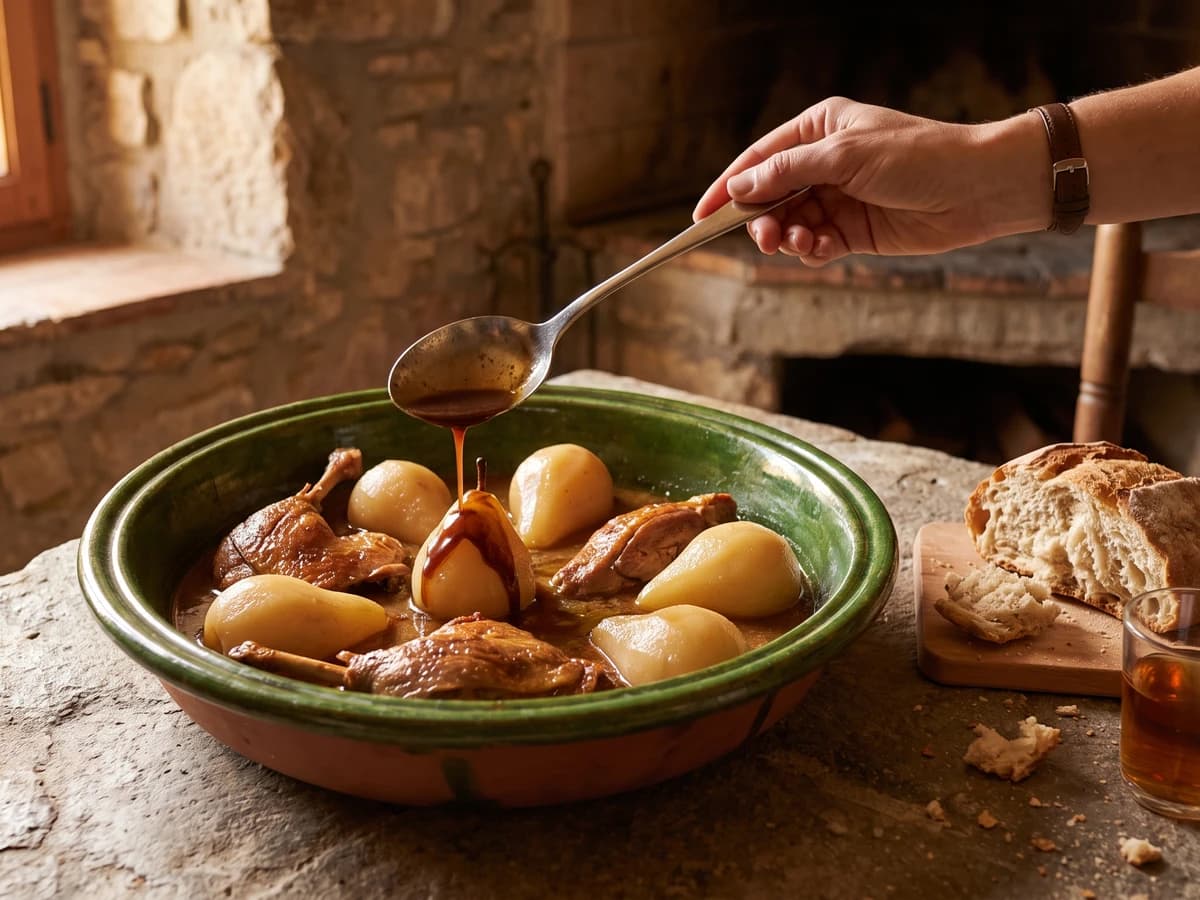
Ànec amb peres is Catalan celebration cooking: duck braised in a dark sofregit, firm autumn pears added near the end, and an almond-garlic picada that turns the juices into a close, glossy sauce.