Chef Graziella
Arrosto di Maiale alle Erbe Aromatiche
Bone-in pork loin rubbed with fennel, rosemary, and sage, roasted until the herbs form a crackling crust and the meat stays pink and succulent. This is the roast that brings Sunday to life.
A cooking platform built around craft, culture, and the stories behind what we eat.
Created by
The baroque masterpiece of Abruzzo: paper-thin scrippelle layered with hazelnut-sized meatballs, tomato sauce, and melting scamorza. A dish that proves the mountain cooks of central Italy rival any court kitchen.
In Teramo, in the mountains of Abruzzo where shepherds once moved their flocks between summer and winter pastures, there exists a dish so magnificent that families reserve it for Christmas, Easter, and weddings. The timballo teramano is not everyday food. It demands a day of preparation and an audience worthy of the effort.
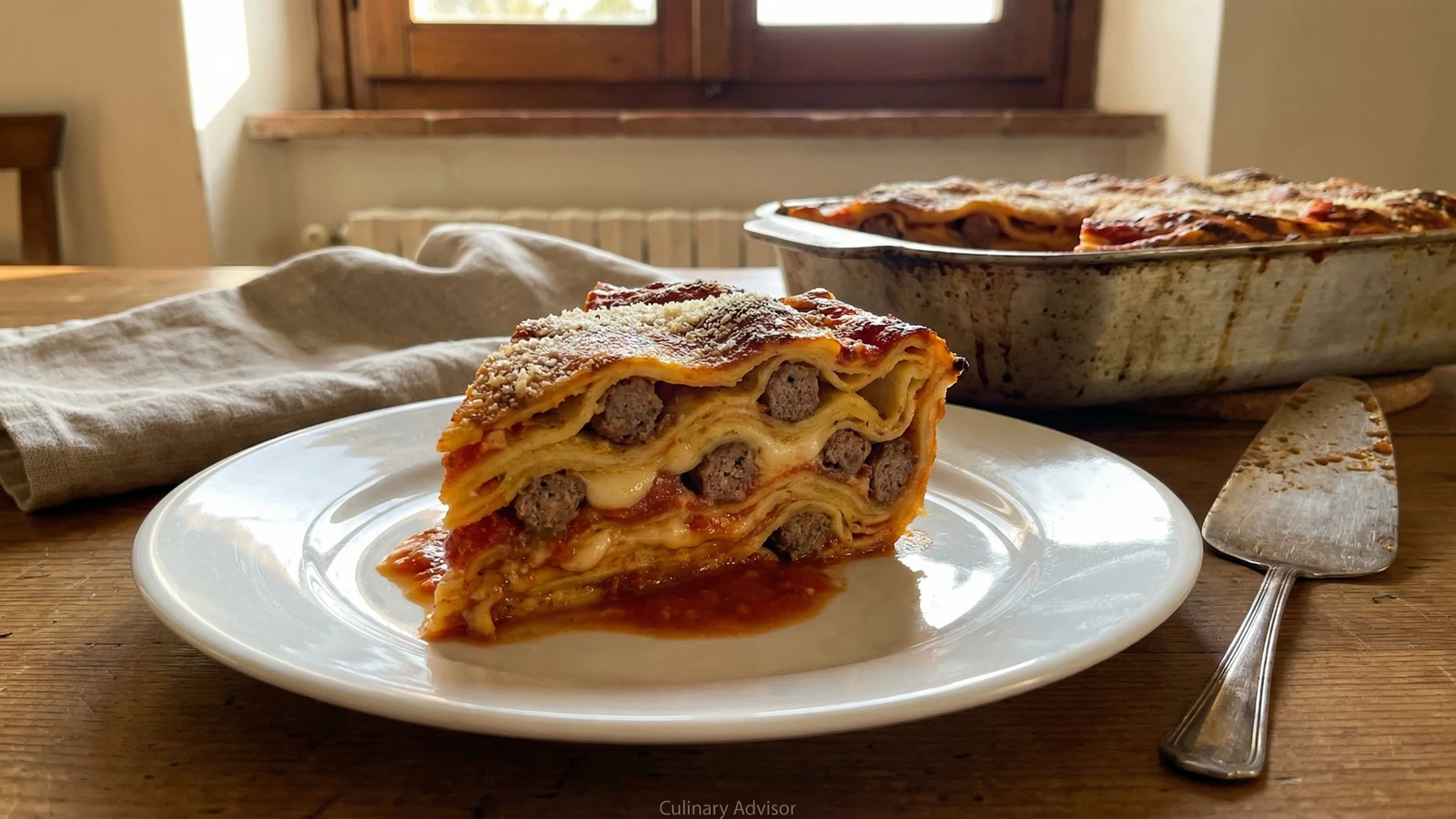
The foundation is the scrippelle, crepes thinner than any Frenchman ever dreamed, enriched with Pecorino and parsley directly in the batter. These are layered with polpettine, meatballs so small you can fit three on a tablespoon, and bound with a restrained tomato sauce and rivers of melting scamorza. When you slice into a properly made timballo, the layers hold. You can count them. This is not lasagna. This is architecture.
Americans confuse all layered Italian dishes. They assume everything is lasagna by another name. The timballo teramano has nothing to do with Emilia-Romagna. It belongs to Abruzzo, to the province of Teramo specifically, where the same families have made it the same way for generations. The scrippelle make it lighter than pasta. The tiny meatballs distribute through every bite. The scamorza, not mozzarella, provides the characteristic pull and tang.
Timballo derives from the Arab word for drum, referring to the cylindrical mold in which these elaborate layered dishes were traditionally baked. The Teramano version evolved in the mountainous Abruzzo region, where shepherding culture demanded celebratory dishes rich enough to mark the great occasions of life. Scrippelle themselves date to at least the 18th century in Teramo, where they also appear in broth as scrippelle 'mbusse.
Quantity
8
for scrippelle
Quantity
1 cup
Quantity
1 cup
Quantity
1/4 cup
freshly grated
Quantity
3 tablespoons
minced fine, for scrippelle
Quantity
1/2 teaspoon
for scrippelle
Quantity
for the pan
Quantity
1 pound
Quantity
1/2 pound
Quantity
1/2 cup
Quantity
1/4 cup
Quantity
1
for meatballs
Quantity
1/4 cup
freshly grated, for meatballs
Quantity
2 tablespoons
minced fine, for meatballs
Quantity
1/2 teaspoon
for meatballs
Quantity
to taste
freshly ground
Quantity
1/4 cup
for frying meatballs
Quantity
1/4 cup
for sauce
Quantity
1 medium
diced fine
Quantity
2 cans (28 ounces each)
crushed by hand
Quantity
1 teaspoon
for sauce
Quantity
6
Quantity
1 pound
sliced thin
Quantity
1 cup
freshly grated, for assembly
Quantity
for baking dish
| Ingredient | Quantity |
|---|---|
| large eggsfor scrippelle | 8 |
| water | 1 cup |
| all-purpose flour | 1 cup |
| Pecorino Romanofreshly grated | 1/4 cup |
| fresh flat-leaf parsleyminced fine, for scrippelle | 3 tablespoons |
| fine sea saltfor scrippelle | 1/2 teaspoon |
| unsalted butter | for the pan |
| ground beef | 1 pound |
| ground pork | 1/2 pound |
| fresh breadcrumbs | 1/2 cup |
| whole milk | 1/4 cup |
| large eggfor meatballs | 1 |
| Parmigiano-Reggianofreshly grated, for meatballs | 1/4 cup |
| fresh flat-leaf parsleyminced fine, for meatballs | 2 tablespoons |
| fine sea saltfor meatballs | 1/2 teaspoon |
| black pepperfreshly ground | to taste |
| extra virgin olive oilfor frying meatballs | 1/4 cup |
| extra virgin olive oilfor sauce | 1/4 cup |
| yellow oniondiced fine | 1 medium |
| San Marzano tomatoescrushed by hand | 2 cans (28 ounces each) |
| fine sea saltfor sauce | 1 teaspoon |
| fresh basil leaves | 6 |
| scamorza cheesesliced thin | 1 pound |
| Parmigiano-Reggianofreshly grated, for assembly | 1 cup |
| unsalted butter | for baking dish |
In a mixing bowl, beat the eggs with the water until combined. Add the flour gradually, whisking to prevent lumps. The batter should be thinner than pancake batter, closer to heavy cream. Stir in the Pecorino, minced parsley, and salt. Let the batter rest for 30 minutes at room temperature. This allows the flour to hydrate fully.
Heat a 9-inch nonstick skillet or well-seasoned crêpe pan over medium heat. Rub with a small piece of butter. Pour in about 3 tablespoons of batter and immediately tilt the pan to spread it into the thinnest possible circle. Cook until the edges curl and the bottom is lightly golden, about 45 seconds. Flip and cook 15 seconds more. Stack the finished scrippelle on a plate. You should have 16 to 18 scrippelle.
Soak the breadcrumbs in the milk until absorbed, about 5 minutes. In a large bowl, combine the ground beef, ground pork, soaked breadcrumbs, egg, Parmigiano, parsley, salt, and several grinds of pepper. Mix with your hands until just combined. Overworking makes tough meatballs. Form into tiny balls the size of hazelnuts, no larger. You should have approximately 60 polpettine.
Heat the olive oil in a large skillet over medium-high heat. Fry the meatballs in batches, turning them to brown evenly on all sides, about 4 minutes per batch. They need not cook through; they will finish in the oven. Transfer to a plate lined with paper towels.
In a heavy saucepan, heat the olive oil over medium heat. Add the onion and cook slowly until soft and pale gold, about 12 minutes. Add the crushed tomatoes and salt. Bring to a gentle simmer and cook uncovered, stirring occasionally, until the sauce thickens and the raw tomato taste disappears, about 35 minutes. Add the basil leaves in the final 5 minutes. Discard the basil before using.
Preheat the oven to 375°F. Butter a deep 9x13-inch baking dish or a round 10-inch springform pan generously. The springform produces the traditional cylindrical shape but requires more care when unmolding. Either works.
Spread a thin layer of tomato sauce on the bottom of the dish. Arrange a layer of scrippelle to cover, overlapping slightly. They may come up the sides; this is fine. Spread more sauce over the scrippelle. Scatter a portion of the polpettine evenly across. Add slices of scamorza and a generous sprinkling of Parmigiano. Repeat this layering: scrippelle, sauce, meatballs, scamorza, Parmigiano. You should have 4 to 5 layers, ending with scrippelle topped with sauce, the remaining scamorza, and a final shower of Parmigiano.
Cover the dish tightly with aluminum foil. Bake for 30 minutes. Remove the foil and continue baking until the top is golden and bubbling, about 15 minutes more. The internal temperature should reach at least 160°F. Let the timballo rest for 15 minutes before slicing. This is not optional. Cutting immediately produces a landslide of cheese and meatballs. Patience rewards you with clean, defined layers.
Cut into squares or wedges, depending on your baking dish. Use a sharp knife and a firm hand. Serve on warmed plates. No additional sauce is necessary; the timballo should be perfectly moist from the layers within.
1 serving (about 400g)
Culinary guides, cultural storytelling, and the editorial depth that makes cooking meaningful.
Discover Culinary ExplorerChef Graziella
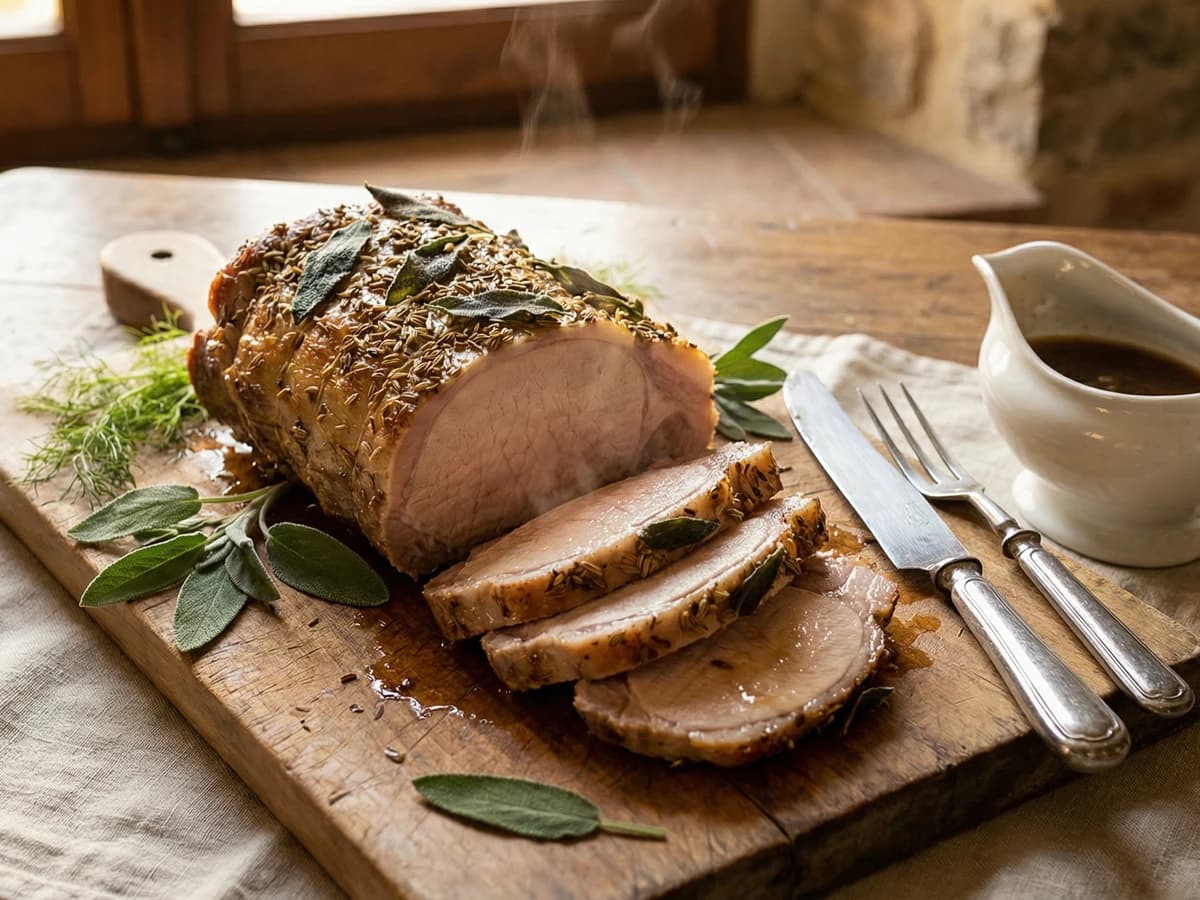
Bone-in pork loin rubbed with fennel, rosemary, and sage, roasted until the herbs form a crackling crust and the meat stays pink and succulent. This is the roast that brings Sunday to life.

Chef Graziella
The ancient technique of salt-baking creates a sealed chamber where the fish steams in its own moisture. What emerges is flesh of remarkable purity, seasoned perfectly, ready for nothing but your best olive oil.

Chef Graziella
The ugly fish that cooks like veal, braised in tomatoes until the firm white flesh absorbs the briny sweetness of olives and capers. Fishermen's wives along the Adriatic knew its worth before restaurants discovered it.

Chef Graziella
A fifteen-minute lesson in restraint: pork chops, butter, sage, and the understanding that what you leave out matters as much as what you put in.