Chef Graziella
Arrosto di Maiale alle Erbe Aromatiche
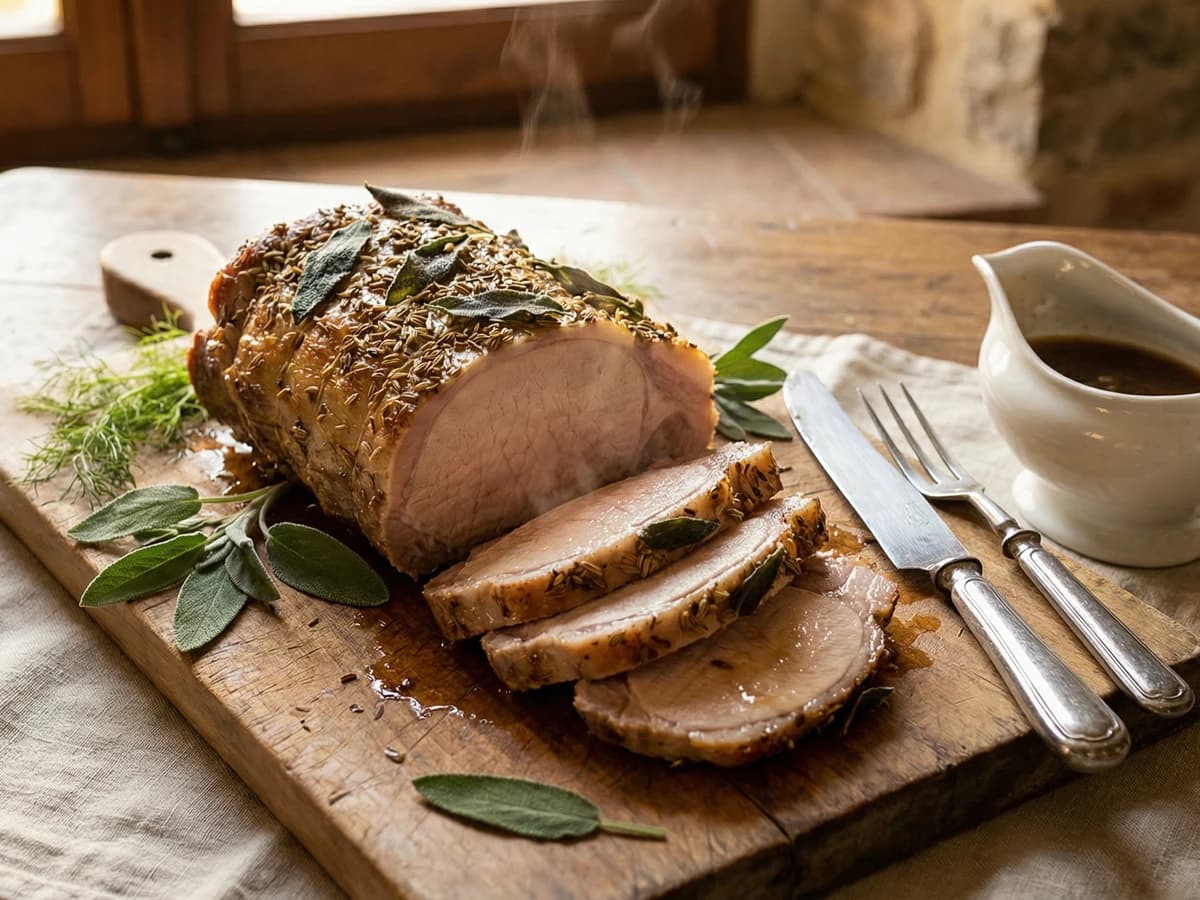
Bone-in pork loin rubbed with fennel, rosemary, and sage, roasted until the herbs form a crackling crust and the meat stays pink and succulent. This is the roast that brings Sunday to life.
A cooking platform built around craft, culture, and the stories behind what we eat.
Created by
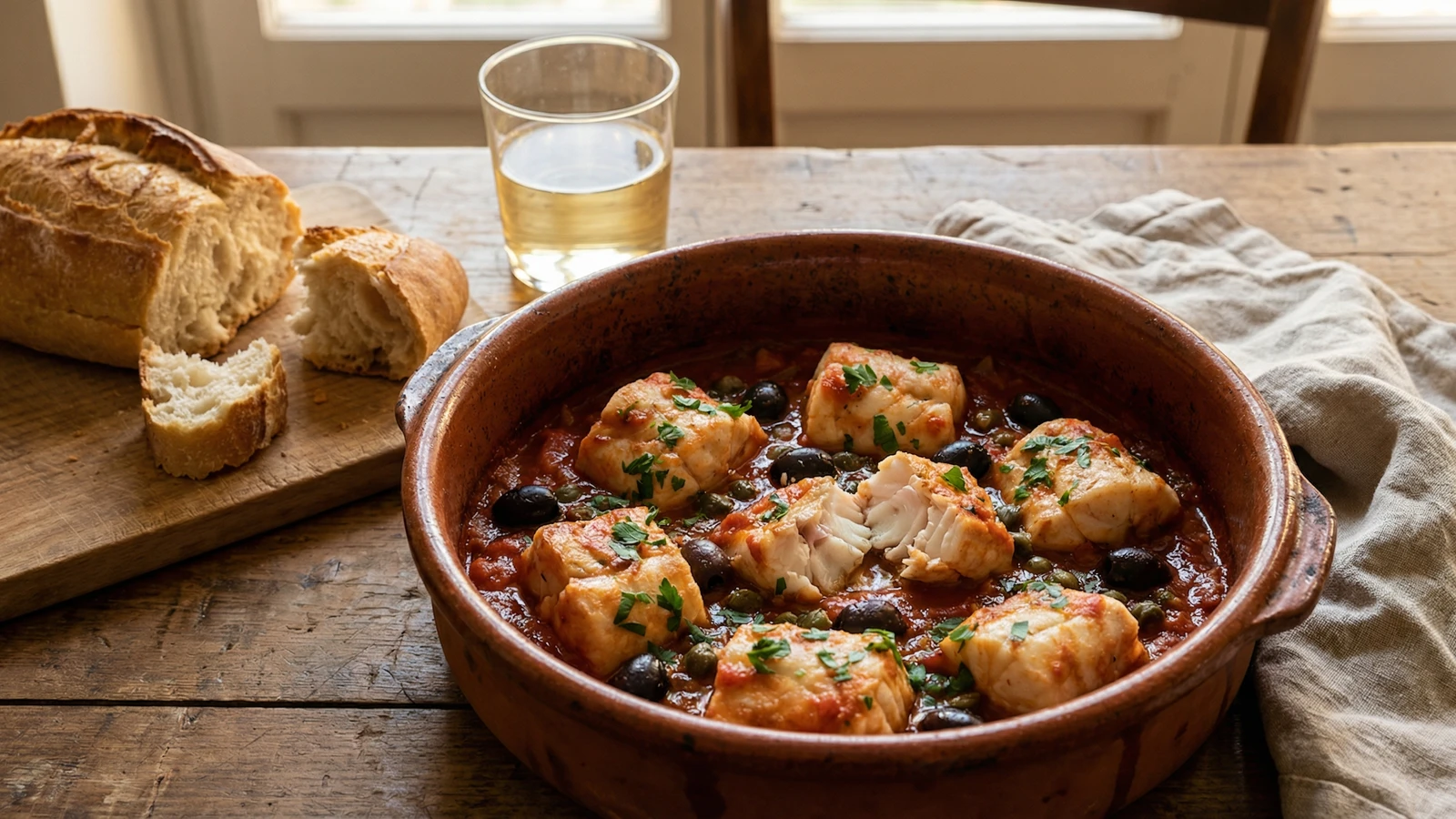
The ugly fish that cooks like veal, braised in tomatoes until the firm white flesh absorbs the briny sweetness of olives and capers. Fishermen's wives along the Adriatic knew its worth before restaurants discovered it.
Monkfish is the ugliest creature pulled from the sea. Its massive head, all gaping mouth and teeth, was traditionally thrown back or sold for pennies. But the tail contains flesh so firm, so meaty, so unlike other fish that Italian cooks call it coda di rospo, the toad's tail, and treat it with the respect it deserves.
This is not delicate cooking. The fish can take heat. It wants heat. Where a sea bass would disintegrate, monkfish holds its shape, absorbing the tomato, the brininess of capers and olives, becoming more itself through the braising. You could almost treat it like veal, and many cooks do.
The sauce here is simple because it must be. Tomatoes, good olives, capers rinsed of their salt, a whisper of garlic removed before it can announce itself. The fish provides the substance. What you keep out is as significant as what you put in. A sauce crowded with herbs and spices would fight the delicate sweetness of the flesh. We are not making a stew. We are coaxing the best from an ingredient that rewards patience.
Monkfish remained a fisherman's secret along Italy's coasts for centuries, considered too ugly to sell in respectable markets. Wives of the men who worked the Adriatic boats around Cesenatico and the Tyrrhenian ports near Livorno developed preparations that showcased the firm flesh, braising it slowly in tomato. Only in the late 20th century did restaurants recognize what fishing villages had always known.
Quantity
2 pounds
membrane removed, cut into 2-inch pieces
Quantity
1/4 cup
Quantity
3
peeled and lightly crushed
Quantity
1/2 cup
Quantity
1 can (28 ounces)
crushed by hand
Quantity
1/2 cup
pitted
Quantity
2 tablespoons
rinsed thoroughly
Quantity
1/4 teaspoon
Quantity
to taste
Quantity
to taste
freshly ground
Quantity
2 tablespoons
chopped
| Ingredient | Quantity |
|---|---|
| monkfish tailmembrane removed, cut into 2-inch pieces | 2 pounds |
| extra virgin olive oil | 1/4 cup |
| garlic clovespeeled and lightly crushed | 3 |
| dry white wine | 1/2 cup |
| San Marzano tomatoescrushed by hand | 1 can (28 ounces) |
| Gaeta or Kalamata olivespitted | 1/2 cup |
| salt-packed capersrinsed thoroughly | 2 tablespoons |
| red pepper flakes | 1/4 teaspoon |
| kosher salt | to taste |
| black pepperfreshly ground | to taste |
| fresh Italian parsleychopped | 2 tablespoons |
Pat the monkfish pieces completely dry with paper towels. Season generously with salt and pepper on all sides. The fish must be dry or it will not brown properly. Wet fish steams. We want color.
Heat three tablespoons of the olive oil in a heavy braising pan or Dutch oven over medium-high heat until the oil shimmers. Add the monkfish pieces in a single layer, leaving space between them. Sear without moving until golden on the bottom, about 3 minutes. Turn and sear the second side, another 2 minutes. The fish will not be cooked through. This is correct. Transfer to a plate.
Reduce heat to medium. Add the remaining tablespoon of olive oil and the crushed garlic cloves. Let the garlic warm gently in the oil until fragrant and barely golden, about 2 minutes. Watch it carefully. The moment it begins to color, remove and discard the cloves. What remains is perfume, not presence. Burned garlic ruins everything.
Add the wine to the pan and let it bubble until reduced by half, scraping up any browned bits from the fish. Add the crushed tomatoes, olives, capers, and red pepper flakes. Stir to combine. Bring to a simmer and cook for 10 minutes, stirring occasionally. The sauce should thicken slightly. Season with salt, remembering that olives and capers bring salt of their own. Taste before adding.
Nestle the seared monkfish pieces into the sauce, spooning some of the tomatoes and olives over the top. Reduce heat to maintain a gentle simmer. Cover the pan and cook for 15 to 18 minutes, until the fish is opaque throughout and flakes when pressed with a fork. The flesh should be firm but yielding, not rubbery.
Remove from heat and let rest, covered, for 5 minutes. The fish will finish cooking gently in the residual heat. Scatter the chopped parsley over the top. Serve directly from the braising pan, or transfer carefully to a warm serving platter. Spoon the sauce generously over each portion. Crusty bread to soak up the sauce is not optional.
1 serving (about 375g)
Culinary guides, cultural storytelling, and the editorial depth that makes cooking meaningful.
Discover Culinary ExplorerChef Graziella
Bone-in pork loin rubbed with fennel, rosemary, and sage, roasted until the herbs form a crackling crust and the meat stays pink and succulent. This is the roast that brings Sunday to life.

Chef Graziella
The ancient technique of salt-baking creates a sealed chamber where the fish steams in its own moisture. What emerges is flesh of remarkable purity, seasoned perfectly, ready for nothing but your best olive oil.

Chef Graziella
A fifteen-minute lesson in restraint: pork chops, butter, sage, and the understanding that what you leave out matters as much as what you put in.

Chef Graziella
The noble dentex of the Mediterranean, roasted whole with nothing more than olive oil, white wine, and a whisper of herbs. When you begin with a fish this fine, your job is to stay out of its way.