Chef Graziella
Arrosto di Maiale alle Erbe Aromatiche
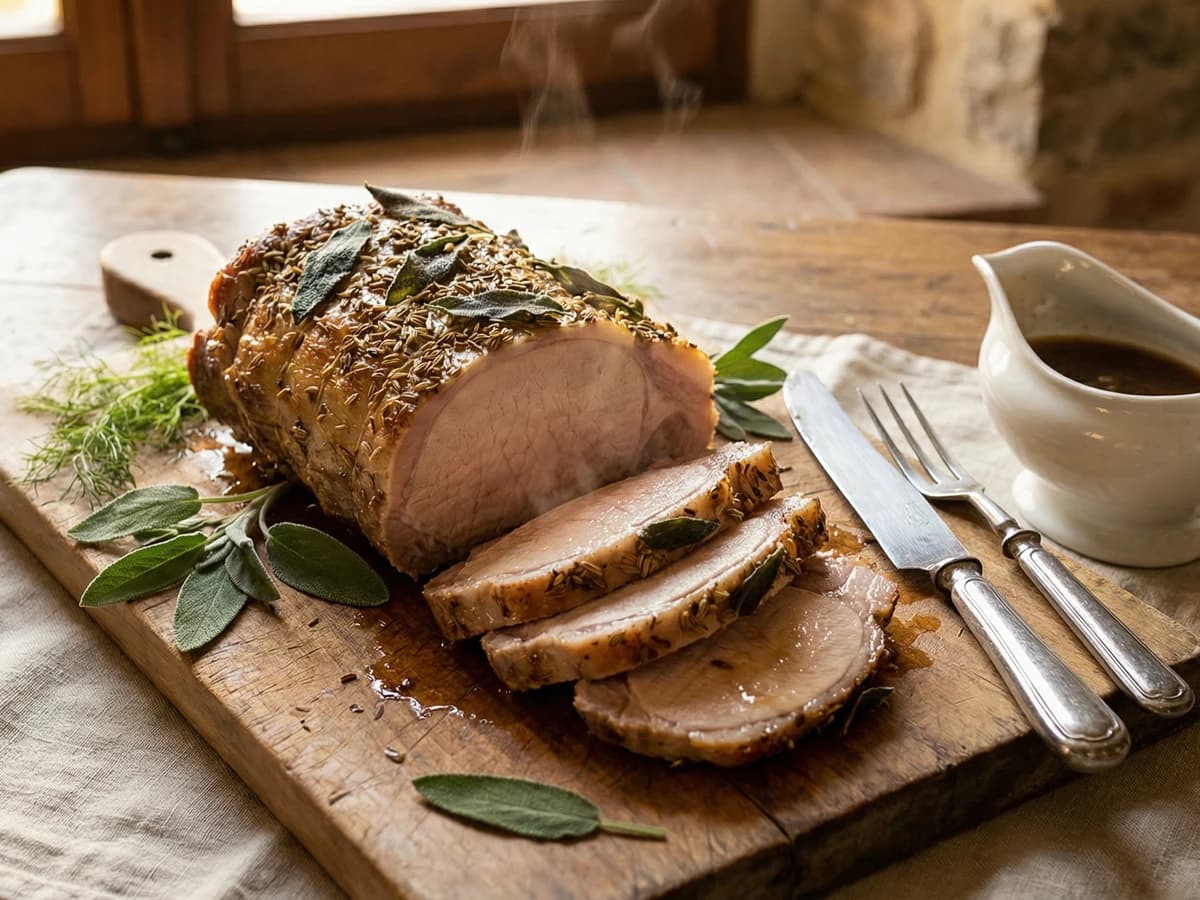
Bone-in pork loin rubbed with fennel, rosemary, and sage, roasted until the herbs form a crackling crust and the meat stays pink and succulent. This is the roast that brings Sunday to life.
A cooking platform built around craft, culture, and the stories behind what we eat.
Created by
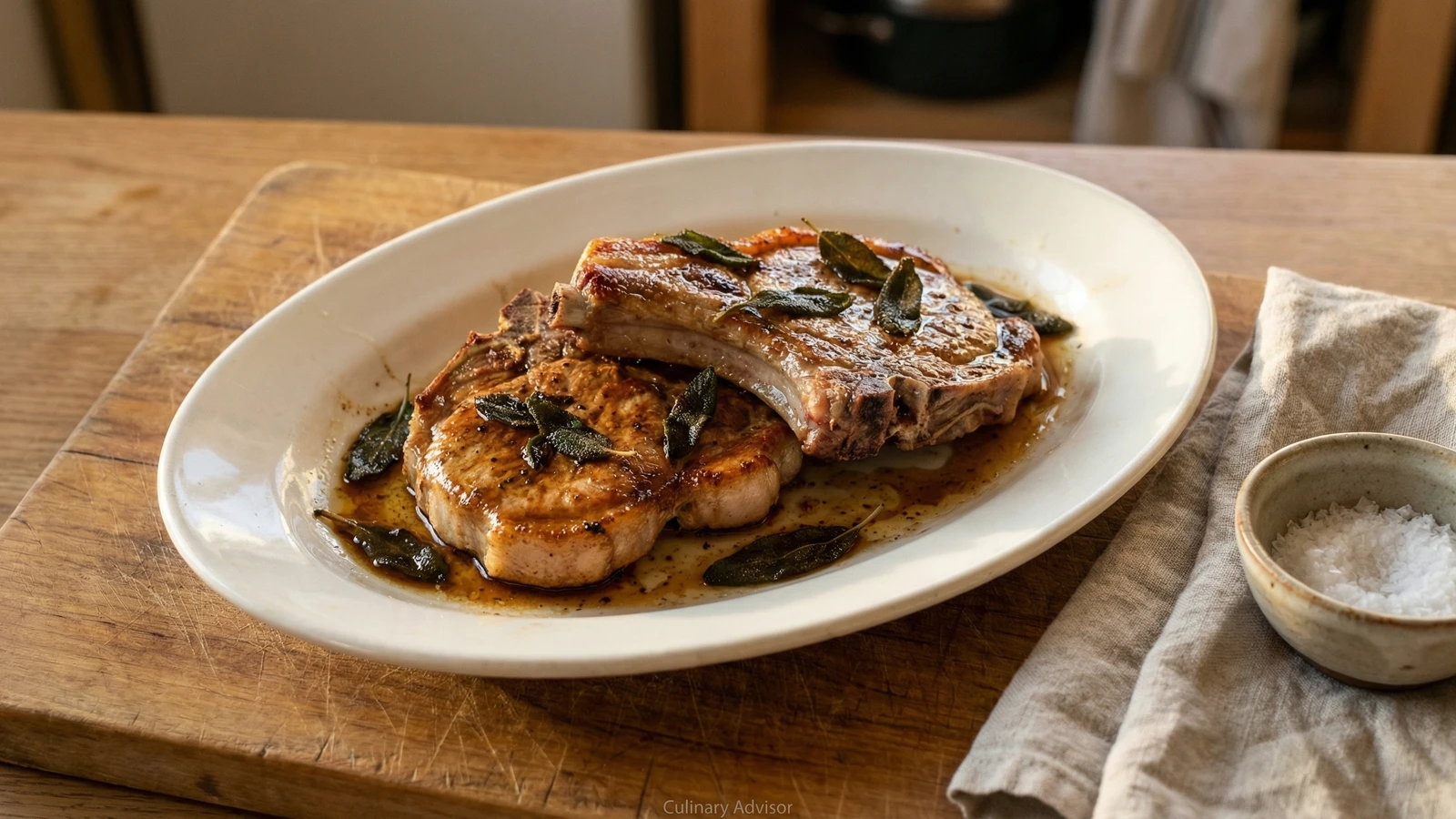
A fifteen-minute lesson in restraint: pork chops, butter, sage, and the understanding that what you leave out matters as much as what you put in.
This is the weeknight cooking of central Italy. No elaborate preparation, no special occasion required. A good pork chop, butter, sage from the garden, and a splash of wine to lift the pan drippings. Dinner in fifteen minutes.
The technique is elemental: hot fat, dry meat, patience to let the crust form, then the perfume of sage crisping in butter. Americans ruin pork chops by cooking them until they are gray and fibrous throughout. Italians understand that pork, like all meat, needs rest and restraint. A blush of pink at the center is not only safe, it is correct.
Sage and pork have been partners in Italian cooking for centuries. The herb's slightly bitter, camphor note cuts through the richness of the meat. But sage is powerful. Twelve leaves are sufficient for four chops. More would overwhelm. What you keep out is as significant as what you put in.
Sage has grown wild in the Mediterranean since antiquity, and its name derives from the Latin salvare, meaning to save or heal. Italian cooks have paired it with pork and butter since at least the Renaissance, when the combination appeared in wealthy Tuscan and Umbrian households. The preparation remains unchanged because it requires no improvement.
Quantity
4 (about 1 inch thick, 8 ounces each)
Quantity
to taste
Quantity
to taste
freshly ground
Quantity
3 tablespoons
Quantity
2 tablespoons
Quantity
12
Quantity
2
peeled and lightly crushed
Quantity
1/3 cup
| Ingredient | Quantity |
|---|---|
| bone-in pork loin chops | 4 (about 1 inch thick, 8 ounces each) |
| kosher salt | to taste |
| black pepperfreshly ground | to taste |
| unsalted butter | 3 tablespoons |
| extra virgin olive oil | 2 tablespoons |
| fresh sage leaves | 12 |
| garlic clovespeeled and lightly crushed | 2 |
| dry white wine | 1/3 cup |
Remove the pork chops from the refrigerator 30 minutes before cooking. Cold meat does not brown properly. Pat them completely dry with paper towels. Season both sides generously with salt and pepper. The salt should be visible on the surface.
In a heavy skillet large enough to hold all four chops without crowding, heat the butter and olive oil over medium-high heat. The oil prevents the butter from burning. When the butter foam subsides and the fat shimmers, you are ready. If the chops do not fit comfortably, cook them in two batches. Crowding causes steaming, not browning.
Lay the chops in the hot fat. Do not move them. Let them cook undisturbed for 4 minutes. You should hear a steady sizzle, not violent popping or quiet cooking. After 4 minutes, the underside should be deeply golden, almost mahogany at the edges. Turn the chops.
Scatter the sage leaves and crushed garlic cloves into the pan around the chops. The sage will crisp and perfume the fat within 30 seconds. Tilt the pan slightly and spoon the fragrant butter over the tops of the chops repeatedly as they finish cooking, another 3 to 4 minutes for medium (145°F internal temperature). The sage leaves should be brittle and darkened but not black.
Transfer the chops to a warm plate and scatter the crispy sage over them. Let them rest. Add the wine to the hot pan, scraping up the browned bits with a wooden spoon. Let it bubble vigorously for 30 seconds until slightly reduced. Discard the garlic. The sauce should be deeply flavored and just coat a spoon.
Spoon the pan sauce over the rested chops. The meat should be rosy pink at the center with juices pooling on the plate. Serve at once. This is not a dish that waits.
1 serving (about 180g)
Culinary guides, cultural storytelling, and the editorial depth that makes cooking meaningful.
Discover Culinary ExplorerChef Graziella
Bone-in pork loin rubbed with fennel, rosemary, and sage, roasted until the herbs form a crackling crust and the meat stays pink and succulent. This is the roast that brings Sunday to life.

Chef Graziella
The ancient technique of salt-baking creates a sealed chamber where the fish steams in its own moisture. What emerges is flesh of remarkable purity, seasoned perfectly, ready for nothing but your best olive oil.

Chef Graziella
The ugly fish that cooks like veal, braised in tomatoes until the firm white flesh absorbs the briny sweetness of olives and capers. Fishermen's wives along the Adriatic knew its worth before restaurants discovered it.

Chef Graziella
The noble dentex of the Mediterranean, roasted whole with nothing more than olive oil, white wine, and a whisper of herbs. When you begin with a fish this fine, your job is to stay out of its way.