Chef Graziella
Arrosto di Maiale alle Erbe Aromatiche
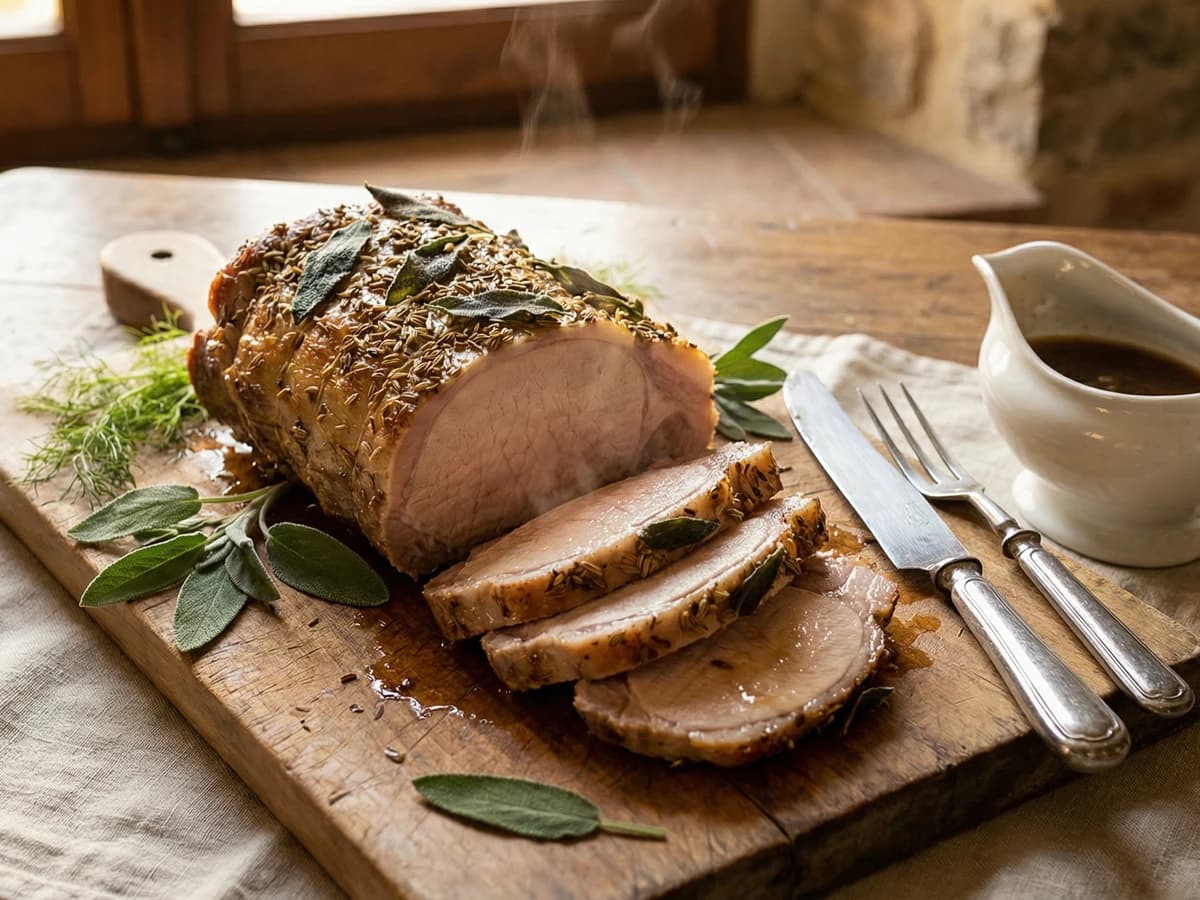
Bone-in pork loin rubbed with fennel, rosemary, and sage, roasted until the herbs form a crackling crust and the meat stays pink and succulent. This is the roast that brings Sunday to life.
A cooking platform built around craft, culture, and the stories behind what we eat.
Created by
The ancient technique of salt-baking creates a sealed chamber where the fish steams in its own moisture. What emerges is flesh of remarkable purity, seasoned perfectly, ready for nothing but your best olive oil.
Salt-baked fish is not a recipe. It is an act of faith. You encase a beautiful fish in four pounds of salt, put it in the oven, and trust that when you crack open that hardened shell, perfection awaits inside.
The salt crust works like a self-sealing oven. As it bakes, the egg whites bind the salt into an impermeable shell. Inside, the fish steams gently in its own moisture. No flavor escapes. No external flavor intrudes. What you taste is the pure essence of the fish itself, seasoned to perfection by the barest whisper of salt that penetrates through the skin.
This is coastal cooking of the most elemental kind. Fishermen along the Ligurian coast, the Amalfi shore, the waters around Sicily have prepared their catch this way for centuries. The technique requires nothing but salt, a fire hot enough to bake it, and a fish fresh enough to deserve such treatment. If your fish is not impeccably fresh, do not insult it with this preparation. Salt-baking conceals nothing.
The drama of cracking open the crust at table is real, but it serves a purpose beyond spectacle. The crust keeps the fish hot. The moment of opening is the moment of serving. Your guests eat the fish at its peak, still releasing steam, before a single degree of heat or drop of moisture can escape.
Salt-baking fish predates written recipes, practiced around the Mediterranean wherever salt was plentiful and fresh fish abundant. The technique appears in Roman texts and likely goes back further. Italian coastal communities from Liguria to Sicily each claim variations, but the method remains essentially unchanged: seal the fish, bake it, crack it open, eat immediately.
Quantity
2 (about 1 1/2 pounds each)
gutted and scaled, head and tail intact
Quantity
4 pounds
Quantity
4
Quantity
1/2 cup
Quantity
1 small bunch
Quantity
1 small bunch
Quantity
2
Quantity
1
sliced thin
Quantity
finest quality, for serving
Quantity
for serving
Quantity
for serving
| Ingredient | Quantity |
|---|---|
| whole branzinogutted and scaled, head and tail intact | 2 (about 1 1/2 pounds each) |
| coarse sea salt or kosher salt | 4 pounds |
| large egg whites | 4 |
| water | 1/2 cup |
| fresh thyme | 1 small bunch |
| fresh flat-leaf parsley | 1 small bunch |
| bay leaves | 2 |
| lemonsliced thin | 1 |
| extra virgin olive oil | finest quality, for serving |
| lemon wedges | for serving |
| flaky sea salt | for serving |
Rinse each fish inside and out under cold running water. Pat completely dry with paper towels. The fish must be dry or the salt will not adhere properly. Stuff each cavity with half the thyme, half the parsley, one bay leaf, and several lemon slices. Do not season the fish with salt. The crust provides all it needs.
In a large bowl, combine the coarse salt with the egg whites and water. Mix thoroughly with your hands until the texture resembles wet sand that holds together when squeezed. The egg whites bind the salt into a shell that will seal completely around the fish.
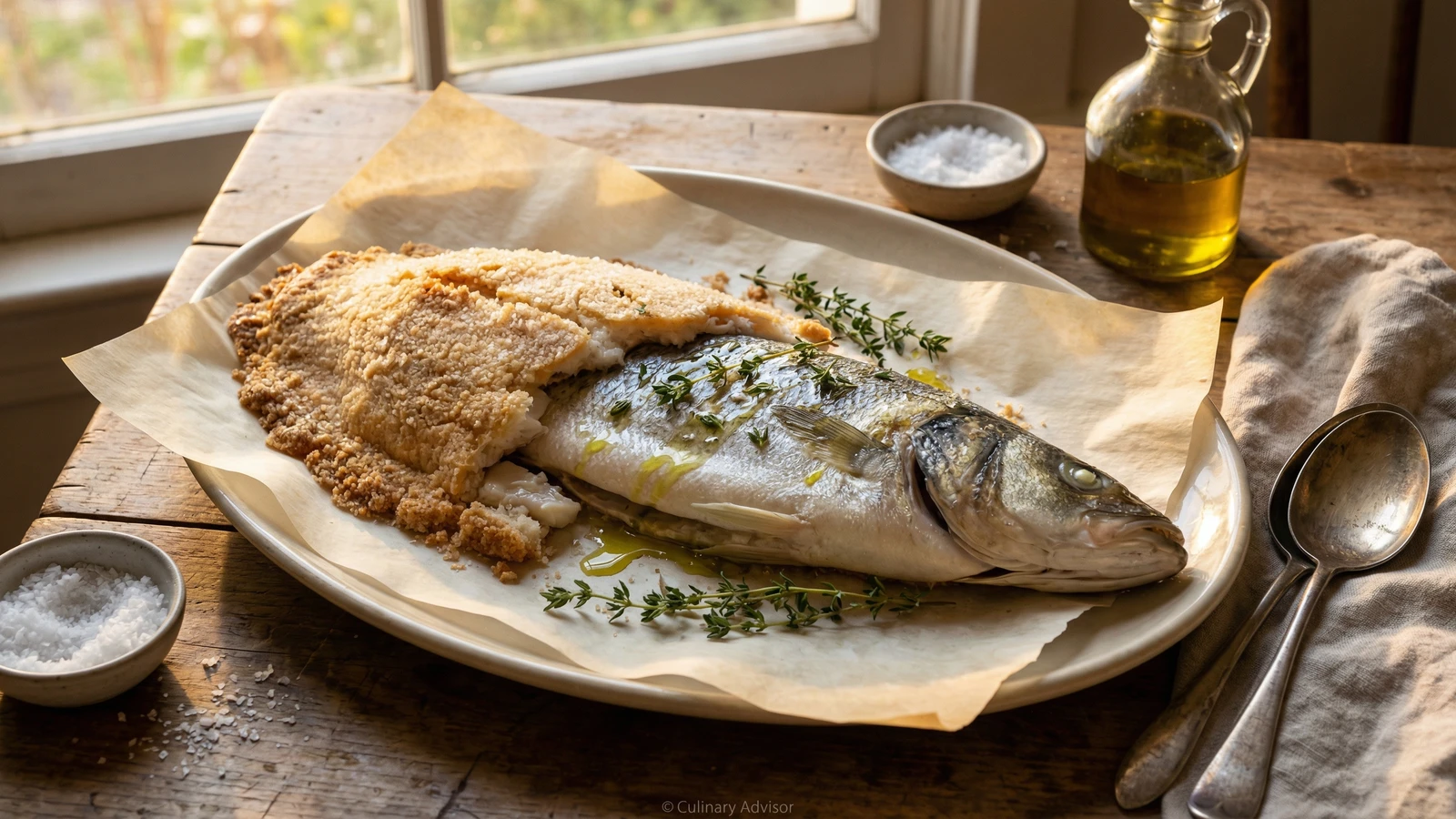
Line a rimmed baking sheet with parchment paper. Spread a layer of the salt mixture about half an inch thick in the rough shape of each fish. Lay the fish on top, leaving space between them. Pack the remaining salt mixture over and around each fish, pressing firmly to create a sealed dome. Only the tail may peek through if you wish. The crust should be about half an inch thick everywhere.
Place in the center of the oven preheated to 400 degrees Fahrenheit. Bake for 30 to 35 minutes. The crust will turn pale golden and harden completely. A fish this size is done when an instant-read thermometer inserted through the crust into the thickest part reads 135 degrees. If you have no thermometer, trust the timing for fish of this weight.
Let the fish rest in its salt shell for 5 minutes after removing from the oven. This allows the heat to equalize and the flesh to relax. Bring the baking sheet to the table. This is the moment your guests have been waiting for.
Using the back of a heavy spoon or a small mallet, crack the salt crust along the top. It should break away in large pieces. Lift away the crust carefully, brushing off any salt that clings to the fish. Peel back the skin, which will come away easily. Lift the fillets from the bone using two spoons. Transfer to warm plates. Discard the herbs from the cavity. Drizzle generously with your finest olive oil. Serve immediately with lemon wedges and a small dish of flaky salt on the side.
1 serving (about 165g)
Culinary guides, cultural storytelling, and the editorial depth that makes cooking meaningful.
Discover Culinary ExplorerChef Graziella
Bone-in pork loin rubbed with fennel, rosemary, and sage, roasted until the herbs form a crackling crust and the meat stays pink and succulent. This is the roast that brings Sunday to life.

Chef Graziella
The ugly fish that cooks like veal, braised in tomatoes until the firm white flesh absorbs the briny sweetness of olives and capers. Fishermen's wives along the Adriatic knew its worth before restaurants discovered it.

Chef Graziella
A fifteen-minute lesson in restraint: pork chops, butter, sage, and the understanding that what you leave out matters as much as what you put in.

Chef Graziella
The noble dentex of the Mediterranean, roasted whole with nothing more than olive oil, white wine, and a whisper of herbs. When you begin with a fish this fine, your job is to stay out of its way.