Chef Isabel
Bollo Preñao Asturiano
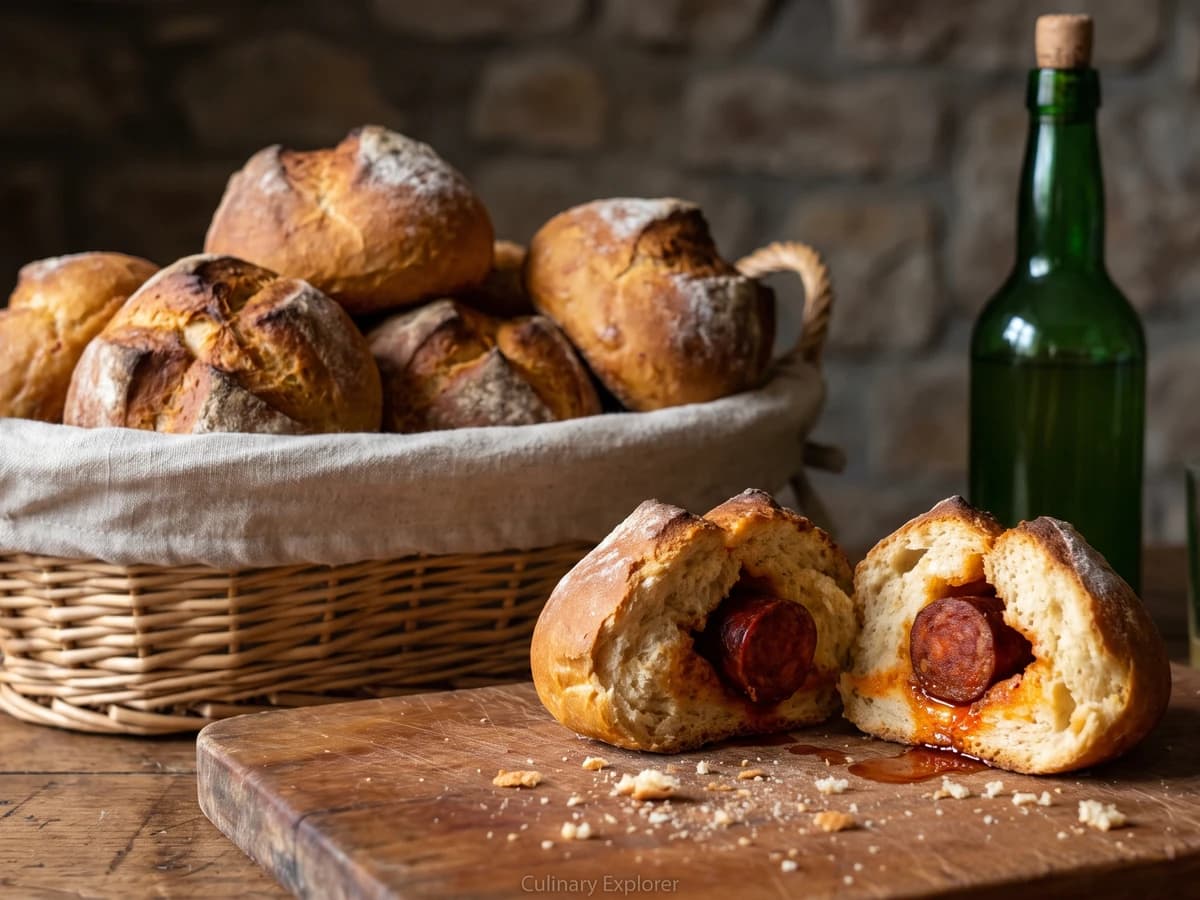
Asturias tucks a whole smoky chorizo inside each bread roll, so its pimentón-red fat seasons the crumb as it bakes. Seal the dough well, and you have the proper food of romerías and picnics.
A cooking platform built around craft, culture, and the stories behind what we eat.
Created by
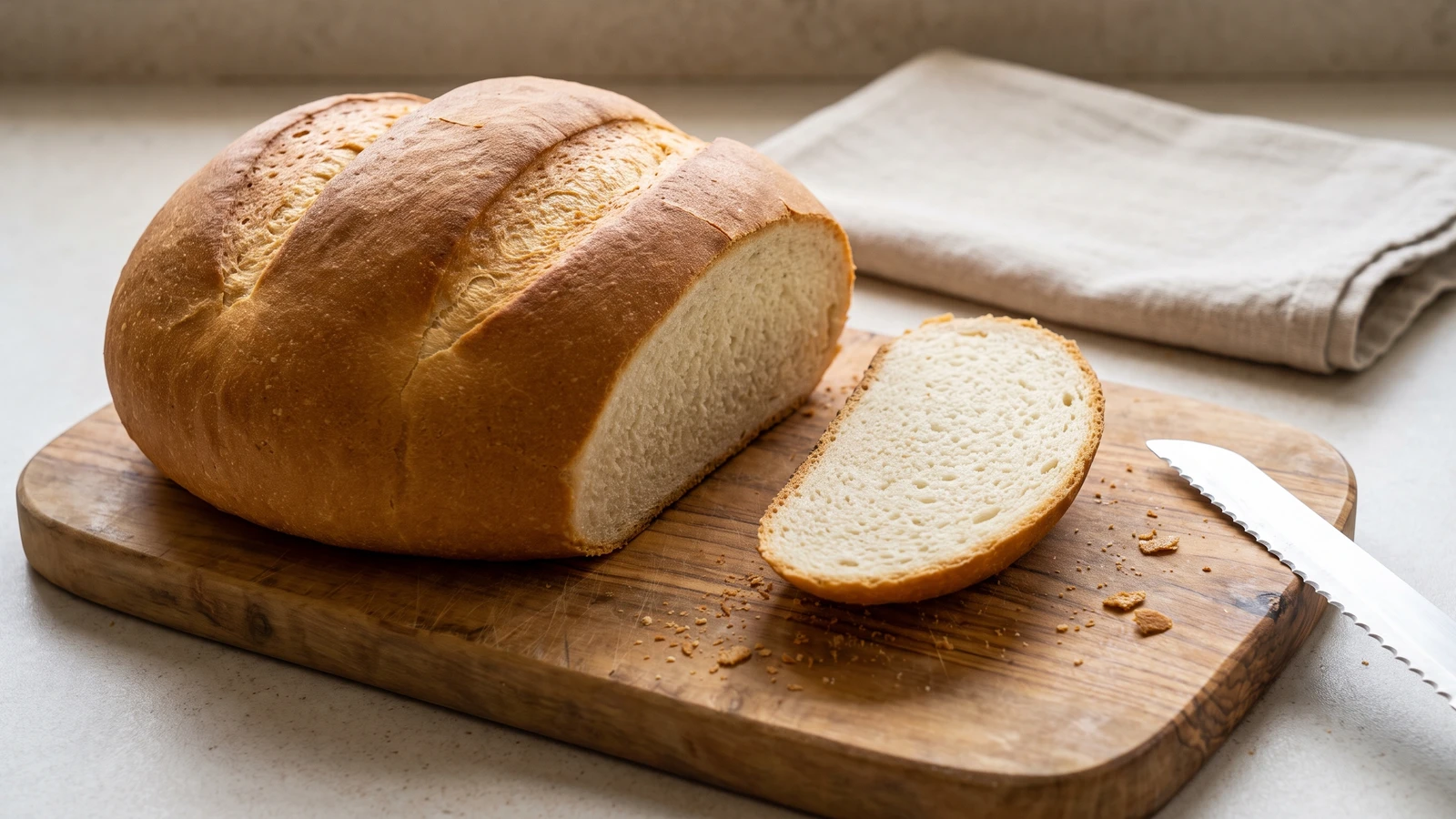
Córdoba's telera is a candeal loaf with a fine, close white crumb and crisp gold crust, refined under a rolling pin and marked with two deep cuts into its unmistakable montera shape.
Telera Cordobesa belongs to Córdoba, Andalucía: a broad candeal loaf with a pale, close-grained crumb, a crisp golden shell, and two deep diagonal cuts that open into the shape of a torero's montera. It is sturdy everyday bread, made for dipping into olive oil, carrying a sandwich, and becoming salmorejo cordobés once it has gone firm. A telera full of large holes may be handsome, but it is the wrong bread. This one should be dense, white, and even inside.
The method that decides it is the refinado, the repeated rolling and folding of a very stiff dough. That work presses out large pockets of air and aligns the gluten, giving candeal bread its fine crumb and clean bite. Don't soften the dough because it feels stubborn. Pésalo, no lo adivines, weigh it, don't guess. The rolling pin does the work that extra water would undo.
White candeal wheat flour gives the proper colour and firm, slightly sweet crumb. If you can't find it, use white bread flour with 11 to 12 percent protein. The loaf will be a little springier and less chalk-white, but the low hydration and careful refining still bring it close. My margin beside this bread says only, "no dejarla inflarse demasiado," don't let it swell too far. Proof it until plainly puffed, not doubled, cut it boldly, and it comes out. Siempre sale, si lo sigues.
Telera belongs to Córdoba and the wheat country of the Guadalquivir valley, where candeal flour was worked into durable everyday loaves and stale bread was put back to use in salmorejo and migas. It belongs to the family of panes bregados, stiff breads traditionally pounded or passed repeatedly through rollers to produce a white, compact crumb. Its two deep cuts divide the loaf into rounded sections associated with a torero's montera, giving Córdoba's telera its recognizable form.
Quantity
500g
divided into 100g for the pie de masa and 400g for the final dough
Quantity
235g
at about 20°C, divided into 55g for the pie de masa and 180g for the final dough
Quantity
4g
divided into 1g for the pie de masa and 3g for the final dough
Quantity
10g
| Ingredient | Quantity |
|---|---|
| white candeal wheat flourdivided into 100g for the pie de masa and 400g for the final dough | 500g |
| waterat about 20°C, divided into 55g for the pie de masa and 180g for the final dough | 235g |
| instant dried yeastdivided into 1g for the pie de masa and 3g for the final dough | 4g |
| fine sea salt | 10g |
Mix 100g flour, 55g water, and 1g yeast until no dry flour remains. This pie de masa, the small fermented dough that begins the loaf, will be quite firm. Knead it for 3 to 4 minutes, cover it tightly, and leave it at room temperature for 30 minutes. Refrigerate for 12 hours, or up to 18 hours.
Take the pie de masa from the refrigerator 30 minutes before mixing. Tear it into small pieces. Stir the remaining 3g yeast into the remaining 180g water, then add the pieces of fermented dough, the remaining 400g flour, and the salt. Squeeze and knead until the mixture gathers into a very stiff, rough ball. Cover it and rest for 20 minutes so the flour can take up the water.
Knead the rested dough firmly for 8 to 10 minutes. It will resist more than ordinary bread dough, and that is correct. Push with the heel of your palm, fold, and turn until the pieces of pie de masa disappear and the surface begins to smooth. Do not add water to make the work easier; a soft dough cannot give telera its close candeal crumb.
Flatten the dough with a heavy rolling pin, then roll it into a rectangle about 1cm thick. Fold it in thirds like a letter, turn it a quarter turn, and roll it out again. Repeat 8 to 10 times over 12 to 15 minutes. This is the refinado: it presses out coarse air pockets and makes the crumb fine and even. Finish when the dough feels smooth, satiny, and free of cracks.
Round the refined dough tightly and leave it covered for 15 minutes. Press it into a broad oval about 24cm long, 18cm wide, and 4 to 5cm thick. Tuck the edges underneath so the top remains taut and smooth, then place it seam-side down on baking parchment.
Cover the loaf loosely and proof at about 22°C for 75 to 100 minutes. It should grow by roughly half and feel lighter, but it must not double. Press a floured fingertip gently into one edge; the mark should return slowly and remain faintly visible. If the loaf becomes soft and swollen, the finished crumb will be too open.
While the loaf proofs, heat the oven to 230°C, conventional heat, with a heavy baking sheet or stone on the middle rack for at least 35 minutes. Just before baking, use a very sharp knife or bread lame to make two bold, parallel diagonal cuts across the top, each about 12cm long and 2cm deep. The cuts should divide the oval visually into three rounded sections and open clearly in the oven.
Slide the loaf and parchment onto the heated sheet or stone. Bake at 230°C for 10 minutes, then lower the oven to 210°C and bake for another 22 to 27 minutes. The telera is ready when its crust is an even deep gold, the base sounds hollow when tapped, and the centre reaches 96 to 98°C.
Move the loaf to a wire rack and leave it untouched for at least 2 hours. The close crumb continues setting as it cools; cut it early and the knife compresses it into a damp line. Once cold, slice through the montera sections with a serrated knife.
1 serving (about 64g)
Culinary guides, cultural storytelling, and the editorial depth that makes cooking meaningful.
Discover Culinary ExplorerChef Isabel
Asturias tucks a whole smoky chorizo inside each bread roll, so its pimentón-red fat seasons the crumb as it bakes. Seal the dough well, and you have the proper food of romerías and picnics.
Chef Isabel
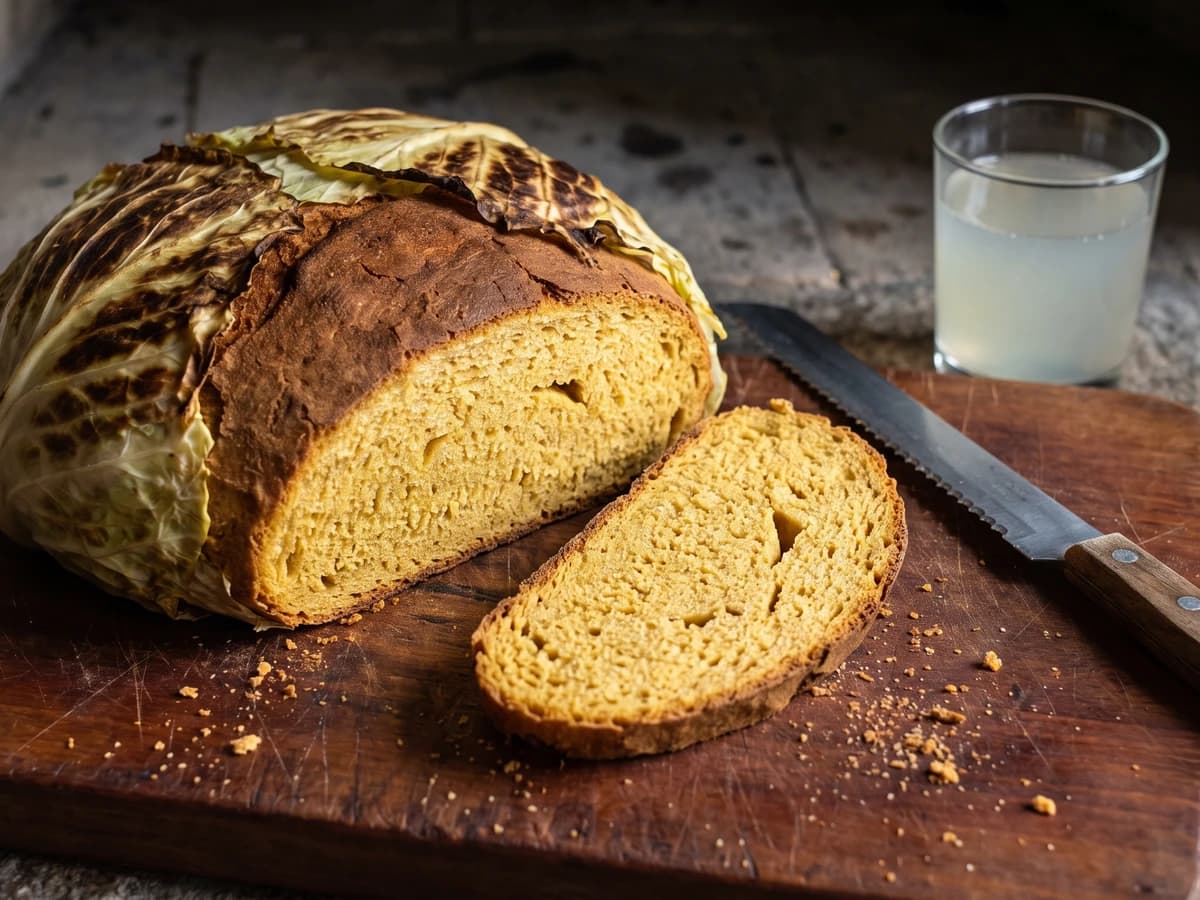
Asturian boroña is the plain corn loaf of the wet north, scalded with salted water and baked inside cabbage leaves until the crust darkens and the crumb stays close, gold, and moist.
Chef Isabel
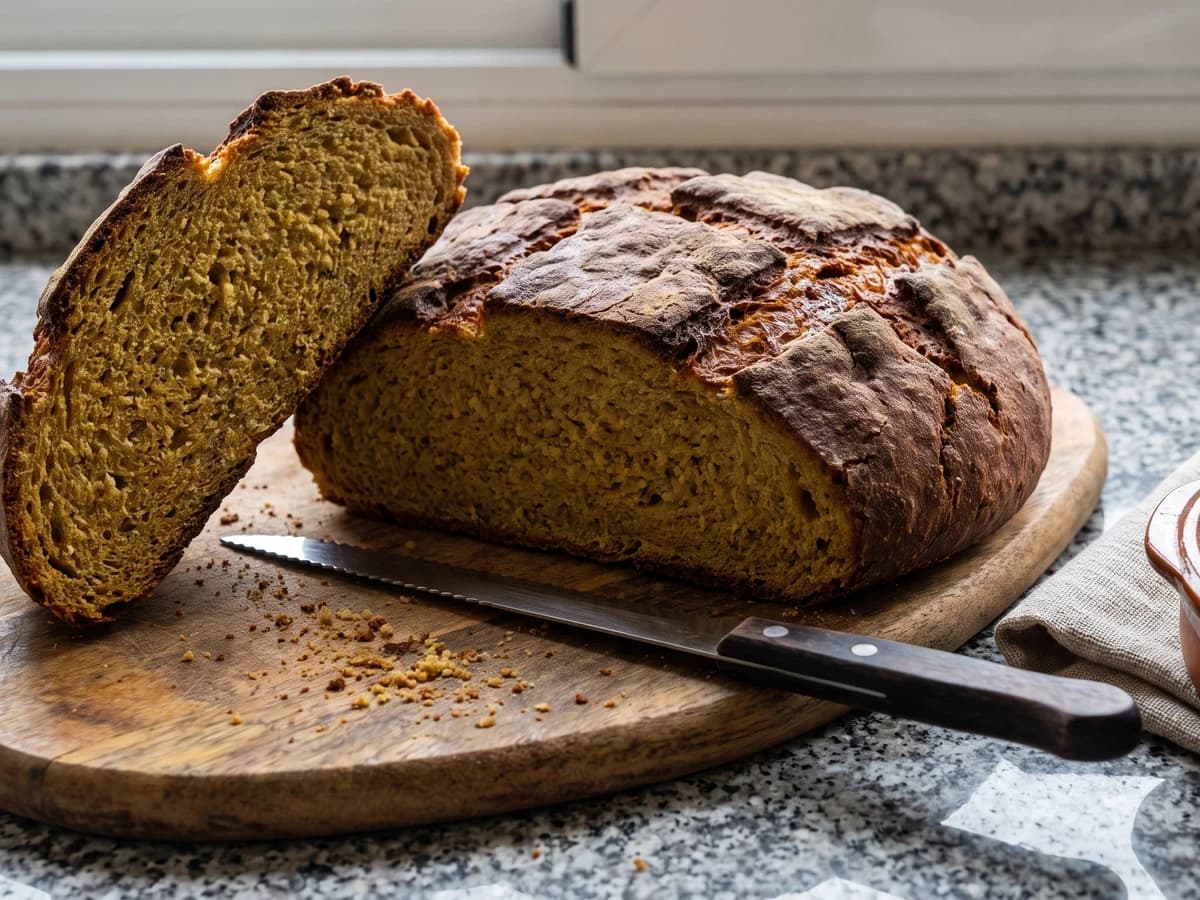
Broa Galega is Galicia's sturdy maize-and-rye loaf: scald the corn flour, give the damp dough time to rise, and the oven gives back a cracked crust and close, faintly sweet crumb.
Chef Isabel
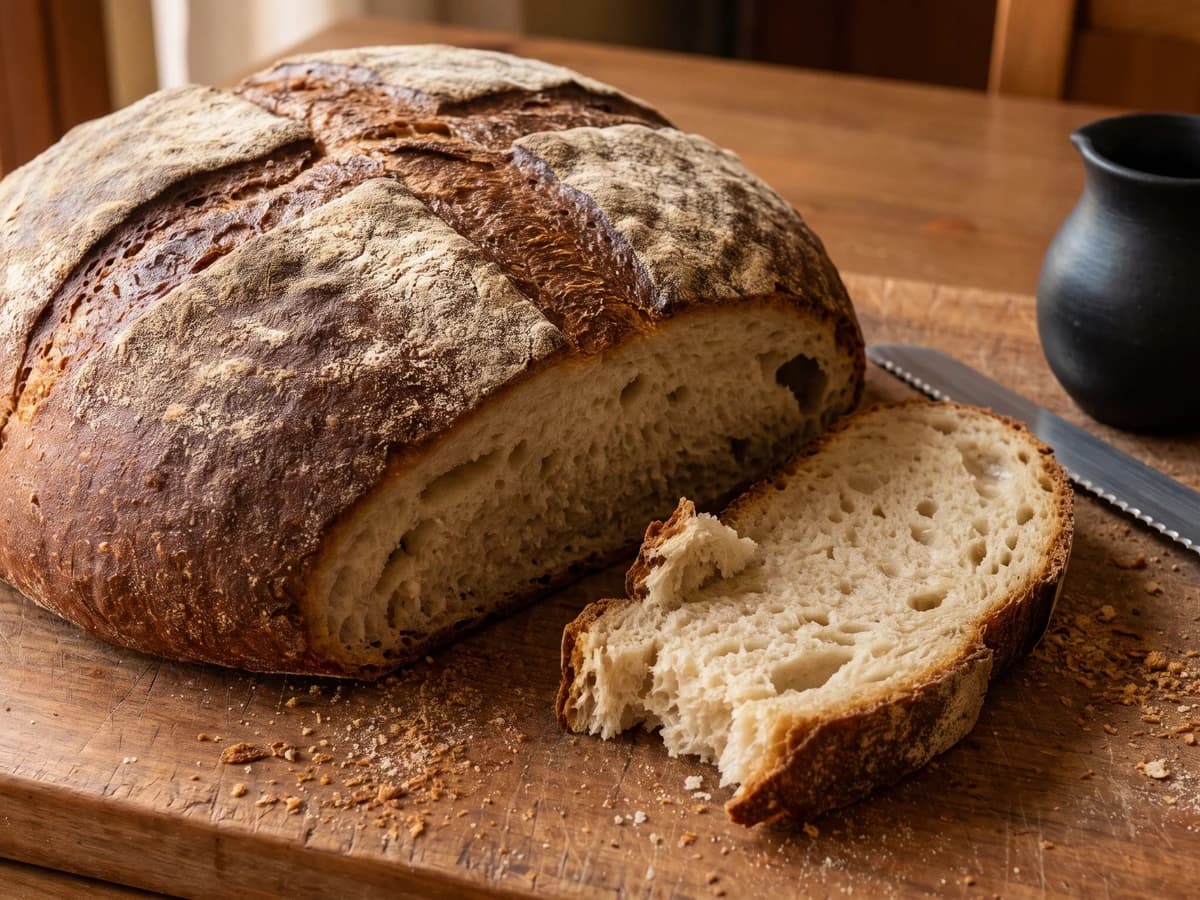
León's great pan de flama is a one-and-a-half-kilo round, slowly fermented and baked dark, with a thick crust that protects its moist, irregular crumb for days.