Chef Isabel
Bollo Preñao Asturiano
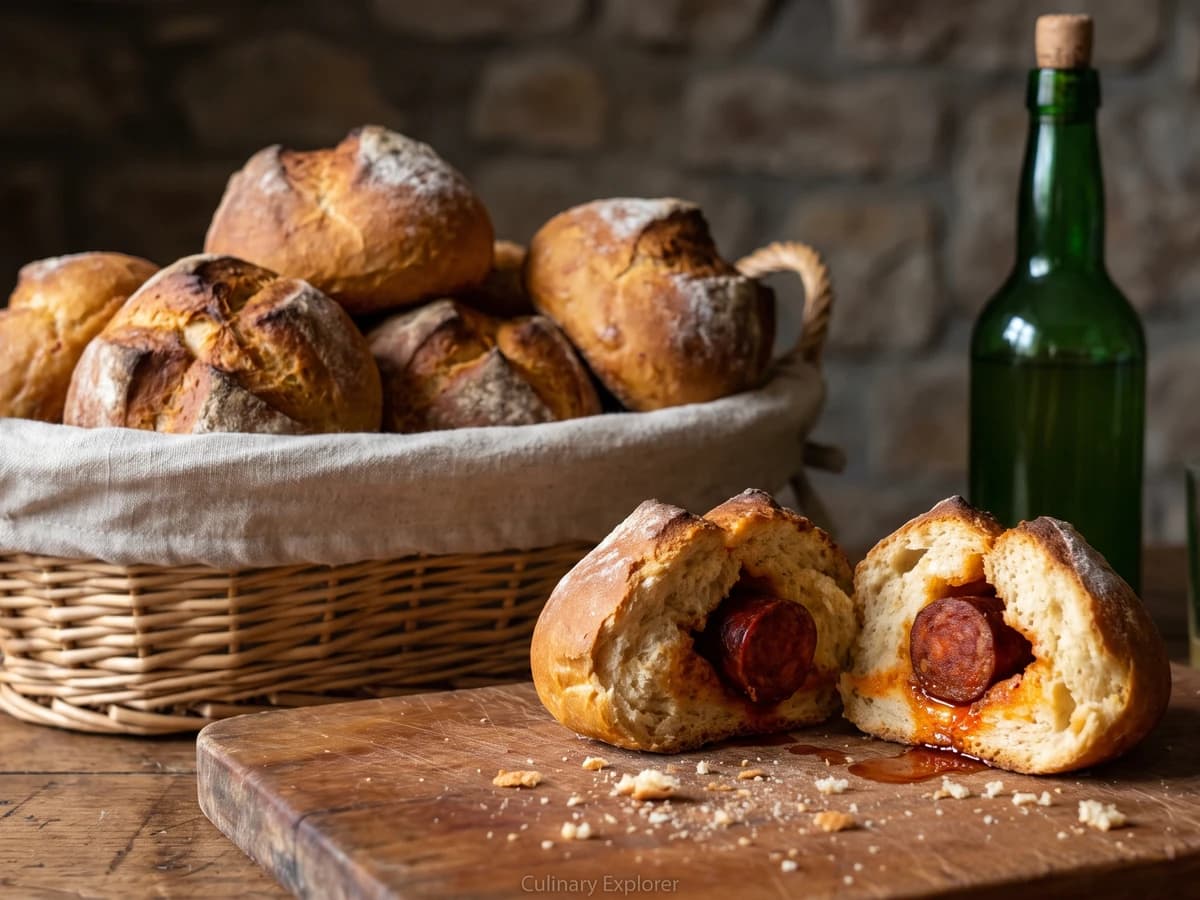
Asturias tucks a whole smoky chorizo inside each bread roll, so its pimentón-red fat seasons the crumb as it bakes. Seal the dough well, and you have the proper food of romerías and picnics.
A cooking platform built around craft, culture, and the stories behind what we eat.
Created by
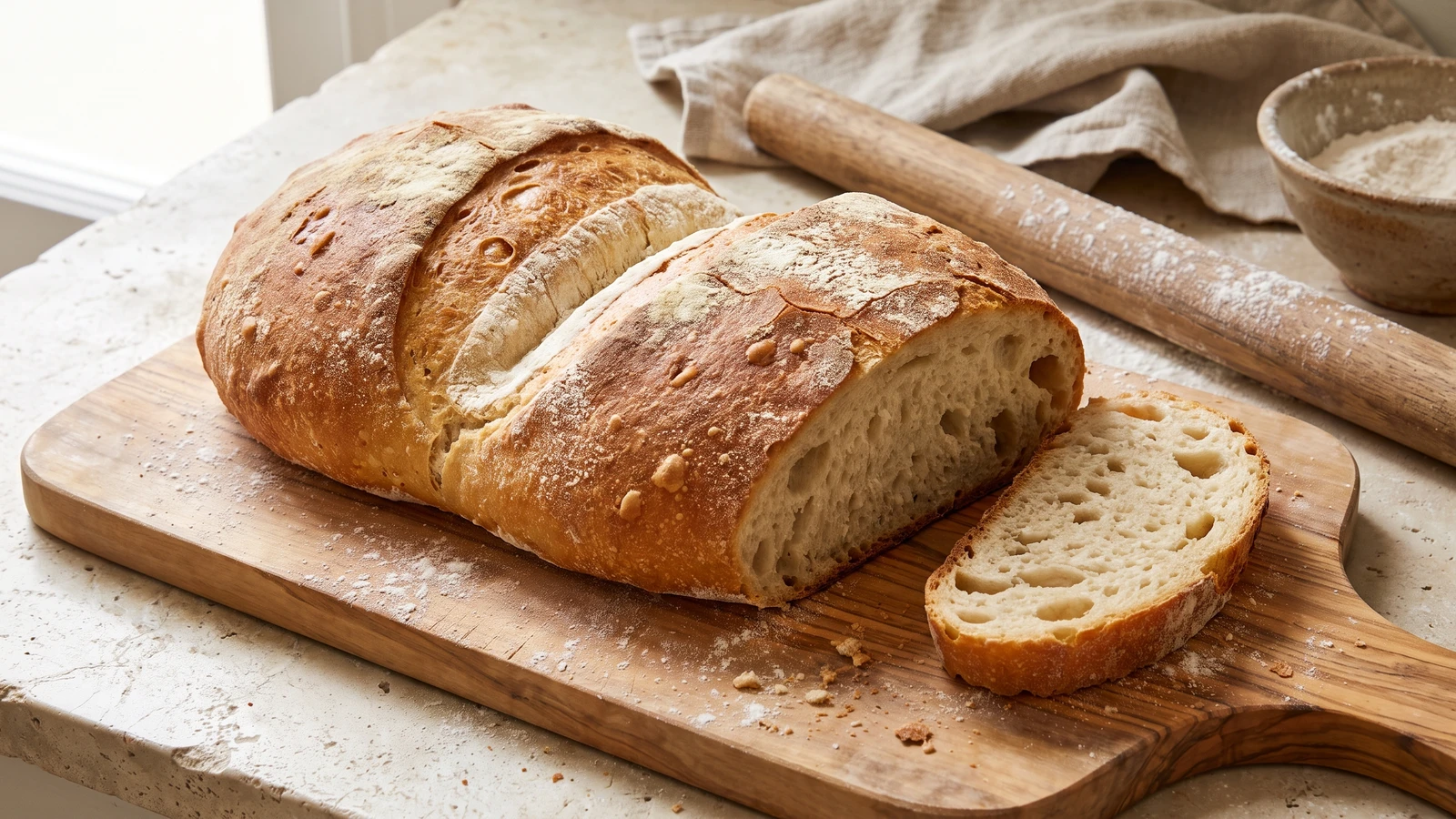
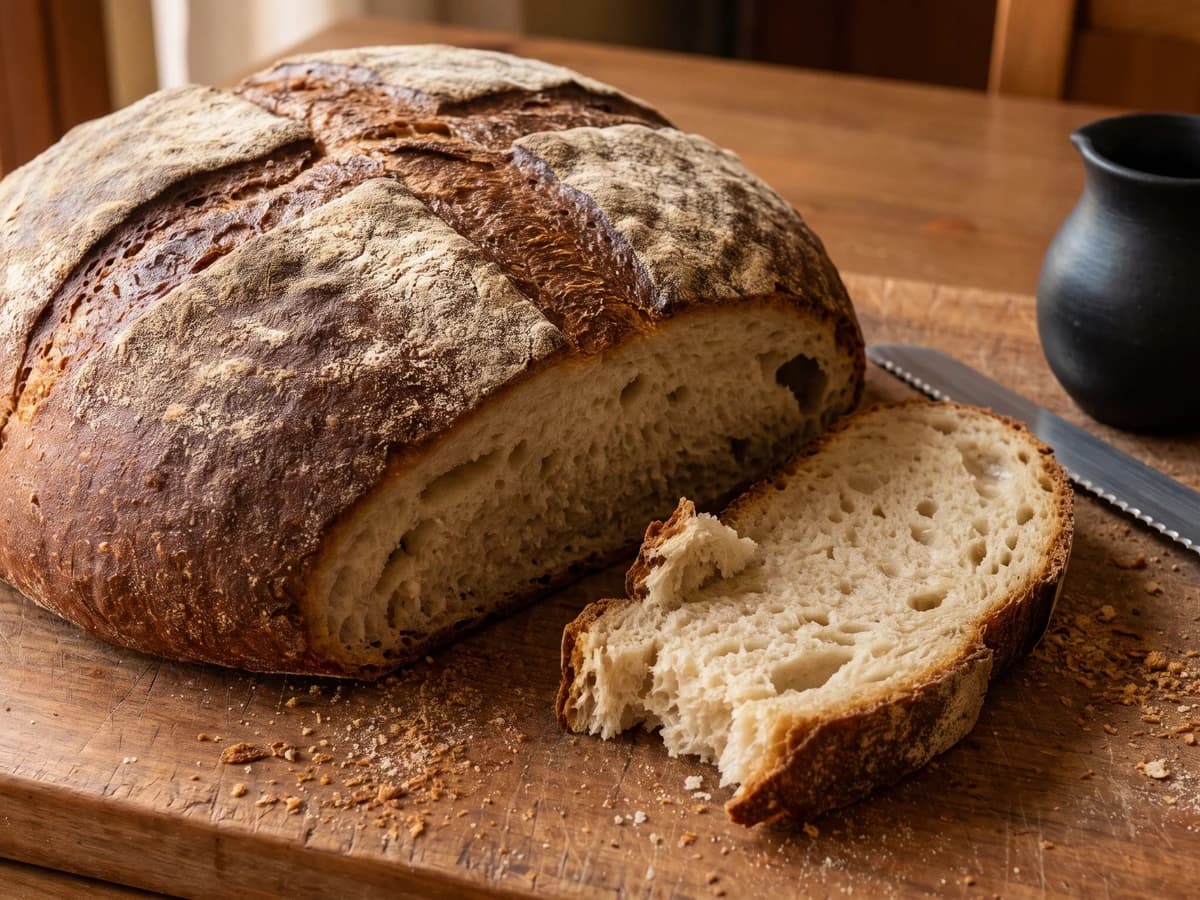
Taja is Navarra's folded hogaza: a golden, sturdy loaf whose deep middle crease comes from a thick wooden rod, never a knife, so the dough opens into two joined lobes as it bakes.
Taja is Navarra's folded hogaza, a plain wheat loaf recognized by the two joined lobes and deep band across its crown. That band isn't scored. A flour-dusted palo, a thick wooden rod, presses the dough almost to the table and folds it inward, leaving only a thin hinge between the halves. This is what makes a taja, not a round loaf wearing a decorative slash.
It is everyday table bread, built for thick slices, bocadillos, soups, and anything with juices worth gathering. The one method that decides it is the press. Make the fold too shallow and fermentation closes it; cut it with a blade and the loaf bursts like any other hogaza. Press firmly, proof it crease-down, then turn it crease-up for the oven. The compressed hinge guides the rise and opens into that unmistakable double crown.
Use harina panificable, bread-making flour with moderate strength. If all you can find is ordinary all-purpose flour, hold back 15g of the water at first; the crumb will be a little closer, but the bread remains sound. No hace falta haber pisado España. The Margin beside mine says, "Press farther than your nerves would like." Siempre sale, si lo sigues.
Taja belongs to Navarra's village bread tradition, when a substantial hogaza from the communal bake had to serve a household for several days. Its name points to the deep division across the loaf, traditionally formed with a thick wooden rod that compresses and folds the dough instead of cutting it. The resulting twin-lobed crown identifies the Navarrese loaf and gives it more well-browned crust while preserving a useful, tender crumb.
Quantity
500g, plus 20g for dusting
Quantity
325g
at 24°C, divided
Quantity
10g
Quantity
2g
Quantity
6g
| Ingredient | Quantity |
|---|---|
| white wheat bread flour, 11-12% protein | 500g, plus 20g for dusting |
| waterat 24°C, divided | 325g |
| fine sea salt | 10g |
| instant dry yeast | 2g |
| fresh baker's yeast (optional) | 6g |
Put 315g of the water in a large bowl and stir in the yeast. Add the 500g flour and mix until no dry patches remain. The dough will look rough and feel slightly firm. Cover the bowl and leave it for 20 minutes so the flour can drink properly before you knead.
Sprinkle the salt over the dough, add the reserved 10g water, and squeeze and fold until both disappear into it. Knead on an unfloured surface for 8 to 10 minutes. It is ready when smooth, elastic, and only faintly tacky; pull a small piece and it should stretch thin before tearing.
Return the dough to the bowl, cover, and leave at 22-24°C for 1 hour 45 minutes to 2 hours. After 45 minutes, lift each side of the dough and fold it toward the centre once. By the end it should have risen by about three quarters and feel aerated, but it need not double.
Turn the dough onto a lightly floured surface without crushing it flat. Draw the edges into the centre, turn it seam-side down, and rotate it against the worktop until you have a taut round about 20cm across. Cover and let it relax for 20 minutes.
Dust the loaf, the worktop, and a smooth wooden rod 2.5-3cm thick with flour. Lay the rod straight across the middle of the round and press slowly and firmly until only about 5mm of dough remains between it and the worktop. Rock the rod once toward you and once away, widening the depression into a floury fold about 3cm across, then lift it straight up. You should have two plump lobes joined by a thin, unbroken hinge. This pressure-fold is the taja. A knife makes an ordinary scored hogaza, which is another bread.
Flour a linen cloth generously. Turn the loaf over so the crease rests against the cloth, cover loosely, and leave for 45 to 60 minutes. Meanwhile, heat the oven to 240°C with a baking stone or an upside-down heavy baking sheet inside. The loaf is ready when a floured fingertip leaves a dent that returns slowly and incompletely.
Carefully turn the loaf crease-side up onto baking paper or a floured peel. Do not score it. Slide it onto the hot stone or sheet and bake for 15 minutes at 240°C. Lower the heat to 215°C and bake for another 25 minutes, until the crust is a deep wheat-gold, the fold is clearly open, and the base sounds hollow when tapped. The centre should register about 96°C if you use a thermometer.
Move the taja to a rack and leave it for at least 1 hour before slicing. The crumb is still setting while the loaf cools; cut too soon and it turns damp and gummy around the knife. Once cool, the crumb should be tender and irregular beneath a firm, well-browned crust.
1 serving (about 63g)
Culinary guides, cultural storytelling, and the editorial depth that makes cooking meaningful.
Discover Culinary ExplorerChef Isabel
Asturias tucks a whole smoky chorizo inside each bread roll, so its pimentón-red fat seasons the crumb as it bakes. Seal the dough well, and you have the proper food of romerías and picnics.
Chef Isabel
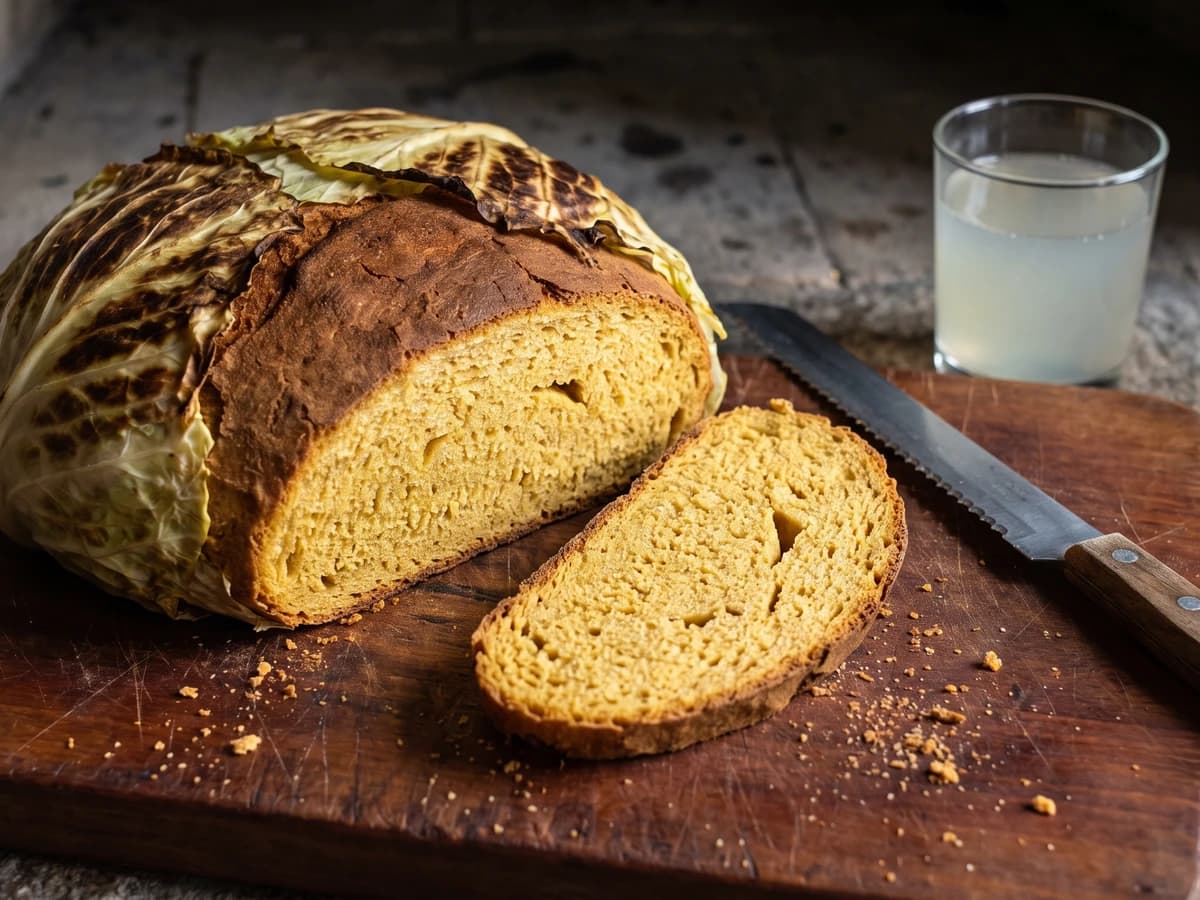
Asturian boroña is the plain corn loaf of the wet north, scalded with salted water and baked inside cabbage leaves until the crust darkens and the crumb stays close, gold, and moist.
Chef Isabel
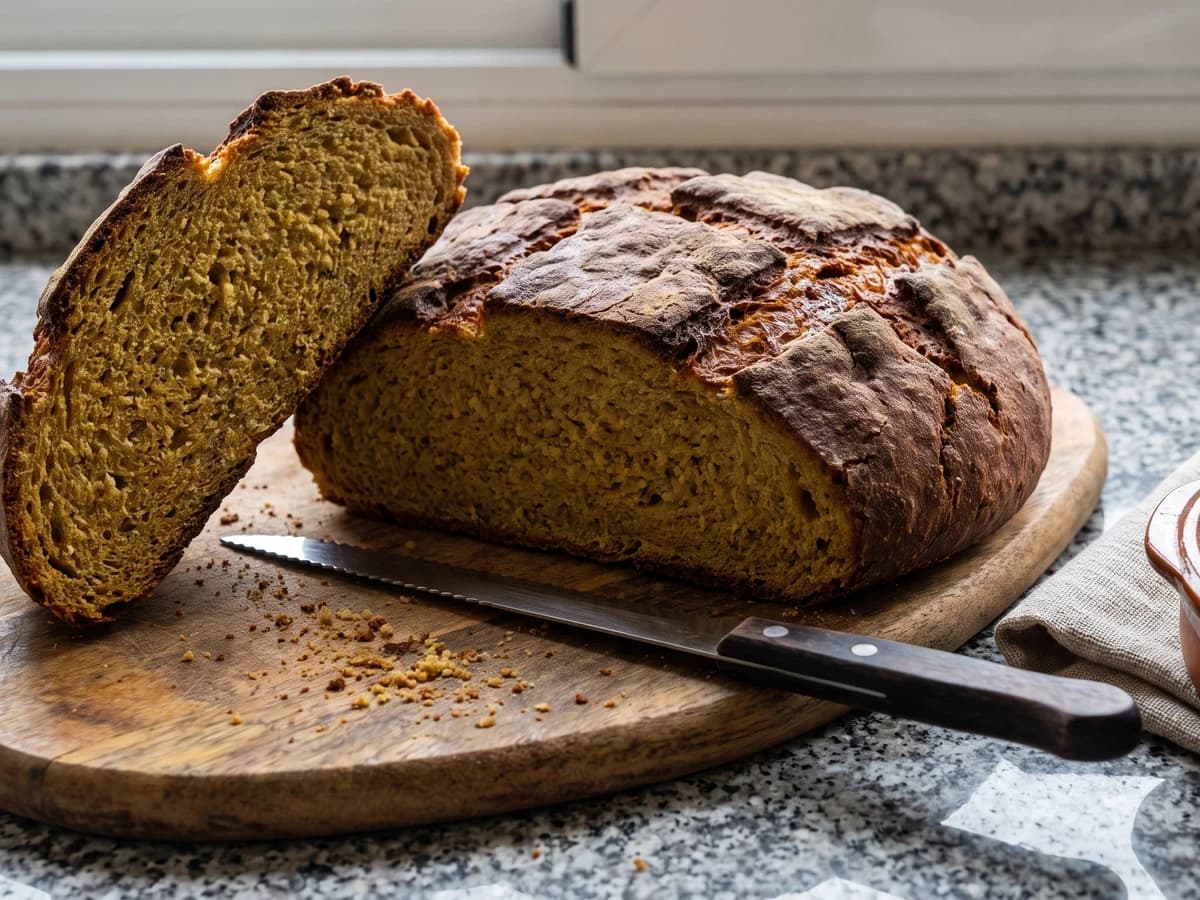
Broa Galega is Galicia's sturdy maize-and-rye loaf: scald the corn flour, give the damp dough time to rise, and the oven gives back a cracked crust and close, faintly sweet crumb.
Chef Isabel
León's great pan de flama is a one-and-a-half-kilo round, slowly fermented and baked dark, with a thick crust that protects its moist, irregular crumb for days.