
Chef Takumi
Agar Jelly with Anko and Fruit (あんみつ, Anmitsu)
Anmitsu looks like a tray of small tasks, but the work is calm: dissolve the kanten fully, chill the pieces clean, then let fruit, anko, and kuromitsu do the speaking.
A cooking platform built around craft, culture, and the stories behind what we eat.
Created by
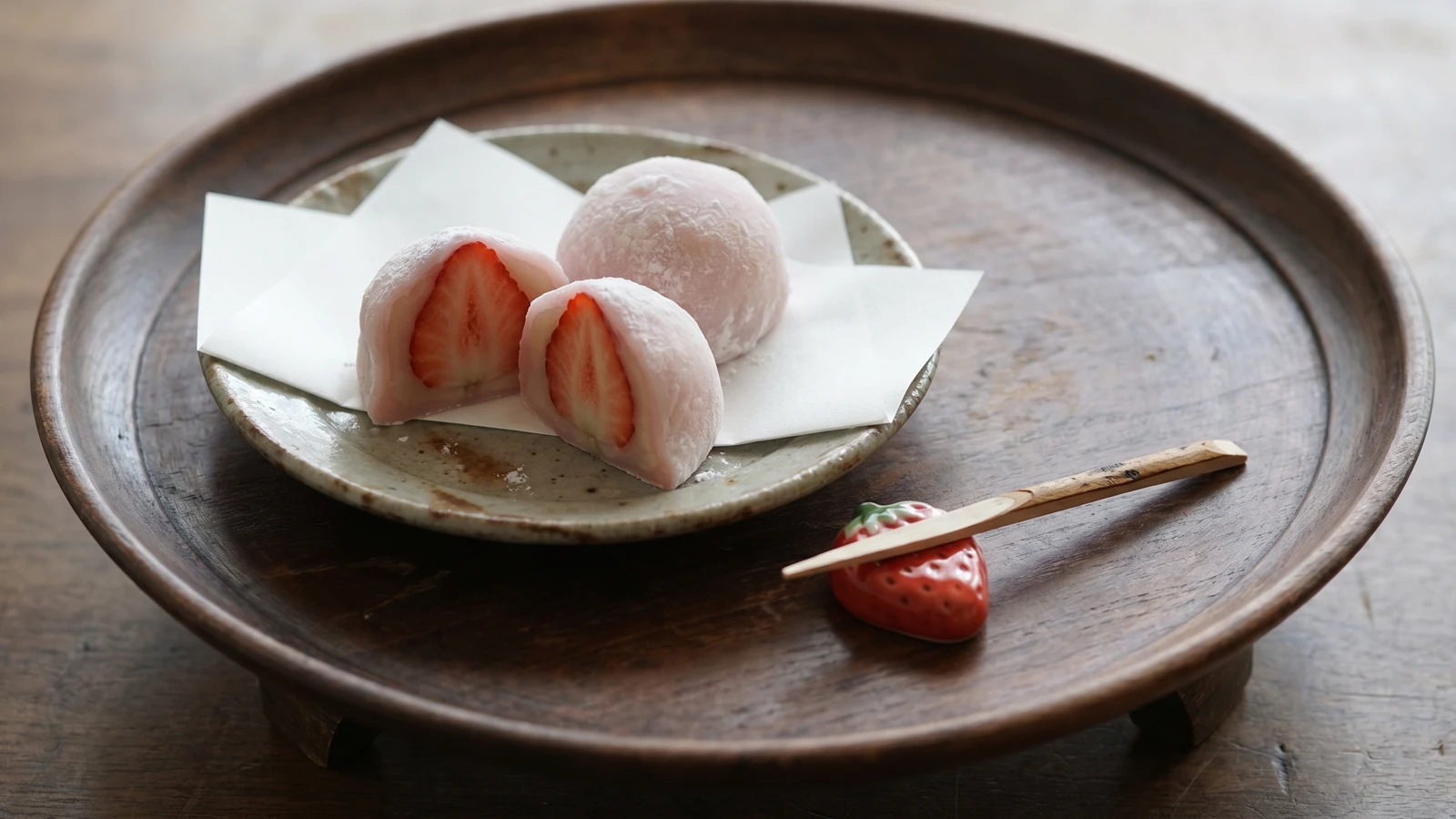
One bright strawberry, a thin coat of white-bean paste, and soft mochi pulled around it while warm. Ichigo daifuku is modern wagashi with an old lesson: freshness decides everything.
Awinter strawberry is a small, dangerous thing to hide inside mochi. Too soft and it leaks. Too tart and the sweet bean paste turns clumsy. Choose one that's glistening fresh, fragrant, and firm at the shoulder, and the confection is already leaning toward honmono, the real thing.
The fear is the mochi. People imagine it as some secret sweet-shop substance, when really it's rice flour, sugar, water, and heat. The one detail that decides it is timing: wrap while the mochi is warm and stretchy, because once it cools it stiffens and fights you like a polite but stubborn aunt. Dust your hands well with katakuriko, potato starch, and work calmly.
We coat the strawberry first in shiroan, smooth white-bean paste, not to be decorative, but to make a dry, even layer between fruit and mochi. The paste absorbs a little juice and gives your fingers something round to wrap. Keep the point of the berry upward, pinch the mochi closed underneath, and set it seam-side down. Leave it room on the plate. This is celebration food, but it should still have quiet manners.
Ichigo daifuku is a modern wagashi, appearing in Japan in the early 1980s rather than in the old tea-sweets canon. Several confectioners claim its invention, and Tokyo's Daikaku Tamaya is often cited for selling a version in 1985, in the late Shōwa period. Its rise followed the spread of winter greenhouse strawberries, which made a bright fresh berry available during the season when mochi sweets were already welcome.
Quantity
6
hulled and dried completely
Quantity
240g
Quantity
100g
Quantity
30g
Quantity
130ml
Quantity
1 to 2 drops
Quantity
for dusting
| Ingredient | Quantity |
|---|---|
| small firm strawberrieshulled and dried completely | 6 |
| shiroan (sweet white-bean paste) | 240g |
| shiratamako (glutinous rice flour) | 100g |
| granulated sugar | 30g |
| water | 130ml |
| red food coloring (optional) | 1 to 2 drops |
| katakuriko (potato starch) | for dusting |
Hull the strawberries, then pat them dry until no moisture clings to the surface. This matters more than it looks. Water makes the bean paste slide and later wets the mochi, so begin with fruit that is clean, firm, and dry. If the berries are large, this becomes a wrestling match; choose small ones, about 3cm across.
Divide the shiroan into 6 portions of about 40g each. Flatten one portion in your palm, set a strawberry point-side up in the center, and wrap the paste around the berry, leaving the pointed tip just covered or barely showing if you like the cut face to reveal it later. The paste makes the fruit round and gives the mochi an even shape to hold.
Put the shiratamako and sugar in a microwave-safe bowl. Add the water a little at a time, rubbing any lumps of flour between your fingers or a spatula until the mixture is smooth and pourable. Add one drop of red food coloring if you want pale pink mochi. Keep it faint; the color should suggest the strawberry, not shout over it.
Cover the bowl loosely and microwave at 600W for 1 minute. Stir with a wet spatula, then microwave for another 1 minute. Stir again, then microwave 30 to 60 seconds more, until the mochi turns glossy, thick, and slightly translucent. Stirring between bursts cooks it evenly, so you don't get raw flour at the edges and rubber in the middle.
Generously dust a tray with katakuriko and scrape the hot mochi onto it. Dust the top as well, then pat it into a rough rectangle and cut it into 6 pieces with a starch-dusted bench scraper or knife. Use enough starch to stop sticking, but brush away heavy clumps. Too much starch leaves the surface dry and dull.
While the mochi is still warm, stretch one piece into a round, keeping the center a little thicker than the edges. Set a shiroan-wrapped strawberry in the center, point-side down against the mochi if you want a smooth top, then pull the edges up and pinch them closed underneath. Warm mochi stretches cleanly; cold mochi tears and makes you believe in curses, which are not part of wagashi.
Set each daifuku seam-side down in a paper cup or on a starch-dusted tray. Brush off extra starch with a soft pastry brush. Serve the same day, ideally within a few hours, when the mochi is tender and the strawberry still tastes bright. Cut one in half only if you're serving it at once, because the exposed fruit will weep.
1 serving (about 95g)
Culinary guides, cultural storytelling, and the editorial depth that makes cooking meaningful.
Discover Culinary ExplorerChef Takumi
Anmitsu looks like a tray of small tasks, but the work is calm: dissolve the kanten fully, chill the pieces clean, then let fruit, anko, and kuromitsu do the speaking.

Chef Takumi
A cool square of almond-scented milk, set softly and served with mikan in thin syrup, is dinner-party food without theater. The only stern demand is restraint with the fragrance.

Chef Takumi
Azuki bar asks for patience twice: once while the beans soften, and once while the frozen bar yields. That hardness is not a flaw. It is the character of the thing.
Chef Takumi
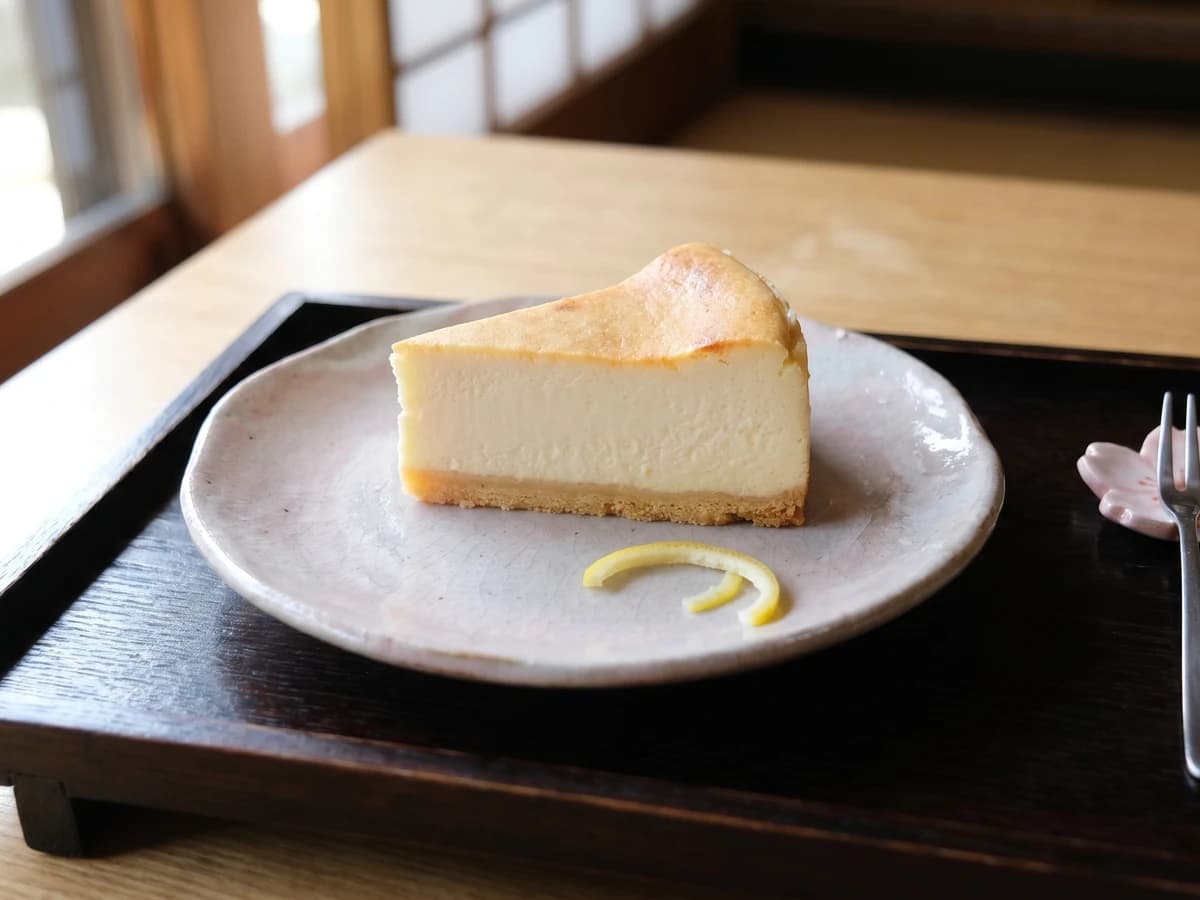
A Japanese baked cheesecake is not trying to float away. It is dense, smooth, and quietly tart, with a clean slice doing the work of decoration.