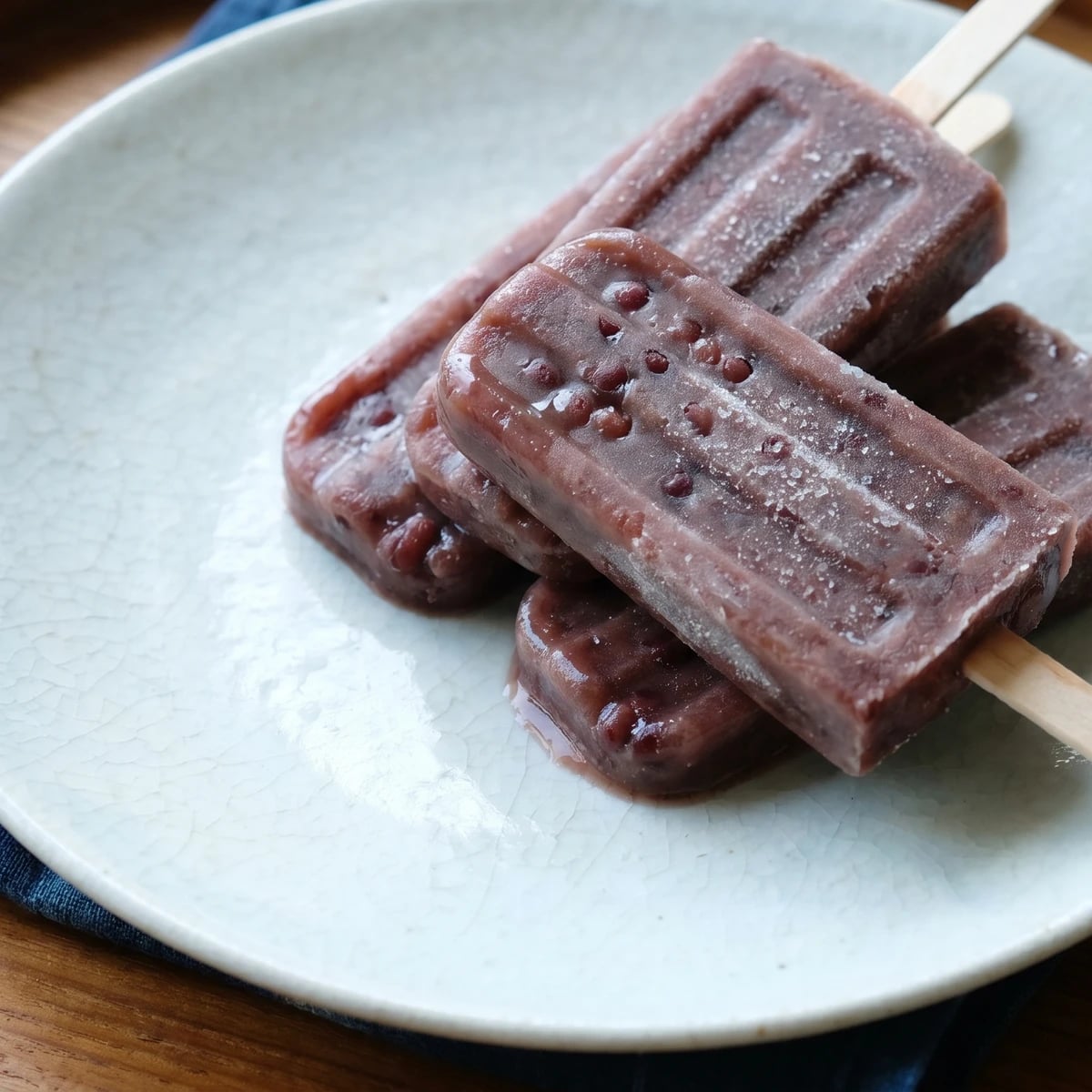
Azuki bar asks for patience twice: once while the beans soften, and once while the frozen bar yields. That hardness is not a flaw. It is the character of the thing.
Desserts
Japanese
Make Ahead
Freezer Friendly
Picnic
15 min
Active Time
1 hr 20 min cook•7 hr 35 min total
Yield8 popsicles
Azuki bar begins with a small red bean and a little stubbornness. Not yours, the bean's. Azuki looks modest in the pot, but it needs time before it gives up its clean, nutty sweetness, and no amount of fussing will hurry it honestly.
The first secret is not to make a rich paste. This is closer to frozen zenzai, the sweet red bean soup, than to a creamy Western ice. You simmer the beans until tender, sweeten them only after they soften, then freeze the beans in their own sweet broth. Sugar added too early tightens the skins, so we wait. The bean must open first, then it can drink.
What surprises people is the texture. A good azuki bar is hard when it comes from the freezer, almost comic in its seriousness, then it relaxes by degrees as you eat. That slowness is part of the pleasure. The flavor is plain, cool, and direct: azuki, sugar, a pinch of salt, nothing hidden.
This is summer food in the modern Japanese rhythm, the kind of thing bought from a freezer case and eaten on a hot walk, but the feeling underneath is older. Beans and sugar, restrained and clear, belong to wagashi, the Japanese sweet tradition. Freeze them on a stick and the form changes. The honesty does not.
The best-known azuki bar is Imuraya's Azuki Bar, introduced in Japan in 1973 by the Mie-based confectioner Imuraya. It took the familiar flavor of sweet azuki, used in zenzai and wagashi, and put it into the postwar freezer-case world of ice candies. Its famous hardness comes from a simple, water-rich frozen mixture with little air beaten in, which is why it softens slowly rather than eating like ice cream.
The technique, the tradition, and the story behind every dish.
Rinse the azuki in a bowl of cold water, rubbing them lightly with your fingers, then drain. Pick out any split beans or grit. This is a plain sweet, so the bean flavor has nowhere to hide.
2
Discard first boil
Put the beans in a pot with plenty of fresh water and bring to a boil. Boil for 5 minutes, then drain. This first boil, called shibukiri, removes some of the harshness from the skins so the finished bar tastes clean, not muddy.
3
Simmer until tender
Return the beans to the pot with 1.2 liters water. Bring to a gentle simmer and cook, uncovered, 50 to 70 minutes, adding a little water if the beans rise above the surface. They are ready when one bean crushes easily between finger and thumb. Do not add sugar yet. Sugar tightens the skins before the centers soften, and then no sermon from the stove will save them.
Keep the simmer quiet. A hard boil breaks the beans and clouds the broth before the flavor has settled.
4
Sweeten slowly
Stir in the sugar in two additions, waiting 3 minutes between them, then add the mizuame and salt. Simmer 10 to 15 minutes more, until the broth tastes clearly sweet and the beans are glossy. The syrup helps the frozen bar bite cleanly instead of turning icy and brittle.
5
Measure the mixture
You should have about 700 to 750 ml of sweet bean mixture. If it is much thinner, simmer a few minutes longer. If it is too thick, add hot water by the spoonful. The bars need enough broth to freeze around the beans, but not so much water that the flavor disappears.
6
Fill the molds
Let the mixture cool until warm, then spoon it into popsicle molds, dividing the beans evenly. Tap the molds gently on the counter to settle the beans and release large air pockets. Insert sticks and leave a little headroom, since the mixture expands as it freezes.
7
Freeze solid
Freeze at least 6 hours, preferably overnight. Unmold by dipping the outside of each mold briefly in cool water, not hot. Hot water melts the surface too fast and blurs the clean shape you waited for.
8
Eat slowly
Serve straight from the freezer and give it a minute before biting hard. Azuki bar is meant to be firm at first, then to soften little by little, releasing the bean flavor as the ice relaxes.
Chef Tips
•Choose dried azuki with a deep red color and a little shine, and avoid bags with many broken beans. Old beans take longer to soften and give a duller broth.
•Mizuame is the Japanese starch syrup used in sweets. Light corn syrup is a sensible stand-in here because it does the same work in the freezer, keeping the texture from becoming all hard ice.
•Do not puree the whole pot. A few broken beans are welcome, but this bar should keep the small pleasure of whole azuki suspended in the ice.
•The bars are firm by nature. Let one stand for a minute before eating, especially if your freezer runs very cold.
Advance Preparation
•The sweetened azuki mixture can be made 2 days ahead and kept refrigerated before freezing.
•Frozen azuki bars keep well for 1 month, wrapped or stored in an airtight container once unmolded.
Frequently Asked Questions
Nutrition Information
1 serving (about 110g)
Calories
165 calories
Total Fat
0 g
Saturated Fat
0 g
Trans Fat
0 g
Unsaturated Fat
0 g
Cholesterol
0 mg
Sodium
80 mg
Total Carbohydrates
36 g
Dietary Fiber
3 g
Sugars
20 g
Protein
5 g
Where cooking meets culture.
Culinary guides, cultural storytelling, and the editorial depth that makes cooking meaningful.