
Chef Takumi
Agar Jelly with Anko and Fruit (あんみつ, Anmitsu)
Anmitsu looks like a tray of small tasks, but the work is calm: dissolve the kanten fully, chill the pieces clean, then let fruit, anko, and kuromitsu do the speaking.
A cooking platform built around craft, culture, and the stories behind what we eat.
Created by
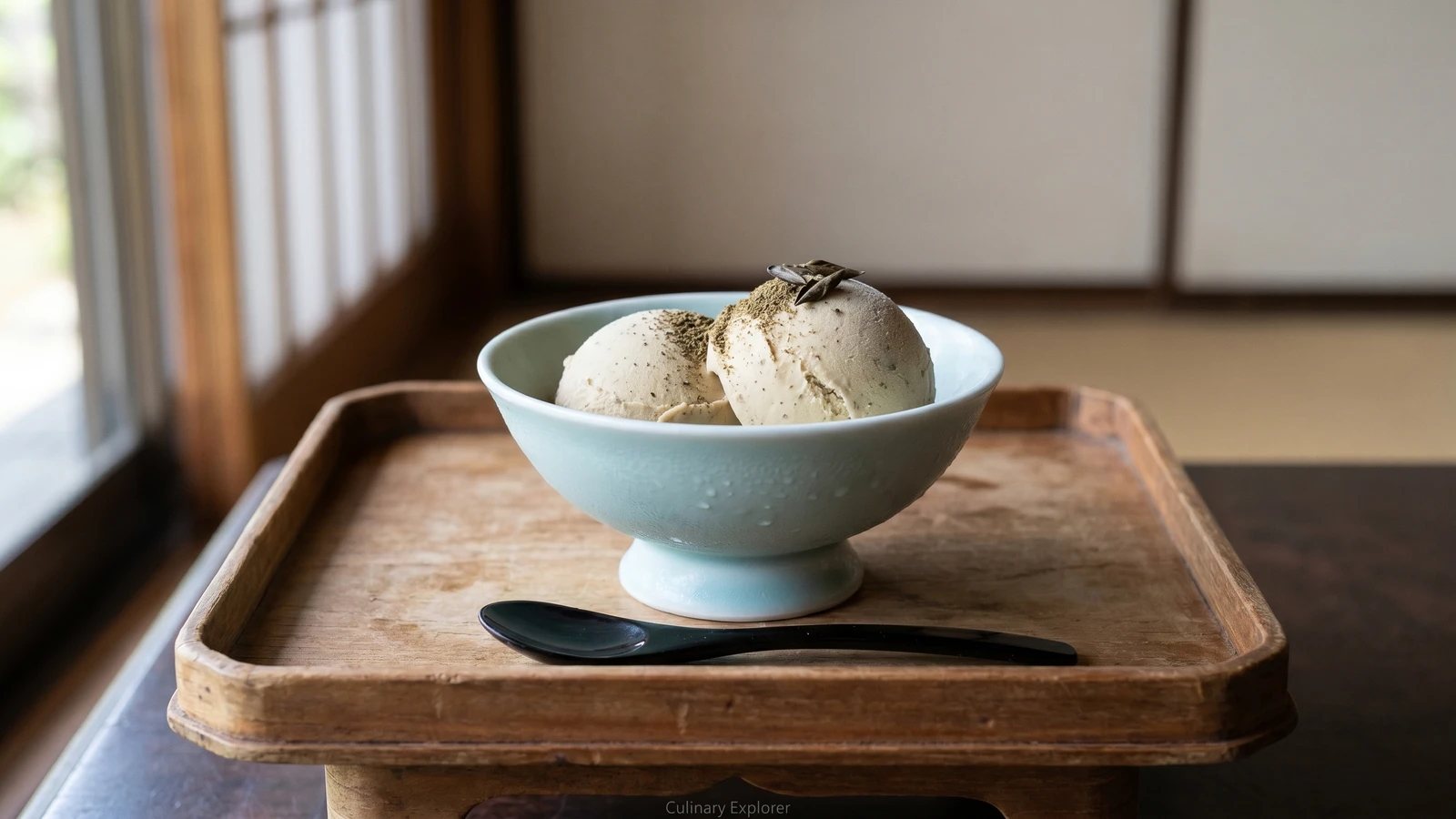
Hōjicha makes ice cream deeper than matcha: roasted, nutty, a little smoky, and calm. Steep the tea gently, strain it cleanly, and the flavor comes through without heaviness.
Hōjicha is green tea after the fire has had its say. The leaves are roasted until their green sharpness turns brown, fragrant, and almost nutty. In ice cream, that roasted note does something useful: it keeps the sweetness from becoming childish. A small mercy, because dessert has suffered enough from trying to be impressive.
The one detail that decides this dish is the steeping. Boil the tea hard and it gives you bitterness before it gives you depth. Warm the milk and cream, add the hōjicha, cover the pot, and let the leaves steep quietly. You're asking for aroma, not punishment. The liquid should turn tan and smell like toasted grain and warm wood.
The custard is plain work, not difficult. Egg yolks give the ice cream its body, but they need gentle heat. Cook the base only until it lightly coats a spoon, because a hard boil turns smooth custard into sweet scrambled egg, and no amount of poetry fixes that. Strain it well, chill it fully, then churn it cold. That patience is what makes the texture fine.
This is a modern Japanese sweet, but the feeling is familiar to the table: restrained, seasonal, and built around one clear flavor. Serve a small scoop in a chilled bowl and leave it room. Honmono doesn't need a tower of toppings. It needs good tea and a calm hand.
Hōjicha is usually traced to Kyoto in the 1920s, when tea merchants began roasting bancha, stems, and broken leaves over high heat to make a fragrant brown tea with less sharpness than sencha. Ice cream entered Japan earlier, in the Meiji period, with one famous account placing Japan's first commercial ice cream at Yokohama's Bashamichi in 1869. Hōjicha ice cream belongs to the later meeting of Japanese tea culture and yōgashi, Western-style sweets adapted into everyday Japanese confectionery.
Quantity
2 cups
Quantity
1 cup
Quantity
25g
Quantity
5
Quantity
2/3 cup
Quantity
1 tablespoon
Quantity
1/4 teaspoon
| Ingredient | Quantity |
|---|---|
| whole milk | 2 cups |
| heavy cream | 1 cup |
| loose-leaf hōjicha | 25g |
| large egg yolks | 5 |
| granulated sugar | 2/3 cup |
| glucose syrup or mild honey (optional) | 1 tablespoon |
| fine sea salt | 1/4 teaspoon |
Put the milk and cream in a heavy saucepan and warm them over medium-low heat until small bubbles gather at the edge and the surface looks gently quivering. Don't let it boil. Dairy boiled hard takes on a cooked taste, and the tea has enough roast of its own.
Take the pan off the heat, stir in the hōjicha, cover, and steep for 10 minutes. The liquid should turn light brown and smell of toasted grain, nuts, and warm leaves. Longer isn't always better here. Past a point, the tea gives bitterness instead of fragrance.
Strain the steeped dairy through a fine-mesh sieve into a clean bowl, pressing only lightly on the leaves. A gentle press returns the trapped cream. A hard squeeze pulls out rough tannins, and then the bitterness follows you all the way to the spoon.
In a separate bowl, whisk the egg yolks, sugar, glucose syrup if using, and salt until the mixture looks thick and slightly paler. The sugar begins dissolving into the yolks, which helps the custard cook evenly instead of tightening in little grains.
Slowly ladle about one cup of the warm hōjicha dairy into the yolks while whisking constantly, then pour the loosened yolk mixture back into the saucepan. This gradual warming is tempering. It brings the eggs up gently, so they thicken the base instead of curdling on contact.
Cook over low heat, stirring constantly with a heatproof spatula and scraping the bottom of the pan, until the custard lightly coats the spatula, 5 to 8 minutes. If you use a thermometer, aim for 170 to 175 F. The base should look smooth and slightly thicker, never bubbling hard.
Strain the custard into a clean container, then cool it quickly over an ice bath or let it stand briefly before refrigerating. Chill at least 4 hours, preferably overnight. A fully cold base churns finer because the ice crystals form smaller and faster.
Churn in an ice cream maker according to the machine's directions until thick and softly mounded. Pack into a chilled container, press parchment directly on the surface, cover, and freeze until firm, about 2 hours. The parchment keeps the surface from drying and picking up freezer smells.
Let the ice cream stand at room temperature for 5 minutes before scooping. Serve one or two small scoops in chilled bowls, with a pinch of roasted tea powder if you like. Keep the portion modest. The flavor is roasted and quiet, and it reads better when it isn't buried under abundance.
1 serving (about 150g)
Culinary guides, cultural storytelling, and the editorial depth that makes cooking meaningful.
Discover Culinary ExplorerChef Takumi
Anmitsu looks like a tray of small tasks, but the work is calm: dissolve the kanten fully, chill the pieces clean, then let fruit, anko, and kuromitsu do the speaking.

Chef Takumi
A cool square of almond-scented milk, set softly and served with mikan in thin syrup, is dinner-party food without theater. The only stern demand is restraint with the fragrance.

Chef Takumi
Azuki bar asks for patience twice: once while the beans soften, and once while the frozen bar yields. That hardness is not a flaw. It is the character of the thing.
Chef Takumi
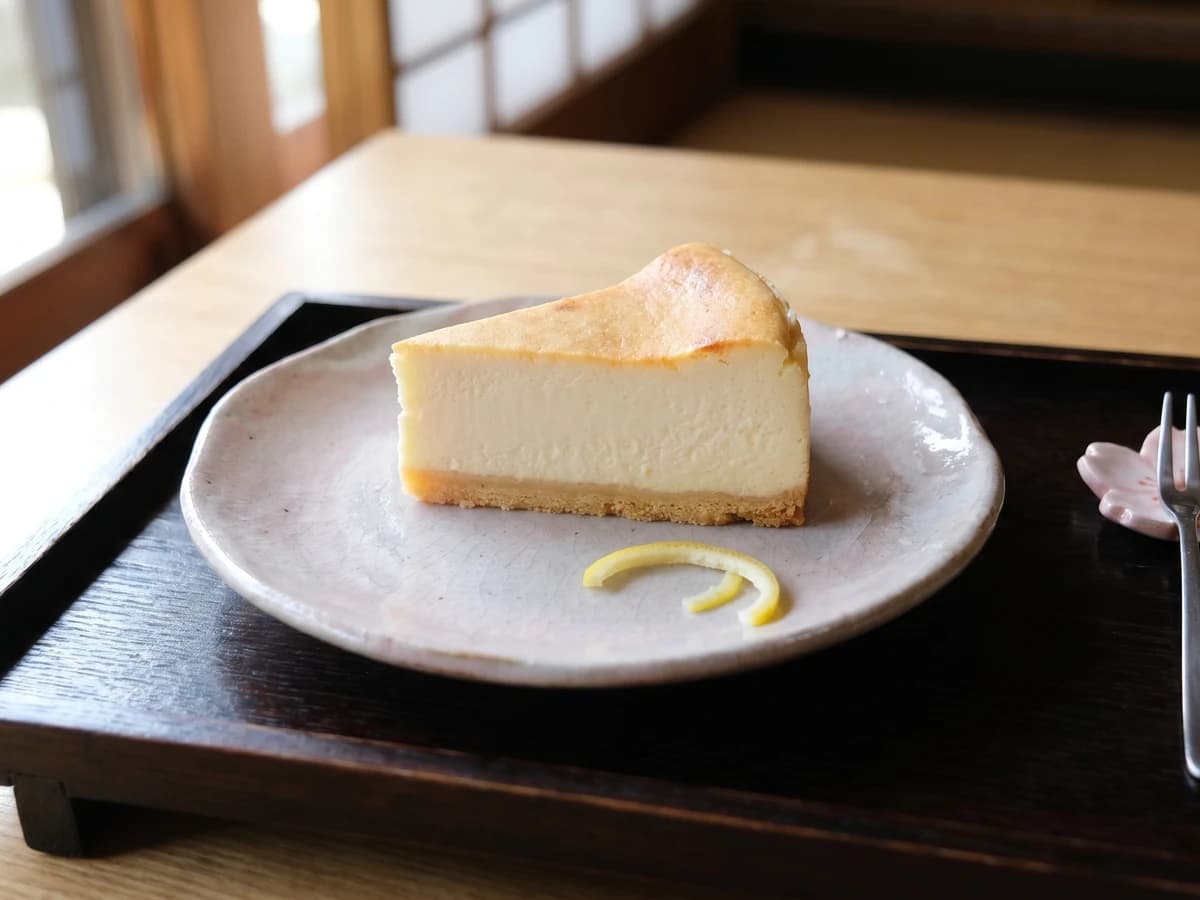
A Japanese baked cheesecake is not trying to float away. It is dense, smooth, and quietly tart, with a clean slice doing the work of decoration.