
Chef Takumi
Agar Jelly with Anko and Fruit (あんみつ, Anmitsu)
Anmitsu looks like a tray of small tasks, but the work is calm: dissolve the kanten fully, chill the pieces clean, then let fruit, anko, and kuromitsu do the speaking.
A cooking platform built around craft, culture, and the stories behind what we eat.

Created by
Kanten cubes, sweet azuki, shiratama, fruit, and vanilla ice cream are stacked cold, then tied together with kuromitsu. The pleasure is contrast in each spoonful, not complication.
Cream anmitsu looks busy because every small thing has its own place: clear kanten cubes, sweet azuki, white shiratama, fruit, cold vanilla, and dark kuromitsu. It is not difficult. It is a bowl of contrasts, and most of the work is waiting for things to chill.
The first secret is kanten, the firm seaweed jelly that gives anmitsu its clean bite. Gelatin wobbles and melts under warmth; kanten sets with a sharp edge and holds it beside fruit, syrup, and ice cream. Boil it fully or it won't dissolve. Cut it small or it won't catch the syrup. That is the whole stern lecture, mercifully short.
Choose fruit at its shun, its prime, and let the season show. Peach and melon in summer, strawberries in spring, mikan in winter. The sweet-shop version often uses canned mikan and white peach, and they belong here when they taste bright and clean. Keep everything cold, add the ice cream last, and drizzle the kuromitsu just before serving. We don't bury the bowl in syrup. Each bite should change: cool cream, earthy anko, springy shiratama, clear kanten, and a little salt from the red peas. Leave it room.
Anmitsu is a twentieth-century Tokyo descendant of mitsumame, a sweet of kanten, red peas, fruit, and syrup that took shape in urban sweet shops. Ginza Wakamatsu, founded in 1894, is widely credited with selling the first anmitsu in 1930 by adding an, sweet azuki paste, to mitsumame. Cream anmitsu became familiar in the Shōwa-period coffee shop and department-store dessert counter, where vanilla ice cream joined the older kanten, beans, anko, and kuromitsu.
Quantity
4g
Quantity
2 cups
for the kanten
Quantity
120g
chopped
Quantity
1/2 cup
for the kuromitsu
Quantity
1 pinch
Quantity
100g
Quantity
90 to 100ml
for the shiratama dough
Quantity
1 cup
chilled
Quantity
1/3 cup
drained
Quantity
2 cups
cut bite-size
Quantity
4 small scoops
Quantity
4
for the top
| Ingredient | Quantity |
|---|---|
| powdered kanten (kanten-ko) | 4g |
| waterfor the kanten | 2 cups |
| kokutō (Japanese black sugar)chopped | 120g |
| waterfor the kuromitsu | 1/2 cup |
| sea salt | 1 pinch |
| shiratamako | 100g |
| waterfor the shiratama dough | 90 to 100ml |
| tsubu-an (coarse sweet azuki paste)chilled | 1 cup |
| salted red peas (aka endō mame)drained | 1/3 cup |
| mixed seasonal fruitcut bite-size | 2 cups |
| vanilla ice cream | 4 small scoops |
| fresh cherries or strawberry halves (optional)for the top | 4 |
Stir the kanten powder into 2 cups water while the water is still cold, then bring it to a full boil over medium heat, stirring often. Once it boils, keep it at a lively simmer for 2 minutes. Kanten has to be truly dissolved or the set turns grainy and weak. Pour it into a nagashikan or an 8-inch square pan, let it cool until firm, then chill.
Put the kokutō, 1/2 cup water, and salt in a small saucepan. Warm gently, stirring until the sugar dissolves, then simmer for 3 to 4 minutes. Stop while it still pours easily; it thickens as it cools, and a syrup cooked too far lands in heavy drops on the ice cream. Strain if the sugar leaves mineral flecks, then chill completely.
Put the shiratamako in a bowl and add the water little by little, kneading with your fingers. Stop when the dough feels soft as an earlobe, the old mimitabu cue. Different flours drink differently, so the feel matters more than the exact last spoonful. Roll into 16 small balls and press a shallow dimple in each center so they cook evenly.
Bring a pot of water to a steady boil. Drop in the shiratama and stir once so they don't stick to the bottom. When they float, cook 1 minute more; floating tells you the outside has set, and the extra minute cooks the center. Lift them into cold water to firm the surface and wash away loose starch.
Cut the firm kanten into 1/2-inch cubes. Drain the fruit well and cut it into small, neat pieces. Chill the serving bowls, because a cold bowl gives the ice cream a little more grace at the table. If using canned mikan or white peach, drain them carefully so the syrup doesn't thin the kuromitsu.
Divide the kanten among four chilled bowls, leaving some open space. Arrange the fruit in odd little groups, scatter in the salted red peas, and add a spoonful of tsubu-an and four shiratama to each bowl. Set the ice cream on last, then drizzle each serving with 1 to 2 tablespoons kuromitsu. Serve at once, with extra syrup at the table.
1 serving (about 435g)
Culinary guides, cultural storytelling, and the editorial depth that makes cooking meaningful.
Discover Culinary ExplorerChef Takumi
Anmitsu looks like a tray of small tasks, but the work is calm: dissolve the kanten fully, chill the pieces clean, then let fruit, anko, and kuromitsu do the speaking.

Chef Takumi
A cool square of almond-scented milk, set softly and served with mikan in thin syrup, is dinner-party food without theater. The only stern demand is restraint with the fragrance.

Chef Takumi
Azuki bar asks for patience twice: once while the beans soften, and once while the frozen bar yields. That hardness is not a flaw. It is the character of the thing.
Chef Takumi
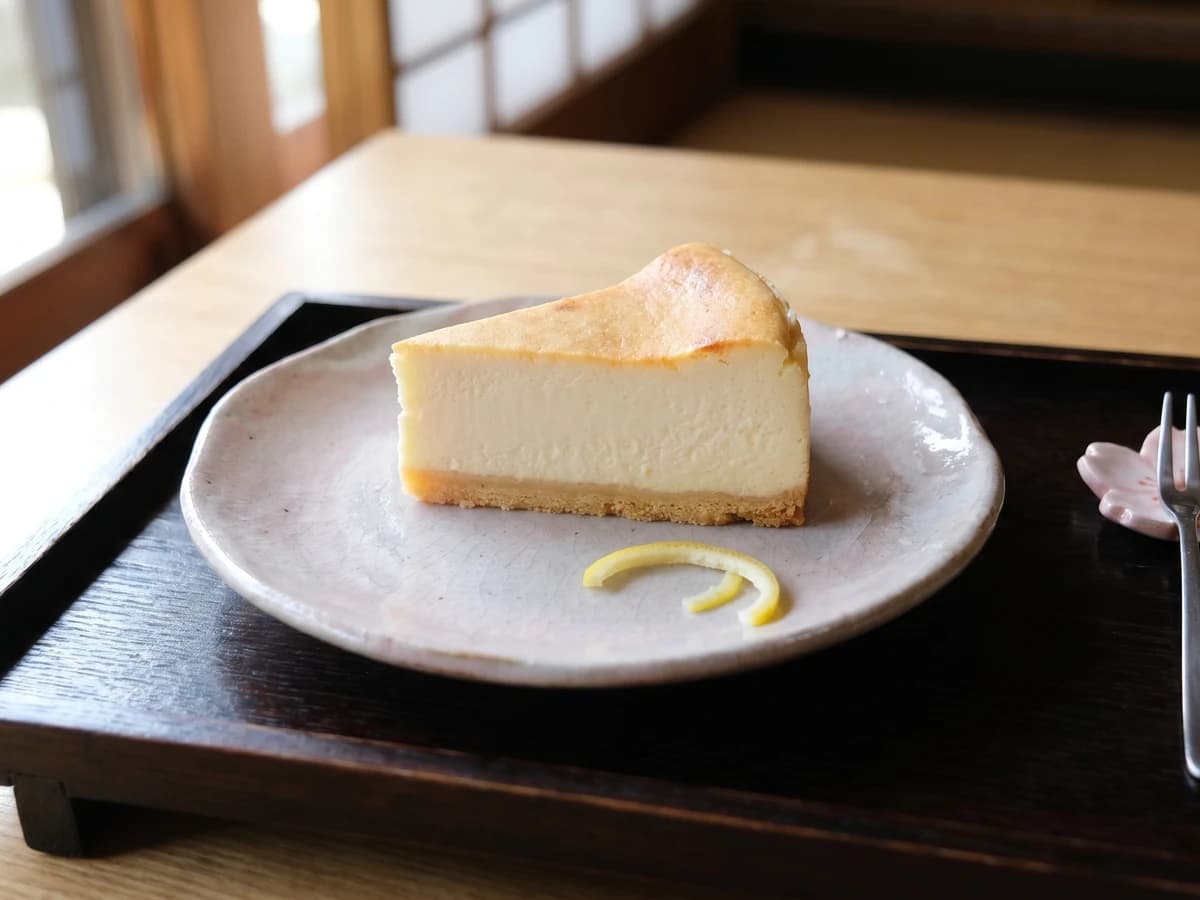
A Japanese baked cheesecake is not trying to float away. It is dense, smooth, and quietly tart, with a clean slice doing the work of decoration.