
Chef Takumi
Agar Jelly with Anko and Fruit (あんみつ, Anmitsu)
Anmitsu looks like a tray of small tasks, but the work is calm: dissolve the kanten fully, chill the pieces clean, then let fruit, anko, and kuromitsu do the speaking.
A cooking platform built around craft, culture, and the stories behind what we eat.
Created by
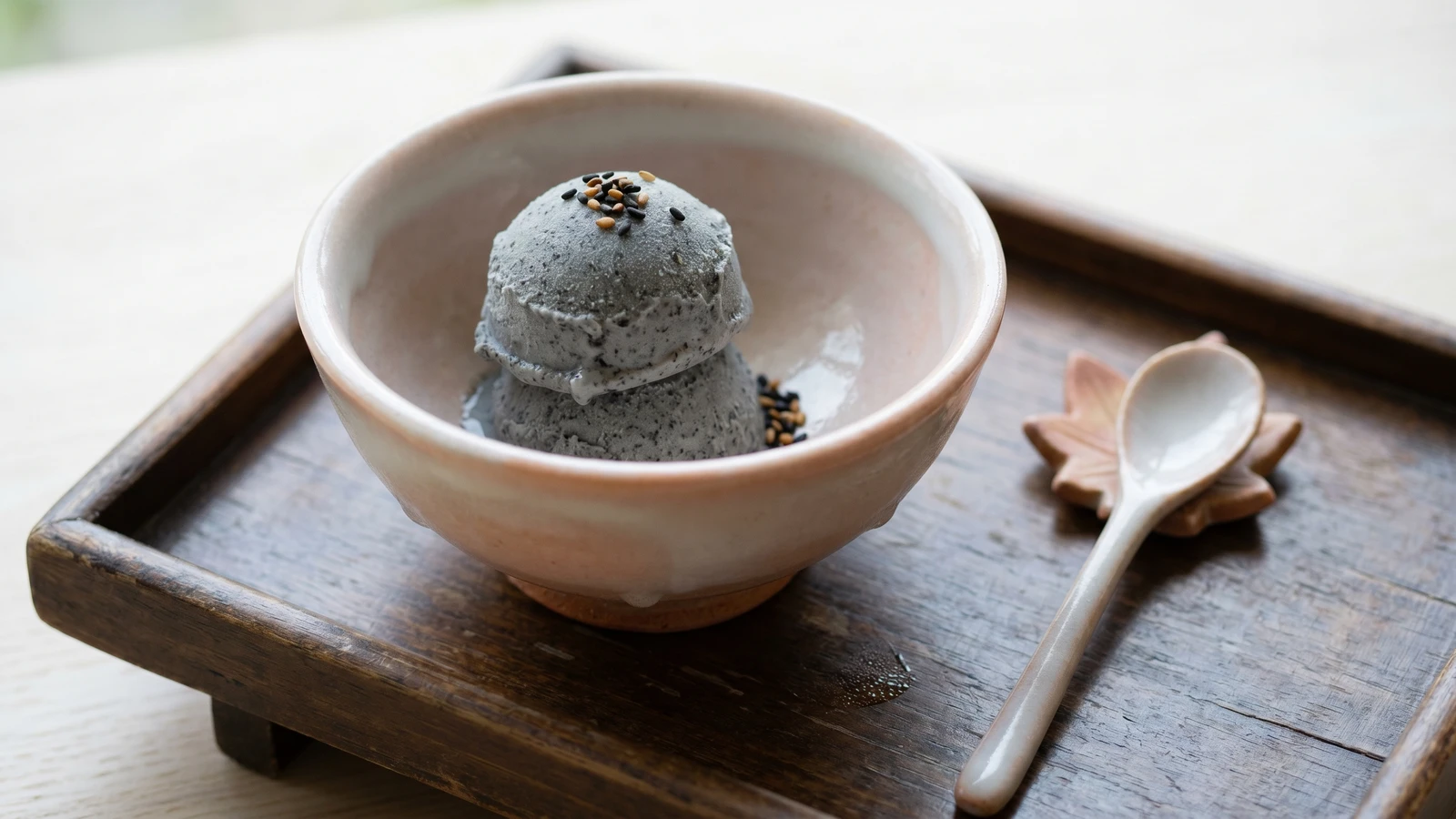
Black sesame ice cream is decided before the custard thickens: toast the seeds until fragrant, grind them while warm, and the dark gray color tells you it came from seed, not flavoring.
Black sesame is quiet until you warm it. Then it gives itself away: nutty, smoky at the edge, a little bitter in the best sense. This ice cream depends on that moment. Use old, tired seeds and the custard will taste flat. Toast them fresh, grind them well, and the flavor arrives before the spoon does.
The hesitation here is usually the color. Good kuro goma ice cream is not black like ink. It's deep gray, sometimes almost charcoal, with tiny specks showing where the seeds were ground. That is the sign of the real thing. If it looks too smooth and too dark, someone has probably helped it along with coloring, and help of that sort is not help.
The one detail that decides it is the paste. Grind the toasted seeds with a little sugar while they are still warm, because warmth lets their oil loosen and the sugar helps break them down. A suribachi, the ridged Japanese mortar, gives the finest texture by hand. A spice grinder works too, and no pride is injured. What matters is that the seed becomes fragrant and oily before it meets the cream.
Serve this in a small bowl, not a tall heap. It belongs at the end of a Japanese meal as a restrained sweet, rich but not loud, the savory edge of sesame keeping the sugar in its place. Leave it room. Even dessert benefits from manners.
Ice cream entered Japan in the early Meiji period, with the first commercial Japanese ice cream commonly traced to Machida Fusazō's aisukurin shop in Yokohama in 1869. Sesame has a much older place in Japanese cooking, appearing in early records and becoming important in temple kitchens, where ground sesame thickened and enriched vegetable dishes. Kuro goma ice cream is a modern dessert, but its flavor rests on an old Japanese habit: grinding sesame until its oil carries the seasoning.
Quantity
70g
Quantity
150g
divided
Quantity
2 cups
Quantity
1 cup
Quantity
5
Quantity
1/4 teaspoon
Quantity
1 tablespoon
Quantity
1 teaspoon
for finishing
| Ingredient | Quantity |
|---|---|
| black sesame seeds | 70g |
| granulated sugardivided | 150g |
| whole milk | 2 cups |
| heavy cream | 1 cup |
| large egg yolks | 5 |
| fine sea salt | 1/4 teaspoon |
| honey or mizuame (optional) | 1 tablespoon |
| toasted black sesame seeds (optional)for finishing | 1 teaspoon |
Put the black sesame seeds in a dry skillet over medium-low heat and shake the pan often for 3 to 5 minutes. They are ready when they smell deeply nutty and a few seeds begin to pop softly. Do not wait for color as you would with pale sesame. Black seeds won't tell you much by sight, so trust the aroma.
While the seeds are still warm, grind them with 50g of the sugar in a suribachi and surikogi, the Japanese ridged mortar and pestle, until the mixture turns damp, dark, and paste-like. This takes patience by hand, about 8 to 10 minutes. A spice grinder or small food processor will do the same work in short pulses; stop before the paste overheats.
Combine the milk, cream, salt, and honey or mizuame if using in a saucepan. Warm over medium heat until the edges tremble and small bubbles gather, then take it off the heat. You want hot dairy, not boiling dairy, because boiling dulls the cream and makes the egg yolks harder to temper cleanly.
Whisk the egg yolks with the remaining 100g sugar until the mixture lightens slightly. Pour in a ladle of the hot milk mixture while whisking, then add another ladle. This gradual warming keeps the yolks smooth instead of shocking them into sweet scrambled egg, which is not the dessert we set out to make.
Return the yolk mixture to the saucepan and cook over low heat, stirring constantly with a heatproof spatula, until the custard lightly coats the back of the spatula, about 75 to 80 C. Draw a finger through the coating; the line should hold. Keep the heat gentle, because a slow custard gives a smooth ice cream and a rushed one turns grainy.
Take the custard off the heat and whisk in the black sesame paste until fully blended. Strain through a fine-mesh sieve into a bowl, pressing gently with the spatula. Straining catches coarse seed hulls and any bits of egg, but don't force every last speck through or the texture turns sandy.
Set the bowl over ice water and stir until cool, then cover and refrigerate for at least 4 hours, preferably overnight. Cold base churns faster and forms smaller ice crystals, which is the plain reason it tastes creamier.
Churn the chilled base in an ice cream maker until thick and softly set, usually 20 to 25 minutes. Pack it into a chilled container, press parchment directly on the surface, cover, and freeze until firm, about 2 hours. The parchment protects the surface from freezer dryness, a small courtesy the ice cream repays.
Let the ice cream stand at room temperature for 5 minutes before scooping. Serve one or two small scoops in chilled bowls with a few toasted sesame seeds on top. The flavor is rich and savory-sweet, so a modest portion reads better than a mountain.
1 serving (about 175g)
Culinary guides, cultural storytelling, and the editorial depth that makes cooking meaningful.
Discover Culinary ExplorerChef Takumi
Anmitsu looks like a tray of small tasks, but the work is calm: dissolve the kanten fully, chill the pieces clean, then let fruit, anko, and kuromitsu do the speaking.

Chef Takumi
A cool square of almond-scented milk, set softly and served with mikan in thin syrup, is dinner-party food without theater. The only stern demand is restraint with the fragrance.

Chef Takumi
Azuki bar asks for patience twice: once while the beans soften, and once while the frozen bar yields. That hardness is not a flaw. It is the character of the thing.
Chef Takumi
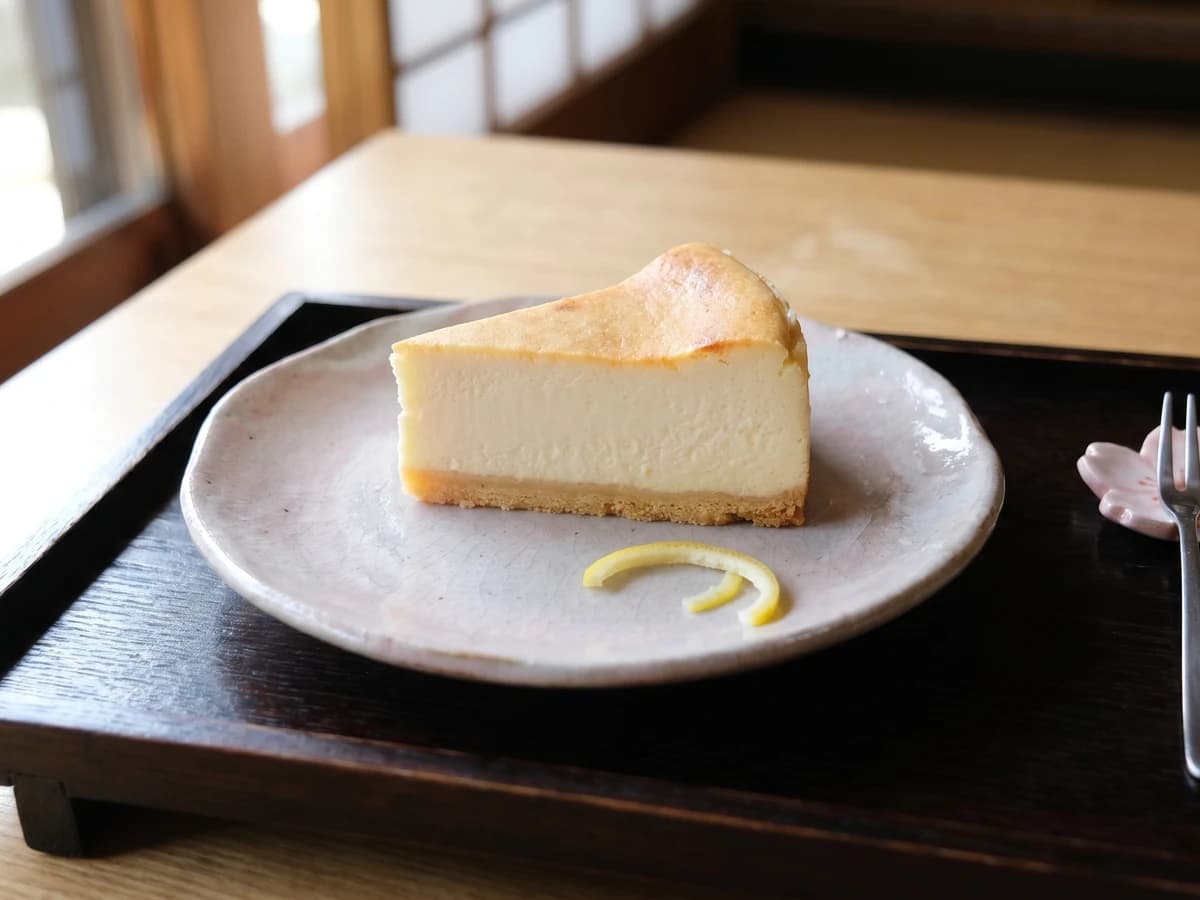
A Japanese baked cheesecake is not trying to float away. It is dense, smooth, and quietly tart, with a clean slice doing the work of decoration.