
Chef Takumi
Agar Jelly with Anko and Fruit (あんみつ, Anmitsu)
Anmitsu looks like a tray of small tasks, but the work is calm: dissolve the kanten fully, chill the pieces clean, then let fruit, anko, and kuromitsu do the speaking.
A cooking platform built around craft, culture, and the stories behind what we eat.
Created by
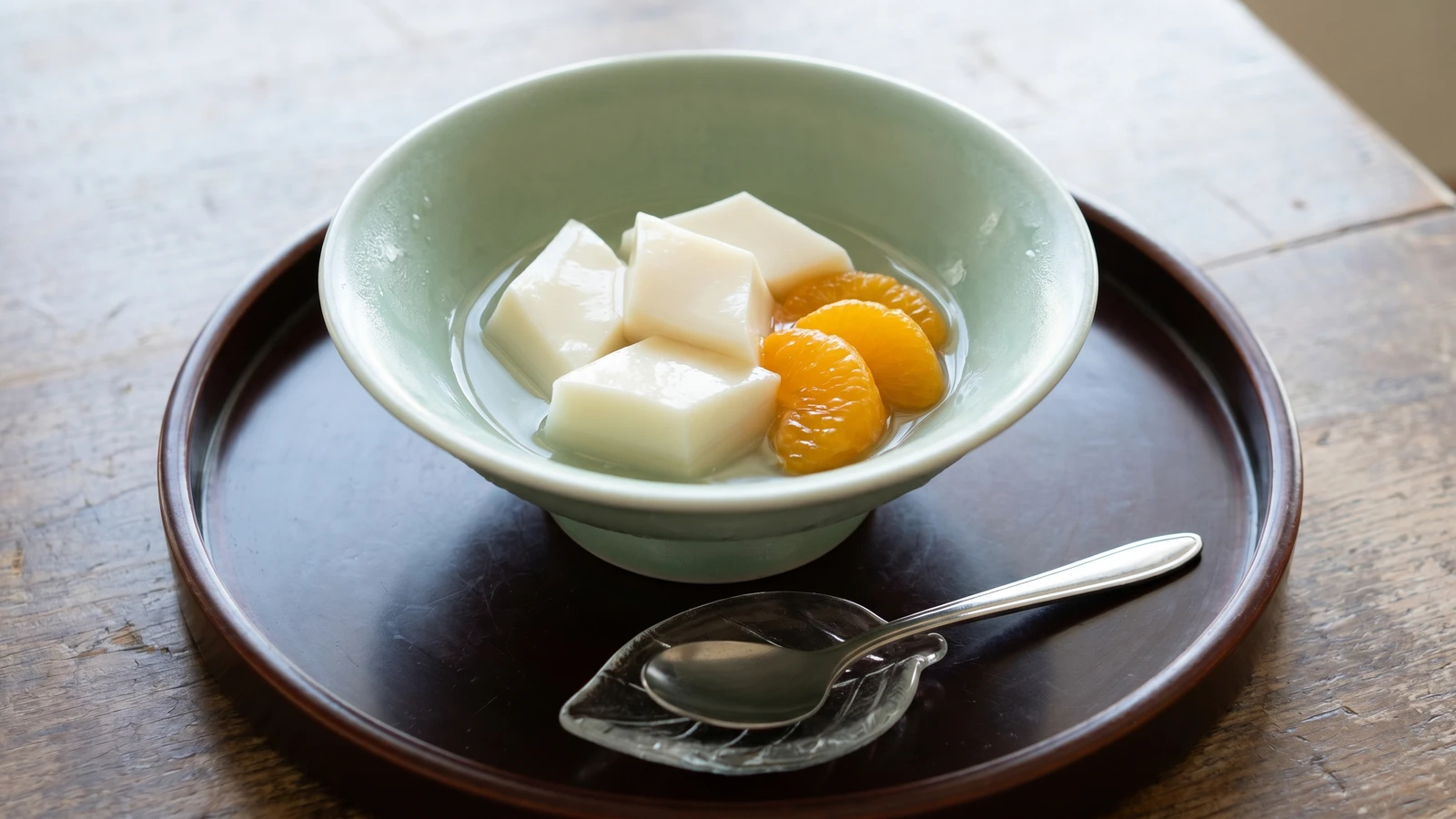
A cool square of almond-scented milk, set softly and served with mikan in thin syrup, is dinner-party food without theater. The only stern demand is restraint with the fragrance.
Annin dōfu looks like custard trying to be tofu, which is a small joke the dish makes without asking permission. It isn't tofu at all. It's a softly set milk jelly, pale and clean, chilled until the spoon cuts it into trembling squares.
The flavor turns on one thing: the almond scent. In the Chinese root of the dish, that fragrance comes from apricot kernels, called annin in Japanese. At the Japanese home table, bottled almond essence became the practical road, especially with canned mikan and a clear syrup poured over the top. That is not a failure of seriousness. It is the way this dish settled into everyday Japan.
Use a light hand. Too much essence and the bowl smells like a confectionery drawer, not food. Warm the milk only enough to dissolve the sugar and gelatin, because hard heat dulls the dairy and pushes the scent away. Set it cold, cut it neatly, and give it fruit and syrup with room around them. The dessert should finish a meal quietly, as if the kitchen has lowered its voice.
Annin dōfu comes from the Chinese almond-jelly tradition and entered Japanese eating through Chinese restaurants and home cookery in the twentieth century, especially as gelatin and canned fruit became common household goods. In Japan the dessert is often made with milk, gelatin or agar, almond essence, and canned mikan, a form that became familiar through postwar department-store restaurants and family recipe books. The name uses the characters for apricot kernel and tofu, but the texture is a set jelly rather than bean curd.
Quantity
2 teaspoons
Quantity
3 tablespoons
for blooming gelatin
Quantity
2 cups
Quantity
1/2 cup
Quantity
1/4 cup
for the milk base
Quantity
1/2 teaspoon
or 1 teaspoon milder almond extract
Quantity
1 cup
for syrup
Quantity
1/3 cup
for syrup
Quantity
2 tablespoons
Quantity
1 can
drained
Quantity
1 teaspoon
| Ingredient | Quantity |
|---|---|
| powdered gelatin | 2 teaspoons |
| cold waterfor blooming gelatin | 3 tablespoons |
| whole milk | 2 cups |
| heavy cream | 1/2 cup |
| granulated sugarfor the milk base | 1/4 cup |
| almond essenceor 1 teaspoon milder almond extract | 1/2 teaspoon |
| waterfor syrup | 1 cup |
| granulated sugarfor syrup | 1/3 cup |
| syrup from canned mikan (optional) | 2 tablespoons |
| canned mikan mandarin segmentsdrained | 1 can |
| lemon juice (optional) | 1 teaspoon |
Sprinkle the gelatin over the cold water in a small bowl and leave it for five minutes, until it swells and looks like wet sand. Don't stir dry gelatin straight into hot milk. It clumps, and then the set will be spotted instead of smooth.
Combine the milk, cream, and sugar in a small saucepan. Warm over low heat, stirring, until the sugar dissolves and the liquid feels hot to the touch but never boils. Take it off the heat. Boiling makes the dairy taste flat and leaves a skin, which is not the quiet texture we're after.
Stir the bloomed gelatin into the hot milk until fully dissolved, then add the almond essence. Start with the smaller amount, taste a spoonful, and stop when the fragrance is clear but gentle. The scent grows a little stronger as the pudding chills, so bravery here is usually punished.
Strain the milk mixture through a fine-mesh sieve into a shallow square container. Straining catches any gelatin threads or milk skin, giving you a clean face when the jelly is cut. Let it cool for ten minutes, cover, and refrigerate until fully set, at least four hours.
While the pudding chills, simmer the syrup water and sugar just until clear, then cool completely. Stir in a little syrup from the canned mikan if you like, and a few drops of lemon juice if it tastes too sweet. The syrup should be thin and bright, not thick enough to coat the spoon.
Run a thin knife through the set pudding to make small diamonds or squares. Lift them gently into chilled bowls, add three or five mikan segments to each, and spoon over enough cold syrup to gather at the bottom. Don't drown it. The pale jelly, orange fruit, and clear syrup should each be visible.
1 serving (about 215g)
Culinary guides, cultural storytelling, and the editorial depth that makes cooking meaningful.
Discover Culinary ExplorerChef Takumi
Anmitsu looks like a tray of small tasks, but the work is calm: dissolve the kanten fully, chill the pieces clean, then let fruit, anko, and kuromitsu do the speaking.

Chef Takumi
Azuki bar asks for patience twice: once while the beans soften, and once while the frozen bar yields. That hardness is not a flaw. It is the character of the thing.
Chef Takumi
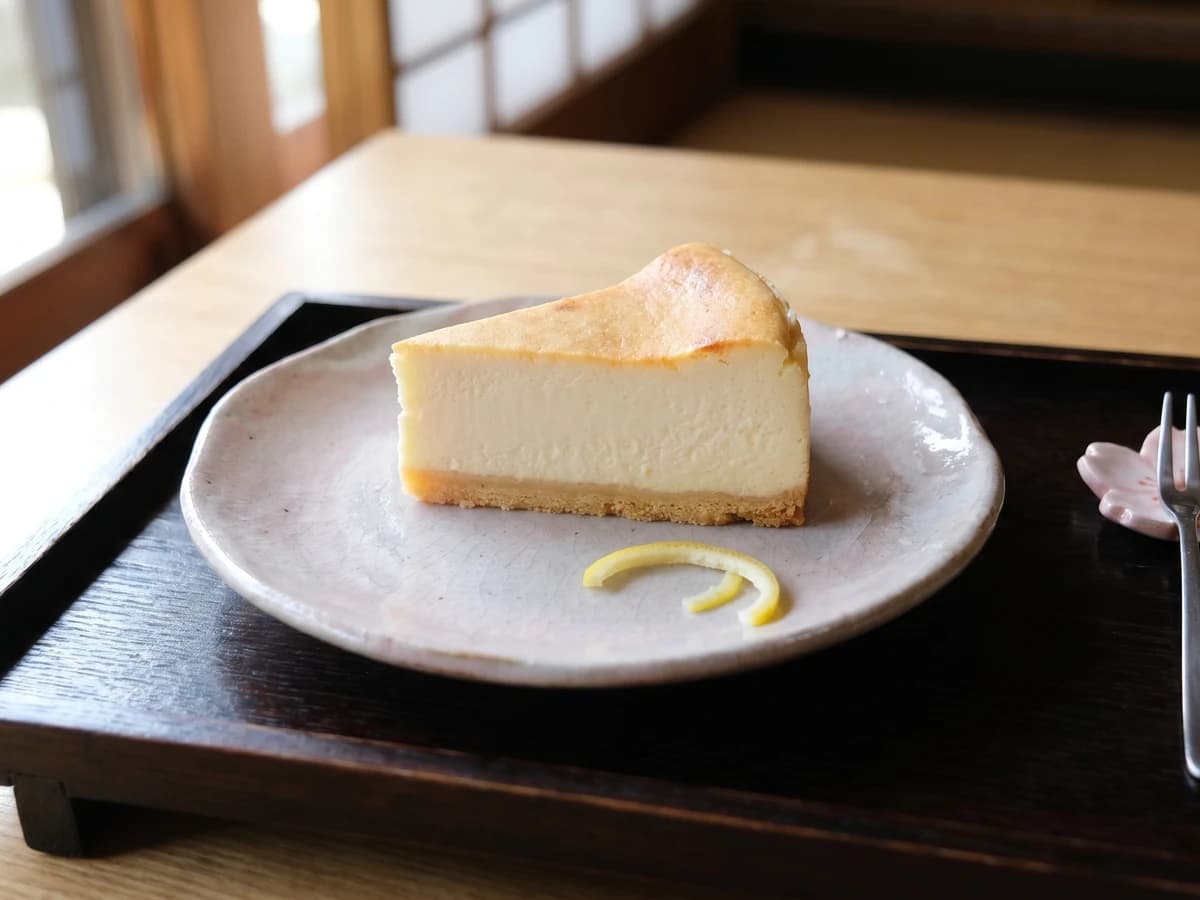
A Japanese baked cheesecake is not trying to float away. It is dense, smooth, and quietly tart, with a clean slice doing the work of decoration.
Chef Takumi
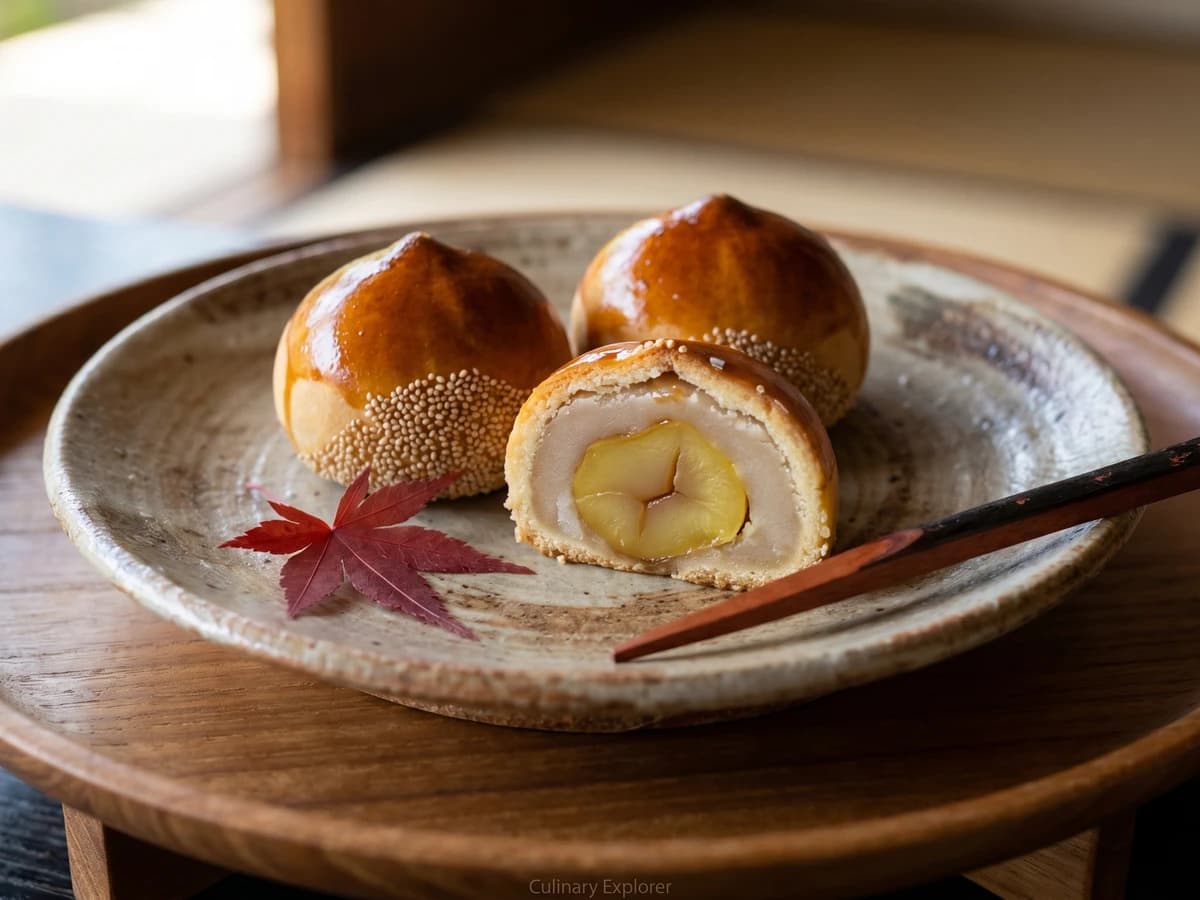
Autumn sits inside this manjū: a whole sweetened chestnut wrapped in pale bean paste, sealed in soft dough, and brushed until the top bakes glossy as lacquer.