
Chef Takumi
Agar Jelly with Anko and Fruit (あんみつ, Anmitsu)
Anmitsu looks like a tray of small tasks, but the work is calm: dissolve the kanten fully, chill the pieces clean, then let fruit, anko, and kuromitsu do the speaking.
A cooking platform built around craft, culture, and the stories behind what we eat.
Created by
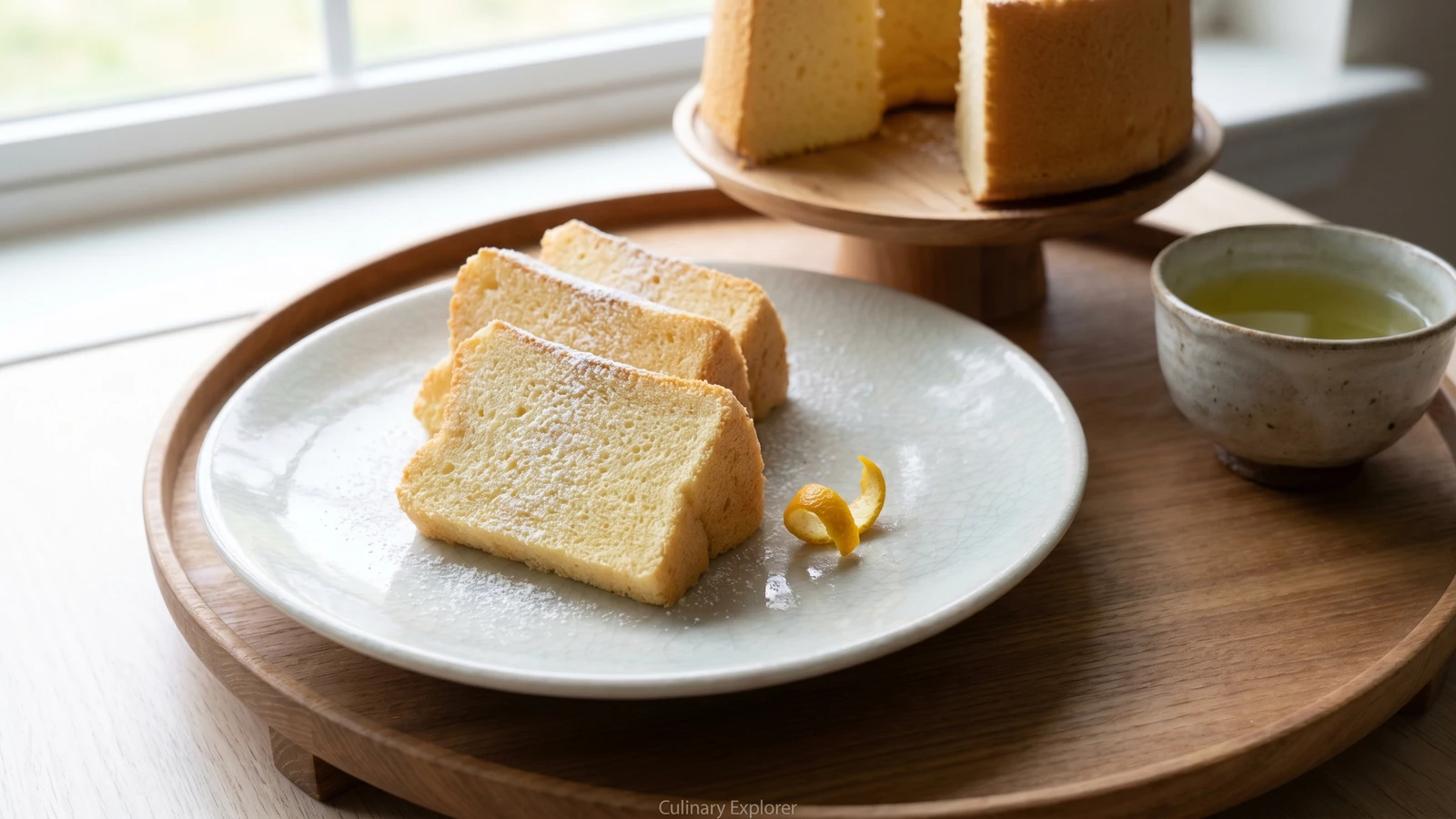
A good chiffon cake is all lightness, but it isn't fragile if you treat the egg whites kindly and cool the pan upside down.
Chiffon cake looks like the sort of cake that wants to defeat a calm person. It doesn't. The tall shape, the pale crumb, the trembling softness, all of it comes from one plain act: whipping egg whites well and folding them in without crushing the air you just made.
This is yōgashi, Western-style confectionery made at home in a Japanese way: restrained sweetness, clean texture, no heavy frosting to hide behind. The oil keeps the crumb moist even after a day, while the egg whites lift the batter higher than butter would. Use fresh eggs at room temperature and a plain aluminum tube pan. That ungreased metal matters, because the batter climbs it as it bakes, like a child climbing a tree with serious intentions.
The detail that decides the cake comes after the oven. Cool it inverted, still in the pan, until fully cold. If you turn it out warm, the crumb collapses under its own lightness. Let it hang upside down and the structure sets while stretched tall. Then loosen it gently, slice with a long serrated knife, and leave it room on the plate. A cake this quiet doesn't need much company.
Chiffon cake was created in the United States in the 1920s by Harry Baker, a Los Angeles baker, and the formula became widely known after General Mills published it in 1948. In Japan it entered the broad world of yōgashi, Western-style sweets adapted to Japanese tastes, where its low sweetness and soft texture suited home baking and kissaten cafe service. The ungreased tube pan and inverted cooling method remained central, because the cake's height depends on the batter clinging to the pan as it rises and sets.
Quantity
4
separated, at room temperature
Quantity
70g
Quantity
80g
divided
Quantity
1 teaspoon
Quantity
1/4 teaspoon
Quantity
45ml
rice bran oil or canola oil
Quantity
60ml
room temperature
Quantity
1 teaspoon
Quantity
1/2 teaspoon
Quantity
for serving
| Ingredient | Quantity |
|---|---|
| large eggsseparated, at room temperature | 4 |
| cake flour | 70g |
| granulated sugardivided | 80g |
| baking powder | 1 teaspoon |
| fine sea salt | 1/4 teaspoon |
| neutral oilrice bran oil or canola oil | 45ml |
| whole milkroom temperature | 60ml |
| vanilla extract | 1 teaspoon |
| lemon juice or rice vinegar | 1/2 teaspoon |
| powdered sugar (optional) | for serving |
Set an oven rack in the lower third and heat the oven to 170 C. Use an ungreased 17cm aluminum chiffon tube pan. Don't oil it and don't line it. The batter needs to grip the bare metal as it rises, and grease would make it slide back down before the structure sets.
In a large bowl, whisk the egg yolks with 30g of the sugar until smooth and slightly pale. Whisk in the oil slowly, then the milk and vanilla. Sift in the cake flour, baking powder, and salt, and whisk just until the batter is smooth. Stop there. Too much mixing wakes the gluten, and chiffon should bend softly, not chew back.
In a clean bowl, beat the egg whites with the lemon juice or rice vinegar until foamy. Add the remaining 50g sugar in three additions, beating until the meringue holds glossy medium-stiff peaks that bend only at the tip. The acid steadies the foam, and adding sugar slowly lets the bubbles stay small and even.
Stir one third of the meringue into the yolk batter to lighten it. This first addition is allowed to lose some air, because its job is to loosen the heavy batter for the rest. Add the remaining meringue in two additions, folding with a rubber spatula from the bottom up, turning the bowl as you go. Stop when no white streaks remain.
Pour the batter into the ungreased pan from one spot, then run a skewer once through the batter to break large hidden pockets. Smooth the top lightly. Bake for 35 to 40 minutes, until the top is deep golden, springs back when touched, and a skewer comes out clean. The cake should rise high and may crack on top. That crack is not a failure; it is the cake breathing properly.
As soon as the cake leaves the oven, turn the pan upside down over its legs or over the neck of a bottle. Let it cool completely, at least 2 hours. This is the step people want to hurry, and this is the one that decides it. While warm, the crumb is too tender to hold itself up, so cooling inverted keeps the height you worked for.
Run a thin knife or offset spatula around the outer wall, center tube, and base of the pan. Lift out the cake and loosen the bottom. Slice with a long serrated knife using a gentle sawing motion, letting the blade do the work instead of pressing down. Dust lightly with powdered sugar if you like, or serve it plain with tea.
1 serving (about 52g)
Culinary guides, cultural storytelling, and the editorial depth that makes cooking meaningful.
Discover Culinary ExplorerChef Takumi
Anmitsu looks like a tray of small tasks, but the work is calm: dissolve the kanten fully, chill the pieces clean, then let fruit, anko, and kuromitsu do the speaking.

Chef Takumi
A cool square of almond-scented milk, set softly and served with mikan in thin syrup, is dinner-party food without theater. The only stern demand is restraint with the fragrance.

Chef Takumi
Azuki bar asks for patience twice: once while the beans soften, and once while the frozen bar yields. That hardness is not a flaw. It is the character of the thing.
Chef Takumi
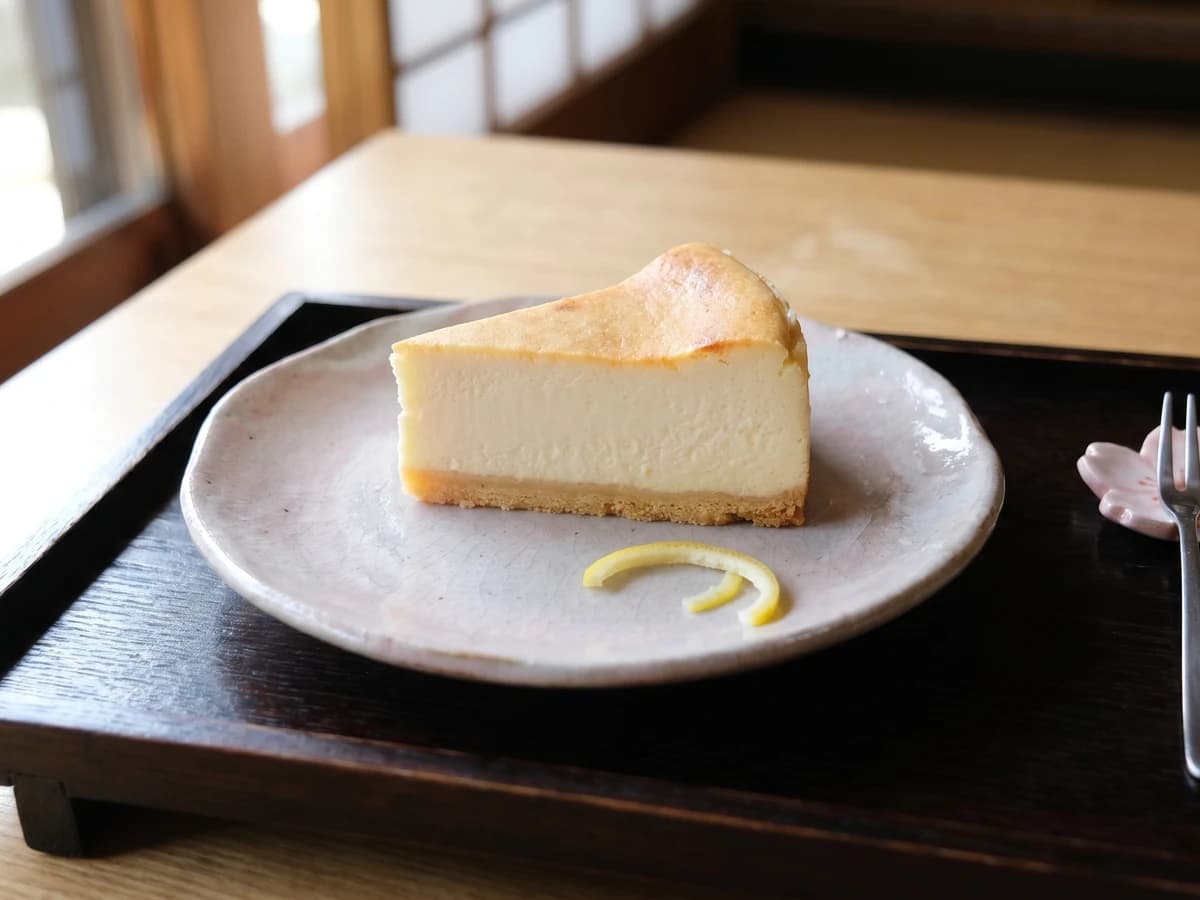
A Japanese baked cheesecake is not trying to float away. It is dense, smooth, and quietly tart, with a clean slice doing the work of decoration.