
Chef Takumi
Agar Jelly with Anko and Fruit (あんみつ, Anmitsu)
Anmitsu looks like a tray of small tasks, but the work is calm: dissolve the kanten fully, chill the pieces clean, then let fruit, anko, and kuromitsu do the speaking.
A cooking platform built around craft, culture, and the stories behind what we eat.

Created by
Castella asks for no butter, no decoration, and no bravery: only warm eggs beaten patiently, a careful bake, and one night of rest so the crumb turns moist and fine.
Castella looks like a plain cake until you cut it. Then the truth shows: a tight honeyed crumb, a lacquer-brown top, and a line of zarame sugar at the base that crunches softly under the teeth. A cake this bare makes people nervous. No butter, no cream, no decoration to distract anyone. Good. It means nothing is hidden.
The one detail that decides it is the foam. Castella has no baking powder, so the eggs and sugar must be beaten until thick enough to fall in a ribbon, then settled on low speed so the bubbles become small and even. This is not difficult work. It is patient work, the kind that makes a cake rise on air you put there with your own hands. I have seen students turn it into surgery. It is only eggs, sugar, flour, honey, and time.
Zarame belongs at the bottom, not scattered like decoration. Those coarse crystals partly melt into the lower crust and partly stay whole, which gives the quiet crunch that marks Nagasaki castella. Then comes the part impatient cooks dislike: wrap it while warm and rest it overnight. Same-day castella is merely cake. Tomorrow it is honmono, moist, close-grained, and calm enough for tea, birthdays, and the wrapped gift box it so often travels in.
Castella reached Nagasaki in the late sixteenth century with Portuguese traders and missionaries, who brought pão de ló, a rich egg sponge baked without chemical leavening. During the Edo period, when Nagasaki remained Japan's formal window to limited foreign trade, local confectioners adapted the cake to Japanese sugar work and gift culture; Fukusaya, a Nagasaki maker founded in 1624, is among the names tied to that history. The coarse zarame at the base is a Japanese mark of the Nagasaki style, giving texture as well as sweetness.
Quantity
6
at room temperature
Quantity
220g
Quantity
2 tablespoons
Quantity
1 tablespoon
or use 1 tablespoon additional honey as a stand-in
Quantity
2 tablespoons
Quantity
200g
sifted twice
Quantity
2 tablespoons
for the base
| Ingredient | Quantity |
|---|---|
| large eggsat room temperature | 6 |
| fine granulated sugar | 220g |
| honey | 2 tablespoons |
| mizuame (Japanese starch syrup) (optional)or use 1 tablespoon additional honey as a stand-in | 1 tablespoon |
| warm water | 2 tablespoons |
| bread flour (strong flour, kyōrikiko)sifted twice | 200g |
| zarame (coarse Japanese sugar)for the base | 2 tablespoons |
Heat the oven to 325 F / 160 C. Line an 8-inch (20 cm) square pan with parchment so the paper rises at least 2 inches above the sides. Do not butter the paper. Fat makes the batter slip before the egg foam has set, and this cake rises on that foam alone.
Stir the honey, mizuame if using, and warm water together until smooth. If the mizuame is stiff, set the cup in warm water for a minute. Loosening it now lets it disappear into the batter later; poured in thick, it sinks and leaves sweet pockets where you don't want them.
Put the eggs and sugar in the bowl of a stand mixer or a large heatproof bowl. Set it over warm water and whisk by hand until the sugar dissolves and the mixture feels just warmer than your hand, about 38 C to 40 C. Warm eggs stretch into a stronger foam. Hot eggs start to cook, and then the cake has lost before it has begun.
Beat on high speed for 8 to 10 minutes, until the mixture is pale, thick, and falls from the whisk in a ribbon that rests on the surface for a few seconds before sinking. Lower the speed and beat 2 minutes more. The fast beating builds the lift; the slow beating tightens the bubbles so the crumb bakes fine instead of full of holes.
Drizzle in the honey mixture on low speed. Sift the bread flour over the batter in three additions, folding each one in from the bottom before adding the next. When no dry flour shows, mix on the lowest speed for 30 to 45 seconds. The strong flour is intentional: it gives Castella its close, springy bite, but it needs enough mixing to hydrate properly.
Scatter the zarame evenly over the lined bottom of the pan. Pour in the batter from a little height in one steady stream, then draw a bamboo skewer through it in tight zigzags all the way to the corners. Tap the pan twice. You are breaking the large bubbles that make tunnels, not punishing the small bubbles that make the cake rise.
Bake for 10 minutes at 325 F / 160 C, then lower the oven to 300 F / 150 C and bake 40 to 45 minutes more. The top should be an even deep amber and spring back slowly when touched; a skewer should come out without wet batter. If the top darkens too fast, lay a loose sheet of parchment over it after the first 35 minutes. Pull it pale and the center tastes eggy and damp; bake it hard and the crumb dries before the overnight rest can do its work.
Take the pan from the oven and drop it once from 4 or 5 inches onto a folded towel. It sounds more dramatic than it is; the small shock helps keep the center from sinking. Let the cake stand 8 minutes, lift it out by the parchment, peel away the side paper, and turn it top-side down onto clean parchment. When it is warm but no longer hot, wrap it tightly in parchment and then plastic wrap.
Rest the wrapped cake overnight in the refrigerator. This is not waiting for ceremony. The moisture evens out, the honey settles into the crumb, and the zarame softens just enough while keeping its quiet crunch. The next day, bring it to room temperature, trim the edges cleanly, and cut thick slices with a serrated knife.
1 serving (about 72g)
Culinary guides, cultural storytelling, and the editorial depth that makes cooking meaningful.
Discover Culinary ExplorerChef Takumi
Anmitsu looks like a tray of small tasks, but the work is calm: dissolve the kanten fully, chill the pieces clean, then let fruit, anko, and kuromitsu do the speaking.

Chef Takumi
A cool square of almond-scented milk, set softly and served with mikan in thin syrup, is dinner-party food without theater. The only stern demand is restraint with the fragrance.

Chef Takumi
Azuki bar asks for patience twice: once while the beans soften, and once while the frozen bar yields. That hardness is not a flaw. It is the character of the thing.
Chef Takumi
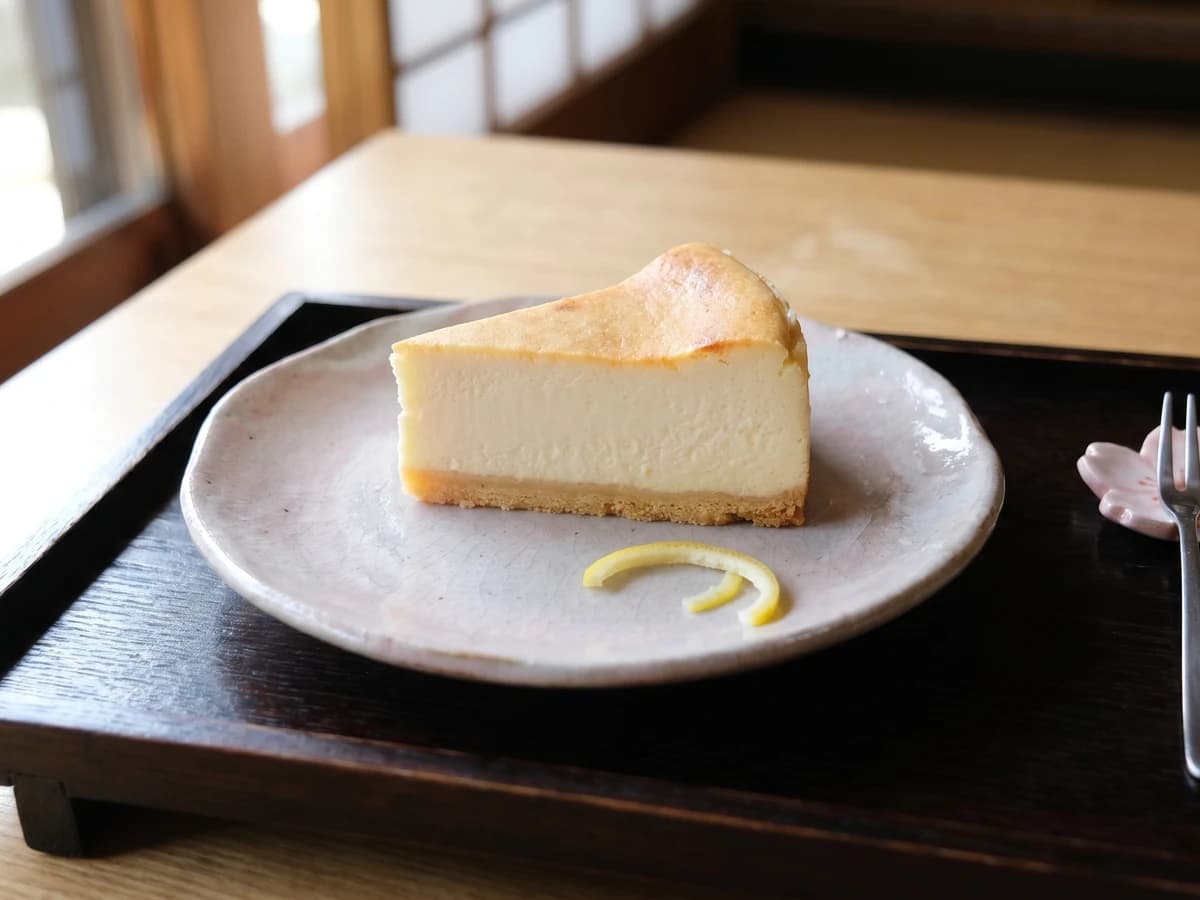
A Japanese baked cheesecake is not trying to float away. It is dense, smooth, and quietly tart, with a clean slice doing the work of decoration.