
Chef Takumi
Agar Jelly with Anko and Fruit (あんみつ, Anmitsu)
Anmitsu looks like a tray of small tasks, but the work is calm: dissolve the kanten fully, chill the pieces clean, then let fruit, anko, and kuromitsu do the speaking.
A cooking platform built around craft, culture, and the stories behind what we eat.
Created by
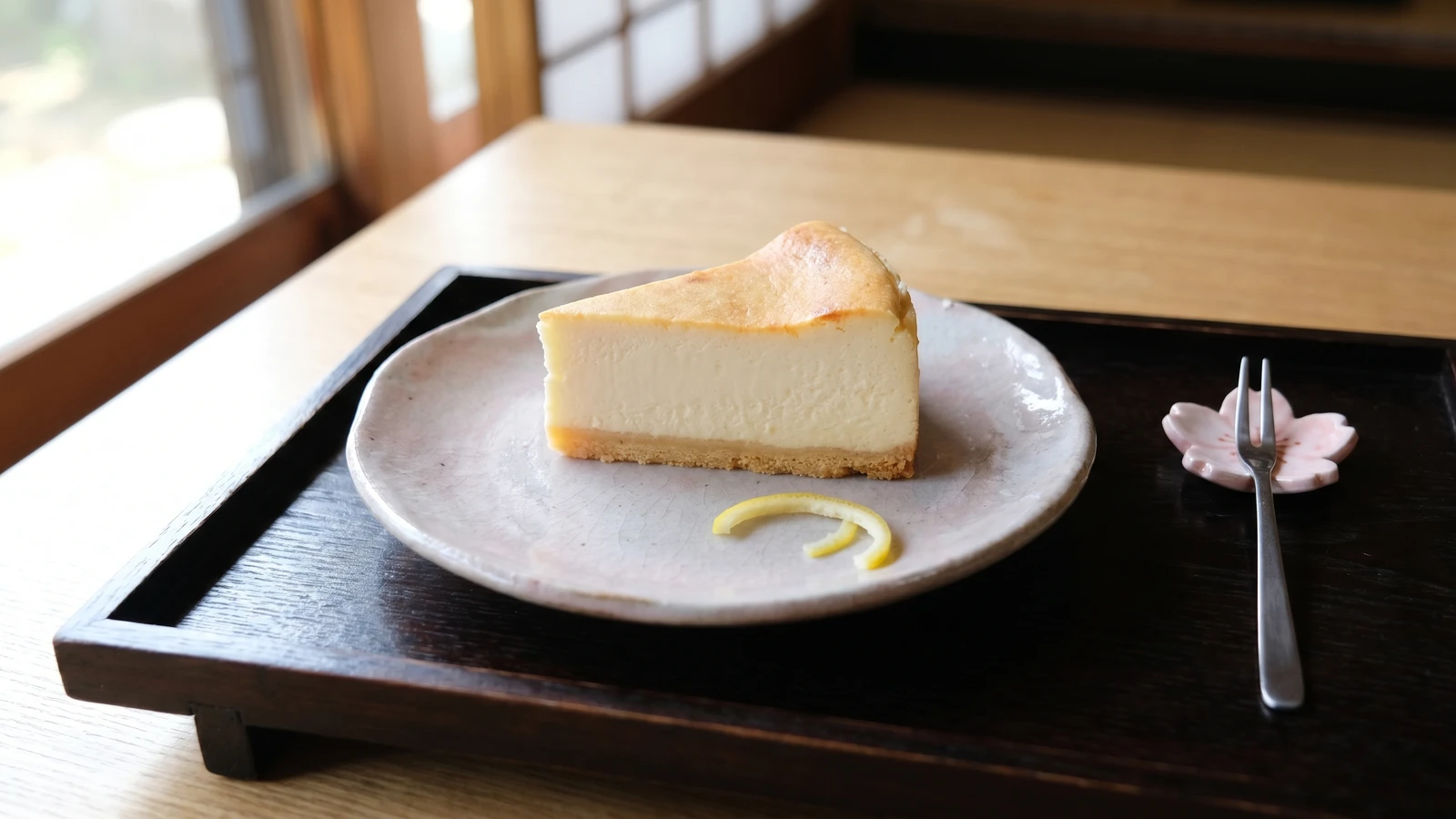
A Japanese baked cheesecake is not trying to float away. It is dense, smooth, and quietly tart, with a clean slice doing the work of decoration.
Cheesecake makes people tense because they expect cracks, sinking centers, and a water bath arranged like a small engineering examination. This one is kinder. Japanese baked cheesecake, beikudo chīzukēki, asks for smooth cream cheese, gentle mixing, and enough patience to let the oven and the refrigerator finish what your hands began.
The one detail that decides it is texture. Beat the cream cheese fully before the eggs go in, because lumps left at the beginning stay with you to the end. Once the eggs are added, mix only until the batter is even. Too much air makes the cake puff grandly, then collapse in a sulk. We want density, not drama.
This is yōgashi, Western-style Japanese confectionery, not old washoku pretending to be older than it is. Still, it has the table manners we respect: a restrained sweetness, a slight tang from sour cream, and a portion small enough that the last bite is still pleasant. Chill it overnight, cut it with a warm knife, and leave the plate room. The clean edge is half the dessert.
Morozoff, the Kobe confectionery company founded in 1931, helped popularize baked cheesecake in Japan after company president Tomotarō Morozoff tasted cheesecake at a café in Berlin and brought the idea home. The company introduced its baked cheesecake in 1969, and the dense, lightly tangy style became part of Japan's yōgashi culture rather than a copy of an American diner slice. Japanese versions are usually more restrained in sugar and portion size than New York cheesecake, with the clean cut valued as much as the richness.
Quantity
120g
Quantity
45g
melted
Quantity
400g
softened
Quantity
90g
Quantity
2
at room temperature
Quantity
120g
at room temperature
Quantity
80ml
at room temperature
Quantity
1 tablespoon
Quantity
1 teaspoon
Quantity
18g
sifted
Quantity
1 pinch
| Ingredient | Quantity |
|---|---|
| digestive biscuits or plain butter cookies | 120g |
| unsalted buttermelted | 45g |
| full-fat cream cheesesoftened | 400g |
| granulated sugar | 90g |
| large eggsat room temperature | 2 |
| sour creamat room temperature | 120g |
| heavy creamat room temperature | 80ml |
| lemon juice | 1 tablespoon |
| vanilla extract | 1 teaspoon |
| cake floursifted | 18g |
| fine sea salt | 1 pinch |
Heat the oven to 160°C. Line the base and sides of a 15cm round springform pan with parchment, leaving a little collar above the rim. The collar gives the cake a clean side and makes unmolding calmer, which is never a bad quality in a dessert.
Crush the biscuits to fine crumbs, then mix with the melted butter until the crumbs look like damp sand. Press them firmly into the base of the pan and chill for 10 minutes. Firm pressure matters because a loose crust breaks into gravel when you slice it.
Beat the softened cream cheese with the sugar and salt until completely smooth, scraping the bowl often. Do this before adding anything thin. Cream cheese smooths best when it has no liquid to slide around in, and this is where you prevent lumps instead of chasing them later.
Add the eggs one at a time, mixing gently until each disappears. Stop as soon as the batter looks even. Eggs bring structure, but extra beating traps air, and air gives you a cake that rises proudly and falls with equal confidence.
Mix in the sour cream, heavy cream, lemon juice, and vanilla until smooth. Sift the cake flour over the batter and fold it in gently. The flour gives a little firmness to the slice, but too much mixing after it goes in makes the cake heavy in the wrong way.
Pour the batter over the chilled crust and tap the pan twice on the counter to lift large bubbles. Bake for 50 to 55 minutes, until the edges are set and the center still gives a slow, small wobble when nudged. If the center is fully firm in the oven, it will be overbaked after it cools.
Turn off the oven, crack the door, and leave the cake inside for 30 minutes. Then cool it to room temperature on a rack. Slow cooling helps the top settle without tearing, because the cake is still finishing its set as the heat leaves.
Cover and refrigerate at least 6 hours, preferably overnight. Unmold the cake cold and cut with a knife warmed in hot water and wiped dry between slices. Warm, clean steel gives the neat face you want. Let the knife do the final bit of seasoning.
1 serving (about 120g)
Culinary guides, cultural storytelling, and the editorial depth that makes cooking meaningful.
Discover Culinary ExplorerChef Takumi
Anmitsu looks like a tray of small tasks, but the work is calm: dissolve the kanten fully, chill the pieces clean, then let fruit, anko, and kuromitsu do the speaking.

Chef Takumi
A cool square of almond-scented milk, set softly and served with mikan in thin syrup, is dinner-party food without theater. The only stern demand is restraint with the fragrance.

Chef Takumi
Azuki bar asks for patience twice: once while the beans soften, and once while the frozen bar yields. That hardness is not a flaw. It is the character of the thing.
Chef Takumi
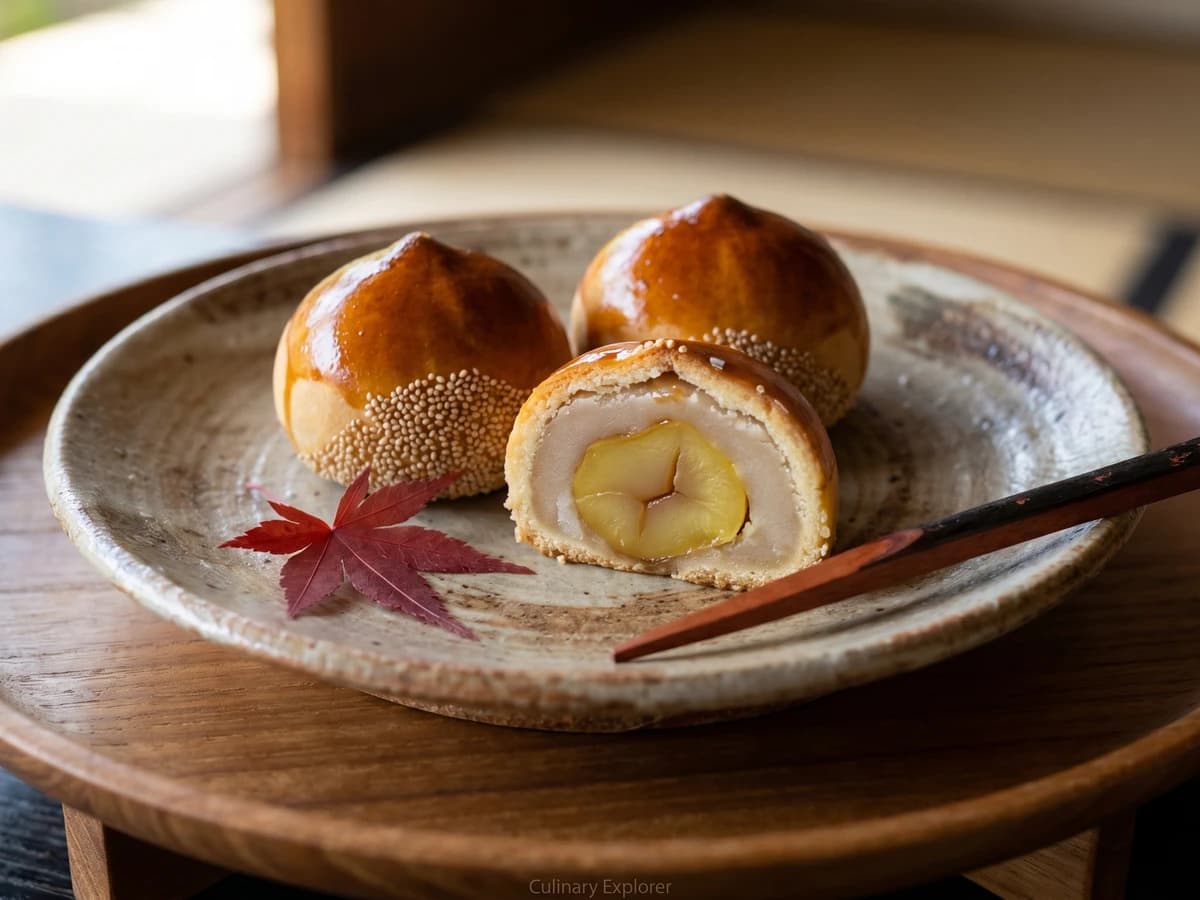
Autumn sits inside this manjū: a whole sweetened chestnut wrapped in pale bean paste, sealed in soft dough, and brushed until the top bakes glossy as lacquer.