Chef Isabel
Abanico Ibérico a la Plancha
Extremadura's dehesa gives us this fan-shaped, marbled rib cut: salt it at the last moment, lay it on a fierce plancha, and count in seconds so the centre stays juicy.
A cooking platform built around craft, culture, and the stories behind what we eat.
Created by
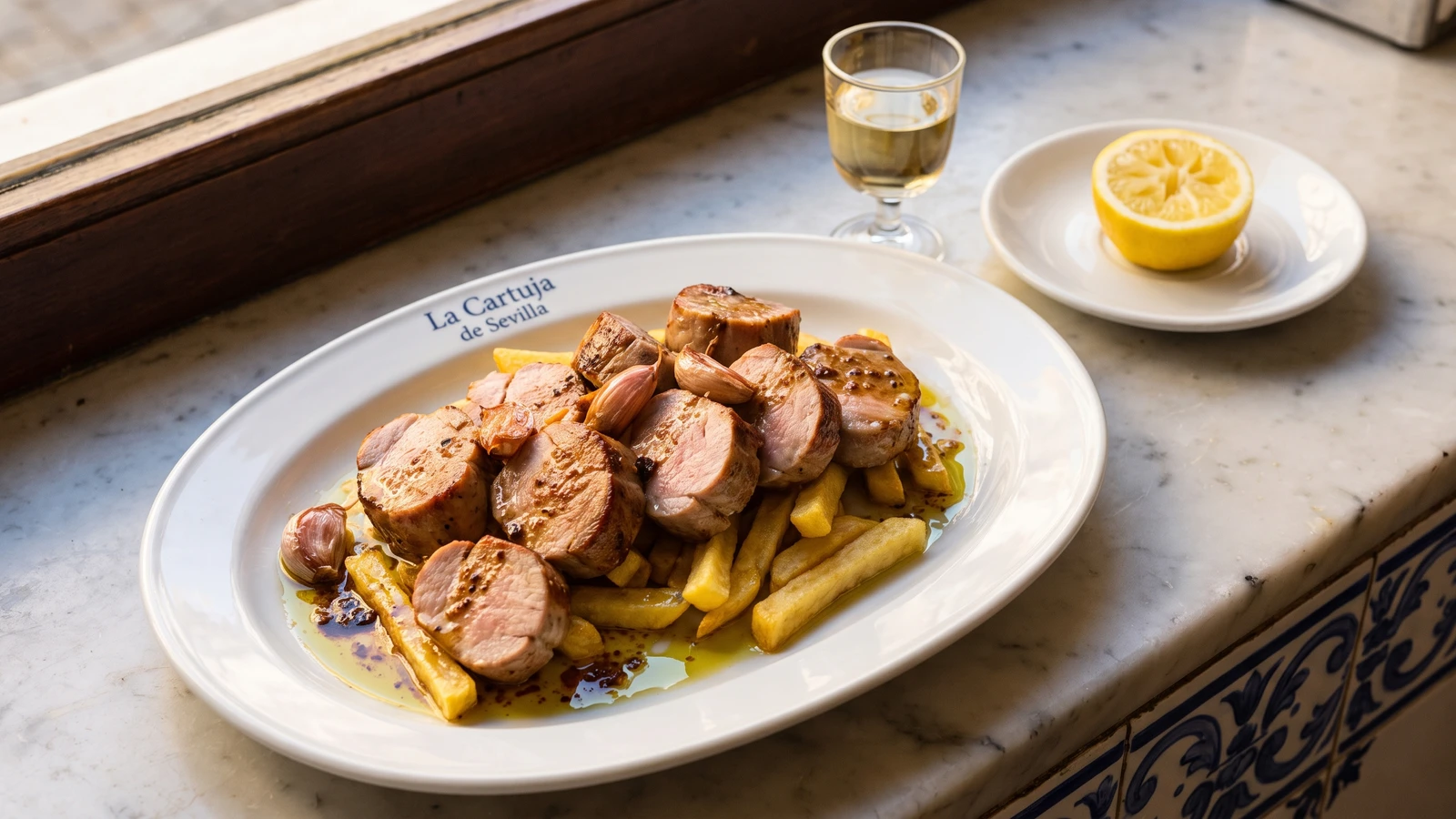
Seville’s favourite pork tapa puts browned tenderloin into a sharp, glossy sauce of whisky, garlic and lemon, with proper fried potatoes underneath because leaving that sauce behind would be foolish.
Solomillo al whisky is Sevillian, an Andalusian bar dish of browned pork tenderloin, whole crushed garlic cloves, whisky, lemon and stock, with fried potatoes underneath to catch the sauce. It comes as a tapa or a larger ración, a plate for sharing, and what marks it as Seville’s is that sharp garlic-and-lemon sauce. This isn’t pork under a blanket of cream. It should taste bright, savoury and plainly of the pan.
The method that decides it is simple: brown the pork, take it out, reduce the sauce without it, then return it only long enough to finish cooking. Tenderloin is lean. Leave it simmering while a panful of liquid reduces and it turns dry before the sauce is ready. Keep the meat rosy and let the whisky, stock and lemon become glossy on their own.
Use an inexpensive, unpeated blended whisky. A costly bottle brings nothing useful here, and a heavily smoky one takes over the garlic. If whisky is impossible to find, an ordinary brandy, brandy de Jerez if you have it, is the household substitute. The sauce will be sweeter and rounder, without whisky’s dry edge, and strictly speaking it becomes another version of the dish. No hace falta haber pisado España. You only need a decent piece of pork and a bottle that knows its place.
The Margin beside this recipe says, “Reduce the sauce, not the meat.” Keep that straight and the rest is easy. Spoon every bit over the potatoes and take it to the table at once. Siempre sale, si lo sigues.
Solomillo al whisky belongs to the tabernas of Seville, where it is served by the tapa or as a larger ración and nearly always arrives with fried potatoes because the sauce is half the point. Its author is not securely recorded, and bar versions vary in proportion, but the city’s recognizable formula is pork tenderloin, abundant garlic, whisky, meat stock and lemon, without cream. The foreign-sounding name hides a thoroughly Sevillian bar-kitchen method: quickly browned meat, a pan reduction, and something plain underneath to leave the plate clean.
Quantity
700g
silver skin removed and cut across the grain into 2.5cm medallions
Quantity
800g
peeled and cut into 1cm batons
Quantity
750ml
for frying the potatoes
Quantity
45ml
divided
Quantity
12 medium cloves (about 50g)
unpeeled and lightly crushed
Quantity
120ml
Quantity
250ml
Quantity
35ml
strained
Quantity
20g
cold and cubed
Quantity
12g
divided
Quantity
1g
| Ingredient | Quantity |
|---|---|
| pork tenderloinsilver skin removed and cut across the grain into 2.5cm medallions | 700g |
| Agria or other floury potatoespeeled and cut into 1cm batons | 800g |
| mild olive oilfor frying the potatoes | 750ml |
| extra virgin olive oildivided | 45ml |
| garlicunpeeled and lightly crushed | 12 medium cloves (about 50g) |
| unpeated blended whisky | 120ml |
| unsalted light chicken or pork stock | 250ml |
| fresh lemon juicestrained | 35ml |
| unsalted buttercold and cubed | 20g |
| fine sea saltdivided | 12g |
| freshly ground black pepper | 1g |
Put the cut potatoes in cold water for 10 minutes, then rinse until the water is nearly clear. Drain and dry them thoroughly between clean towels. Water left on a potato makes the frying oil spit, and a wet surface browns poorly.
Heat the mild olive oil to 150°C in a deep, heavy pan, leaving at least 8cm of empty space above the oil. Fry the potatoes in two batches for 6 to 8 minutes per batch. They should be tender when pierced but still pale. Lift them onto a rack or paper-lined tray and leave them for at least 10 minutes while you cook the pork.
Pat the pork dry and season it evenly with 6g of the salt and all the pepper. Heat 30ml of the extra virgin olive oil in a wide frying pan over medium-high heat. When the oil shimmers, brown the medallions in a single layer for 60 to 90 seconds per side. Work in two batches if necessary. They need a deep golden surface but should remain underdone in the centre. Transfer them and their juices to a plate.
Lower the heat to medium-low and add the remaining 15ml extra virgin olive oil with the crushed, unpeeled garlic. Cook for 4 to 5 minutes, turning the cloves, until their skins blister and the garlic smells sweet. Keep it golden, not dark. Burnt garlic makes the whole sauce bitter.
Take the pan off the heat before pouring in the whisky. Return it to medium-high heat and scrape up every browned bit from the base. Boil for 3 to 4 minutes, until the whisky has reduced by about half and its raw alcoholic smell has softened. There is no need to set it alight. Add the stock, lemon juice and 2g salt, then simmer briskly for 7 to 9 minutes. The sauce is ready when the bubbles look tighter and a spatula drawn across the pan leaves a clear path for one second.
Return the medallions and their collected juices to the pan. Lower the heat and simmer gently for 2 to 4 minutes, turning the meat once, until its centre reaches 63°C. Take the pan off the heat, add the cold butter and move the pan in small circles until the sauce turns glossy and lightly coats the pork. Rest everything off the heat for 3 minutes. This is the point that matters: thicken the sauce before the meat goes back, not by boiling the tenderness out of the pork.
Raise the potato oil to 190°C. Fry the potatoes again in two batches for 90 seconds to 2 minutes, until deeply golden and crisp at the edges. Drain well and season at once with the remaining 4g salt. Spread them across a warm oval platter, arrange the pork over the middle, and spoon on all the whisky sauce and garlic cloves. Serve immediately, while the outer potatoes are still crisp and those beneath have begun to drink the sauce.
1 serving (about 310g)
Culinary guides, cultural storytelling, and the editorial depth that makes cooking meaningful.
Discover Culinary ExplorerChef Isabel
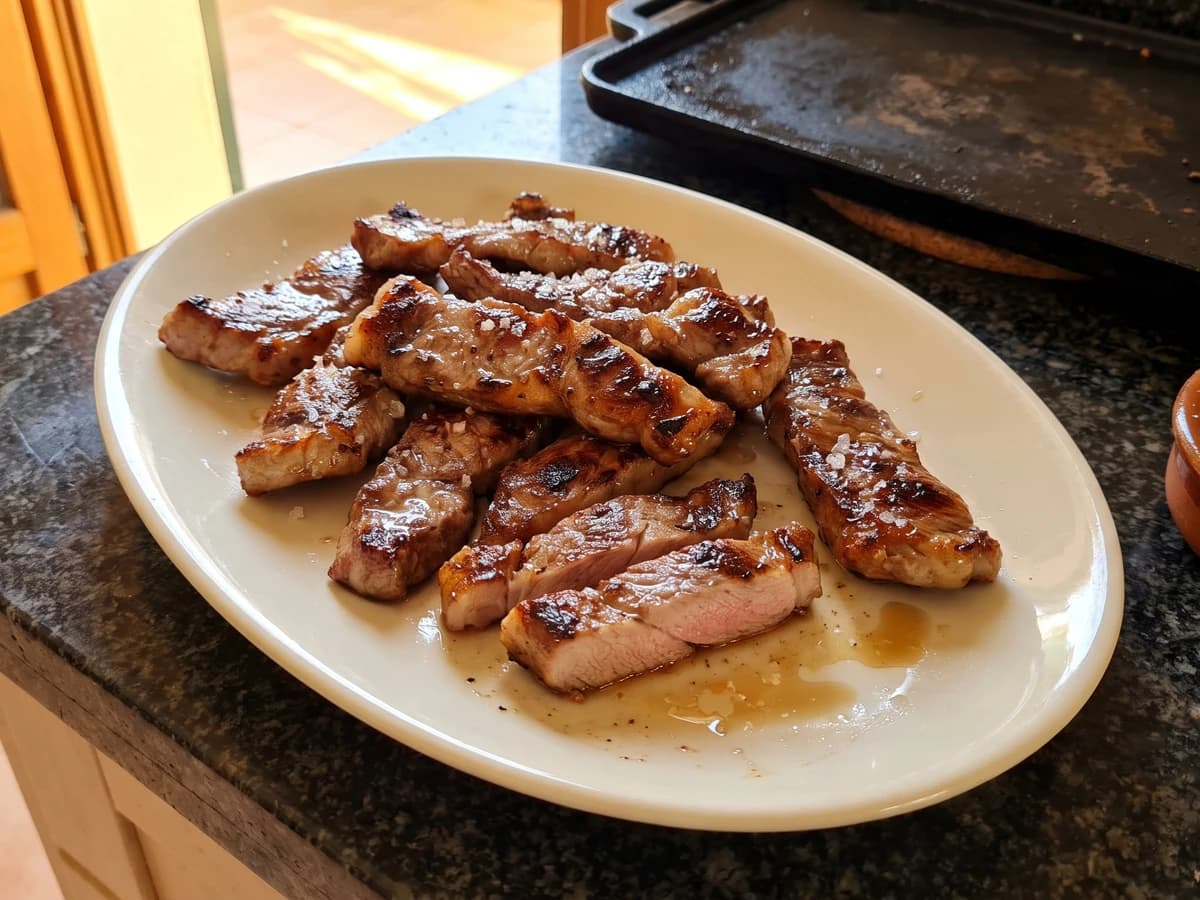
Extremadura's dehesa gives us this fan-shaped, marbled rib cut: salt it at the last moment, lay it on a fierce plancha, and count in seconds so the centre stays juicy.

Chef Isabel
Aletría Murciana is Murcia's humble noodle guiso: fine fideos, pork ribs, potato, saffron, and a dark sweet sofrito. Get that base right and the pot knows where it's going.

Chef Isabel
Andrajos are Andalucía's dough-rag stew from Jaén and Granada: a slow rabbit guiso thickened with torn sheets of flour dough, rolled thin so they cook tender instead of gummy.
Chef Isabel
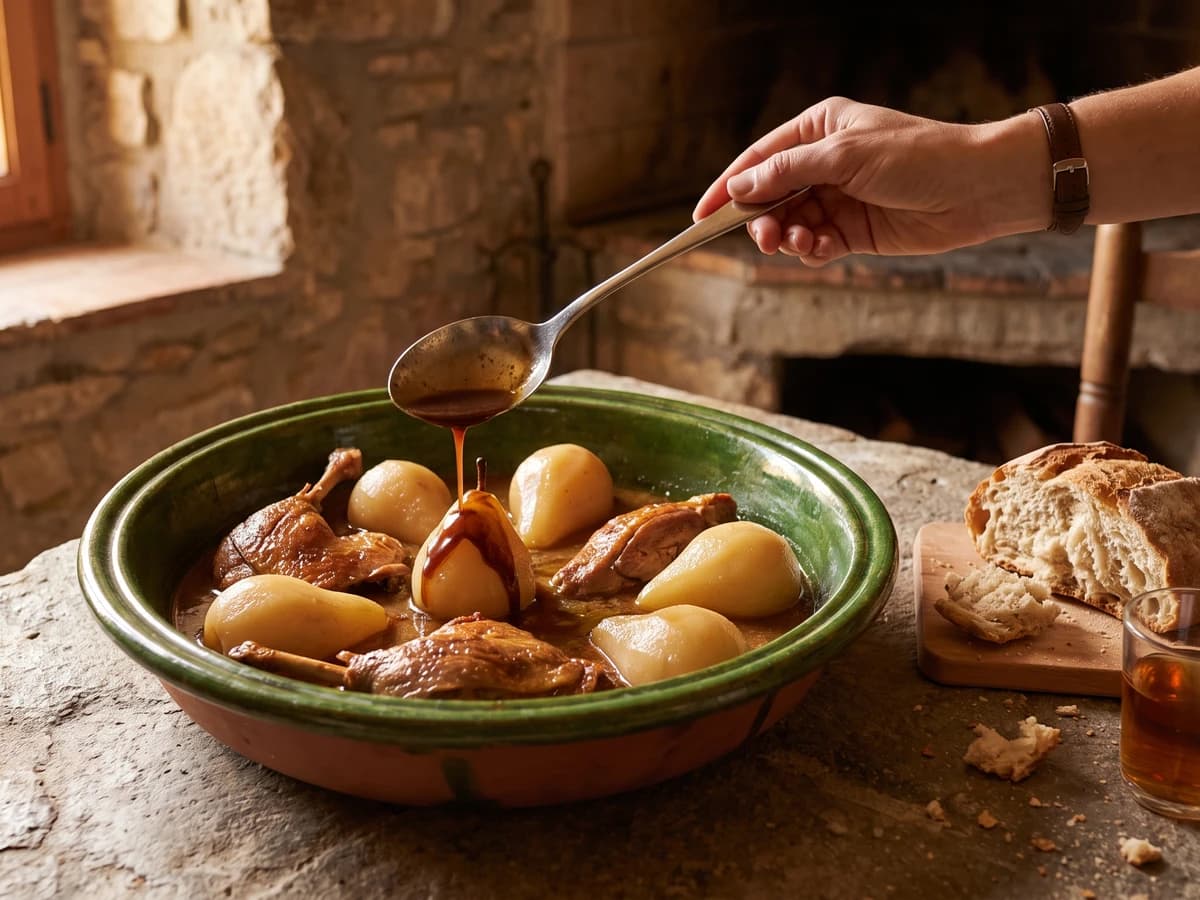
Ànec amb peres is Catalan celebration cooking: duck braised in a dark sofregit, firm autumn pears added near the end, and an almond-garlic picada that turns the juices into a close, glossy sauce.