Chef Isabel
Aceitunas Aliñadas Andaluzas
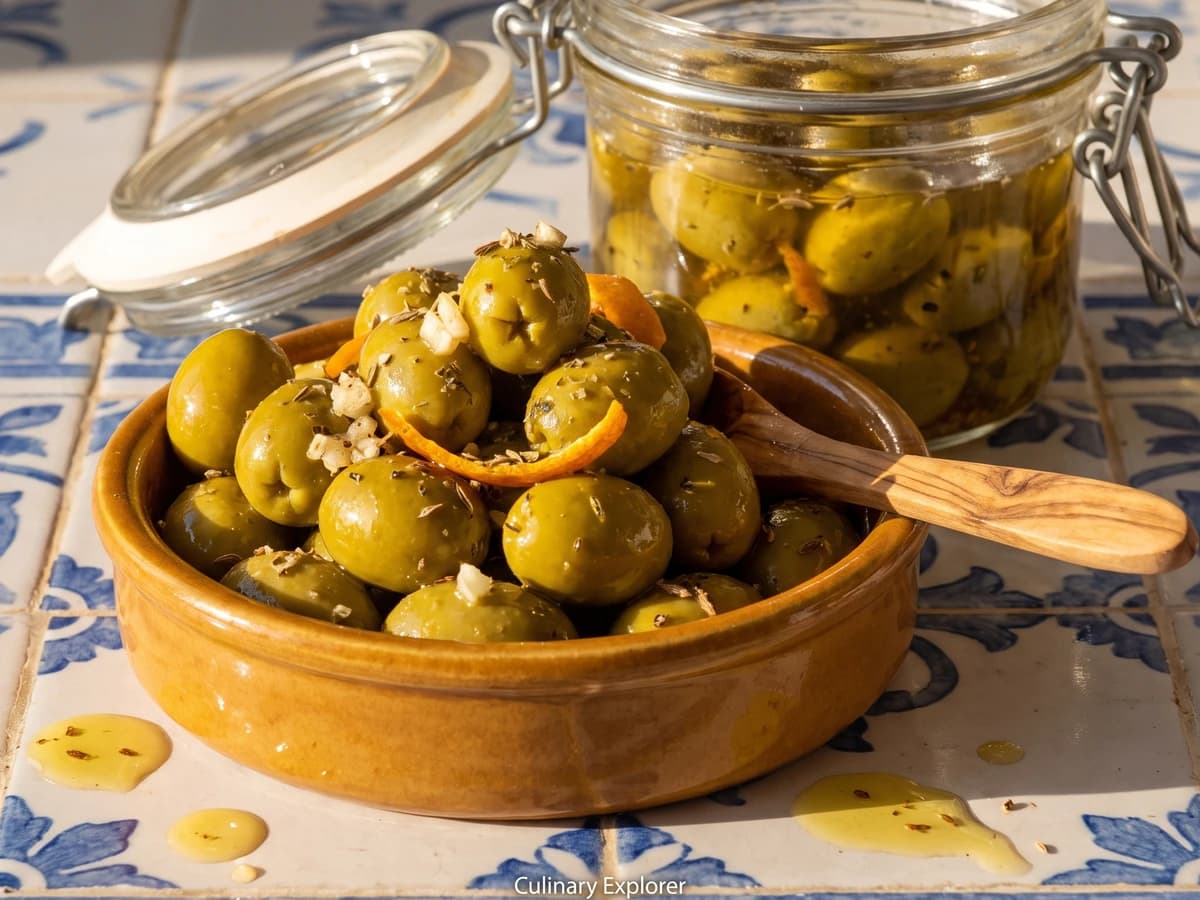
Andalucía's green olives are cracked just enough to drink in garlic, cumin, oregano and sherry vinegar, then left two days until the brine turns fragrant and every bite carries the aliño.
A cooking platform built around craft, culture, and the stories behind what we eat.
Created by
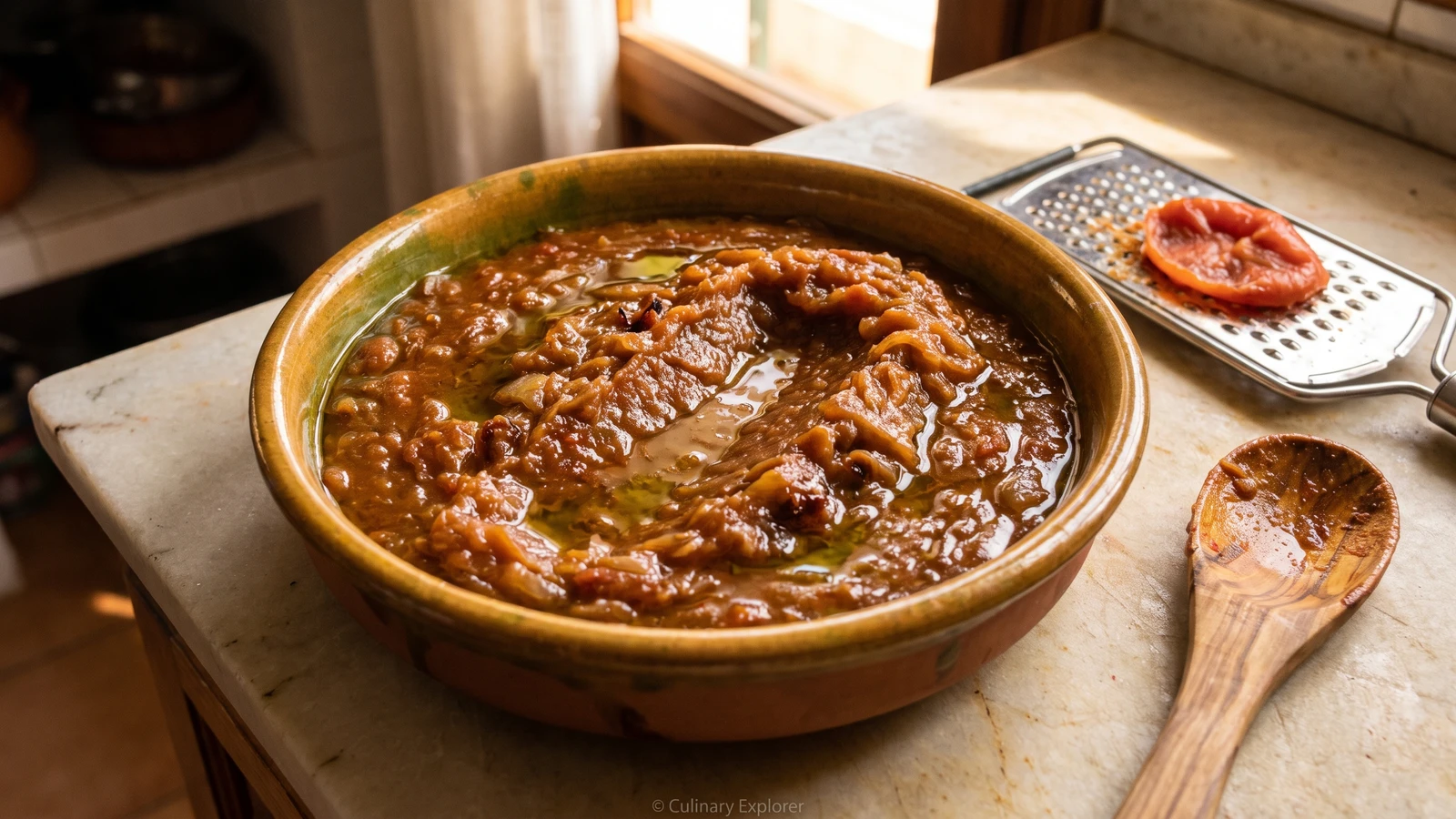
Catalonia's sofregit is onion and tomato cooked patiently in olive oil until dark, sweet, and nearly dry, the quiet foundation beneath arrossos, fideus, legumes, suquets, and slow guisats.
Sofregit is Catalan, the slow onion-and-tomato foundation beneath the region's arrossos, fideus, suquets, legumes, and guisats, its pot stews. What marks it is the order and the depth: onion first, cooked nearly to a dark marmalade, then tomato reduced until no loose water remains. This isn't a sauce for spooning over the finished plate. It belongs underneath, where it gives the whole dish weight.
I keep the pan low and let the onion take its time. That is the one method that decides the result. Slow cooking turns the onion sweet and jammy all the way through; fierce heat only browns its edges and leaves a sharp middle, and the final dish tastes thinner for it. Once the tomato goes in, cook until a spoon drawn through the pan leaves a clean track. Siempre sale, si lo sigues. It turns out if you follow it.
Far from Catalonia, use an ordinary yellow onion in place of ceba de Figueres and good canned whole plum tomatoes when fresh ones smell of nothing. The onion will be a shade less sweet, while canned tomato gives a deeper, less fresh-tasting base and may need a few extra minutes to reduce. Both are honest household substitutions. No hace falta haber pisado España, you don't need to have set foot in Spain. Pésalo, no lo adivines, and trust the clean track across the pan.
The medieval Catalan Llibre de Sent Soví records sofregit as the frying of an aromatic base, long before tomato entered the Catalan larder from the Americas. As tomato settled into the region's cooking, it joined slow-cooked onion and became a foundation for arrossos, fideus, suquets, and guisats rather than a finished table sauce. The Catalan name preserves the method: sofregir means to fry gently, and that patient first panful carries through the whole dish.
Quantity
750g whole, yielding 600g prepared
trimmed, peeled, and finely diced into 3 to 4mm pieces
Quantity
500g fresh, yielding about 400g pulp, or one 400g can
fresh tomatoes halved and grated with skins discarded, or canned tomatoes crushed by hand
Quantity
90ml
Quantity
6g
Quantity
up to 60ml
added 15ml at a time only if the onion catches
| Ingredient | Quantity |
|---|---|
| yellow onions or ceba de Figuerestrimmed, peeled, and finely diced into 3 to 4mm pieces | 750g whole, yielding 600g prepared |
| ripe plum tomatoes or canned whole plum tomatoesfresh tomatoes halved and grated with skins discarded, or canned tomatoes crushed by hand | 500g fresh, yielding about 400g pulp, or one 400g can |
| extra virgin olive oil | 90ml |
| fine sea salt | 6g |
| water (optional)added 15ml at a time only if the onion catches | up to 60ml |
Weigh 600g of peeled onion, then dice it evenly into 3 to 4mm pieces. Cut the fresh tomatoes across their middles and grate the cut faces against the large holes of a box grater until only the skins remain. Discard the skins and weigh out about 400g of pulp. If using canned tomatoes, crush the fruit and its juices into a coarse pulp.
Set a wide 28 to 30cm heavy pan over medium-low heat and add the olive oil. When the oil flows freely across the pan but isn't smoking, add the onion and all the salt. Cook uncovered for 10 to 12 minutes, stirring every two minutes, until the onion collapses, turns translucent, and loses its raw smell.
Lower the heat and cook the onion for another 30 to 40 minutes. Stir every four or five minutes at first, then every minute or two as it darkens. Scrape the bottom and corners each time. The onion must become deep golden, soft, and jammy without developing crisp black edges. If it starts sticking before it is uniformly soft, add 15ml water and scrape the pan clean. Low heat gives the onion time to become sweet while its water leaves; hurry it and the edges burn while the middle stays sharp.
Add the tomato pulp and stir it thoroughly into the onion. Raise the heat to medium for about five minutes, just until the mixture bubbles evenly, then return it to low. Cook for 20 to 30 minutes, stirring every three or four minutes and more often near the end. It is ready when the colour is deep russet, small beads of oil appear at the edges, and a spoon drawn across the pan leaves a clean track for at least five seconds. There should be no watery halo around the sofregit. This is the test that matters.
Take the pan off the heat and leave the sofregit to settle for 10 minutes. Taste a cooled spoonful and adjust only if it truly needs more salt. Transfer it to a shallow container and refrigerate within two hours, or divide it into 75 to 100g portions for freezing. The oil may separate as it chills; stir it back through before using.
1 serving (about 56g)
Culinary guides, cultural storytelling, and the editorial depth that makes cooking meaningful.
Discover Culinary ExplorerChef Isabel
Andalucía's green olives are cracked just enough to drink in garlic, cumin, oregano and sherry vinegar, then left two days until the brine turns fragrant and every bite carries the aliño.
Chef Isabel
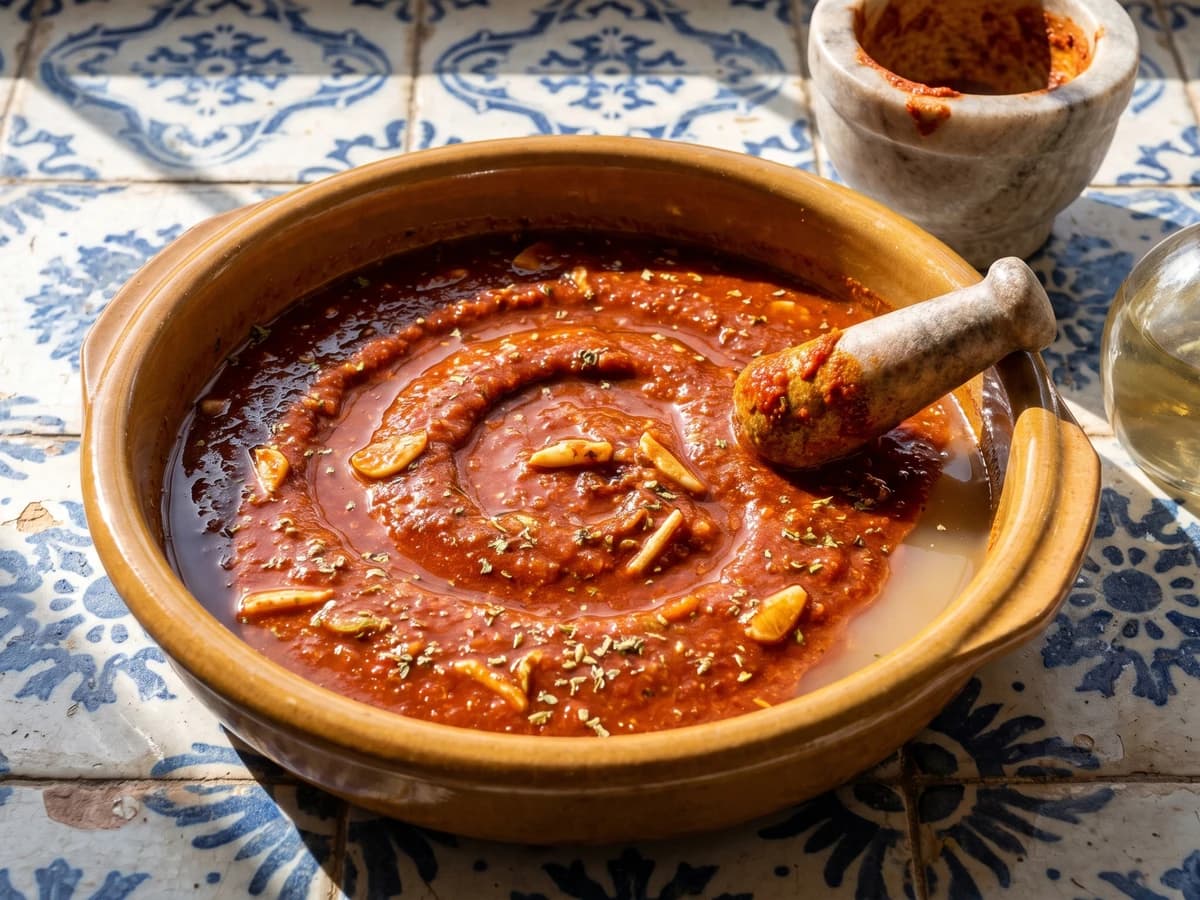
Andalucía's sharp, brick-red marinade brings vinegar, garlic, oregano, cumin and pimentón to fish and pork; pound the seasonings first, then give the acid time to carry them through.
Chef Isabel
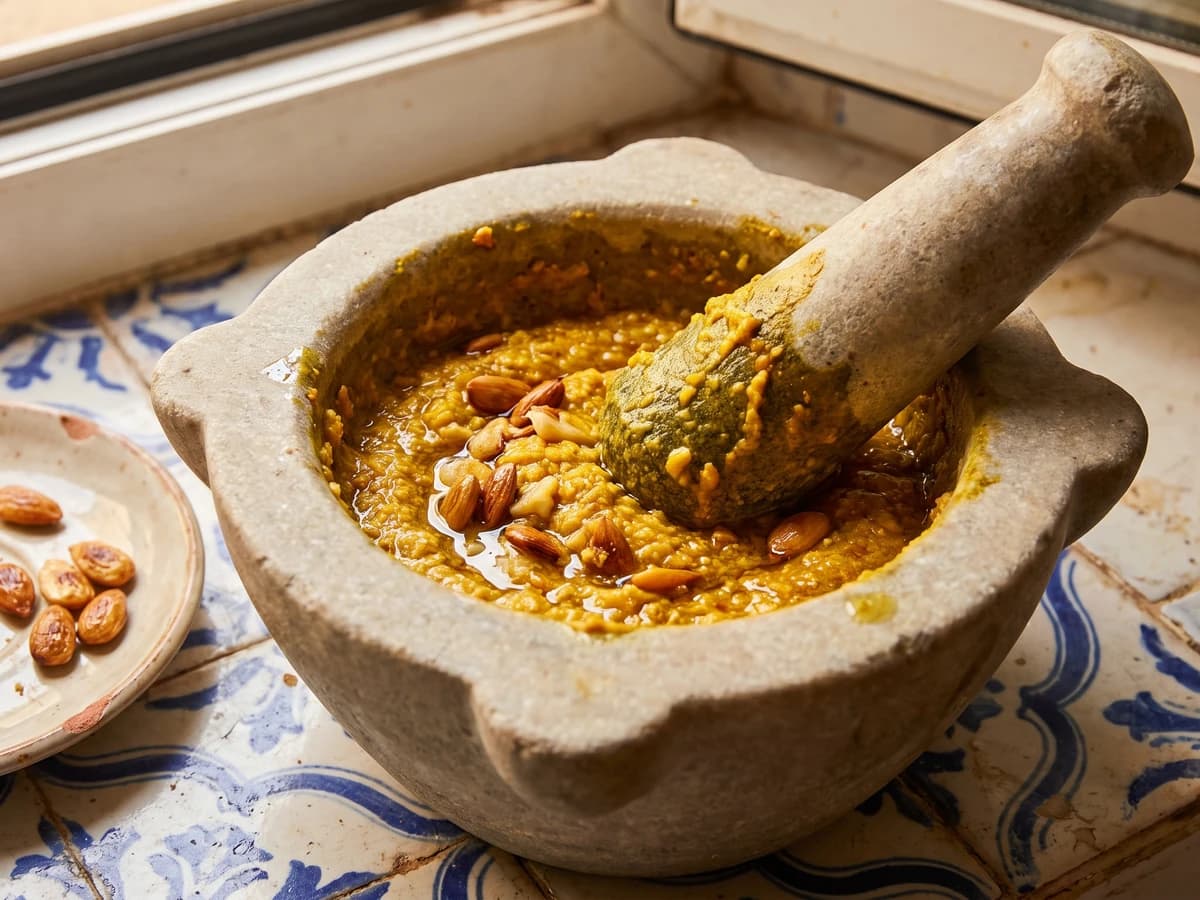
Almería's ajopollo turns fried garlic, almonds, bread and saffron into a golden mortar paste that gives modest fish and potato guisos their body, richness and unmistakable southern depth.
Chef Isabel
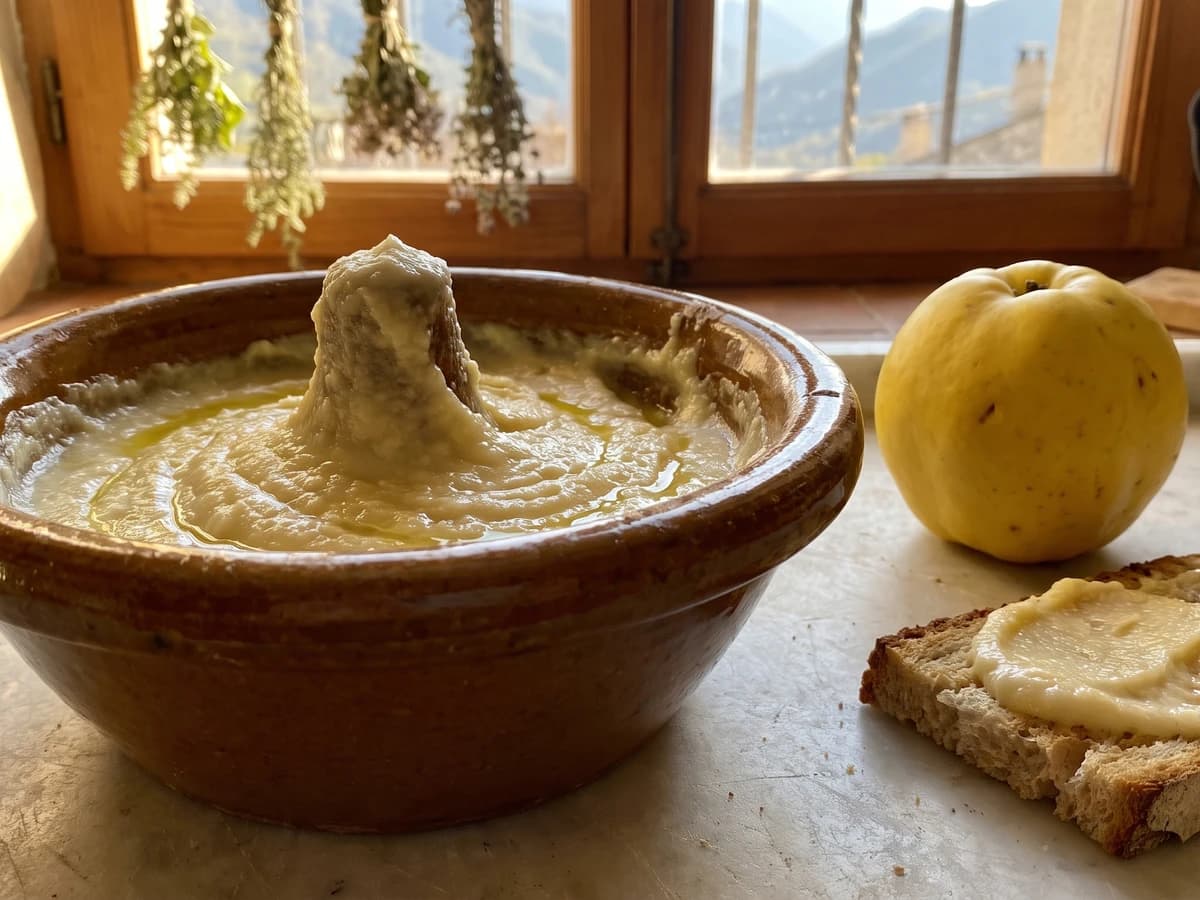
Allioli de codony belongs to the Catalan Pyrenees: boiled quince, raw garlic, salt, and olive oil worked into a thick, fragrant sauce for grilled meat, sausages, bread, and the autumn table.