Chef Isabel
Aceitunas Aliñadas Andaluzas
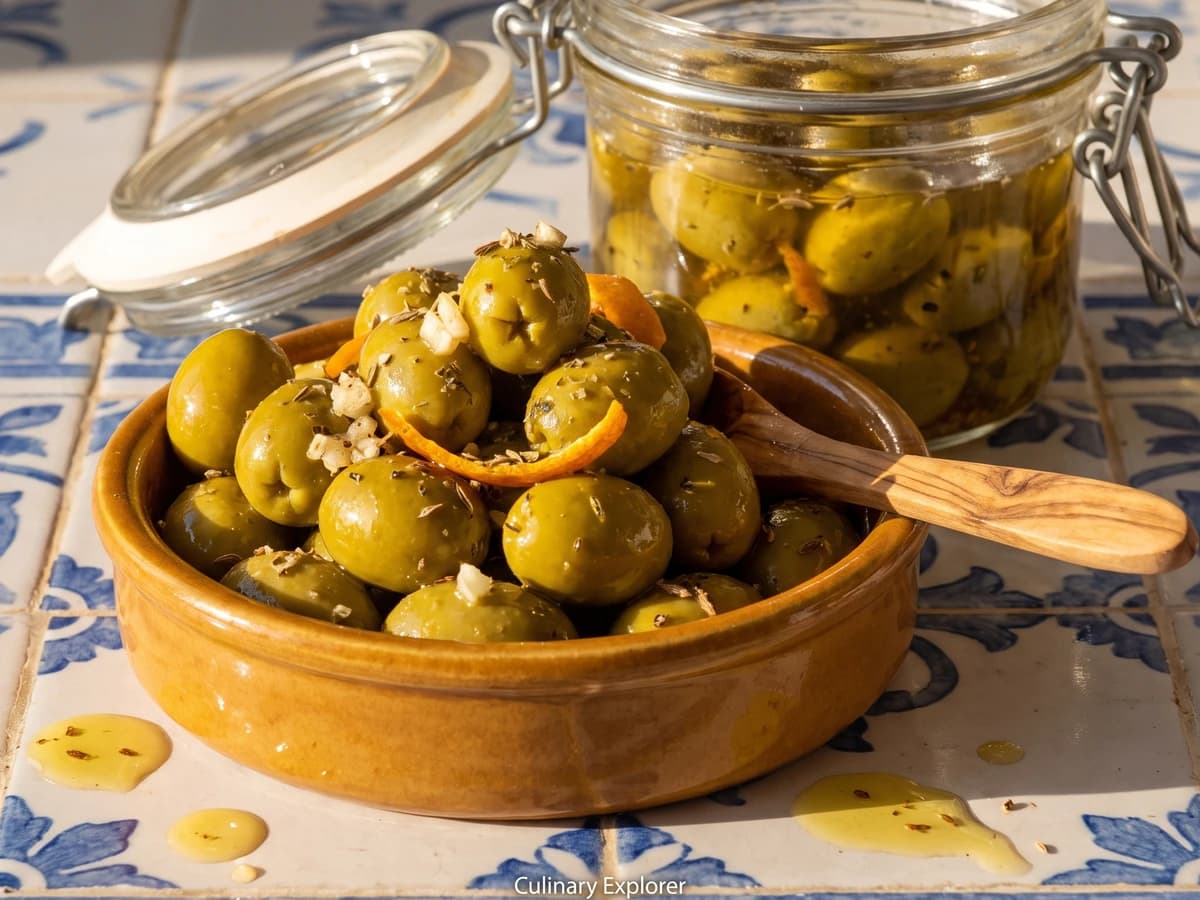
Andalucía's green olives are cracked just enough to drink in garlic, cumin, oregano and sherry vinegar, then left two days until the brine turns fragrant and every bite carries the aliño.
A cooking platform built around craft, culture, and the stories behind what we eat.
Created by
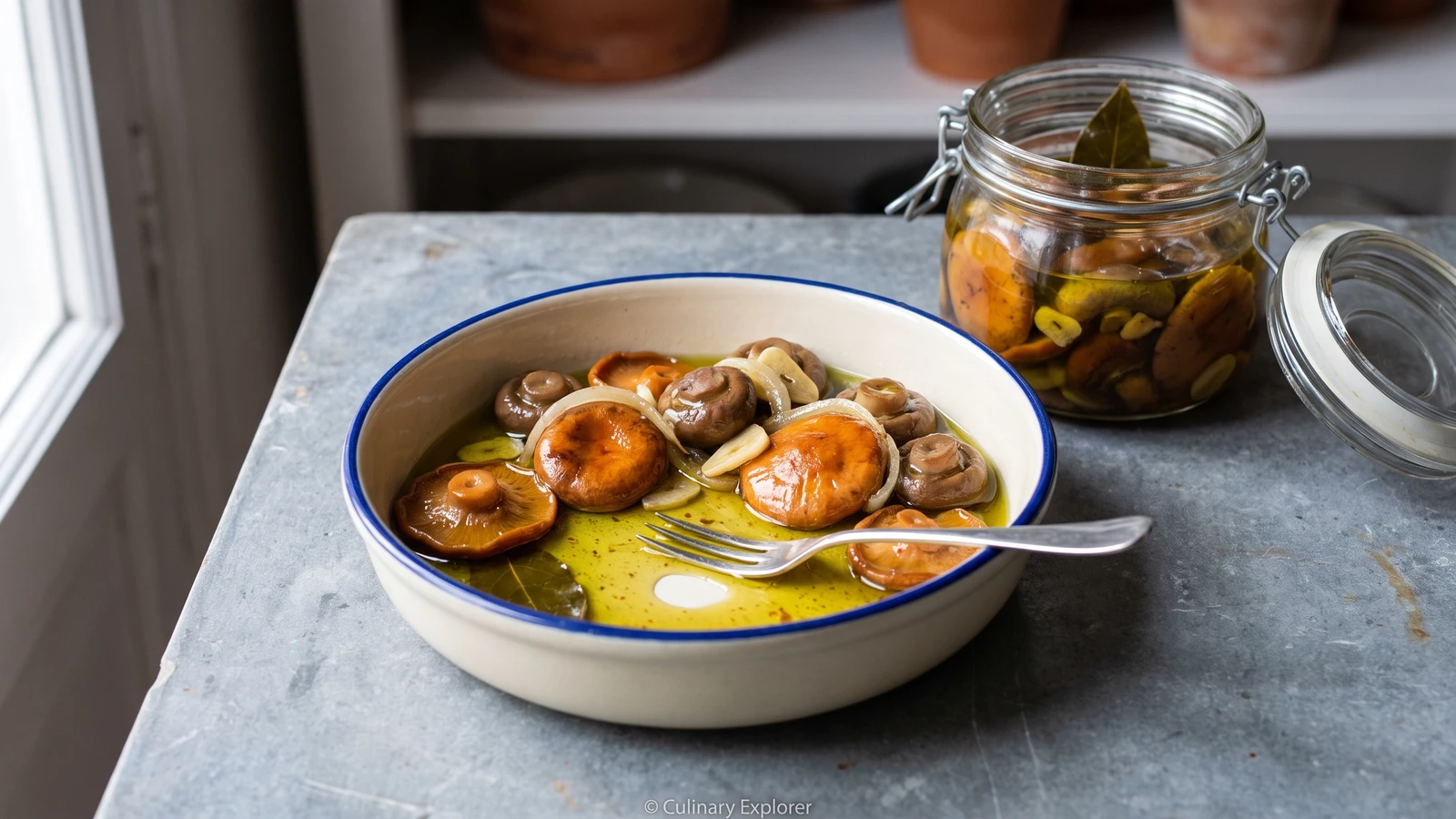
Castile's autumn mushrooms are browned until their water is gone, then given two quiet days in a mild escabeche of olive oil, wine vinegar, garlic, and bay.
Setas en escabeche belong to the autumn table of inland Castile, especially Castilla y León, where níscalos arrive after rain among the pine trees. The Castilian jar is gentle and savoury: mushrooms cooked first, then rested in olive oil, wine vinegar, garlic, onion, pepper, and bay. It isn't a raw mushroom drowned in sharp vinegar. The forest flavour must still be there when you bite.
The method that decides it is the sauté. Cook the mushrooms in uncrowded batches until they release their water, that water evaporates completely, and the edges begin to colour. Put wet mushrooms into the escabeche and they dilute it, turning the liquor weak and the texture spongy. Let the pan do its work, then give the cooked mushrooms five minutes in the hot marinade so they take in the seasoning.
If níscalos, saffron milk caps, aren't sold where you live, use firm brown champiñones for the whole recipe. You lose the níscalo's piney, faintly resinous character, but the texture and method remain right. The Margin beside this recipe says only, "dos días enteros," two full days. On the first day the vinegar and oil still stand apart; by the second they belong together. Siempre sale, si lo sigues.
The pine forests of Soria, Segovia, and Burgos bring níscalos after the autumn rains, and gathering them has long been part of the seasonal kitchen of Castilla y León. The name escabeche descends through Arabic al-sikbaj from an older sour preparation, which Iberian cooks made into a vinegar-and-oil method for keeping game, river fish, vegetables, and fungi. With mushrooms, escabeche carried a brief forest harvest beyond the day of gathering while preserving its firm bite.
Quantity
350g
cleaned and cut into 3cm pieces
Quantity
350g
cleaned and quartered
Quantity
160ml
divided
Quantity
100g
thinly sliced
Quantity
20g (about 5 cloves)
thinly sliced
Quantity
2
Quantity
10
lightly crushed
Quantity
120ml
Quantity
100ml
Quantity
80ml
Quantity
8g
| Ingredient | Quantity |
|---|---|
| níscalos (saffron milk caps), from a trusted commercial sourcecleaned and cut into 3cm pieces | 350g |
| small champiñonescleaned and quartered | 350g |
| extra virgin olive oildivided | 160ml |
| yellow onionthinly sliced | 100g |
| garlicthinly sliced | 20g (about 5 cloves) |
| dried bay leaves | 2 |
| black peppercornslightly crushed | 10 |
| white wine vinegar with 5% to 6% acidity | 120ml |
| dry white wine | 100ml |
| water | 80ml |
| fine sea salt | 8g |
Brush away soil, trim the dirty stem ends, and wipe the mushrooms with a damp cloth. If the níscalos are very gritty, rinse them briefly under cold water, then dry them thoroughly. Cut everything into pieces of roughly the same size so it cooks evenly. Wash two heatproof 500ml jars and their nonreactive lids in hot soapy water, rinse well, and keep them warm.
Heat 20ml of the olive oil in a wide frying pan over medium-high heat. Add half the mushrooms in one uncrowded layer and cook for 8 to 10 minutes, turning occasionally. They will release liquid first. Keep cooking until that liquid has disappeared and the edges are lightly browned. Transfer them to a bowl, add another 20ml oil, and repeat with the remaining mushrooms. Don't salt them yet; salt draws out more water before the pan can brown them.
Lower the heat to medium-low and add the remaining 120ml olive oil to the pan. Add the onion and cook for 6 minutes, stirring often, until supple and translucent but not browned. Add the sliced garlic, bay leaves, and crushed peppercorns. Cook for 2 minutes, just until the garlic smells sweet. Pour in the wine, vinegar, and water, then add the measured salt. Bring to a gentle simmer and cook for 4 minutes.
Return the mushrooms and any juices in the bowl to the pan. Fold them through the escabeche and simmer gently for 5 minutes. The mushrooms should be cooked through and glossy, with enough liquor to move freely around them. Taste one after it cools for a minute; the marinade should be pleasantly sharp because resting will soften it.
Divide the hot mushrooms, onion, garlic, bay, and peppercorns between the warm jars. Pour over all the escabeche, pressing the solids down so they are covered. Tap each jar gently on a folded cloth to release trapped air. Close the lids, cool for no more than 30 minutes, and refrigerate while still slightly warm. Count 48 full hours in the refrigerator before serving, turning each sealed jar once after the first day.
Take the escabeche from the refrigerator 15 minutes before serving so the olive oil loosens. Stir gently and spoon the mushrooms into a shallow dish with enough onion, garlic, and liquor to keep them glossy. Serve with bread, alongside roast meat, or as part of an aperitivo.
1 serving (about 130g)
Culinary guides, cultural storytelling, and the editorial depth that makes cooking meaningful.
Discover Culinary ExplorerChef Isabel
Andalucía's green olives are cracked just enough to drink in garlic, cumin, oregano and sherry vinegar, then left two days until the brine turns fragrant and every bite carries the aliño.
Chef Isabel
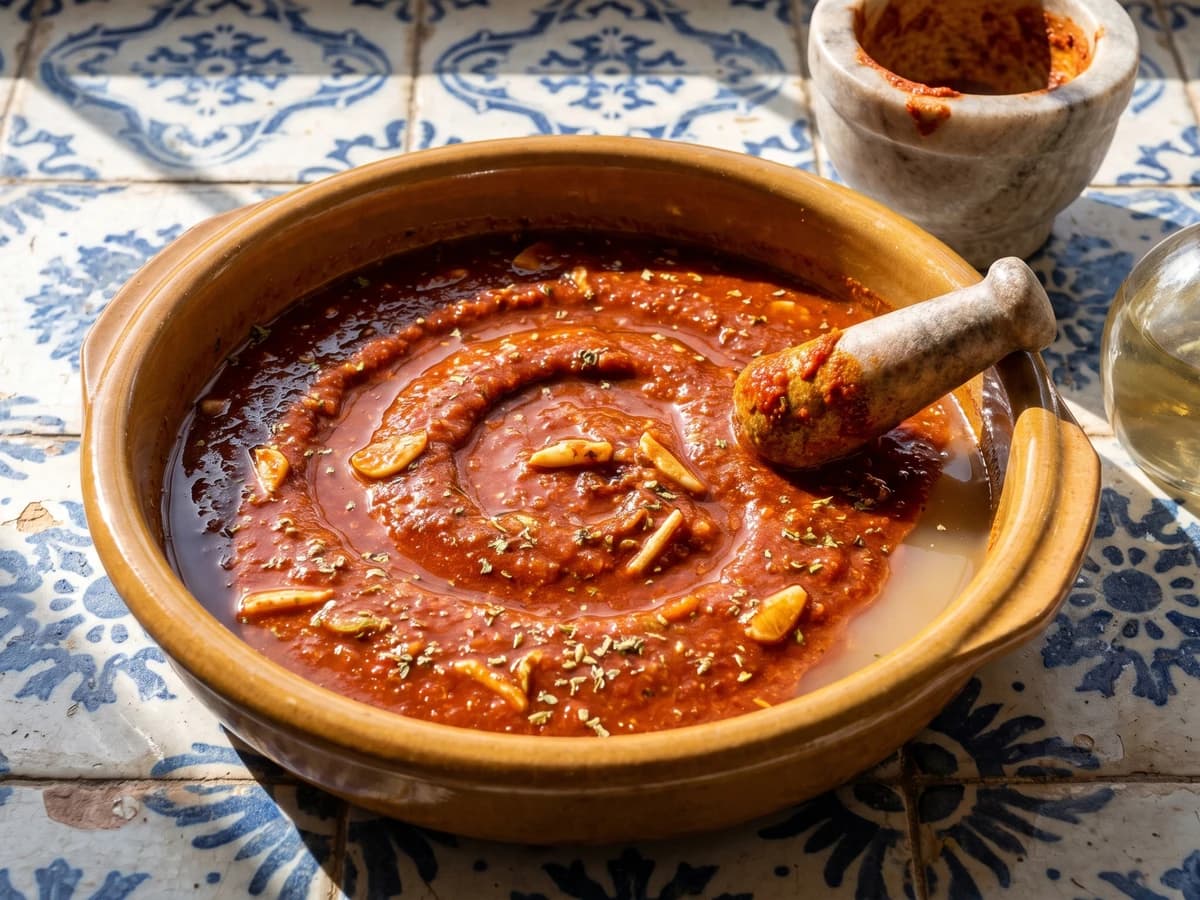
Andalucía's sharp, brick-red marinade brings vinegar, garlic, oregano, cumin and pimentón to fish and pork; pound the seasonings first, then give the acid time to carry them through.
Chef Isabel
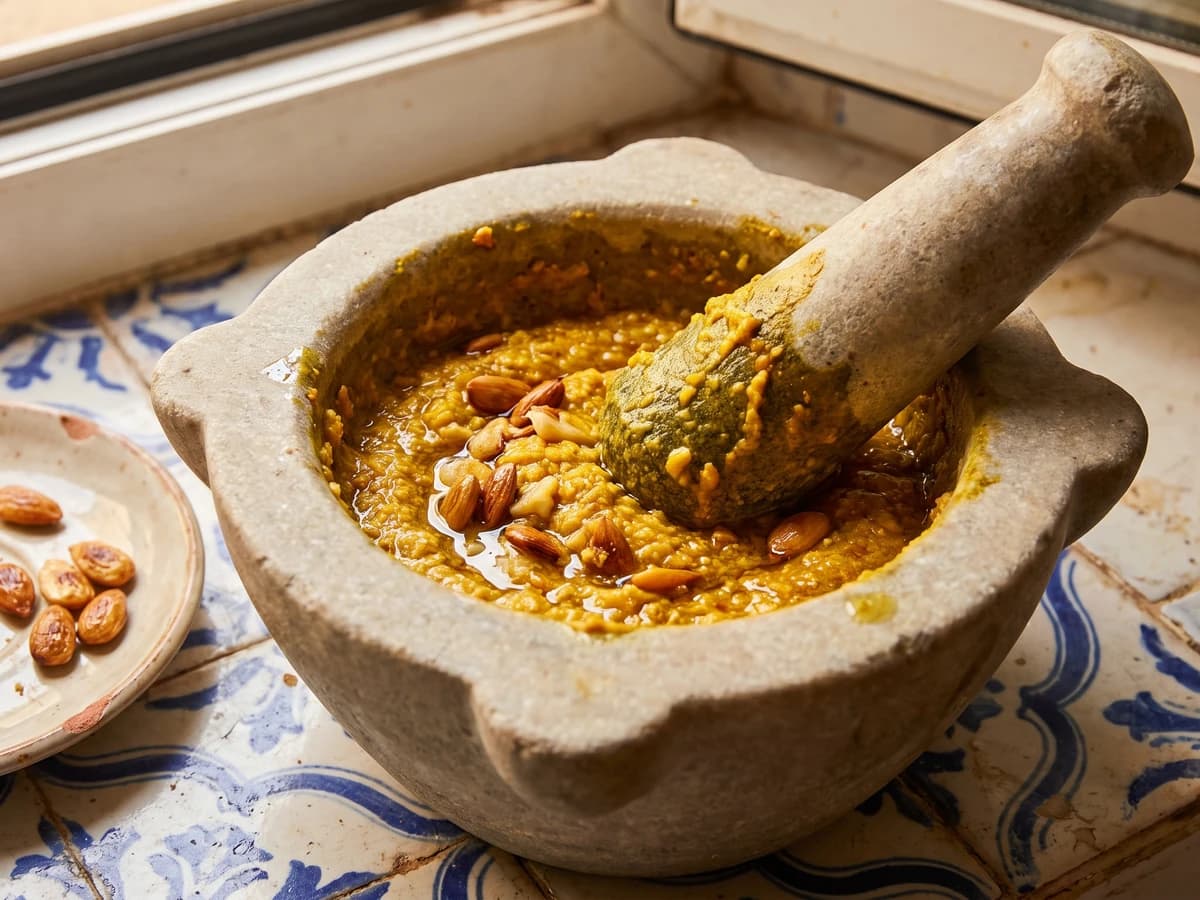
Almería's ajopollo turns fried garlic, almonds, bread and saffron into a golden mortar paste that gives modest fish and potato guisos their body, richness and unmistakable southern depth.
Chef Isabel
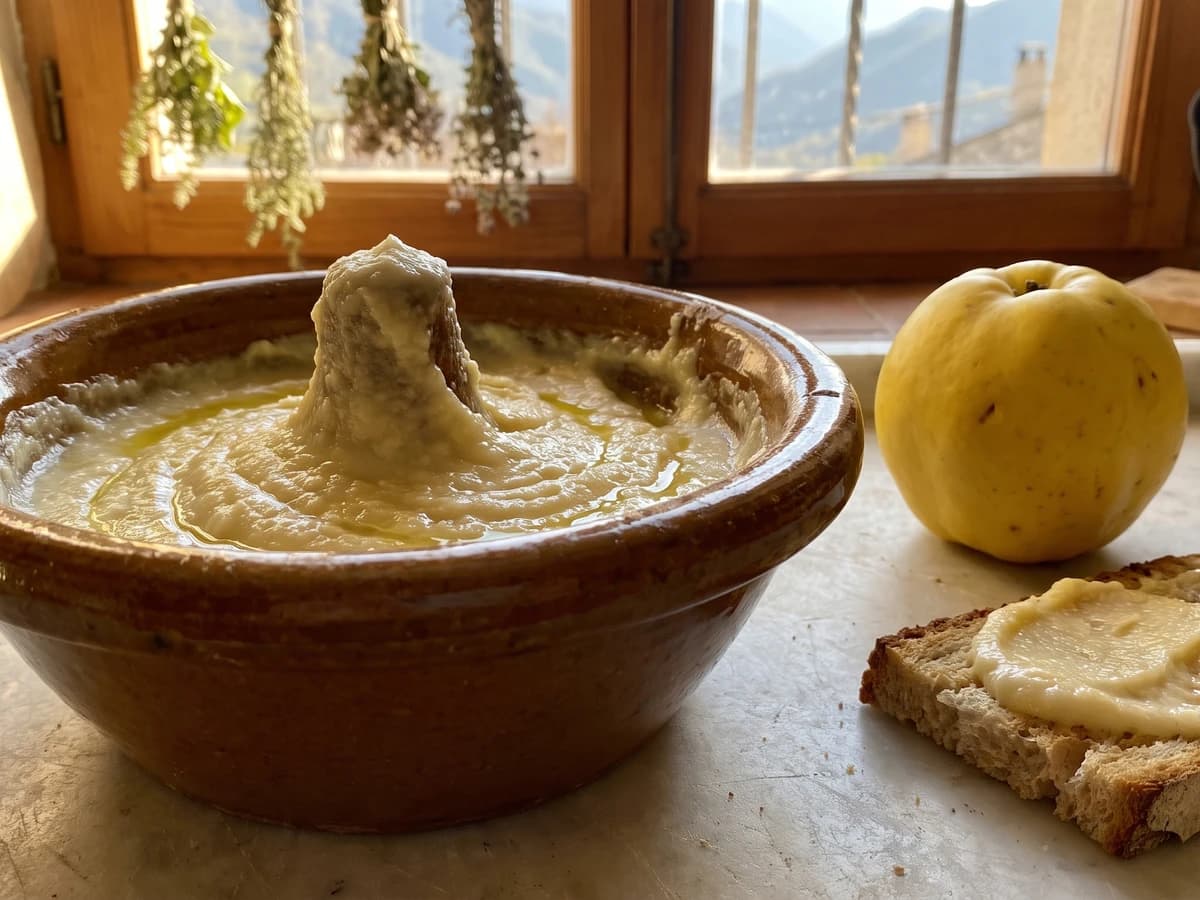
Allioli de codony belongs to the Catalan Pyrenees: boiled quince, raw garlic, salt, and olive oil worked into a thick, fragrant sauce for grilled meat, sausages, bread, and the autumn table.